Summary
- This analysis presents a comprehensive and insightful study of the Civilizational Resurgence and the manifestation of Sanatana consciousness occurring in India’s contemporary social, cultural, and political landscape.
- In the early decades following independence, the primary framework of Indian politics remained confined to narrow vote-bank politics, a colonial mindset, and appeasement strategies. The ruling classes of the time and their regional allies kept society divided along caste, sub-caste, linguistic, and regional lines for political expediency, leaving the majority community culturally and politically fragmented.
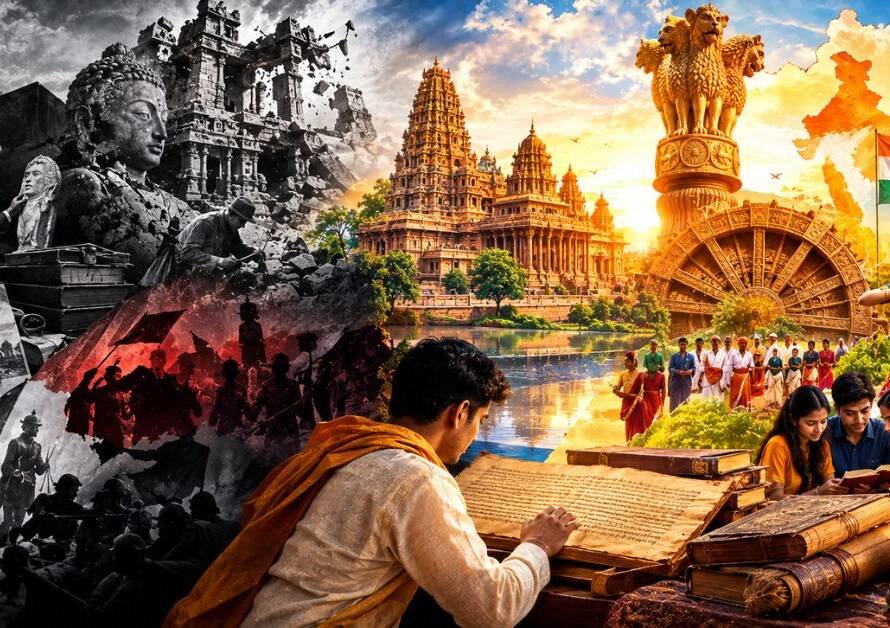
- However, in the present era of the 21st century, this scenario has transformed fundamentally. The ‘Sanatana consciousness’ that has emerged across the nation has made society aware of its historical roots, cultural heritage, and democratic rights. When society rises above narrow caste divisions and unites in the national interest, the entire political discourse shifts.
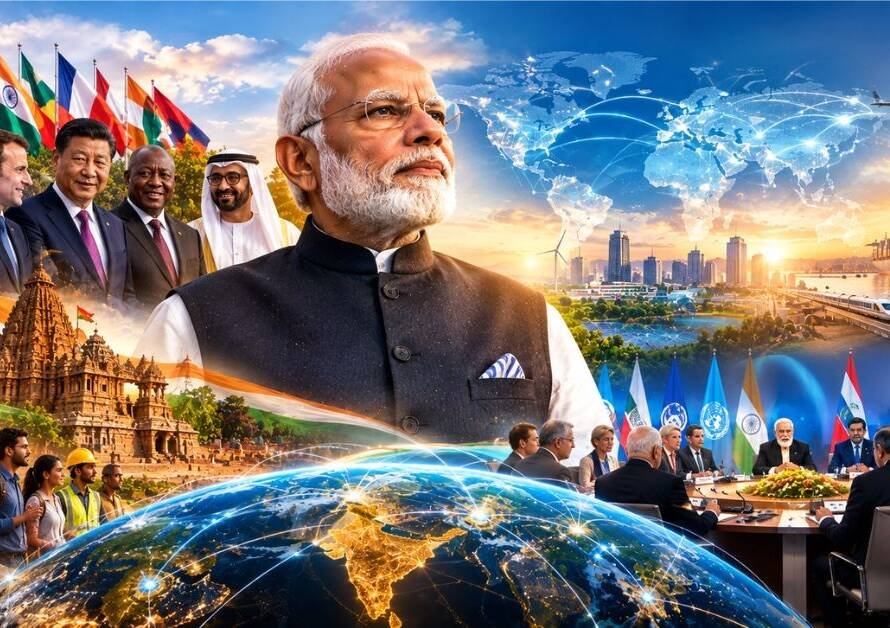
- Currently, through national security and development policies such as ‘Digital India’, ‘Atmanirbhar Bharat’ (Self-Reliant India), and ‘PRAHAAR’, India is setting new standards of global autonomy and sovereignty.
- If citizens exercise their voting power with complete awareness, unprecedented unity, and high voter turnout, no force can stop India from establishing itself as a global superpower and ‘Vishwaguru’ (Global Teacher) in the 21st century.
the Value of Franchise, and the Path to ‘Vishwaguru’
1. Sanatana Resurgence and Its Central Role in Politics
- Permanent Shift in Discourse: For decades in Indian politics, cultural traditions and the concerns of the majority community were relegated to the margins. The present Sanatana awakening has made it clear that the nation’s governance and politics can no longer be run by ignoring its core cultural roots.
- Decline of the Appeasement Model: Traditional vote-bank politics based on appeasement and social polarization has lost its relevance. Today, all mainstream political currents are compelled to operate within the framework of cultural symbols and Sanatana values to maintain their political viability.
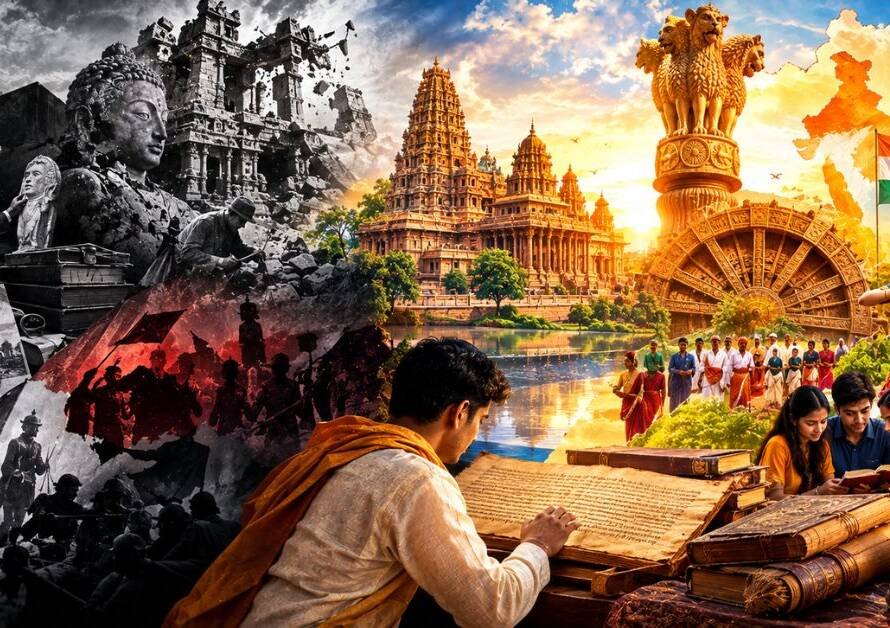
- Restoration of Civilizational Self-Respect: The construction of the Shri Ram Janmabhoomi Temple and the revitalization of the Kashi Vishwanath Dham, Ujjain Mahakal Lok, and Kedarnath Dham are not merely physical structures; they are historic symbols of the awakening of India’s dormant cultural consciousness and liberation from mental colonial servitude.
- Acceptance of Cultural Nationalism: Cultural identity has become an integral part of national development and administrative policy, proving that India’s progress is best achieved by preserving its cultural heritage.
2. Liberation from Caste Divisions and the Need for Social Harmony
- Exposing the ‘Divide and Rule’ Policy: The primary objective of the divisive politics nurtured in the post-independence decades was to keep society entangled in various castes and sub-castes to prevent the formation of a unified national force.
- Call to Rise Above Caste Narrowness: If citizens remain entangled in internal caste contradictions, their social and cultural strength will remain fractured. The core idea of the Sanatana revival is to unite society into an unbroken cultural family.
- Principle of Sanatana Harmony: Indian philosophy has always emphasized Vasudhaiva Kutumbakam (The World is One Family) and social harmony. A powerful, capable, and just nation can only be built by eliminating artificial divisions and inequalities within society.
- Unity as True Strength: When society channels its internal diversity into strength and weaves itself into a single thread, no negative or disruptive force can hinder national progress.
3. Democratic Power: The Value of Franchise and Disciplined Voting
- Historic Impact of Unified Voting: It is a historical fact that organized and disciplined groups have influenced policy-making and political direction through heavy turnout (90% or higher).
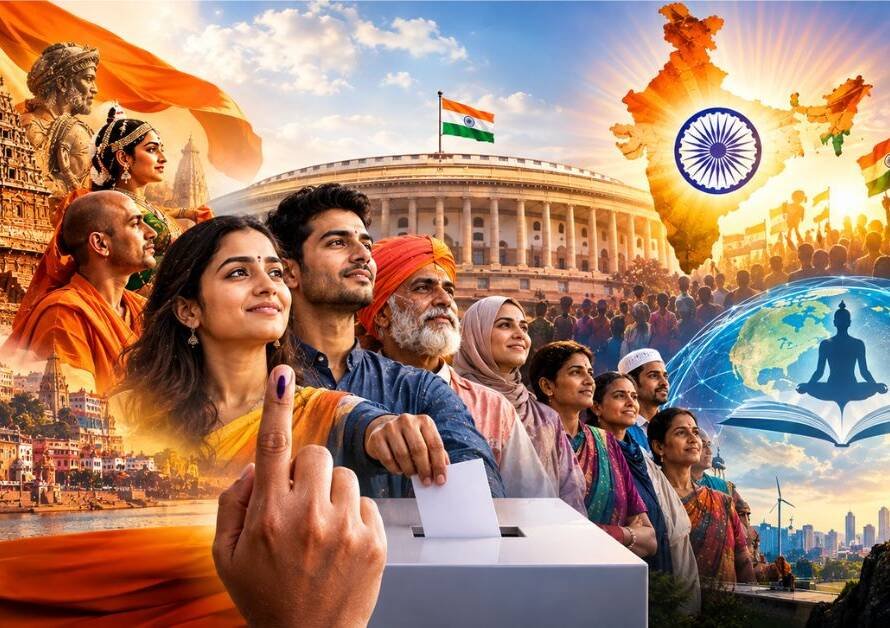
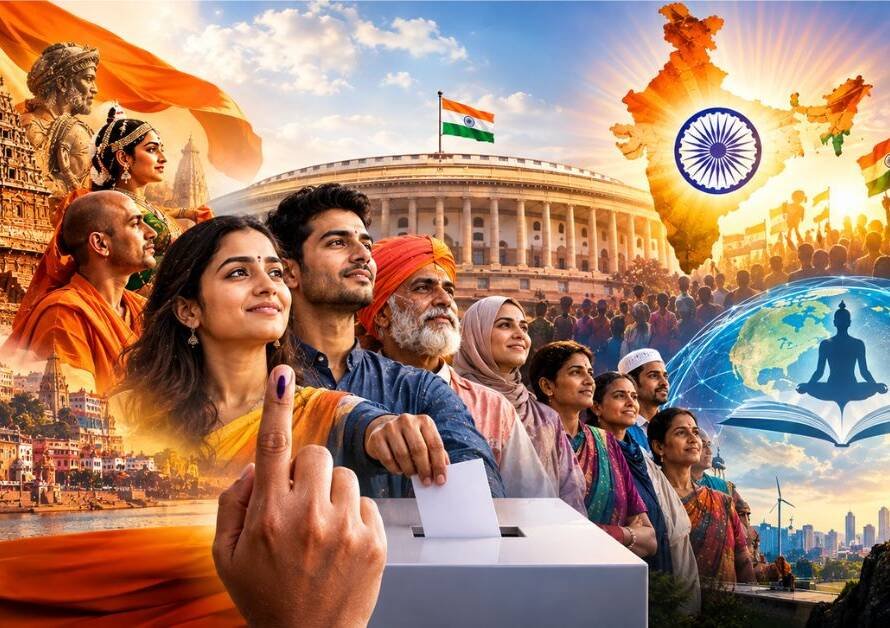
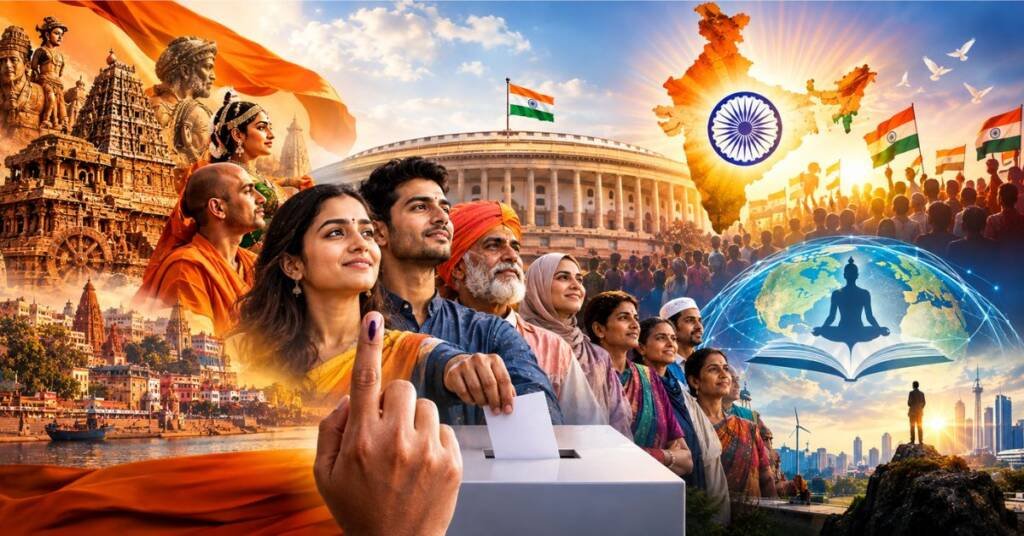
- Realizing the True Capacity of Franchise: If broader society recognizes the true value of its democratic power and prioritizes national interest over caste considerations with over 90% turnout, it becomes the most decisive pillar of the democratic system.
- Indispensable Political Consciousness: Aware and united voting leaves no political party with the opportunity to ignore national security, cultural preservation, or public welfare.
- Citizen Accountability in Democracy: High turnout is not merely a right, but a duty toward nation-building. Disciplined voting remains the strongest guarantee of good governance and transparency.
4. Nationalist Good Governance and the Building of a ‘Vishwaguru’ India
- Fortifying Internal and External Security: Under the current leadership, the nation’s borders and internal security have been rendered formidable through forward-looking policies like ‘Atmanirbhar Bharat’, integrated military commands, and the ‘PRAHAAR’ doctrine.
- Geopolitical Autonomy and De-dollarization: Through Special Rupee Vostro Accounts (SRVA) and bilateral trade agreements, India has carved out an independent identity on international financial forums and insulated itself from global economic pressures.
- Mental Decolonization: Decisive changes in colonial-era laws (such as replacing the Indian Penal Code with the Bharatiya Nyaya Sanhita) and the implementation of the National Education Policy are instilling a sense of pride among Indian youth regarding ancient knowledge systems and history.
- Marching Toward ‘Vishwaguru’ Status: This unprecedented confluence of security, economic prosperity, technological innovation (such as UPI), and civilizational values is positioning India to offer peace, balance, and guidance to the world as a 21st-century ‘Vishwaguru’.
The current era in India is not merely a change of power or policies; it is a historic Civilizational Renaissance. When the citizens of a nation recognize their cultural roots, rise above narrow caste and regional interests, and unite for the nation’s integrity and good governance, the true capability of democracy unfolds.
By exercising their democratic franchise with complete awareness, discipline, and record turnout, the citizenry can ensure the unhindered pace of India’s development and security. By steadfastly advancing along this path of nationalist vision, economic self-reliance, and cultural consciousness, India can establish itself as a secure, prosperous, sovereign, and powerful ‘Vishwaguru’.
🇮🇳Jai Bharat, Vandematram 🇮🇳
Read our previous blogs 👉 Click here
Join us on Arattai 👉 Click here
👉Join Our Channels👈