Summary
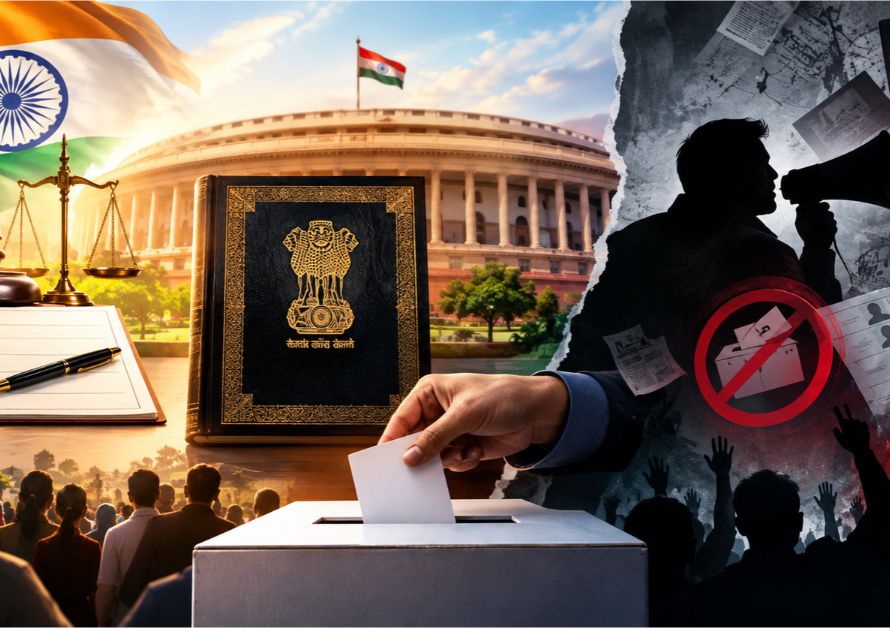
- Core Topic: A detailed factual and political analysis of the Election Commission of India’s Special Intensive Revision (SIR) drive, which purified the electoral rolls by removing 13 crore fake, deceased, shifted, and duplicate voter entries.
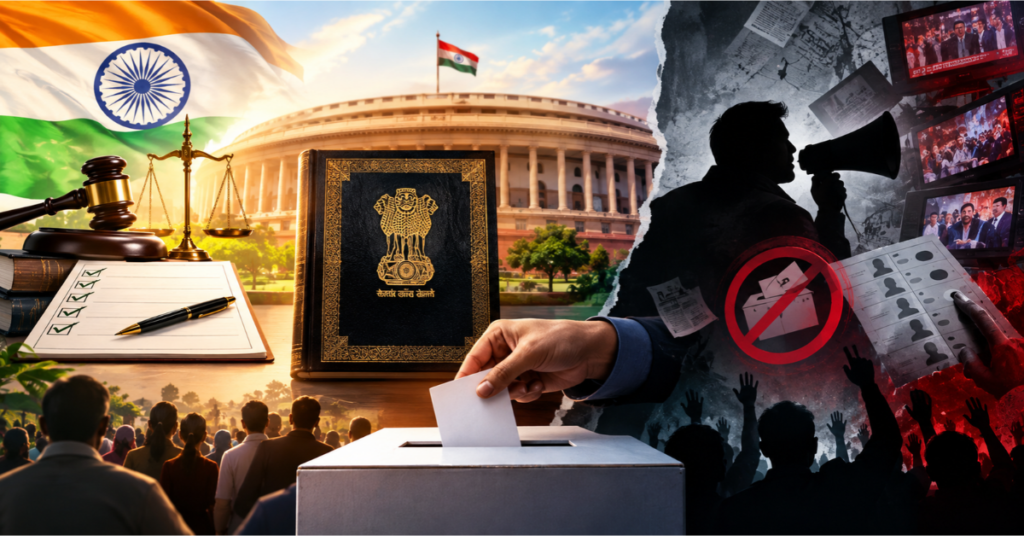
- Key Conclusion: The removal of 13 crore names is not “vote theft” (vote chori), but an essential administrative and constitutional measure to ensure clean, fair, and transparent elections.
- Political Perspective: The narrative spread by the Congress, its alliance (Thugbandhan), and the anti-national ecosystem is a desperate attempt to cover up 12 years of continuous electoral failures, hide their frustration as corrupt avenues and scams are shut down, and attack constitutional institutions to mislead the public while India progresses toward becoming a global superpower and Vishwaguru.
A Comprehensive Analysis of Electoral Roll Purification (SIR)
1. Introduction and the Core Controversy
The figures revealed during the Election Commission of India’s (ECI) Special Intensive Revision (SIR) have sparked a major political debate.
Summary
- Core Topic: A detailed factual and political analysis of the Election Commission of India’s Special Intensive Revision (SIR) drive, which purified the electoral rolls by removing 13 crore fake, deceased, shifted, and duplicate voter entries.
- Key Conclusion: The removal of 13 crore names is not “vote theft” (vote chori), but an essential administrative and constitutional measure to ensure clean, fair, and transparent elections.
- Political Perspective: The narrative spread by the Congress, its alliance (Thugbandhan), and the anti-national ecosystem is a desperate attempt to cover up 12 years of continuous electoral failures, hide their frustration as corrupt avenues and scams are shut down, and attack constitutional institutions to mislead the public while India progresses toward becoming a global superpower and Vishwaguru.
1. Introduction and the Core Controversy
The figures revealed during the Election Commission of India’s (ECI) Special Intensive Revision (SIR) have sparked a major political debate.
The opposition’s demand to immediately restore all 13 crore names carries dangerous real-world consequences:
- Proxy Voting in the Name of the Deceased: Restoring 2.8 crore deceased entries creates an avenue for fake votes. Since deceased individuals cannot vote, rogue elements can misuse their names to cast fraudulent votes.
- Misuse of Absentee Entries: Retaining 3 crore absentee names allows local political operatives or party agents to engage in proxy and bogus voting.
- Dual Enrollment and Fraudulent Voting: Leaving former addresses intact for 6.3 crore shifted voters and 1 crore duplicate entries enables illegal ‘one person, multiple votes’ electoral fraud.
- Distorting Election Outcomes: Many legislative and parliamentary seats in India are decided by narrow margins of a few hundred or thousand votes. The presence of fake names can easily alter the genuine democratic mandate.
4. Procedural Safeguards and Transparency
Claims of indiscriminate “vote cutting” are used to create public anxiety, ignoring the built-in procedural safeguards:
- Draft Stage Status: The 13 crore names were not arbitrarily deleted without recourse; they were flagged at the Draft Roll stage.
- Re-registration via Form-6: Any genuine and eligible voter whose name was incorrectly removed can easily re-enroll for free by submitting Form-6 online or offline.
- Political Party Involvement: Draft lists are shared with Booth Level Agents (BLAs) of all recognized political parties so they can independently verify removed entries.
5. Illegal Immigration, Security, and Judicial Perspectives
This purification drive is equally critical from a national security standpoint:
“The way illegal Bangladeshi immigration was checked in Bihar and West Bengal, this process must continue across Bharat.”
— Gyanesh Kumar (Hon’ble Chief Election Commissioner of India)
“Illegal immigration and fake voters exist. SIR by the EC is a normal and legal process.”
— Lokpal Singh (Former Judge, Uttarakhand High Court)
Reports have repeatedly highlighted illegal immigrants obtaining fake identity documents to get listed on voter rolls in border states. The SIR drive protects the democratic rights of genuine Indian citizens by removing these illegal and ineligible entries.
6. The True Face of the Opposition, Alliances, and Anti-National Ecosystem
The narrative built against this administrative cleanup under the guise of “saving democracy and the constitution” stems from specific political motives:
- Hiding 12 Years of Continuous Failures: Unable to accept a decade of electoral defeats, the opposition alliance and affiliated anti-national ecosystems routinely shift blame onto constitutional institutions like the ECI, EVMs, and the judiciary instead of taking responsibility for their own shortcomings.
Closure of Corrupt Networks and Scams: Transparency initiatives, digital verification, and SIR drives have shut down avenues for bogus voting,
- corruption, and systemic electoral fraud, exposing those who relied on flawed lists.
- Lack of Vision and Talent: Lacking a constructive agenda for nation-building or economic progress, these political entities resort to spreading misinformation and attacking constitutional bodies to maintain relevance.
- Undermining Institutional Integrity: Attacks on democratic institutions damage the nation’s foundational framework under the pretext of saving it.
7. Resurgent Bharat and the Resolve to Become ‘Vishwaguru’
While disruptive elements focus on obstruction, India continues its forward momentum toward national resurgence:
- Building Transparent Systems: Clean voter rolls and fair elections form the bedrock of a strong, secure, and democratic nation.
- Reclaiming 2000-Year-Old Historical Glory: India is not only becoming self-reliant economically and strategically, but is also reclaiming its ancient cultural and spiritual heritage, advancing toward its destiny as a global superpower and Vishwaguru.
- Nation-First Resolve: Patriotic citizens and informed society reject hollow political propaganda, uniting behind transparent governance, institutional integrity, and national progress.
8. Conclusion
- The voter roll purification under SIR is not “vote theft”; it is a necessary measure to safeguard democracy. The opposition must answer three straightforward questions:
- Is it acceptable to allow bogus votes in the name of deceased citizens?
- Should party agents be allowed to cast votes for voters who have been absent for years?
- Why is it wrong to eliminate duplicate entries for individuals registered in multiple locations?
Without rational answers to these questions, allegations of “vote theft” remain an excuse for political frustration. Indian democracy deserves a clean, verified, and transparent voter list—not one padded with duplicate, fake, and deceased names.
🇮🇳 Jai Bharat, Vandematram
Read our previous blogs 👉 Click here
Join us on Arattai 👉 Click here
👉Join Our Channels👈