Summary
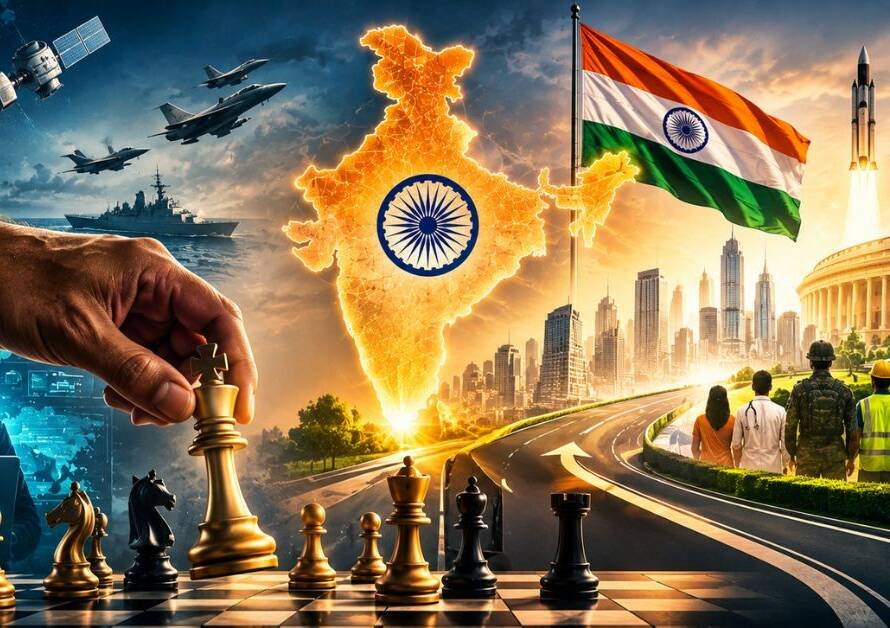
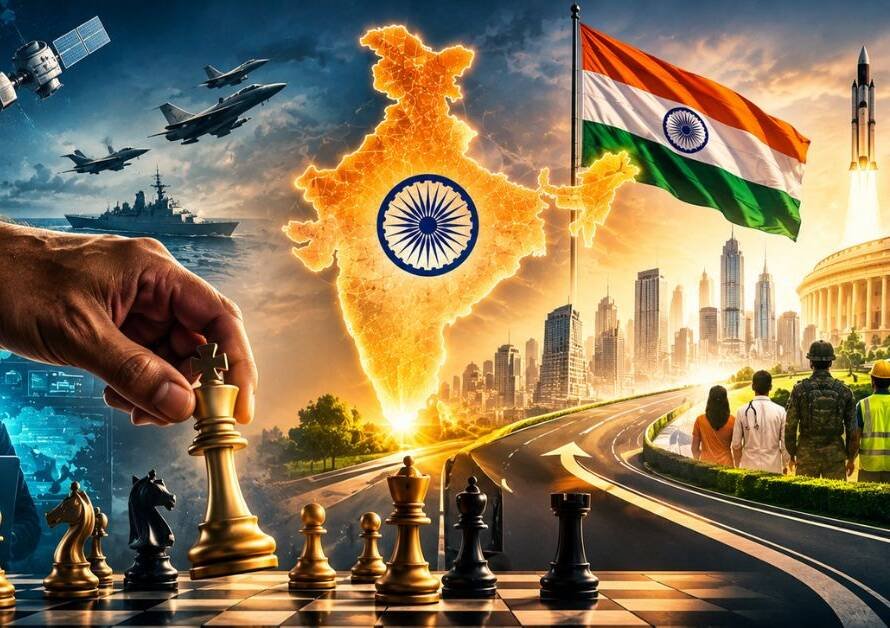
- This comprehensive political and administrative analysis highlights the historic shifts within the governance model of independent India. The report presents a profound evaluation of the mid-generation dynastic leadership and contemporary alliances, focusing specifically on their policy idealism and the resulting Execution Deficit.
- Furthermore, it analyzes the impact over the past 12 years (the Modi Era) of digitalization, Direct Benefit Transfer (DBT), and administrative transparency in cutting off the ‘financial oxygen supply’ of traditional political networks.
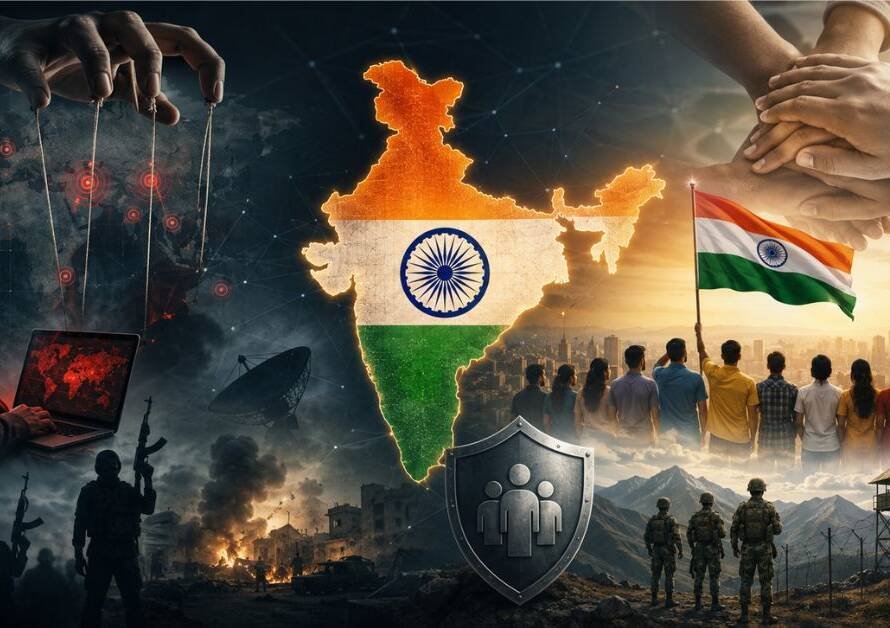
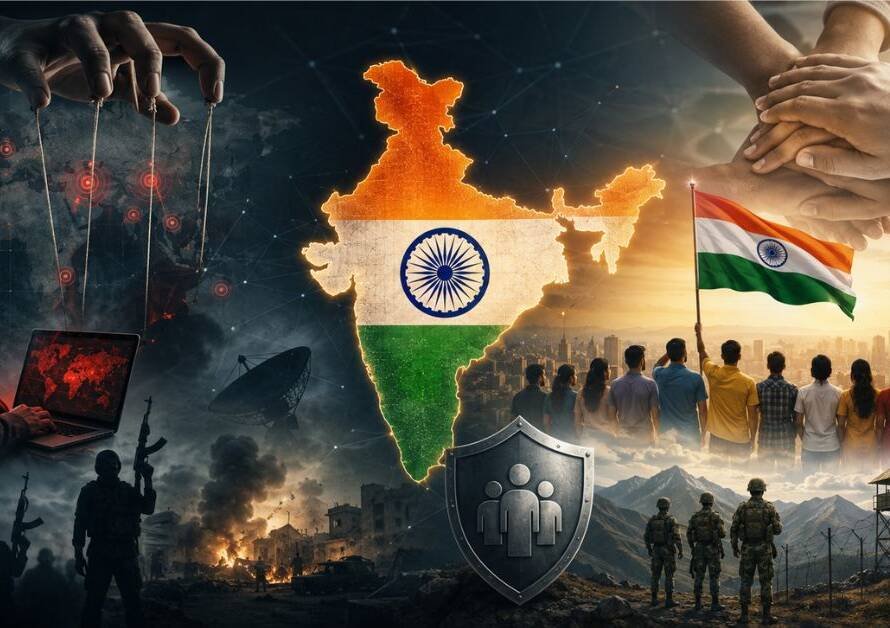
- This report also illustrates how hyperbolic narratives are being crafted in the name of democracy and the Constitution to mask past failures in law and order and internal security, even as an enlightened Indian electorate transitions firmly toward nationalist and progressive good governance.
A Detailed Analysis of the Fragmentation of the Traditional Thugbandhan Political Apparatus
I. Policy Idealism vs. Practical Implementation Crisis (The Execution Deficit)
The greatest challenge facing mid-generation leadership and various political coalitions (coalition politics) in contemporary politics is the profound imbalance between their plurality of ideas and their practical implementation. The core elements of this crisis include:
- Severe Lack of Practical Experience: Crafting populist schemes or framing grand slogans on ideological platforms is relatively simple; however, executing them on the ground in a nation as vast and diverse as India demands deep administrative experience. When leadership lacks direct experience in grassroots policymaking and execution, initiatives remain confined entirely to paper.
- Deficit in Understanding Bureaucracy and Logistics: An astute and seasoned politician understands exactly how to derive results from the nation’s administrative machinery and Bureaucracy in the national interest. Conversely, inexperienced leadership fails completely to anticipate ground-level bottlenecks, budgetary constraints, and logistical challenges.
- The Genesis of Impractical Policies: In the absence of experience, policies are formulated that sound appealing but prove impossible to implement on the actual ground. This deficiency ultimately breeds ‘Policy Paralysis’, which severely stalls the nation’s growth.
- Short-Sighted Horizon: Due to this lack of grassroots experience, these leaders frame policies with an exclusive eye on the next election or immediate political dividends, severely undermining long-term national interests.
II. Striking the Financial Oxygen: The Era of Digitalization and Administrative Transparency
Over the past 12 years, epoch-making technological reforms introduced to India’s administrative and economic architecture have fundamentally altered the operating mechanisms of traditional political systems:
- Dismantling Middlemen and Political Patronage Networks: Under legacy systems, financial resources deployed from the state exchequer for the general public frequently became ensnared across multiple layers of middlemen, brokers, and networks of Patronage-based Governance. The current Rule-based Systems have completely dismantled this parallel apparatus.
- The Revolutionary Impact of Direct Benefit Transfer (DBT): The technological matrix of Direct Benefit Transfer and the Jan Dhan-Aadhaar-Mobile (JAM Trinity) architecture has sealed financial Leakage entirely by delivering fiscal assistance directly into the bank accounts of beneficiaries.
- A Decisive Blow to the Financial Oxygen Supply: This transparency is recognized as a historic blow to the ‘financial oxygen’ powering stakeholders of the old order. With the cessation of illicit wealth flowing through intermediaries, the economic foundation of legacy systems has been completely paralyzed.
- Administrative Robustness: Digital frameworks have established real accountability, eliminating the arbitrary halting of files and eradicating the scope for generating illicit wealth through institutional corruption.
III. The Rise of the Joint Front and the Politics of Hyperbolic Narratives
As administrative reforms and technological transparency weakened the financial and organizational foundations of traditional political setups, the intensity and acrimony of responses within political discourse naturally escalated:
- A Shared Platform for Existential Survival: The convergence of various regional and central opposition parties onto a shared platform (coalition) over the past decade is not viewed as a product of ideological alignment; rather, it is seen as a joint effort to safeguard their eroding political relevance and existential survival.
- Hyperbolic Accusations Devoid of Evidence: This united front has maintained a relentless, multi-pronged narrative assault against the government for the last 12 years. Devoid of any concrete comparative data or empirical evidence, hyperbolic allegations concerning unemployment, rising prices, the failure of democracy, and the ‘murder of the Constitution’ are propagated daily.
- Attempts to Incite the Masses and Foster Chaos: The core objective behind this constant disinformation is to engineer artificial discontent among the citizenry, mobilize them onto the streets, and destabilize a democratically elected nationalist government through Civil Unrest in a desperate bid to restore the old order.
- Evidence-Free Discourse: These repeatedly echoed narratives lack any logical foundation or data matrix; they serve strictly as a calculated strategy to mislead the public.
IV. The Politicization of Internal Security and Legacy Administrative Habits
A major flaw of past governance models was their highly fragile, appeasement-driven, and strategically ambiguous approach to law and order and the nation’s internal security:
- Masking Failures under the Guise of Instability: In previous eras, various regions of the country were kept perpetually unstable through Maoism, insurgency, religious extremism, and foreign-funded demographic shifts (Conversions).
- A Protective Shield to Hide Exploitation: This internal instability and lax law enforcement were frequently utilized as a protective shield to obscure core governance failures, institutionalized corruption, and the plundering of national wealth, ensuring public attention remained diverted from primary issues.
- The Policy of Zero Tolerance: In the current era, India has adopted an unyielding and uncompromising policy of Zero Tolerance toward these internal and external threats. Tightened oversight on foreign funding (reforms in FCRA regulations), the empowerment of investigative agencies (such as the NIA), and stringent internal security laws have broken the backbone of networks that sought to weaken the country from within.
- Preserving Sovereignty: By sidelining appeasement and vote-bank politics to prioritize national integrity, a decisive end has been brought to the series of bomb blasts and internal riots that once plagued the nation.
V. The Paradigm Shift in Citizen Awareness
Opposition forces and their ideological cohorts have failed completely to comprehend that a massive qualitative shift has occurred in the understanding, aspirations, and priorities of the Indian voter:
- Direct Experience of Good Governance: The current generation has directly witnessed and experienced a governance framework over the past 12 years centered squarely on Nation-First principles, integrity, transparency, and rapid Infrastructure Development.
- Rejecting Hollow Promises: The citizenry no longer relies on hollow electoral manifestos, caste equations, or fear-inducing narratives; instead, they trust digital delivery and transparent policies.
- Chaos vs. Progressive Stability: The public has fully unmasked those groups that invoke democracy and the Constitution merely to resurrect the legacy system characterized by corruption and fragile security. Indian society will never again place its trust in forces that seek to drag the nation back down the path of chaos, plunder, and weakness.
- A Development-Oriented Mindset: Citizens now view development, national pride, and transparent governance as their fundamental right, which cannot be bartered away through archaic party politics.
VI. Global Uncertainty, Strategic Restraint, and Lessons in Crisis Management
In this modern era of global turmoil, international conflicts, and Hybrid Warfare, national leadership cannot be sustained by mere intellectual posturing; it requires Strategic Resolve and rigorous administrative experience:
- The Historic Lesson of COVID-19: History bears witness that when the nation confronted an exceptionally devastating and complex catastrophe like the COVID-19 pandemic, the government successfully steered the country through with minimal distress precisely due to the unprecedented discipline and collective Citizens’ Restraint.
- Global Conflict and the Imperative of Public Cooperation: Today’s conditions resemble a global economic war, impacting supply chains and economies across the globe. In the present scenario as well, if the citizens display the same sense of responsibility and restraint, we will successfully navigate this challenging global phase.
- Progressing Toward a Seamless Path: The government is deploying every possible policy measure, and with the full cooperation and strategic restraint of the public, this phase will pass peacefully and smoothly without culminating in any major catastrophe, hardship, or civic crisis.
- Maturity of Administrative Leadership: Taking the right decisions during times of crisis and winning public trust is the hallmark of a mature leadership, rescuing the nation from descending into the abyss of chaos.
The Triumph of Nation-First and Good Governance
- The current timeline of 2026 is a period for India not just to pursue economic advancement, but to keep its sovereignty completely inviolable. The long-term development and security of the nation can remain secure only in the hands of a leadership backed by rigorous administrative experience, one that thoroughly comprehends the complexities of the system, and for whom the national interest is paramount.
- In this golden era of economic reforms, digital sovereignty, and transparent good governance, reverting the nation toward a legacy, middleman-driven, appeasement-heavy, and unstable apparatus is entirely impossible.
“Administrative transparency and a Nation-First policy constitute the true cornerstone of modern India’s political reconstruction.”
🇮🇳 Jai Bharat, Vandematram 🇮🇳
Read our previous blogs 👉 Click here
Join us on Arattai 👉 Click here
👉Join Our Channels👈