Executive Summary
- This comprehensive policy analysis outlines a critical civilizational, administrative, and economic mandate: providing absolute legislative and social support to a nationalist, progressive government to accelerate long-delayed structural reforms.
- For decades following independence, a deeply entrenched anti-national and pseudo-secular ecosystem systematically weaponized minority communities as institutional vote-banks. This governance model fractured India’s social, cultural, and spiritual fabric.
- To appease specific voting blocs, grant disproportionate privileges, and relegate the majority Sanatani community to a legally second-class status within their own nation, the Indian Constitution was altered dozens of times. This legacy of policy paralysis, corruption, and systemic distortions ultimately reduced India to the ignominious status of a “Fragile Five” economy on the global stage.
- Establishing a true, egalitarian democracy, securing national sovereignty, and guaranteeing permanent economic prosperity requires these structural anomalies to be completely dismantled and reversed. There is no alternative path forward for a strong, secure, and prosperous Bharat.
The Case for Urgent Democratic Reforms
I. Dismantling the Anti-National Vote-Bank Ecosystem
The primary step toward stabilizing Indian politics and administration is to dismantle the entrenched vote-bank apparatus. The foundational legislative changes proposed in the manifesto are aimed directly at breaking the institutional mechanisms built by previous regimes to fragment society for electoral gains.
Abolishing the Waqf Board and Unifying Land Laws
- The Waqf Act of 1995 stands out as an unprecedented anomaly in the legislative history of independent India. It granted a autonomous, religious body extraordinary, non-judicial powers over land regulation, acquisition, and claims. Under this framework, the Waqf Board was empowered to declare any public, government, or private property as its own based solely on “belief.” Furthermore, aggrieved property owners were barred from seeking redress in standard civil courts, forcing them instead to approach specialized Waqf Tribunals.
- This parallel property governance is a direct violation of the right to equality guaranteed under the Indian Constitution. Stripping these disproportionate, identity-based privileges is vital to establish a singular land, revenue, and civil law standard. Ensuring that no parallel property administration exists based on religious identity is essential for national cohesion.
Dissolving the Minority Commission for Citizen-Centric Administration
- The Minority Commission was originally set up to institutionalize separate identity politics, giving constitutional and administrative legitimacy to artificial social divisions. Rather than fostering harmony, this body has functioned as a primary driver of social division, victimhood complexes, and policy appeasement.
- A true democracy demands a unified, citizen-centric administration where state rights, duties, and welfare benefits are governed uniformly. State-sponsored religious categorization must be replaced by policies based strictly on citizenship and economic eligibility. Dissolving this commission and transferring the protection of all citizens’ rights to standard human rights bodies and the judiciary ensures equal status for all.
Enforcing the Uniform Civil Code (UCC) Nationally
- The framers of the Indian Constitution explicitly directed the state to implement a Uniform Civil Code under Article 44 of the Directive Principles of State Policy. However, successive regimes delayed its implementation to preserve narrow electoral equations. Implementing a singular, secular code for marriage, divorce, maintenance, inheritance, and adoption fulfills this long-deferred constitutional promise.
- This fundamental reform ends the era of faith-based personal laws that compromised gender justice, fractured state unity, and empowered conservative, regressive leadership within specific voting blocs. Enforcing a nationwide UCC is a foundational requirement for building a modern, integrated, and egalitarian democracy.
II. Correcting Historical Constitutional Asymmetry
Post-independence policies implemented under the guise of secularism created a deep constitutional imbalance against the majority community. This discourse demands a comprehensive review of past amendments and statutes that systematically diluted the rights of the majority Sanatani community while embedding minority vetoes into the state apparatus.
Freeing Hindu Temples from State Control
- A major contradiction in India’s secular framework is that the state maintains direct financial and structural control over the sacred religious institutions, lands, and assets of the majority Hindu community. Through various state-level Hindu Religious and Charitable Endowments (HRCE) Acts, government boards manage the revenues and administrative decisions of prominent temples. Conversely, mosques, churches, and other religious institutions enjoy absolute autonomy over their resources.
- Funds generated by Hindu temples are frequently diverted by states to non-religious or secular administrative expenses, leaving Sanatani institutions underfunded for cultural and community welfare initiatives. Reversing this institutional discrimination ensures that the Sanatani community can independently manage its sacred heritage, institutions, and resources through independent, transparent boards composed of spiritual leaders, scholars, and professionals.
Standardizing Education and Reforming Parallel Ecosystems
- While Article 30 of the Constitution granted minorities the right to establish and administer educational institutions, the proliferation of state-funded religious institutions (Madrasas) created an unmonitored, parallel educational ecosystem. The traditional and religious curriculum in many of these institutions often lacks modern science, mathematics, technology, and analytical training, isolating student populations from the modern global economy.
- To integrate all children into a cohesive national framework and provide equal economic opportunities, the state must standardize education. State funding for purely religious education must be phased out, and a uniform, state-standardized Samman Shiksha (Equal Education) curriculum must be introduced across all primary and secondary institutions, emphasizing modern skills, scientific temper, and India’s authentic cultural history.
III. Securing Sovereignty and Demographics
A nation’s economic sovereignty, long-term stability, and developmental progress depend heavily on secure borders and demographic equilibrium. National security and internal stability are non-negotiable prerequisites for economic growth, requiring decisive action against systematic demographic disruptions.
Implementing CAA-NRC and Eliminating Illegal Migration
- A sovereign nation must maintain absolute control over its borders and resource distribution. The Citizenship Amendment Act (CAA) fulfills a civilizational obligation by granting sanctuary to persecuted religious minorities from neighboring states. Concurrently, the National Register of Citizens (NRC) is an essential sovereign tool designed to document legal residents and identify undocumented, illegal migrants.
- Massive illegal migration networks (including undocumented crossings from Bangladesh and Myanmar) pose a severe threat to internal security and have fundamentally altered regional demographics in strategic border zones. Legacy political administrations frequently legalized these illegal settlements to build reliable voter banks. Aggressively addressing illegal migration, digitizing national identification systems, and removing illegal infiltrators is critical to preserving state sovereignty and national resources.
Universal Population Control and Anti-Conversion Laws
- In a nation with finite natural and economic resources, unmonitored demographic shifts present a severe risk to long-term social peace and economic sustainability. Introducing a universal population policy applied equally to all citizens, without religious exemptions, is essential to ensure sustainable development.
- Coupled with strict legal deterrence against fraudulent, forced, or predatory conversions—including tactical marriages designed for religious conversion—these measures protect the core social fabric from strategic demographic expansion. Instituting strict national anti-conversion laws prevents organized entities from destabilizing localized social balances.
IV. Reversing the “Fragile Five” Legacy
The economic stagnation, policy paralysis, and rampant corruption that characterized the pre-2014 era were the direct consequences of a fragmented, appeasement-first model of governance. Previous administrations prioritized short-term political consolidation over the long-term structural health of the nation’s economy.
From Fragile Five to Global Powerhouse
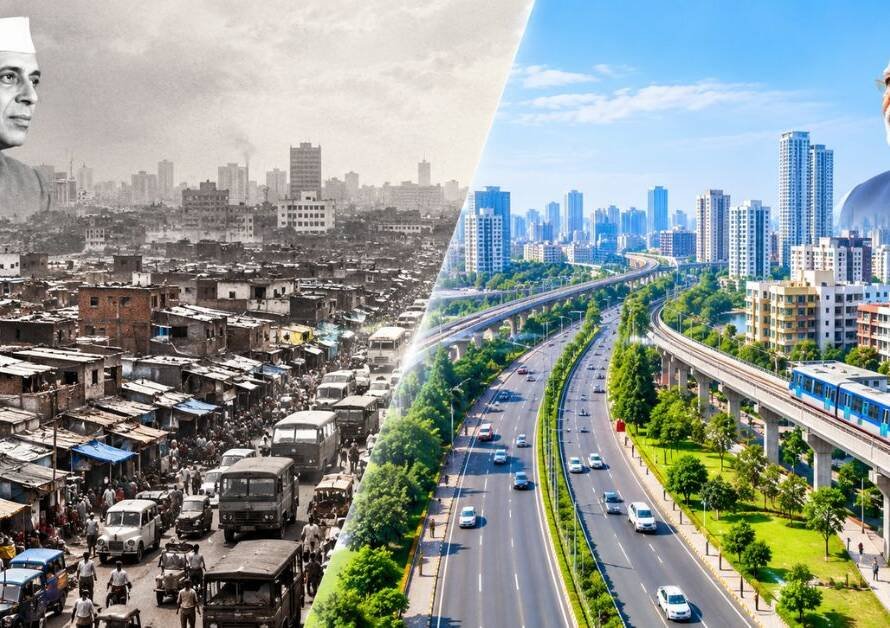
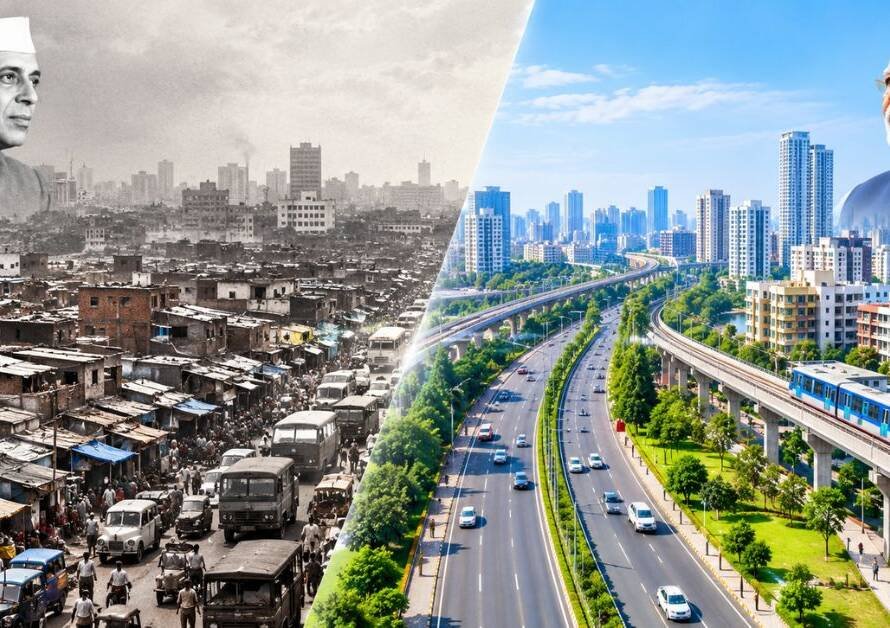
Fragmented governance inevitably compromises macroeconomic stability. Prior to 2014, India was categorized among the “Fragile Five” global economies, burdened by double-digit inflation, shrinking foreign exchange reserves, and a severe non-performing asset (NPA) crisis within the banking sector.
Transitioning the country away from this economic vulnerability required a shift toward national sovereignty, aggressive infrastructure investment, and financial integration. The implementation of mega-infrastructure projects, the Digital India framework, and a unified taxation structure via the Goods and Services Tax (GST) successfully converted India into the fastest-growing major economy in the world.
The Superpower Mandate (Mahashakti Bharat)
- Deep economic resilience, sovereign supply chains, and modern wealth creation cannot coexist with a fragile legal system choked by parallel civil codes, identity-driven institutional gridlock, and vetoes over state policy. To realize the mandate of a global superpower (Mahashakti Bharat), India’s internal legal structures and administrative frameworks must be completely modernized and aligned with core national interests.
V. Establishing True Democracy
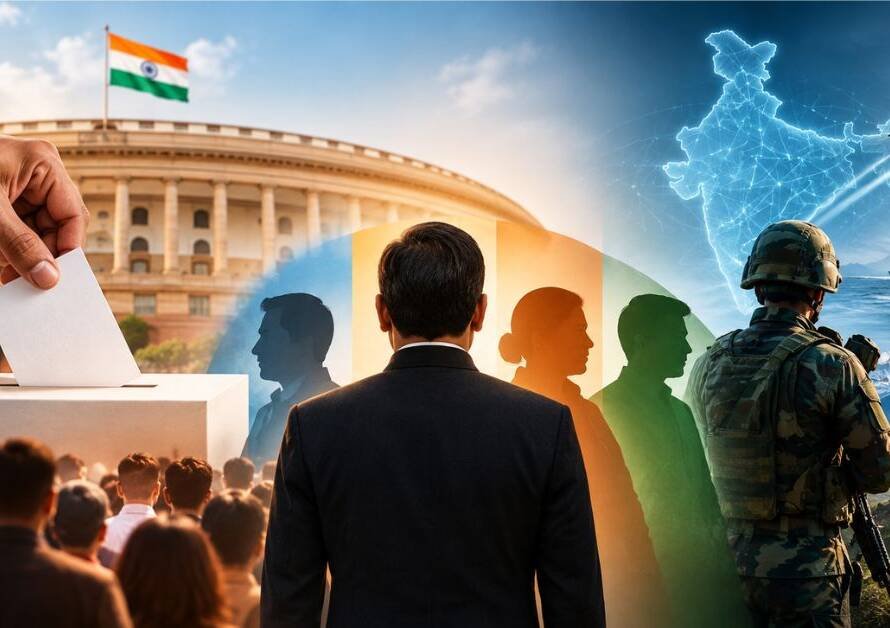
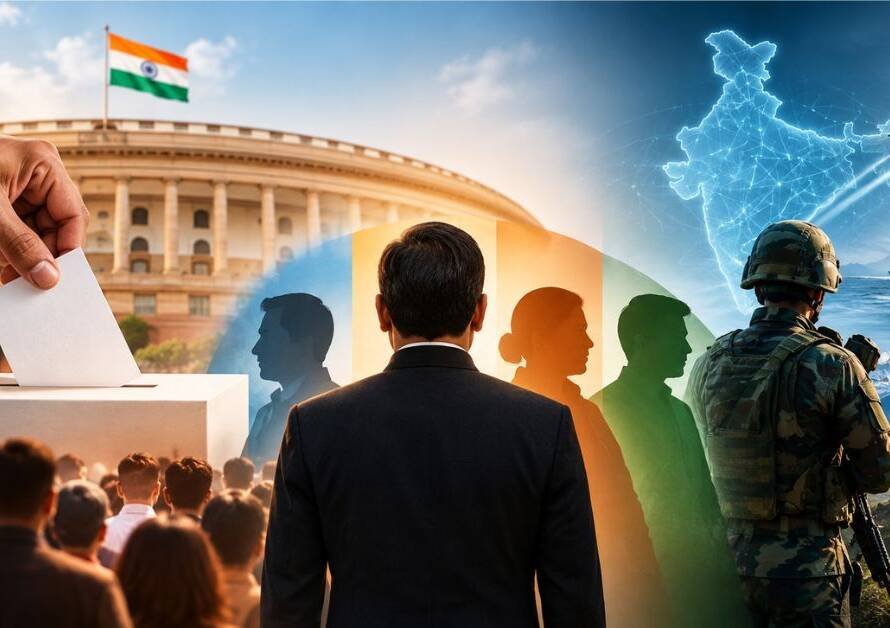
- Securing a decisive, historic legislative majority is not merely about political consolidation; it is the ultimate democratic tool required to execute profound structural rectifications. In a complex polity, comprehensive policy reforms cannot be enacted without a clear mandate capable of overriding institutional inertia and legacy distortions.
- To build a strong, prosperous, and secure Bharat, the historical amendments and statutes that institutionalized social division must be systematically reverted. Establishing a true, equal democracy—where the state treats every citizen identically without regard to identity, and where the rule of law is absolute—is the only viable path forward for the nation’s long-term resurgence.
🇮🇳 Jai Bharat, Vandematram 🇮🇳
Read our previous blogs 👉 Click here
Join us on Arattai 👉 Click here
👉Join Our Channels👈