Summary
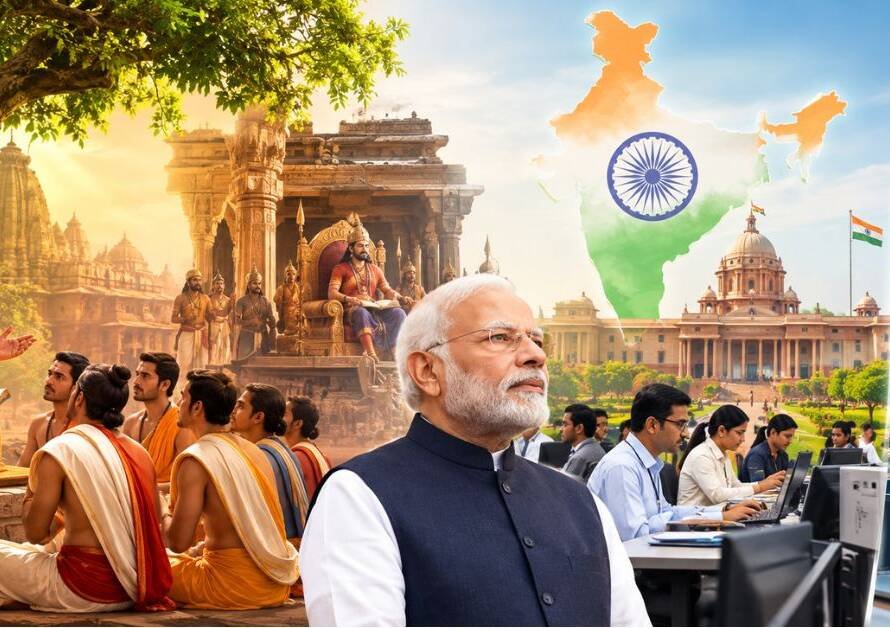
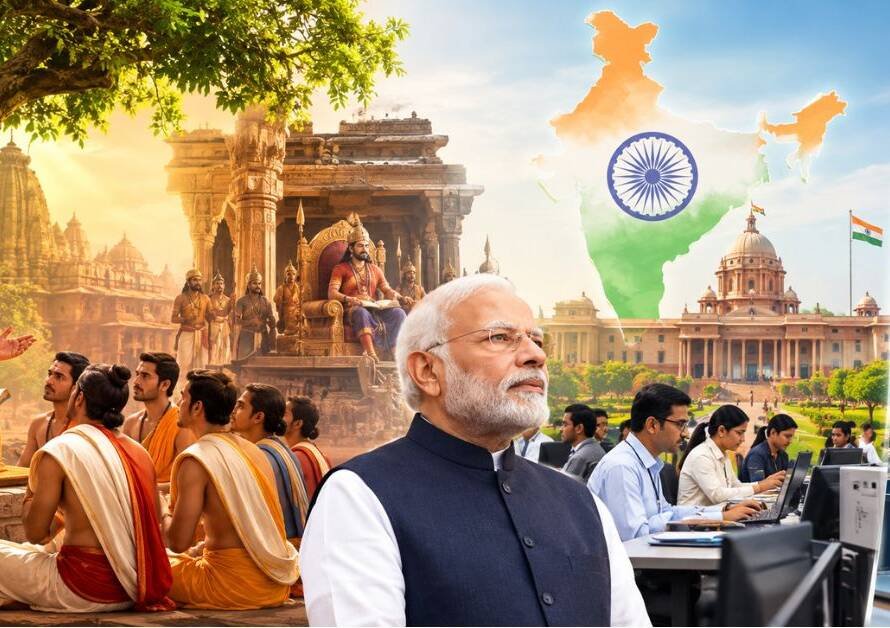
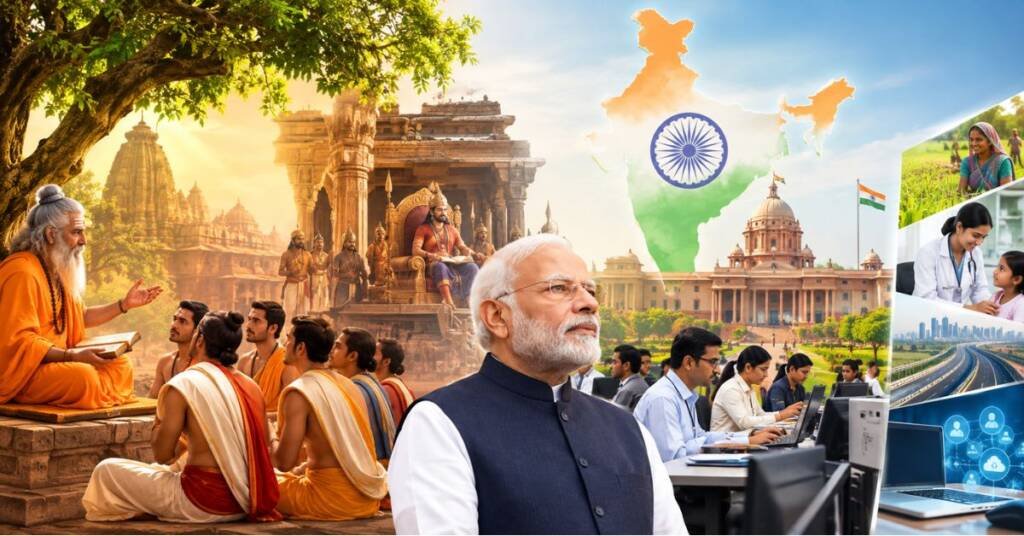
- The governance framework of the Narendra Modi-led administration represents a deliberate synthesis of Sanatana ethos with 21st-century statecraft. Frame-shifting the narrative of development from an imitation of Western paradigms to a self-aware civilizational rebirth, the doctrine rests on Virasat Bhi, Vikas Bhi—preserving deep cultural roots while building a technological, economic, and strategic power.
- State policy is reinterpreted not merely as administrative management, but as a moral responsibility to elevate Bharat into a self-reliant global leader (Vishwaguru), a unifying force in world affairs (Vishwamitra), and a resilient state capable of neutralizing internal and external security threats.
- Operating as a dual strategic model rooted in classical Indian thought, the state pairs the ethical, welfare-oriented doctrines of Ram Neeti and Vidhur Neeti for social unity and global diplomacy with the pragmatic security principles of Chanakya Neeti and Krishna Neeti to defend state sovereignty.
- By executing this comprehensive approach, the administration seeks to achieve domestic progress (Sabka Saath, Sabka Vikas), civilizational revival, and unyielding defense of national interests (Dharma Yuddha).
Sanatana Statecraft & Modi’s Governance Model
1. Sanatana Principles as the Architectural Basis of Domestic Governance
The administration’s domestic policy integrates core concepts of Sanatana Dharma into the daily mechanics of public administration, shifting statecraft from discretionary political patronage to ethical duty:
- Antyodaya & Universal Entitlements (Sabka Saath, Sabka Vikas)
- Derived from the Vedantic ideal of Sarve Bhavantu Sukhinah (may all be happy and free from suffering) and Vidhur Neeti’s emphasis on social fairness and justice, public welfare has been restructured to reach the most vulnerable directly.
- Rather than treating social assistance as discretionary handouts, the state treats basic dignities—piped water via the Jal Jeevan Mission, sanitation through Swachh Bharat, housing under PM Awas Yojana, and direct financial access—as fundamental entitlements.
- Leveraging Digital Public Infrastructure (including Jan Dhan accounts, mobile connectivity, and unified biometric authentication systems), direct benefit transfers bypass local corruption and political patronage, ensuring public resources reach citizens directly without leakage.
- Virasat Bhi, Vikas Bhi (Heritage Alongside Development)
- Rooted in the belief that national strength requires civilizational self-confidence, major infrastructure projects re-integrate heritage with economic growth.
- Religious and historical centers—such as the Kashi Vishwanath Corridor, the Shri Ram Janmabhoomi Temple in Ayodhya, the Mahakal Lok Corridor in Ujjain, and the Char Dham all-weather highway—have been rebuilt using modern engineering while preserving sacred traditions.
- These hubs have evolved into economic drivers for regional employment, art, and local micro-economies.
- Concurrently, initiatives like the Gyan Bharatam Mission leverage advanced technology to digitize and preserve ancient manuscripts, restoring indigenous knowledge systems.
- Kartavya Path (Duty-Centric Civic Ethos)
- In contrast to rights-exclusive governance models, the philosophy grounds civic life in Kartavya (moral duty), mirroring Vidhur Neeti.
- The symbolic renaming of Kingsway to Kartavya Path reflects a transition away from colonial-era administrative authority toward public service rooted in duty.
- Citizens are treated as active co-creators in national transformation, mobilized through mass campaigns for environmental conservation (LiFE – Lifestyle for Environment) and public health.
2. Structural Foundations of Superpower Capability & Strategic Realism
To back moral authority with material strength, the administration pairs domestic welfare with the realistic doctrines of Chanakya Neeti (statecraft, institutional deterrence, and cutting threat roots) and Krishna Neeti (moral clarity in combatting unrighteousness and enforcing Dharma).
- Economic Scale & Atmanirbharta (Swadeshi)
- Grounded in the traditional concept of local economic self-sufficiency (Swadeshi), the Atmanirbhar Bharat initiative aims to reduce critical foreign dependencies.
- Industrial policy through Production-Linked Incentive (PLI) schemes incentivizes domestic manufacturing in core industries—including semiconductors, defense equipment, advanced chemistry cells, and renewable energy.
- Aggressive capital expenditure in high-speed transport networks and digital public infrastructure (UPI, ONDC) secures technological and economic sovereignty.
- Proactive Defense Posture (Krishna Neeti)
- Moving away from passive defense or strategic hesitation, security policy operates on active deterrence and swift response against cross-border state-sponsored terrorism, as demonstrated by surgical strikes and targeted aerial counter-operations.
- Indigenous defense manufacturing—highlighted by platforms like INS Vikrant, indigenous fighter aircraft, and advanced missile systems—has shifted Bharat from a pure arms importer to an exporter of military technology to friendly nations.
- Neutralizing Internal & Extremist Threats (Chanakya Neeti)
- The state applies Kautilya’s four upayas (Sama, Dana, Bheda, Danda) against insurgencies, radical ideologies, and geopolitical subversion:
- Left-Wing Extremism (Naxalism): Development and infrastructure rollout (Dana) in remote districts remove the governance vacuum, while security grids (Danda) systematically dismantle armed cadres. Dialogue and rehabilitation (Sama) are extended to those who surrender, alongside legal action against armed insurgencies and urban support structures.
- Financial Disruption (Artha-Choking): Following Kautilya’s principle of neutralizing threats at their financial source, specialized agencies focus on dismantling terror-financing channels, hawala routes, and radical organizational networks.
- Constitutional Integration: The abrogation of temporary special provisions (such as Article 370) in Jammu & Kashmir removed legal ambiguity that enabled regional separatism, integrating the territory fully into the national framework while directing developmental capital into the region.
3. Position as Vishwaguru, Vishwamitra, and Strategic Autonomy
The administration projects Sanatana values into foreign policy by presenting Bharat not as a traditional, hegemony-seeking power, but as a constructive, stabilizing force that balances moral leadership with hard national interest.
- Vasudhaiva Kutumbakam (The World is One Family)
- Formed the central framework during India’s G20 Presidency, directing global focus toward debt vulnerabilities, climate adaptation finance, and digital access for developing nations.
- Successfully championed the permanent inclusion of the African Union into the G20, amplifying the voice of the Global South on the world stage.
- First-Responder Diplomacy (Vishwamitra)
- Through global vaccine distribution initiatives during the COVID-19 pandemic and rapid Humanitarian Assistance and Disaster Relief (HADR) operations during international crises (such as Operation Dost and Operation Kaveri), Bharat demonstrates global responsibility through service rather than coercion.
- Strategic Autonomy (Vijigeesu)
- Guided by Chanakya’s assertion that a state must prioritize its own national interest (Swayam Siddhi), Bharat avoids aligning strictly with Western or Eastern military blocs.
- The administration maintains an independent, multipolar foreign policy—securing energy supplies, expanding bilateral trade, and asserting national interest despite external diplomatic pressures.
- Soft Power & Knowledge Export
- The global institutionalization of the International Day of Yoga, the promotion of Ayurveda and traditional health systems, and sustainable lifestyle practices (LiFE) serve as civilizational answers to contemporary health, ecological, and geopolitical crises.
4. The Civilizational Responsibility: Civic Vigilance Against Subversion
While the government continues to execute its duties with exceptional efficiency on administrative, defense, and economic fronts, a crucial element in sustaining this momentum lies in the active support of a vigilant, patriotic, and Sanatani civil society at the ground level:
- Countering Internal Subversion and Foreign Interests
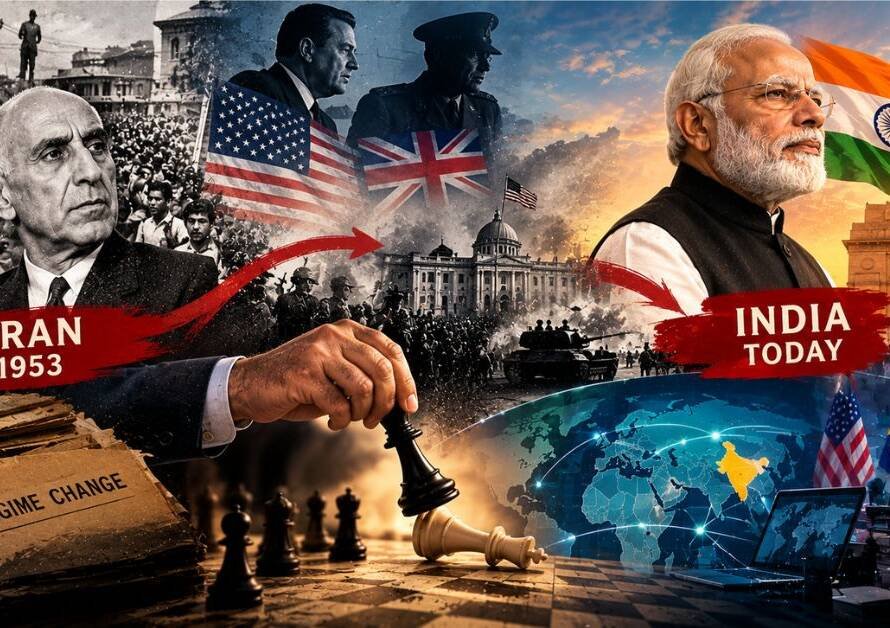
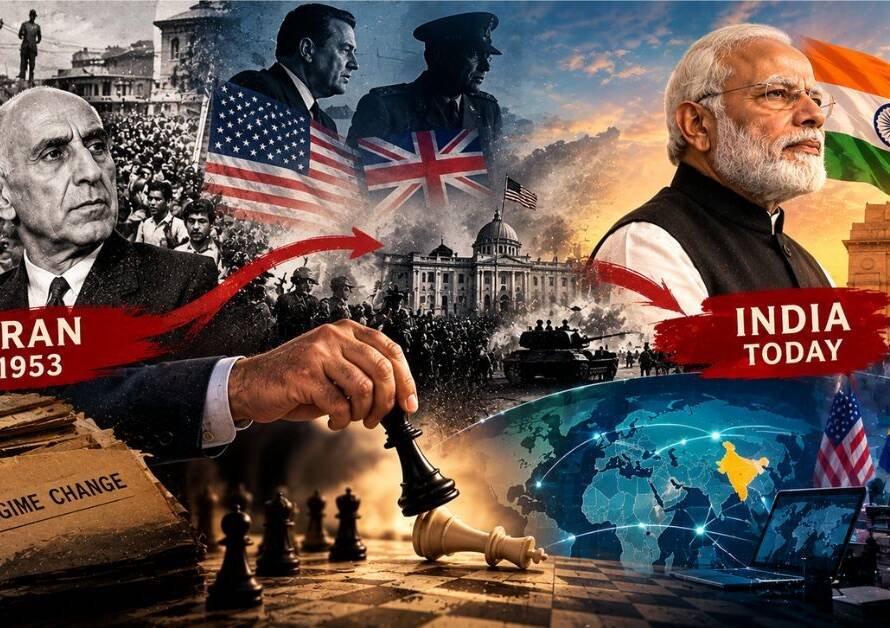
- Bharat’s rapid progress over the past decade has challenged global hegemony, prompting foreign powers and global entities to feel threatened by the nation’s emergence as a dominant geopolitical force.
- To derail this ascent, external powers leverage domestic traitors, opposition networks, and anti-national ecosystems to trigger internal instability and disrupt national cohesion from within.
- Defeating Divide-and-Rule Tactics
- Nefarious elements actively manufacture artificial fault lines to divide society along the lines of caste, sub-caste, community, language, and geography.
- These orchestrated campaigns aim to induce social unrest, mislead the youth, and weaken the collective resolve of the citizenry.
- A Call for Ground-Level Vigilance and Strategic Boycott
- Patriotic citizens must serve as an unwavering shield, standing firmly behind the administration to safeguard national security and the nation’s social fabric.
- Citizens must exercise extreme caution, identify subversives within digital and local networks, and consciously reject their evil designs.
- A decisive, multi-dimensional response—encompassing the social, political, and economic boycott of anti-national elements—is essential to preserve internal harmony, neutralize domestic threats, and secure Bharat’s path toward becoming a global superpower.
🇮🇳Jai Bharat, Vandematram 🇮🇳
Read our previous blogs 👉 Click here
Join us on Arattai 👉 Click here
👉Join Our Channels👈