Summary:
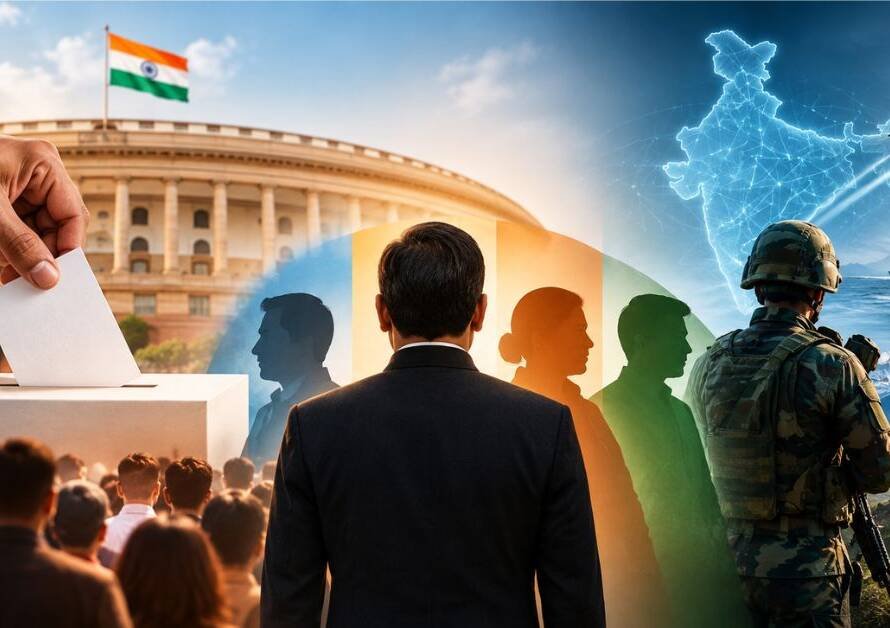
- This comprehensive narrative synthesizes three critical dimensions of modern India’s journey: the immense sacrifice of grassroots workers in West Bengal, the systematic dismantling of divisive institutional frameworks like the Sachar Committee, and Bharat’s emergence as a fiercely independent global power.
- It argues that India’s rise is not a political “gift” but a hard-earned victory over internal corruption and external pressure.
- By prioritizing National Security and Sanatana Culture, the current leadership has transitioned India from a “compliant satellite” of the West to a “Global Pole” that commands caution and respect from world superpowers.
The Rise of Civilizational Consciousness Through the Sacrifice of Martyrs
1. The Crucible of Bengal: A Victory Written in Blood
The narrative that the political shift in West Bengal was served on a platter by the Election Commission or Central forces is a malicious lie. The “Lotus” in Bengal has bloomed not through the ballot alone, but through the courage of those who faced the bayonet.
- The Price of a Vote: Between 2011 and 2026, the movement in Bengal was sustained by ordinary citizens who paid for their political choice with their lives. Hundreds of BJP workers were lynched, hung from trees, or blown up by crude bombs. In the villages of Birbhum and Cooch Behar, the “crime” of voting for a different ideology led to the systematic burning of thousands of homes.
- Weaponizing Violence: Political terror was not limited to physical murder; it included the horrific use of sexual violence as a tool to instill fear and the social boycott of families, cutting off their access to water, electricity, and employment.
- The Unbreakable Spirit: The true strength of this movement lies in the families who remained in relief camps for years, refusing to bow. When a booth president is murdered in the morning and his son sits as the polling agent in the afternoon, it is not “EVM magic”—it is civilizational grit.
- A 15-Year Tapestry: This victory is the culmination of a decade and a half of relentless struggle—from a single seat in 2011 to the absolute mandate of 2026. Every percentage of vote share represents a drop of sweat and blood from a worker who refused to let the “Anti-National Ecosystem” win.
2. Dismantling the Sachar Conspiracy: Preventing a Second Partition
While workers fought on the ground, a different battle was being fought in the corridors of power against a “Constitutional Coup” attempted through the Sachar Committee (2005).
- Institutionalized Division: The Sachar Report was not a development document; it was a blueprint for a “State within a State.” By suggesting religious quotas in the IAS, IPS, and Judiciary, the previous regime sought to erode the meritocratic foundation of India.
- The “First Claim” Fallacy: The ideology that a specific community has the “first claim on resources” was a direct assault on the principle of equality. It was a strategy of “Institutionalized Appeasement” designed to create a permanent dependency and a separate legal-social silo for a vote bank.
- Protection of the Republic: By rejecting these divisive recommendations—such as double voting rights or proportional representation based on religion—the current leadership prevented the internal fragmentation of India. The focus was shifted back to Sabka Saath, Sabka Vikas, ensuring that poverty, not religion, became the metric for welfare.
- Ending the Shadow of 1947: The dismantling of this ecosystem was essential to stop the revival of the “Two-Nation Theory” through administrative means. It ensured that India remains “One Nation, One Law, One People.”
3. Breaking the Washington Script: The Rise of Strategic Autonomy
The internal strengthening of India has directly fueled its external assertiveness. The world no longer sees India as a “swing state” that can be bullied, but as a sovereign powerhouse.
- The Failure of Threats: America and the West have realized that the era of “threatening” India is over. The “Tariff Wars” and attempts to use human rights as a geopolitical weapon have failed. India’s refusal to back down on its energy needs or defense ties (despite Western pressure) has forced global powers to deal with us with unprecedented caution.
- The End of the Pakistan “Balancer”: For 70 years, the West used Pakistan to keep India “in check.” Today, India has decimated Pakistan’s relevance. By neutralizing the “Pakistan Tool,” India has forced the West to engage with Delhi directly, without any regional leverage.
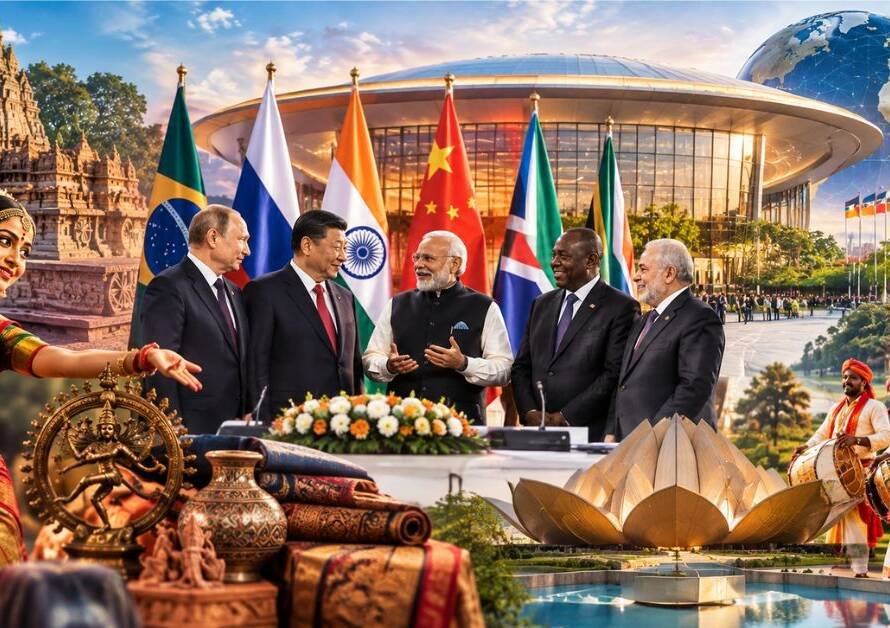
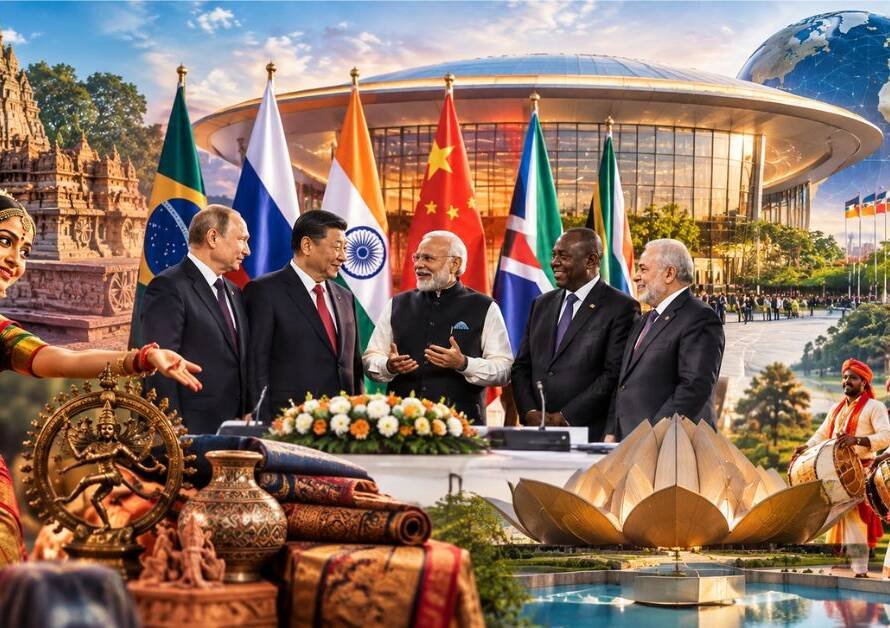
- National Interest Over “Camp Politics”: India’s diplomacy is now a masterclass in balance. We hold secret talks with China for border stability, maintain deep ties with Russia for energy and defense, and partner with the US for technology—all without seeking “approval” from Washington.
- Middle East and Beyond: The West’s own failures in the Middle East have highlighted India’s role as a stable, reliable partner. India is no longer an “extra” in the global movie; it is the director of its own strategic script.
4. The “Anti-National Ecosystem” in Terminal Collapse
The loudest outcries about “Democracy in Danger” are coming from those whose illegal financial pipelines have been permanently severed.
- The Drying of the Swamp: For decades, a specific ecosystem of politicians, middlemen, and “intellectuals” thrived on scams, loot, and institutionalized corruption. The implementation of Direct Benefit Transfer (DBT) and digital transparency has dried up their sources of “black income.”
- Desperation and Mirages: Fragmented and leaderless, the opposition is running through a political desert. They are chasing the “mirage” of a comeback while being led by dozens of self-proclaimed PM candidates, each sabotaging the other.
- The Death of Old Narratives: Tactics like “Chowkidar Chor Hai,” “EVM Fraud,” or “Caste Wars” have all reached their expiration date. The Indian public has seen through the drama and has firmly rejected the “Toolkit” politics that seeks to malign India on international platforms.
- Desperate Cries: Their constant “barking” at the current leadership is the noise of a dying system that knows it can no longer manipulate the masses through fear or false narratives.
5. Protecting the Country and Sanatana Culture: The Global Anchor
At the heart of this entire movement is the realization that the survival of the Country and Sanatana Culture is the only hope for a world on the brink of nuclear and social annihilation.
- Sanatana as a Stabilizer: In a world fractured by expansionist ideologies, the Sanatana philosophy of Vasudhaiva Kutumbakam (The World is One Family) offers the only viable path for coexistence. It is not an aggressive dogma but a civilizational anchor.
- The Duty to Protect: Protecting this culture is a duty toward humanity. A strong, Hindu-majority India is the “spiritual lung” of the world, providing a blueprint for peace that is rooted in duty (Dharma) rather than just rights.
- The Victory of Resolve: The shift in Bengal, the rejection of Sachar, and the defiance of Western scripts are all part of the same victory—the victory of Sovereign Bharat.
- The Path Ahead: We will not stop. We will not bow. Whether the world accepts India’s rise or burns with envy, Bharat will continue to dictate its own destiny, rooted in its ancient roots and looking toward a “Viksit” (Developed) future.
The Final Word:
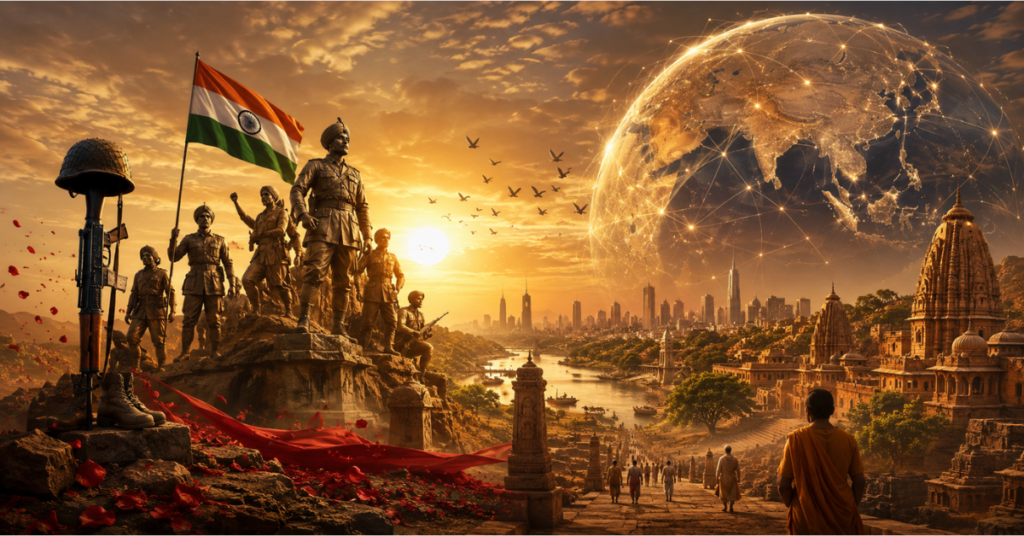
- The New India has risen from the pyres of its martyrs and the wisdom of its sages.
- We are no longer the “toy” of any superpower or the “victim” of internal scammers.
- We are a civilization that has finally found its voice.
🇮🇳 Jai Bharat, Vandematram 🇮🇳
Read our previous blogs 👉 Click here
Join us on Arattai 👉 Click here
👉Join Our Channels👈