Summary:
- This narrative analyzes the role of political authority in preserving civilization and faith (Dharma).
- It outlines how Indian culture flourished under protective rulers like the Rajputs and Marathas but suffered under hostile foreign occupations and opportunistic coalitions.
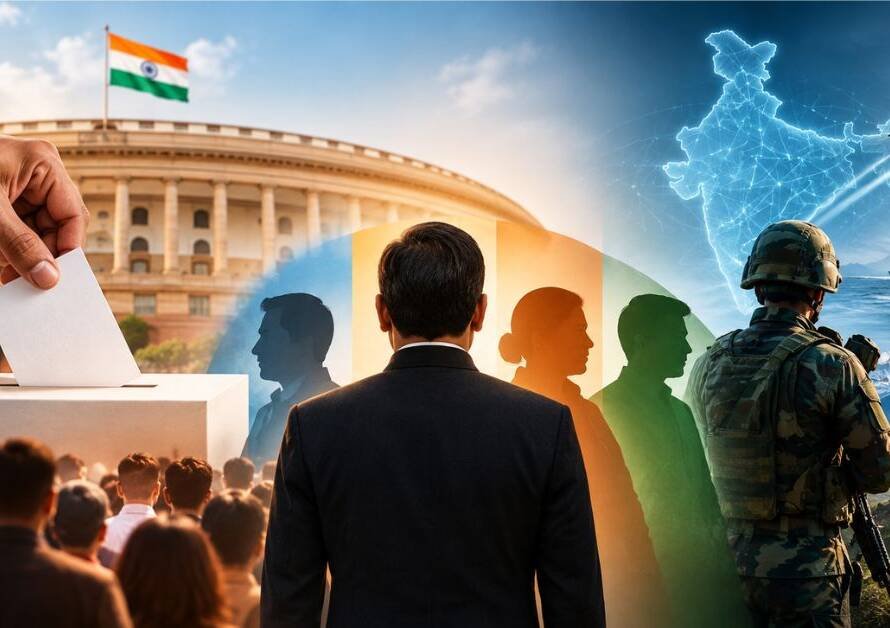
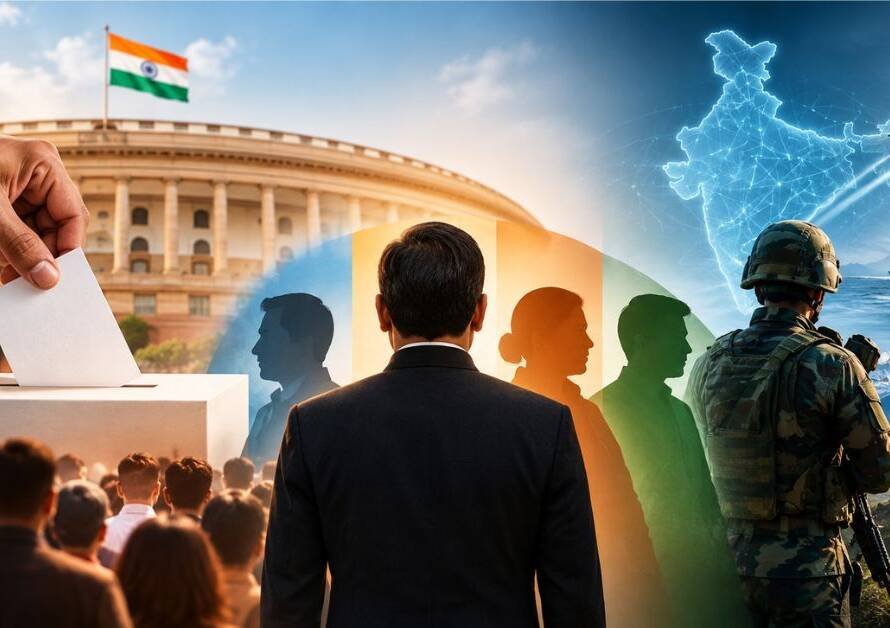
- Drawing upon the examples of Lahore in 1947, Kashmir in 1990, and India’s post-2014 economic and military progress, this text demonstrates why a strong, nationalist, and unified nation-state is vital for safeguarding a society and its heritage.
- Website:https://www.saveindia108.in
- Email: info@saveindia108.com
- Old Blogs: https://saveindia108.in/our-blog/
- WhatsApp: https://tinyurl.com/4brywess
- Arattai: https://tinyurl.com/mrhvj9vs
- Telegram: https://t.me/+T2nsHyG7NA83Yzdl
🏛️ The Reality of Leadership: Dharmic Protection vs. Hostile Rule
The greatest lesson of Indian history is that the survival of cultural identity depends entirely on the character of political power. A society’s heritage cannot survive in a vacuum; it requires a political framework committed to its defense.
Historical Sovereignty and the Golden Age
- The Protective Shield: Historically, India’s culture prospered most when the land was governed by explicitly protective and nation-first rulers.
- Valour of the Rajputs: The Rajput clans of Rajasthan fought valiantly against invaders to safeguard their homeland, sacred shrines, and cultural fabric.
- Rise of the Maratha Empire: Under the visionary leadership of Chhatrapati Shivaji Maharaj, the Maratha Empire established a formidable defense of native traditions and self-respect.
- Civilizational Consciousness: These warriors did not fight merely to conquer territory or collect revenue; they sacrificed their lives to keep the core character of their civilization alive.
- Institutional Revival: Their reigns saw the reconstruction of temples destroyed by foreign invaders, the revival of spiritual traditions, and the patronage of indigenous knowledge systems.
The Contrast of Foreign Subjugation
- Hostile Regimes: Conversely, whenever the nation fell under the control of indifferent or hostile external powers, the land and its citizens suffered immense devastation.
- Tyranny of the Mughal Era: The Mughal period witnessed widespread temple destruction, forced conversions, and the economic and social humiliation of the majority community through oppressive religious taxes like Jizya.
- Colonial Subversion: Following them, British colonial rulers implemented a more modern, subtle, yet equally destructive strategy.
- Economic Demolition: The British systematically dismantled India’s self-reliant rural economy and prosperous indigenous industries through calculated policies.
- Ideological Slavery: They targeted the traditional Gurukul education system to instill a deep, generational inferiority complex within the society regarding its own language and culture.
🛑 Post-Independence Vulnerabilities: Political Compromise and Appeasement
Unfortunately, the threat to civilizational survival did not end with the departure of the British in 1947. For decades, India’s political leadership continued to display severe negligence in protecting its core culture due to short-sighted electoral interests.
Appeasement and Political Paralysis
- Opportunistic Coalitions: For a long time after independence, fragmented political coalitions—often termed opportunistic alliances—diverted state policies away from national interests.
- Vote-Bank Engineering: Governance frequently operated under the pressure of keeping the majority divided while executing targeted minority appeasement.
- Distortion of History: The sacrifices of the nation’s true heroes were erased from textbooks, while invaders were glorified so that society would forget its roots.
- Assault on Identity: This administrative approach pushed the country’s foundational cultural identity to the margins, viewing it with institutional disdain.
Impacts on National Security and Social Fabric
- Weakened Resolve: A weak and directionless political will directly compromised India’s national security, keeping borders porous and internal security fragile.
- A Divided Society: The majority community was deliberately fractured along caste and regional lines, keeping them defensive and vulnerable within their own country.
- Institutional Neglect: State machinery was frequently used to control and regulate native religious traditions, while turning a blind eye to radical expansionism.
🗺️ The Ultimate Consequence: The Historical Tragedy of Lahore (1947)
The shift of power from a protective leadership to an opportunistic or hostile regime yields consequences written not in theory, but in the blood of partition.
The Collapse of the Illusion of Prosperity
Abrupt Power Shift: On August 14, 1947, the sudden change of political leadership in the newly created territory of Pakistan proved how quickly a prosperous society can turn into refugees.
- The Futility of Wealth: In grand cities like Lahore, Karachi, Peshawar, and Multan, Hindu and Sikh communities owned most of the businesses, factories, and palatial mansions.
- The Illusion of Economic Dominance: They drove the entire economy of Punjab and falsely believed their financial contributions would guarantee their safety under any future regime.
- Overnight Destruction: The moment a hostile state apparatus came to power, their decades of accumulated financial strength became entirely meaningless.
- Massacre and Displacement: As the state’s commitment to security vanished, their properties were seized, temples were destroyed, and millions were killed or forced to flee with nothing but the clothes on their backs.
The Erasure of Sacred Geography
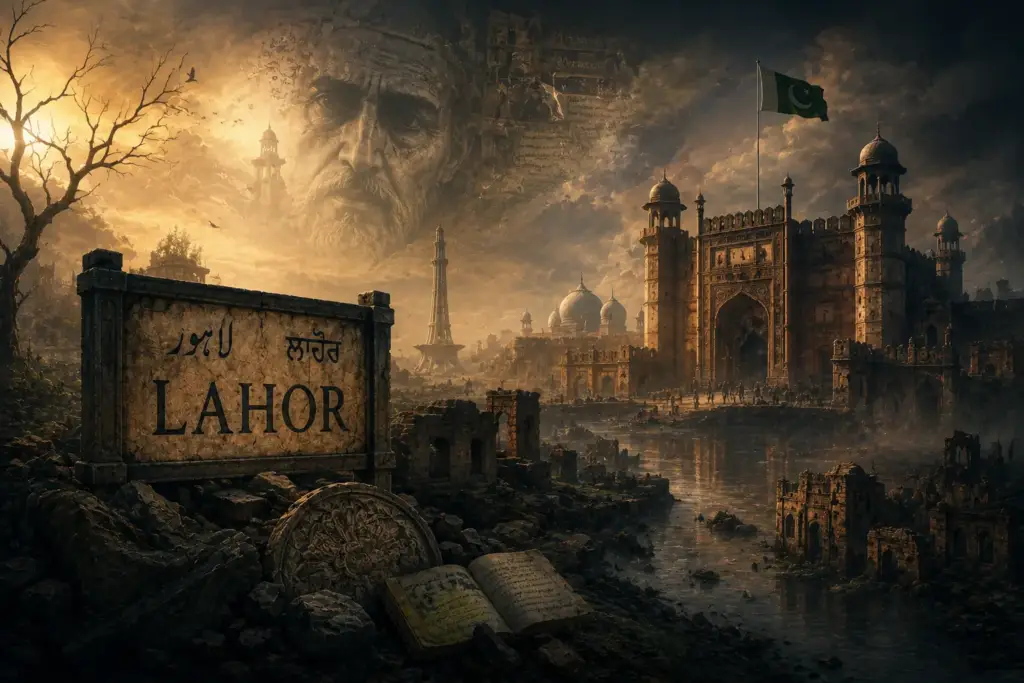
- From Lavapuri to Lahore: Lahore, originally founded as Lavapuri by Lava, the son of Bhagwan Shri Ram, had its ancient identity systematically erased.
- End of a Heritage: The city that once served as the grand capital of Maharaja Ranjit Singh’s empire was entirely stripped of its foundational history.
- Structural Devastation: Thousands of historical temples and Gurudwaras were converted into government offices, schools, and shops, or left to decay in order to permanently alter historical memory.
💔 The Forgotten Victims: The Vulnerable Societies Left Behind
While affluent merchants and elite classes possessed the resources to escape the violence of 1947, the most horrific aspect of the tragedy was borne by the weakest segments of society who could not move.
The Trap of Institutional Slavery
- The Stranded and Helpless: The poorest sections of Hindu society—specifically the Valmiki, Meghwar, and Bhil communities—were stranded without any means of escape.
- Restrictions on Flight: They lacked the financial capital to leave, and the new Pakistani regime actively barred them from exiting.
- Forced Labor Policy: The hostile state required cheap manual labor to maintain municipal sanitation systems, essentially holding them back as state property.
Generational and Demographic Destruction
- Absence of Protection: Left behind without social security, spiritual leadership, or community cohesion, these vulnerable groups were completely isolated.
- Institutional Atrocities: Over the ensuing decades, this remaining society faced systematic institutional pressures and forced conversions.
- Assaults on Women: The forced abduction and marriage of young minority women became a calculated tool of demographic warfare.
🏔️ A Modern Parallel: The Institutional Failure in Kashmir (1990)
Believing that the horrors of 1947 are confined to distant history is a dangerous form of ideological blindness. The events of 1990 in the Kashmir Valley proved that modern state mechanisms can fail entirely without the political will to act.
The Helplessness of the Administrative Apparatus
- Failure of Paper Security: In 1990, India was a mature, sovereign republic with a robust constitution, an independent judiciary, and one of the largest standing armies in the world.
- Internal Paralysis: Despite this formidable institutional framework, when targeted radical terrorism peaked in the Valley, local administrative and political will collapsed from within.
- The Reign of Terror: Threats broadcast from mosque loudspeakers combined with hit-lists pinned to doors completely paralyzed law enforcement.
The Heavy Price of Political Vacuity
- Exile Within One’s Own Country: Within a few weeks, nearly a quarter-million Kashmiri Hindus were forced to abandon their ancient, ancestral homeland.
- Ineffective Laws: Despite its tanks, courts, and constitutional clauses, the state apparatus failed to provide security to its indigenous people inside their own homes.
- The Critical Need for Resolve: This tragedy made it undeniable that paper laws and weaponry are useless without a firm political will to enforce them. Pakistan and Kashmir stand as twin living examples of this reality.
📈 The Great Turnaround: Post-2014 National and Economic Revival
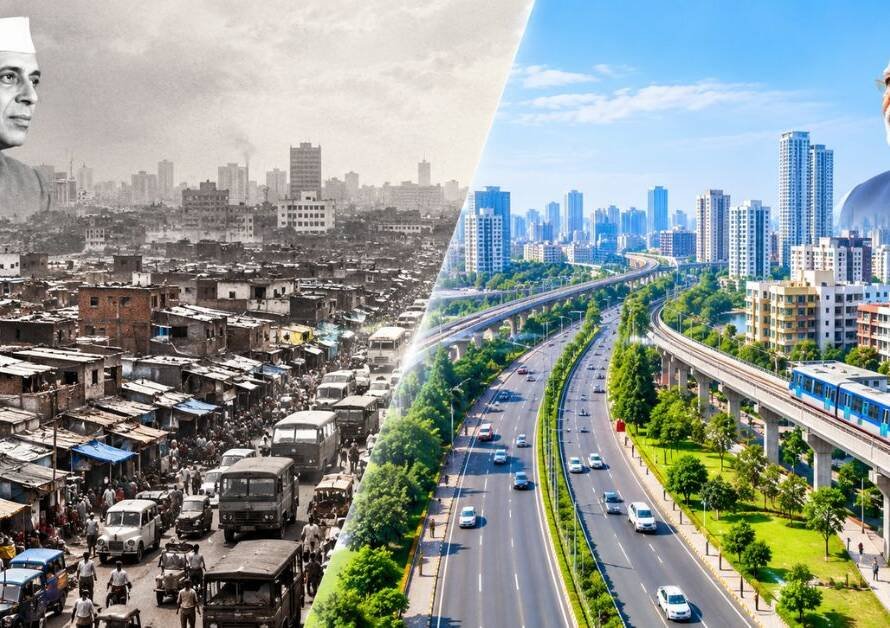
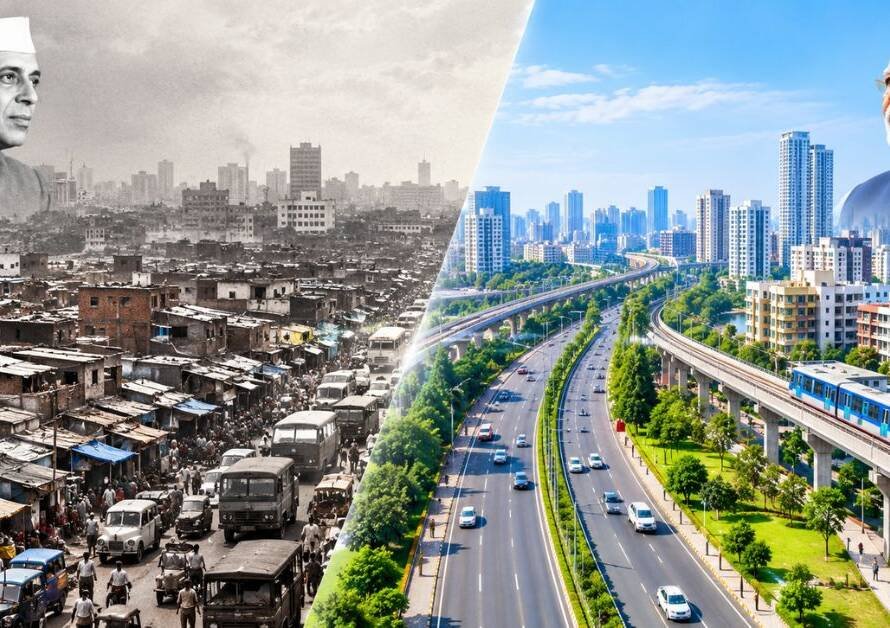
The period leading up to 2014 marked a historic low in India’s institutional strength, where the country’s economy and its cultural identity declined simultaneously.
Emerging from the “Fragile Five”
- Economic Vulnerability: Prior to 2014, burdened by weak and corruption-ridden coalition governance, India was globally categorized among the “Fragile Five” economies.
- Policy Paralysis and Terrorism: The nation suffered from policy paralysis and internal scandals, while cross-border proxy terrorism struck major Indian cities with impunity.
Stepping Forward as a Global Power
- Ideological Shift: The political transition of 2014 established a clear, nationalist, and ideologically resilient administration led by Prime Minister Narendra Modi.
- The Dual Mandate: This governance model recognized that economic capability and civilizational revival go hand in hand; economic growth without a cultural foundation is unsustainable.
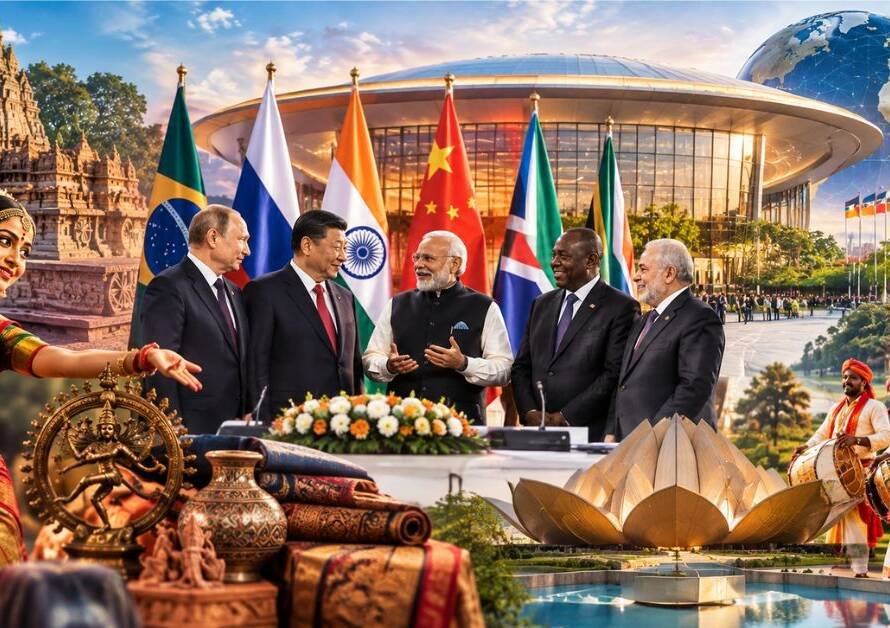
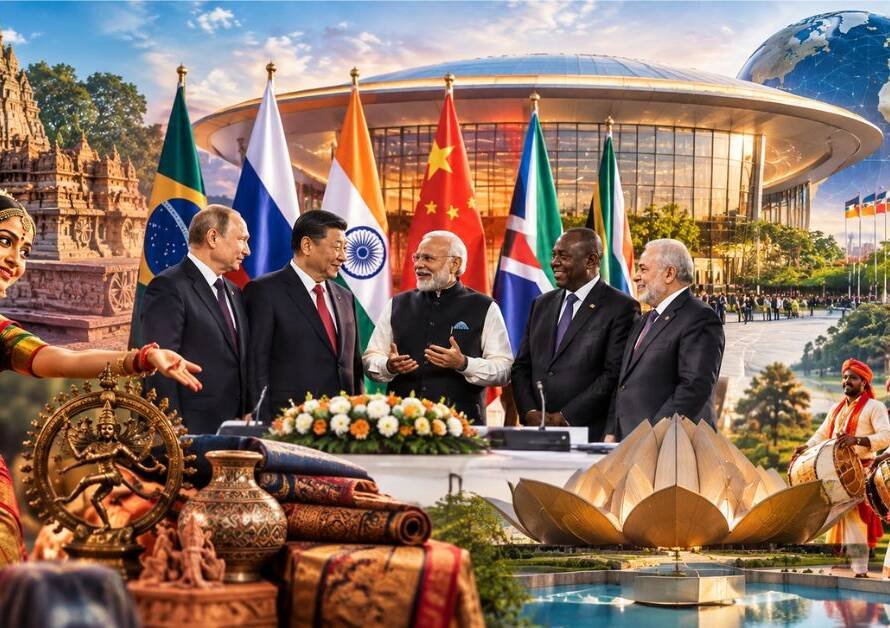
- Economic and Military Progress: Under this decisive leadership, India advanced rapidly to become one of the top five global economies. The strategy of self-reliance (Atmanirbhar Bharat) firmly established its military capabilities on the world stage.
- Civilizational Pride: The construction of the grand Ram Mandir in Ayodhya, the rejuvenation of the Kashi Vishwanath Dham, and the global resurgence of cultural confidence proved that a nation prospers externally only when it is anchored in its true identity.
⚖️ The Philosophy of ‘Dharmo Rakshati Rakshitah’: The Ultimate Takeaway
The ultimate realization for modern Indian society is that a strong, secure, and culturally conscious nation-state is a non-negotiable prerequisite for the survival of its people and heritage.
The Limits and Reality of Material Wealth
- Transient Assets: The empty havelis of Lahore, the abandoned factories of Karachi, and the locked homes of Kashmir prove that personal wealth offers zero protection once the political and demographic balance of a region is lost.
- Transfer of Ownership: The moment state authority falls into the hands of an unprotective or opportunistic leadership, material assets change hands overnight.
The Duty of the Modern Era
- Unity is Strength: The modern meaning of “Dharmo Rakshati Rakshitah” (Dharma protects those who protect it) translates to absolute political awareness and unyielding social cohesion.
- Rejecting Fragmentation: Protecting the nation’s ethos means preventing state power from slipping into the hands of elements willing to compromise borders and national security for the sake of vote-banks.
- The Path of Vigilance: The post-2014 resurgence demonstrates the potential of a resolute, nationalist leadership. To ensure that the historical tragedies of Lahore, Karachi, and Kashmir are never repeated, society must remain permanently vigilant, deeply organized, and fiercely dedicated to maintaining a robust and unyielding state.