Summary:
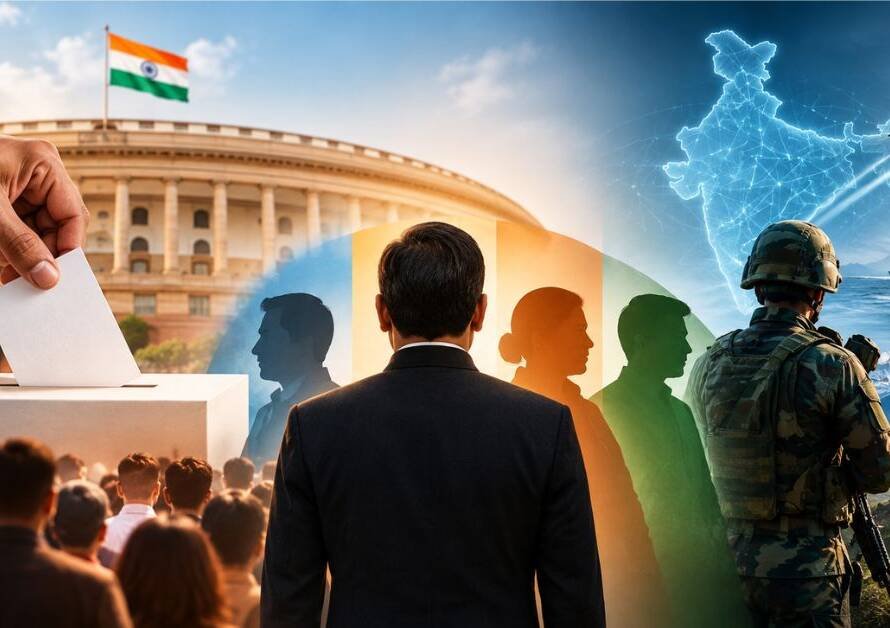
- The third term of the Modi-led government (2024–2026) has transitioned from policy reform to a total structural overhaul of the Indian state.
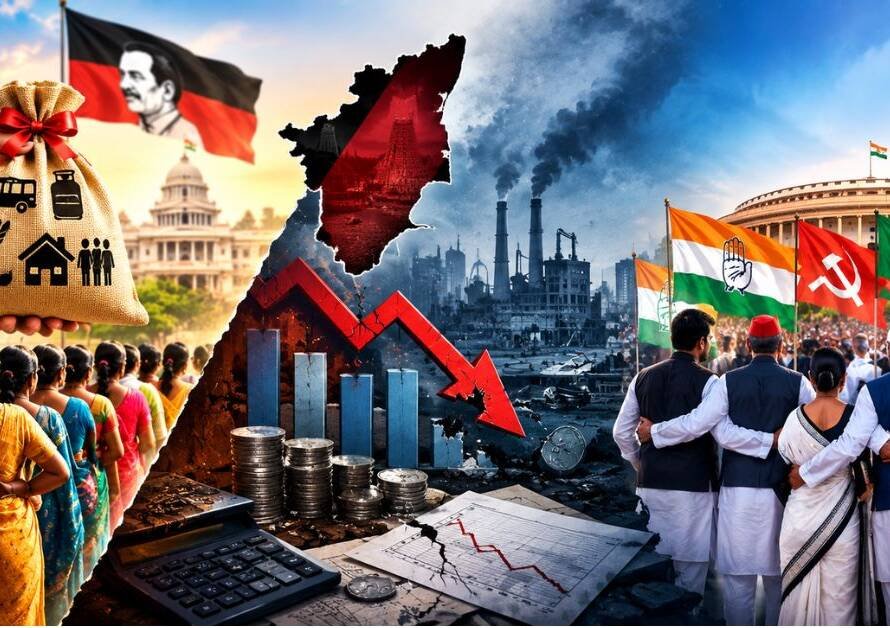
- By introducing the Bharatiya Nyaya Sanhita (BNS) to replace colonial laws, passing the Constitution (130th Amendment) Bill to disqualify corrupt officials, and tightening the FCRA to choke “anti-national” funding, the administration is neutralizing the “Thugbandhan” (opposition) and its supporting networks.
- These moves aim to purify the judiciary, administration, and political sphere, setting the stage for India to become a global superpower while triggering a desperate, vocal backlash from those losing their long-held influence.
New India, New System
I. Judicial Revolution: De-linking from the Colonial Past
The cornerstone of the third-term agenda is the complete “Indianization” of the legal system. The government argues that for India to lead the world, it cannot be governed by laws written by the British to suppress Indians.
- Bharatiya Nyaya Sanhita (BNS): By replacing the IPC, the government has redefined “National Security.” The law now specifically targets “subversive activities” and acts that endanger the “sovereignty, unity, and integrity” of India.
- This has directly impacted the “ecosystem” that previously used legal loopholes to justify separatist or anti-state rhetoric.
- Zero Tolerance for Organized Crime: For the first time, organized crime and economic terrorism are defined as major offenses. This allows the state to dismantle the financial syndicates that the government claims have historically funded “thugbandhan” activities and urban unrest.
- Victim-Centric Justice: The shift from protecting the “accused” (a colonial focus) to ensuring justice for the “victim” has streamlined the trial process. Mandatory timelines for charge sheets and judgments are preventing the opposition’s tactic of delaying cases for decades.
II. Political Cleansing: Eradicating the “Thugbandhan” Culture
The government has identified political corruption as the biggest hurdle to superpower status. The third term has seen a direct assault on the institutionalized corruption of the Congress and its allies.
- The 130th Amendment Bill (2025): This landmark bill proposes the automatic removal of any elected official (Prime Minister, Chief Minister, or Minister) if they are detained for 30 consecutive days on serious criminal charges. This effectively prevents “governance from jail” and forces a higher ethical standard on the “Thugbandhan” leadership.
- Financial Disruption: By integrating the Financial Intelligence Unit (FIU) with the Cyber Crime Coordination Centre (I4C), the government has created a digital “dragnet.” This has successfully identified the “Shell Company” networks used by dynastic politicians to hide illegal wealth and fund “anti-national” narratives.
- End of the “Presonal Interest First” Policy: The administration has popularized the narrative that the opposition only supports laws that benefit their own pockets. By making political funding more transparent and digital, the government has removed the “black money” oxygen that the “ecosystem” relied on for decades.
III. Administrative Purity: Moving from “Red Tape” to “Red Carpet”
A superpower requires a bureaucracy that works for the nation, not for political masters. The reforms here have been about efficiency and accountability.
- Mission Karmayogi 2.0: The scaling up of this mission in 2025 has forced civil servants to undergo continuous “Nationalist Orientation” and skill upgrades. This is designed to break the “old-boy networks” that were historically loyal to the Congress establishment.
- Digital Governance (I-Governance): By moving almost all administrative approvals to AI-driven digital platforms, the “Inspector Raj”—which the opposition used to extract “speed money”—has been largely eliminated.
- Strict Accountability for Delays: New regulations now impose financial penalties on administrators for delays in public service delivery, ensuring that the common man is no longer a slave to the “bureaucratic ecosystem.”
IV. Neutralizing the Anti-National NGO Ecosystem
Perhaps the most “on fire” sector is the network of foreign-funded NGOs and civil society groups that the government identifies as the “Intellectual Wing” of the anti-national ecosystem.
- FCRA Amendment Bill (2026): This new regulation gives the government the power to seize and manage the assets of any NGO whose license is cancelled or suspended. This prevents these groups from hiding funds or shifting assets to “proxy” organizations once they are caught working against national interests.
- FATF Compliance: Leveraging India’s high rating from the Financial Action Task Force, the government has justified a global crackdown on the funding of “civil unrest” under the guise of human rights work.
- The “Litigation Shield” Crackdown: The government has identified that many “anti-national” groups use endless litigation to stall infrastructure projects (like dams and highways). New rules now require these groups to prove their “standing” and financial sources before they can file public interest litigations (PILs) that affect national development.
V. The Reaction: A “Barking” Ecosystem in Retreat
The government characterizes the current political climate as a “purification ritual.” The more the laws tighten, the louder the “ecosystem” screams.
- The “Democracy in Danger” Narrative: Whenever a corrupt leader is arrested or a foreign-funded NGO is shut down, the “Thugbandhan” immediately labels it as “anti-democratic.” The government views this as a standard defense mechanism of a “guilty conscience.”
- Running for Cover: From 2024 to 2026, thousands of organizations have lost their licenses, and numerous political figures are facing the heat of new transparency laws. Their frantic efforts to seek international intervention or spark domestic protests (like the 2026 campus unrest) are seen by the public as the “last gasps” of a dying, parasitic system.
- Global Gaslighting: The government has ignored reports from international “rating agencies” that criticize India’s democracy, framing them as part of a global “anti-India” axis that fears the country’s rise.
The Path Ahead: Vision 2047
- The “cleaning” of the judiciary, administration, and politics is not just about punishment; it is about preparation.
- By removing the “Thugbandhan” culture of corruption and the “Anti-National” culture of subversion, the Modi government is ensuring that India’s foundation is solid.
- Under the combined leadership of the BJP and the ideological guidance of the RSS, the country is moving toward a future where “National Interest First” is the only law. The noise of the opposition is dismissed as the inevitable friction of a country finally moving forward at “Superpower Speed.”
🇮🇳 Jai Bharat, Vandematram 🇮🇳
Read our previous blogs 👉 Click here
Join us on Arattai 👉 Click here
👉Join Our Channels👈