Executive Summary
- This comprehensive narrative offers a deep ideological analysis of the Yazidi genocide and the subhuman atrocities committed by the Islamic State (ISIS) in Iraq and Syria in 2014.
- Through the harrowing testimonies of survivors like Nadia Murad and Farida, this article exposes the jihadi and ‘Khilafat’ (caliphate) mindset that institutionalizes extreme cruelty against non-believers.
- This discourse extends beyond history, connecting the events to a 1,400-year pattern of expansionism and the historical experiences of the Indian subcontinent, particularly Kashmir.
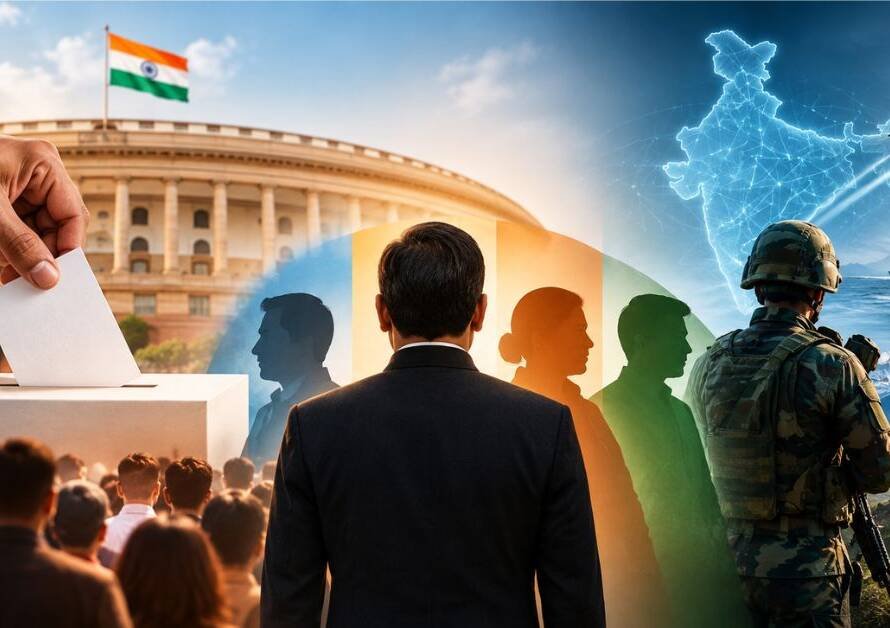
- Ultimately, it posits that as India progresses through its ‘Amrit Kaal’ toward 2047, it must step up as a global moral leader to ensure the eradication of radical extremism above political and economic self-interest.
Historical Perspective of the Yazidi Genocide
1. The Yazidi Genocide: The 21st Century’s Most Horrific Slaughterhouse
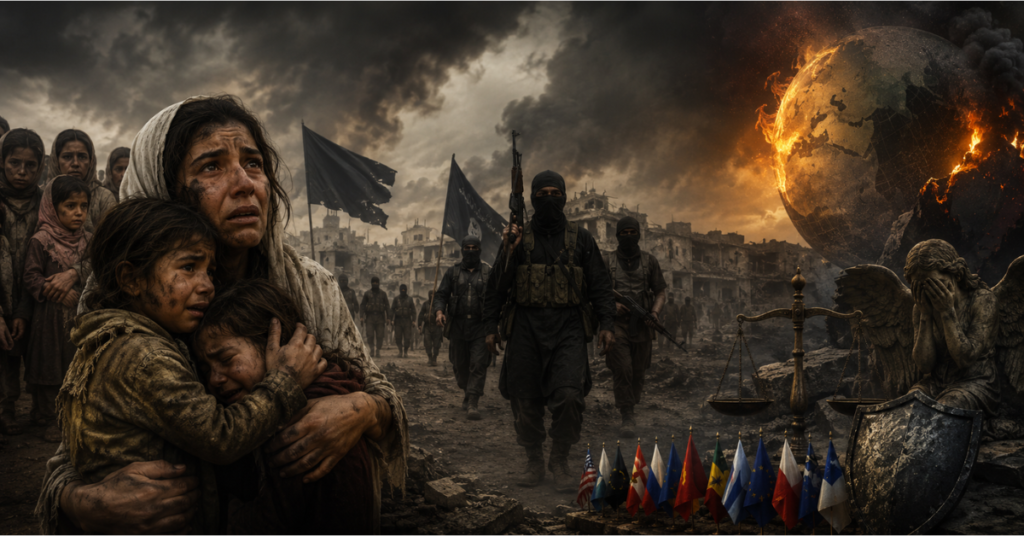
The Sinjar and Dohuk provinces of northern Iraq, once the peaceful homeland of the Yazidi community, became the epicenter of a medieval savagery in 2014 that shattered all modern claims of human advancement.
- The Theological Definition of the ‘Infidel’: Under radical expansionist ideologies, the Yazidis—not belonging to an Abrahamic faith—were branded as ‘devil worshippers’ and Kafirs (infidels). This theological labeling was deliberately weaponized by terrorists to provide moral and religious legitimacy to mass murder and systemic abductions.
- The Revival of Slave Markets: The modern world witnessed the literal rebirth of slave markets on the streets of Mosul and Raqqa. Yazidi women and young girls were publicly auctioned, their dignity bartered away for the price of a smartphone, a packet of cigarettes, or a few dinars.
- Rape as an Institutional Weapon of War: For ISIS fighters and commanders, sexual violence was not merely an act of depravity; it was a structured policy of institutional warfare. The strategic intent was to systematically dismantle the ancient Yazidi culture and identity, reducing captive women to forced instruments for birthing the next generation of jihadis.
- The Torture of Innocents: When coalition forces eventually liberated the underground dungeons and sex-slave centers of Mosul, they found virtually no captive woman without a child. The existence of these children stands as living evidence of the systematic, daily trauma inflicted upon these women.
2. Farida’s Testimony: A Shattered World and Ideological Obsession
The firsthand account of 23-year-old Farida serves as a historical document of how an entire civilization can be uprooted in a single night.
- Massacre Before Her Eyes: Farida had been married for just two months when fighters carrying black flags surrounded her village. Her husband, father, and five brothers were executed in front of her solely for the crime of being non-Muslims. Farida and her 16-year-old sister were then abducted.
- Commoditization of Human Life: Held captive in a Mosul sex-slave center, Farida was bought and sold among five different men. She witnessed her 16-year-old sister being subjected to forced ‘nikah’ (marriages) with seven different men sequentially—a sister who remains lost somewhere in the remnants of Syria.
- The Elimination of Absolute Human Decency: Farida’s testimony describes a harrowing scene where terrorists forcibly tore a newborn infant away from its mother’s breast simply to commit gang rape. Such acts demonstrate a system where basic human empathy had been entirely extinguished.
- Conscious, Cold-Blooded Cruelty: When a secular journalist asked Farida if these fighters committed these atrocities under the influence of narcotics, she firmly corrected the misconception: “They do this completely sober, consciously, and with full conviction. They breathe, eat, and sleep their radical ideology. It is a deep-seated obsession, and they are actively raising their children to do the same.”
3. Nadia Murad: The Nobel Prize and the Silence of Bystanders
The story of Nadia Murad, awarded the Nobel Peace Prize in 2018, demonstrates how personal tragedy can be channeled into a global movement for justice.
- The Destruction of Kocho: Nadia lived a simple life in Kocho, a quiet village near Sinjar. In 2014, jihadi convoys entered the village, executing her six brothers, her father, and her elderly mother. Nadia, along with thousands of young women, was trucked into Mosul, the then-declared capital of the ISIS caliphate.
- Systemic Brutality: In Mosul, Nadia was subjected to severe physical torture and repeated sexual violence. She was placed under immense duress to renounce her faith and accept forced marriage to a militant handler.
- The Role of Local Bystanders: A critical observation in Nadia’s book, The Last Girl, centers on the behavior of the surrounding local population. She notes that while the Yazidis were being systematically slaughtered and marched off as slaves, ordinary citizens in neighboring towns continued their daily routines, watching the atrocities unfold in absolute silence.
- Betrayal Instead of Sanctuary: Nadia recounts that after successfully scaling a wall to escape captivity, she knocked on the door of an unfamiliar local home seeking refuge. Instead of providing sanctuary, the resident immediately alerted and handed her over to ISIS fighters. As a consequence of her escape attempt, she was subjected to severe retaliatory violence until she lost consciousness.
4. The Economics and Global Infrastructure of the Caliphate
The Islamic State was not merely a disorganized band of rogue criminals; it operated as a highly structured, economically self-sustaining entity with global linkages.
- Control Over Strategic Resources: By seizing control of numerous oil fields across Syria, Libya, and Iraq, ISIS generated millions of dollars in daily revenue. This funding was systematically funneled into acquiring sophisticated weaponry and maintaining an administrative state apparatus.
- Implementation of Medieval Governance: The territory was governed under a strict interpretation of Sharia law, establishing a medieval judicial system that drew radicals globally who believed their vision of a caliphate was being realized.
- Global Financial and Ideological Support: The infrastructure relied heavily on an international network. Radicalized individuals operating within Western and secular nations utilized digital platforms to funnel millions in cryptocurrency and cash to Mosul. Furthermore, thousands of educated professionals—including doctors and engineers—voluntarily abandoned their modern lives to migrate and serve this brutal regime.
5. A 1,400-Year Ideological Continuity and the Indian Context
Viewing the 2014 Yazidi genocide as an isolated, modern anomaly is a profound historical error. It represents the continuation of a long-standing expansionist ideology.
- The Pattern of Historical Invasions: Centuries of historical records show that whenever invading forces driven by this specific mindset conquered a territory, the systematic execution of men and the treatment of women as Ghanimat (war booty) followed a predictable pattern. India experienced this exact template from the fall of Sindh to the invasions of Mahmud Ghazni, Muhammad Ghori, and Timur, where captive Indian women were historically auctioned in the markets of Central Asia.
- The 1990 Kashmiri Pandit Exodus: The events that transpired within India’s own territory of Kashmir represent a modern manifestation of this ideology. The slogans of “Raliv, Chaliv, ya Galiv” (Convert, Leave, or Die) raised outside the homes of Kashmiri Pandits, followed by targeted assassinations and systemic violence against women, stem from the same fundamental philosophy that devastated the Yazidis in Mosul.
- The Distortion of the Secular Lens: Certain sections of the intelligentsia consistently attempt to obscure the ideological roots of these conflicts. By misattributing these atrocities purely to “economic deprivation” or “lack of education,” they mask the core theological drivers, preventing society from recognizing the actual nature of the threat.
6. Obstacles to Global Peace: Expansionism and Economic Opportunism
The contemporary world stands at a critical juncture of geopolitical instability due to deep-seated ideological expansionism combined with raw economic opportunism.
- Ideological Expansionism: As long as specific global entities and radical ecosystems maintain an expansionist agenda aimed at imposing their theological worldview uniformly across the globe, permanent peace remains an impossibility. The obsession with establishing global hegemony is the root cause of these asymmetrical wars.
- Economic Self-Interest Over Global Morality: Many powerful nations deliberately hesitate to take decisive, punitive action against state sponsors of terror due to narrow economic interests, such as lucrative arms sales or bilateral oil dependencies. As long as financial gain takes precedence over global human security, dismantling the infrastructure of terror funding will remain unachievable.
- The Hypocrisy of Double Standards: Global forums frequently compromise their integrity by classifying terrorism into arbitrary categories of ‘good’ and ‘bad.’ If a proxy terror group aligns with the geopolitical objectives of a specific superpower, its actions are met with international silence. This duplicity is exactly what allowed entities like ISIS to flourish.
7. Amrit Kaal 2047: India’s Resolution as a Sovereign Leader
The political and cultural resurgence within India post-2014 has provided the nation with a definitive strategic direction, offering a resilient model for countering global radical networks.
- Internal Security and Institutional Cleanup: India has significantly strengthened its legislative and investigative frameworks to dismantle domestic radical fronts like the PFI and their underground financing networks. The state policy is clear: no form of secessionist or extremist ideology will be permitted to take root on Indian soil.
- Diplomacy Rooted in Civilizational Values: On the global stage, India consistently champions the philosophy of Vasudhaiva Kutumbakam (The World is One Family). This civilizational ethos inherently rejects geopolitical expansionism, advocating instead for mutual co-existence and the absolute protection of human dignity.
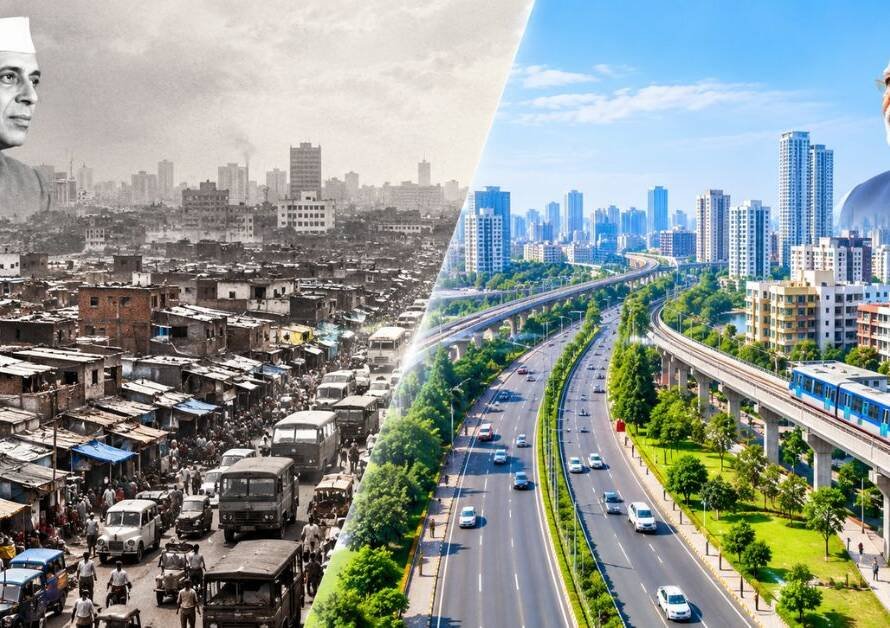
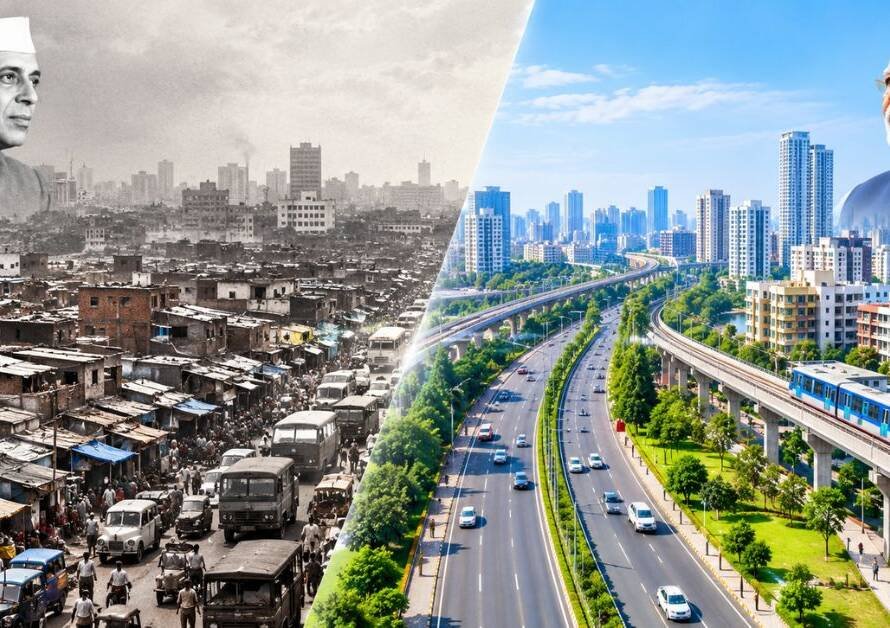
- Balancing Material Power with Moral Strength: Through mega-infrastructure projects like Sagarmala, the expansion of high-speed rail networks, and the overarching vision of Viksit Bharat (Developed India) by 2047, India is consolidating its status as an economic and technological powerhouse. Crucially, this material growth is backed by a firm spiritual and moral resolve, positioning India to guide the global community away from destructive radicalism and uncheckered militarism.
Conclusion
- The testimonies of Nadia Murad and Farida are not merely tragic footnotes of history; they are active, urgent warnings for the present generation.
- Their experiences remind the world that a society that chooses to remain ‘neutral’ or silent in the face of radical extremism shares equal complicity with the perpetrators.
- As India advances toward its centenary goal of a developed and secure nation by 2047, its primary objective remains the absolute defense of its cultural borders and the presentation of a civilizational model where radicalism, betrayal, and expansionism can never again compromise human dignity.
🚩 Jai Bharat! Vande Mataram! 🚩
Read our previous blogs 👉 Click here
Join us on Arattai 👉 Click here
👉Join Our Channels👈