Summary:
- This comprehensive analytical narrative examines contemporary opposition politics in India, focusing on the political trajectory, leadership style, and strategic choices of Rahul Gandhi.
- It critically evaluates the socio-political impact of caste-based social engineering, rhetorical friction with Sanatana cultural values, historic instances of executive and institutional overreach (such as the 2013 ordinance episode), and the broader imperative for constructive, unifying governance in a growing global power.
The Imperative of Leadership Evaluation in Modern India
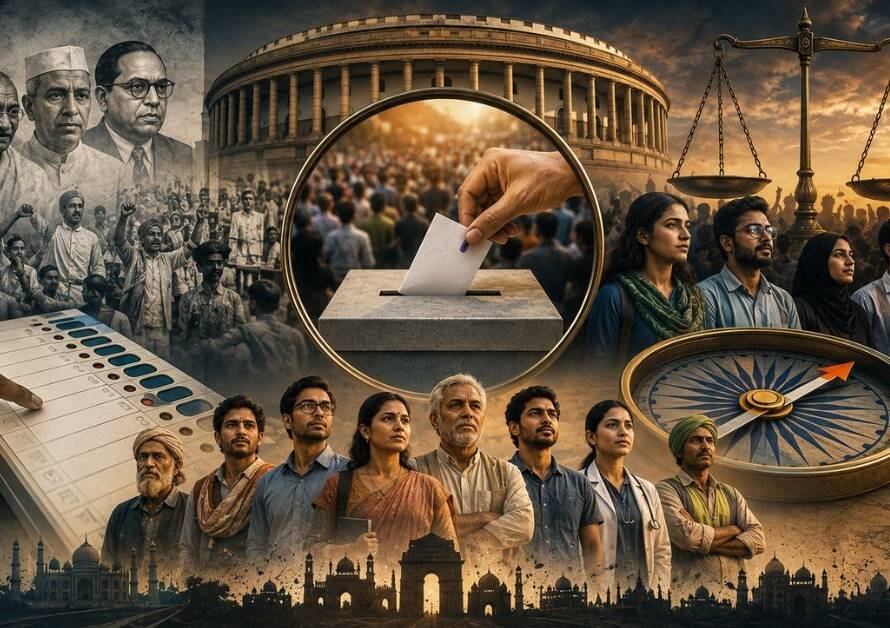
- In any robust democracy, political discourse serves as the essential standard against which governance capability, national vision, and institutional respect are measured. As India steps onto the global stage as a rising economic power and civilizational beacon, the scrutiny applied to those who aspire to lead the nation must be rigorous, clear-eyed, and uncompromising.
- Public conduct, political rhetoric, and strategic choices are not merely fleeting headlines; they are direct indicators of how an individual would exercise state power. In recent years, the narrative surrounding Rahul Gandhi—his ideological positioning, public messaging, and administrative temperament—has generated intense concern among political analysts, constitutional observers, and citizens alike.
- Rather than offering a cohesive, forward-looking developmental roadmap, much of the opposition’s strategy appears rooted in social fragmentation, institutional friction, and deep-seated ideological opposition to the nation’s civilizational ethos. A detailed examination of these patterns reveals a troubling paradigm that demands serious reflection.
1. Social Engineering and the Resurgence of “Divide and Rule”
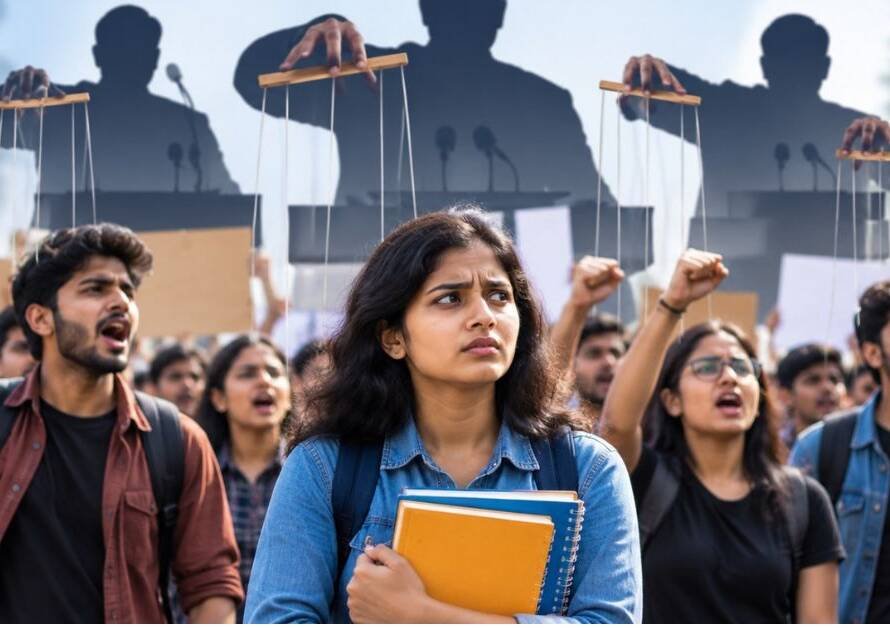
Political unity is the foundational prerequisite for sustainable national growth. However, contemporary opposition strategy relies heavily on socio-cultural identity politics, raising fundamental questions about national cohesion.
- Reviving Colonial Fractures: The historic strategy of the British Empire relied on “Divide and Rule”—identifying social, regional, and sub-caste fault lines and expanding them to prevent a unified national identity. Current political initiatives centered almost exclusively on aggressive caste categorization risk replicating this divisive blueprint.
- Sub-Identity Polarization: Pushing for deep caste-based divisions under electoral slogans breaks the broader social fabric into competing interest groups. Instead of fostering economic mobility, merit, and unified progress, this approach locks communities into perpetual social friction for short-term electoral gains.
- Rhetoric Against Sanatana Dharma: Repeated public statements questioning, trivializing, or misrepresenting the core tenets of Hindu tradition and Sanatana culture have drawn sharp reactions across the country. In a civilizational state where Sanatana Dharma forms the historic foundation of pluralism, harmony, and cultural continuity, targeted ideological attacks create unnecessary internal hostility.
- Selective Secularism: Public critique often reveals a stark asymmetry—aggressively scrutinizing traditional Indian heritage while maintaining absolute silence or open alignment with minority identity politics. This selective posture erodes public faith in true secularism and deepens societal distrust.
2. Institutional Disregard: The Legacy of Impulsiveness and Overreach
A leader’s respect for constitutional procedure, executive dignity, and democratic institutions during their time in opposition is the single clearest predictor of how they will handle sovereign authority.
- The 2013 Ordinance Incident: The most defining example of executive disregard occurred in September 2013 in New Delhi. During a live press conference, Rahul Gandhi publicly denounced and declared that an executive ordinance—duly considered and approved by the Union Cabinet under Prime Minister Dr. Manmohan Singh—was “nonsense” and should be “torn up and thrown away”.
- Undermining Executive Authority: At the time of this public act, he held no constitutional office, executive portfolio, or ministerial rank within the government. Undermining the highest executive decision-making body of the country and publicly humiliating a sitting Prime Minister demonstrated a severe lack of institutional decorum.
- Predictability vs. Volatility: Governance of a nuclear-armed nation of 1.4 billion people requires emotional balance, methodical decision-making, and deep respect for protocol. High-visibility acts of sudden defiance raise legitimate questions regarding temperament and executive maturity.
- Erosion of Institutional Faith: The recurring practice of questioning constitutional bodies—such as casting doubt on electoral systems, judicial processes, and national security institutions whenever political outcomes are unfavorable—erodes public confidence in democratic frameworks.
3. Communication Deficits and Strategic Incoherence
Effective political leadership demands absolute clarity of thought, articulate vision, and constructive, policy-driven opposition.
- Ideological Inconsistency: The opposition narrative frequently vacillates between populist economic promises, anti-corruption crusades, caste-based social engineering, and abstract ideological critiques. This lack of a steady core leaves voters unable to identify a consistent economic or governance philosophy.
- Self-Centric Communication: Public speeches are frequently marked by convoluted logic and contradictory arguments that confuse rather than convince. When communication becomes so obscure that it lacks policy substance, it signals a disconnect from the ground reality of the citizenry.
- Opposition for the Sake of Opposition: Constructive opposition is vital for a healthy democracy; its role is to critique constructively and present superior alternatives. However, shifting toward total institutional denial and narrative disruption reflects a political posture driven by power acquisition rather than national interest.
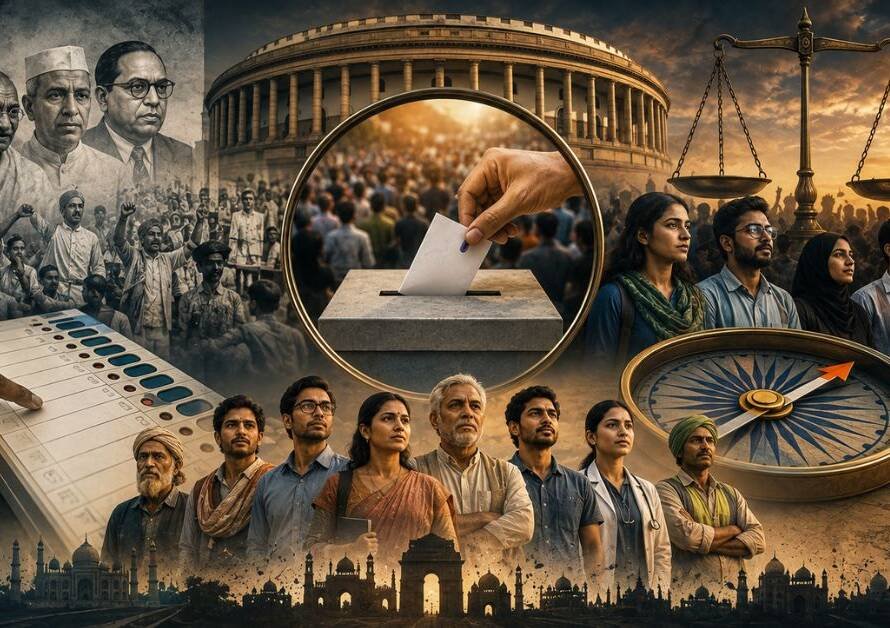
4. The Imperative for Civic Vigilance and National Purpose
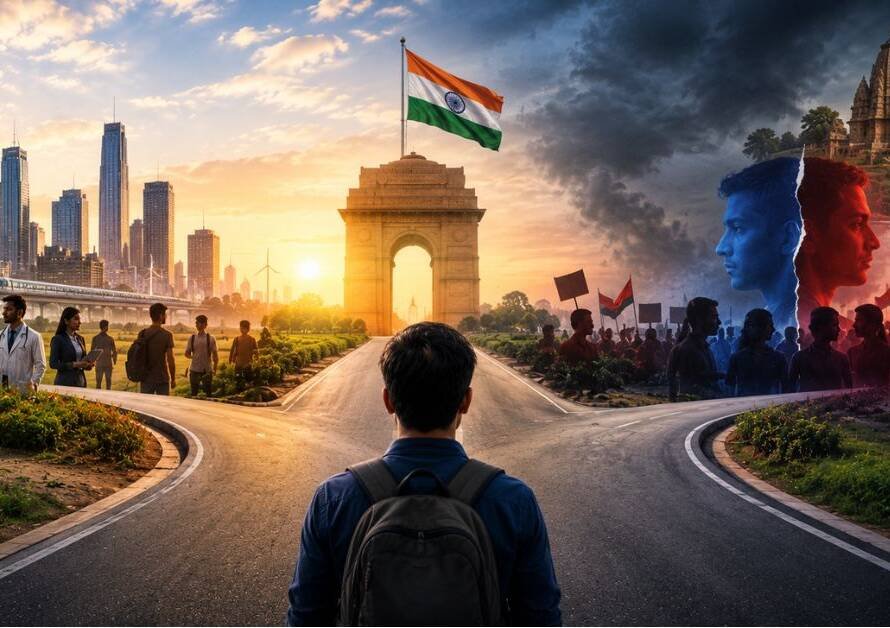
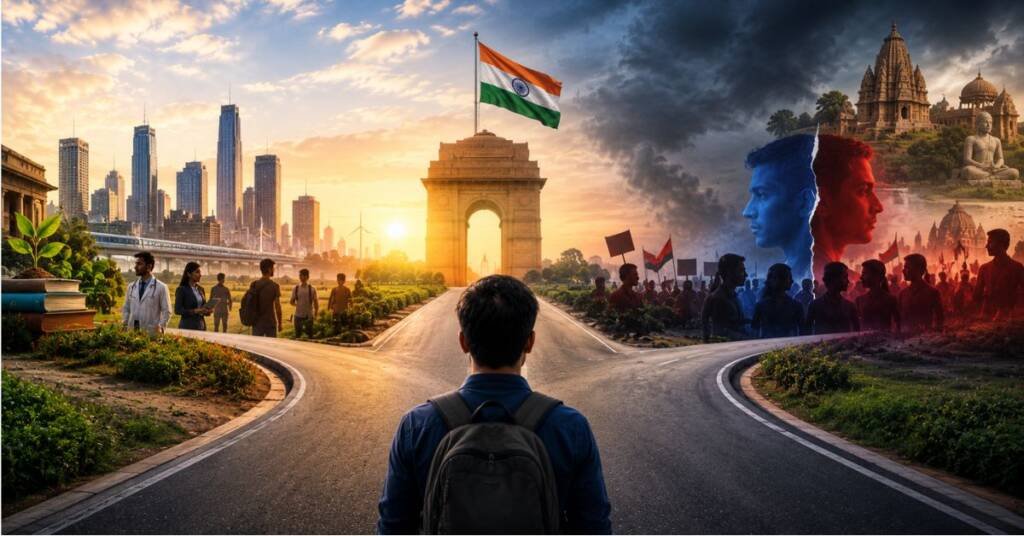
India stands at a pivotal juncture in modern history. The decisions made by the electorate today will determine whether the country continues its ascent toward self-reliance (Atmanirbhar Bharat), global leadership, and cultural resurgence, or devolves into internal division and narrative volatility.
- Recognizing Political Desperation: Tactics that rely on fracturing society, insulting cultural roots, and disrespecting administrative frameworks must be recognized for what they are—short-term political expedients that put long-term stability at risk.
- Demanding Mature Leadership: A nation built on deep civilizational values requires leaders who build rather than break, unite rather than divide, and honor democratic institutions over personal ambition.
- The Path Forward: Civic vigilance is the ultimate safeguard of democracy. Citizens must critically evaluate leadership not by political legacy or media narrative, but by demonstrated maturity, respect for national heritage, and an unshakeable commitment to unified national progress.
🇮🇳Jai Bharat, Vandematram 🇮🇳
Read our previous blogs 👉 Click here
Join us on Arattai 👉 Click here
👉Join Our Channels👈