Summary:
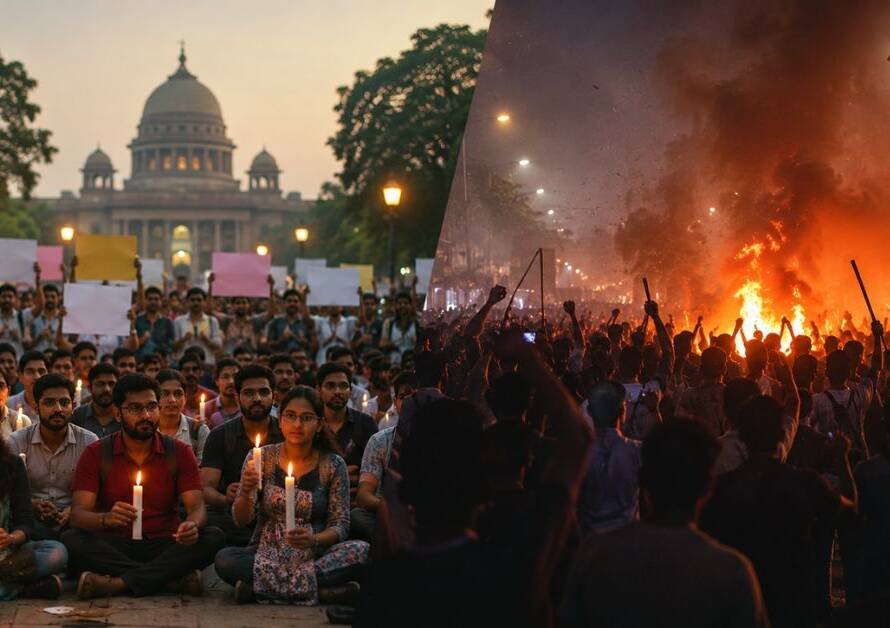
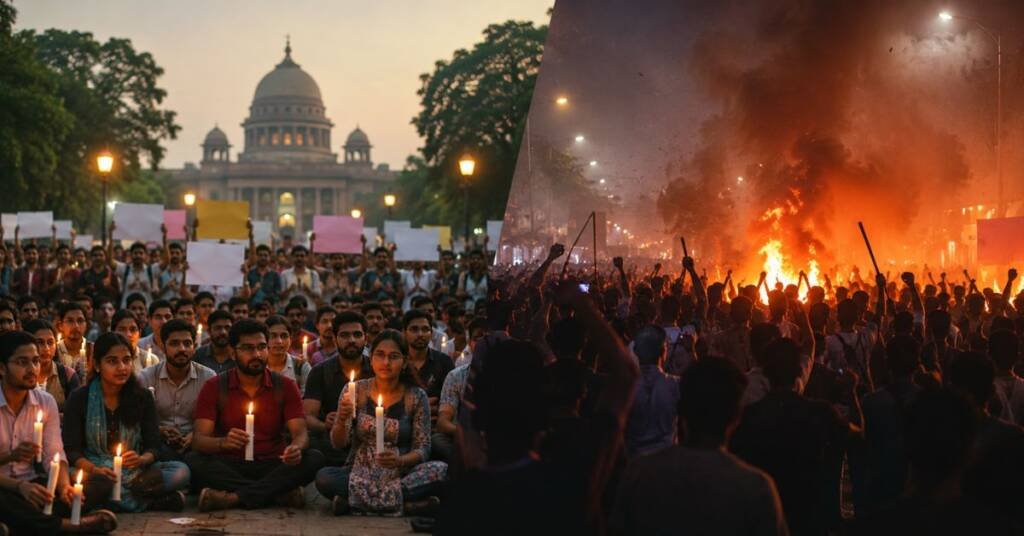
- This in-depth analytical document explores the stark contrast between authentic, disciplined democratic movements in India—exemplified by recent student demonstrations in Ranchi, Jharkhand—and the highly engineered, volatile political spectacles organized at sites like Delhi’s Jantar Mantar.
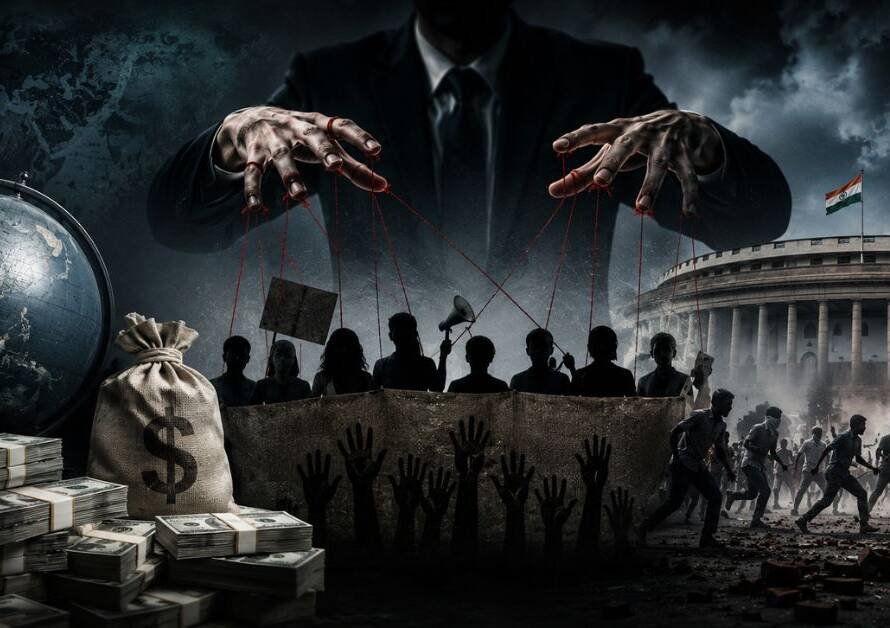
- It exposes the systemic efforts by opposition parties, anti-national networks, and vested foreign interests to incite public disruption, infiltrate student platforms with dedicated political cadres and individuals with criminal backgrounds, and attempt to replicate foreign destabilization models seen in Nepal and Bangladesh.
- Furthermore, this narrative examines the structural causes of youth discontent, the mechanics of selective outrage (चयनात्मक आक्रोश), and the operational framework of political toolkits.
- Ultimately, it demonstrates why these desperate attempts to destabilize the nation fail: underestimating the maturity of a responsible Gen Z that rejects political manipulation, alongside a resolute administrative setup capable of enforcing legal accountability and federal financial scrutiny through statutory bodies like the Enforcement Directorate (ED).
Two Demonstrations, Two Narratives: Understanding Democratic Dissent
1. Democratic Expression vs. Manufactured Anarchy: The Ranchi–Jantar Mantar Contrast
A fundamental divide has emerged in contemporary Indian civic discourse between genuine, law-abiding public grievances and staged agitational events designed to paralyze governance.
- Civic Discipline and Maturity in Ranchi: Thousands of genuine job aspirants in Ranchi gathered to demand transparency and reform in state competitive examinations. Even when subjected to water cannons, tear gas, and police baton charges, authentic students maintained exceptional self-control, carrying symbolic roses, refraining from arson, and refusing to damage public property.
- Active Rejection of Political Co-optation: Recognizing that political operatives sought to hijack their genuine grievances, the Ranchi student leadership explicitly prohibited partisan slogans, banished opportunistic activists, and prevented external influencers from using their platform for personal or political leverage.
- The Staged Spectacle at Jantar Mantar: In contrast, demonstrations organized by opposition ecosystems in the capital frequently center around provocative rhetoric, deliberate verbal and physical confrontations with security forces, and orchestrated media campaigns aimed at creating an illusion of widespread chaos.
- Preserving Dignity in Public Movements: While the Ranchi aspirants focused on concrete administrative solutions—such as independent examination audits and statutory accountability—manufactured gatherings prioritize symbolic outrage, sensationalism, and personal attacks on elected leadership.
2. The Infiltration Strategy: Cadres, Non-Student Agitators, and Criminal Elements
Unable to secure popular mandates through democratic elections, opposition networks have increasingly relied on street-level disruption, employing systematic tactics to infiltrate and compromise peaceful gatherings.
- Deployment of Dedicated Party Cadres: Investigations and ground observations demonstrate that manufactured protests are routinely populated by organized party cadres, political workers, and youth wing operatives masquerading as ordinary, unaffiliated students.
- Co-opting Anti-Social Elements: To escalate peaceful assemblies into violent standoffs, these networks introduce individuals with criminal records and anti-social backgrounds. Their specific role is to initiate stone-pelting, provoke law enforcement personnel, and force a physical reaction from security forces.
- Students as Human Shields: Genuine job aspirants and young citizens are strategically placed at the frontlines of protests by background handlers, ensuring that any administrative crowd-control measures yield images that can be exploited for political propaganda.
- Fabricating Victimhood: Once violence is triggered by infiltrated elements, movement organizers routinely disown the perpetrators as “anti-social elements,” while simultaneously blaming state authorities and claiming constitutional persecution.
3. The Destabilization Blueprint: Attempting a Nepal or Bangladesh Scenario in India
The strategic objective behind these sponsored disruptions extends far beyond immediate policy critiques; it forms part of an overarching attempt to create systemic national instability.
- Emulating Foreign Regime-Change Models: Driven by political desperation, opposition coalitions attempt to replicate street-level uprisings observed in neighboring countries such as Nepal and Bangladesh, seeking to bypass democratic processes and force administrative capitulation through public paralysis.
- Targeting National Infrastructure: Engineered agitations deliberately target vital economic arteries—blocking national highways, besieging government headquarters, and disrupting public transport networks—to inflict economic damage and project an image of state paralysis.
- Undermining International Image: Opposition leaders and allied commentators routinely leverage domestic disruptions on international platforms, attempting to sully India’s growing global reputation, economic resilience, and democratic credentials.
- Inevitable Collapse of Manufactured Agitations: Despite extensive planning, these engineered crises collapse because they lack genuine organic support, exposing the desperation of their architects and alienating the broader public.
4. The Role of Deep-State Actors and Vested Foreign Interests
The operational footprint of manufactured protests reveals significant alignment between domestic political networks and external entities seeking to stall India’s national trajectory.
- Financial and Narrative Support: Internal agitation networks frequently receive strategic support, narrative amplification, and opaque funding from foreign non-governmental organizations, deep-state actors, and vested interests uncomfortable with India’s economic sovereignty.
- Information Warfare and Digital Manipulation: Coordinated bot networks, sponsored social media trends, and foreign media coverage are synchronized to project localized administrative issues as existential constitutional crises.
- Subverting Economic Growth: By attempting to stall major infrastructure projects, labor reforms, defense self-reliance initiatives, and education policies, these coalition networks attempt to cripple India’s global competitiveness.
- Exposure and Neutralization: Increased public scrutiny and enhanced intelligence monitoring have repeatedly exposed the financial links and international coordination behind these toolkits, rendering them ineffective against national resilience.
5. The Resilience of New India: Responsible Gen Z and Decisive Governance
The primary reason these foreign-backed and politically engineered plots fail to achieve their objectives is the fundamental evolution of modern Indian society and its leadership.
- A Discerning and Patriotic Gen Z: Today’s youth—comprising Gen Z and Gen Alpha—are highly analytical, digital-native citizens who value meritocracy, national progress, and transparency. They quickly identify political maneuvering and refuse to act as pawns in manufactured agendas.
- Rejection of Ideological Toolkits: Modern students recognize that genuine administrative progress is achieved through legal accountability and institutional reform, not through engineered street violence or destructive ideological campaigns.
- Decisive and Prepared State Leadership: India’s administrative architecture possesses the strategic intelligence, legal framework, and administrative resolve required to distinguish between authentic democratic feedback and foreign-assisted subversion.
- Proactive Public Safety: Security agencies employ modern technology—including digital forensics, drone surveillance, and financial tracking—to neutralize organized agitators while ensuring minimal disruption to law-abiding citizens.
6. Deconstructing the Four-Stage Opposition Toolkit and Selective Outrage
The mechanics of selective outrage (चयनात्मक आक्रोश) operate through a standardized, four-stage framework designed to maximize political damage while evading institutional responsibility.
- Stage 1: Targeted Sparking: Identifying a localized administrative error, examination dispute, or policy delay within a targeted jurisdiction to launch an immediate, highly charged confrontation.
- Stage 2: Digital Amplification: Coordinating with sponsored digital influencers, media commentators, and specialized hashtag campaigns to build artificial online trends and manufacture public urgency.
- Stage 3: Escalation and Physical Infiltration: Moving political cadres and anti-social elements into the physical space to provoke law enforcement into taking forceful crowd-control measures.
- Stage 4: Strategic Absence and Silence: Maintaining total silence, justifying administrative force, or suppressing news when far more severe recruitment scandals, paper leaks, or police actions take place in states governed by allied political parties.
7. Institutional Accountability: PMLA, ED Probes, and Systemic Administrative Action
Resolving recruitment disputes and protecting examination integrity requires robust legal mechanisms rather than political rhetoric or administrative compromise.
- Failure of Localized Inquiries: In states like Jharkhand, past recruitment controversies demonstrated that local state-level investigations often modified their findings under administrative pressure, leading to judicial discharges for key suspects and destroying public trust.
- Financial Crime Scrutiny under PMLA: Recognizing that recruitment scams involve extensive financial networks, bribery, and seat-monetization, the Enforcement Directorate (ED) registers cases under the Prevention of Money Laundering Act (PMLA) based on local FIRs.
- Tracing Money Trails and Asset Attachment: Statutory financial probes allow federal agencies to trace illicit financial flows, identify political and administrative beneficiaries, and attach illegally acquired assets, ensuring comprehensive accountability.
- Fast-Track Legal Frameworks: Implementing strict anti-paper-leak legislation and establishing fast-track specialized courts ensure that exam syndicates face swift convictions, establishing a powerful deterrent against future recruitment fraud.
8. Conclusion: The Triumph of Civic Responsibility Over Manufactured Chaos
- The contrast between genuine student demonstrations and manufactured political outrage underscores the strength and maturity of Indian democracy.
- Attempts by opposition ecosystems, infiltrated cadres, and foreign deep-state actors to destabilize the nation through engineered chaos will continue to crumble against the discernment of India’s youth and the firmness of its institutions.
- As the nation advances toward greater development, security, and institutional transparency, manufactured protests will remain exposed for what they truly are: desperate political gambits that ultimately fail, reinforcing the resilience of a nation committed to rule of law and democratic integrity.
🇮🇳Jai Bharat, Vandematram 🇮🇳
🇮🇳 जय भारत, वन्देमातरम 🇮🇳
Read our previous blogs 👉 Click here
Join us on Arattai 👉 Click here
👉Join Our Channels👈