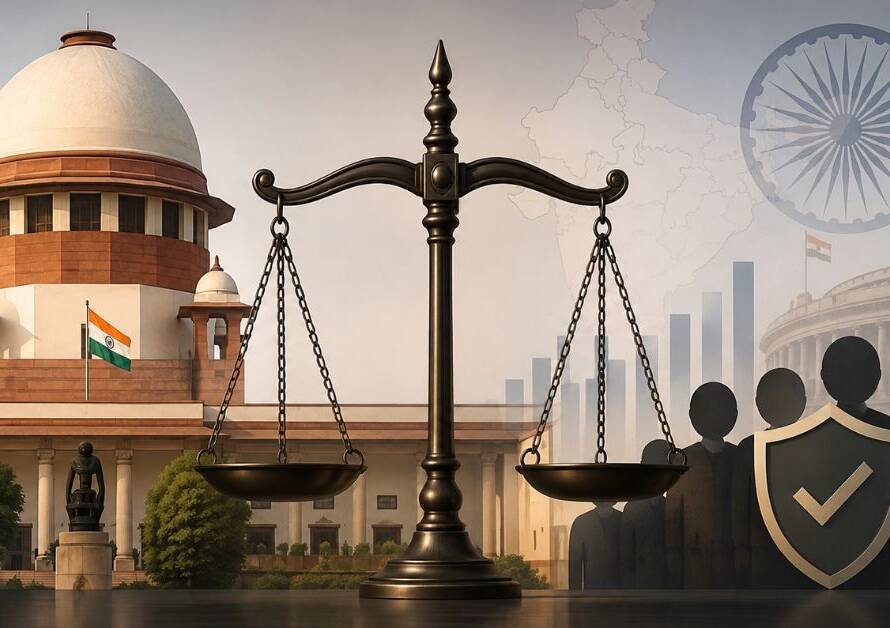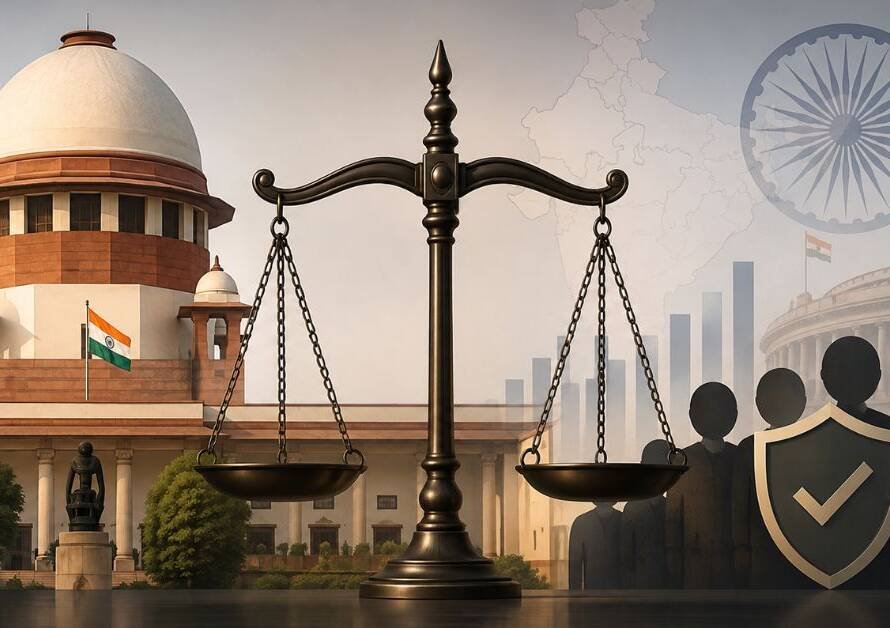
Summary
- For nearly eight decades, affirmative action in India has served as a critical instrument of state policy. Originally envisioned as a temporary constitutional measure to uplift historically disadvantaged communities, caste-based reservation has increasingly been converted into a permanent, hereditary entitlement and a tool for electoral vote-bank politics.
- This comprehensive blueprint proposes a structural transition toward a transparent, multidimensional, need-based model. By replacing permanent caste criteria with a verified Deprivation Index, limiting preferences to a single primary entry point, establishing foundational capability-building up to secondary education, and fully transitioning higher education and public employment to pure merit, India can eliminate systemic capture.
- Furthermore, replacing caste-specific criminal statutes with universal, caste-neutral anti-discrimination laws will protect all citizens equally, preserve social harmony, and reinforce national unity.
National Cohesion
1. Historical Intent vs. Political Reality: The Need for Transition
- The Original Constitutional Vision: The framers of the Constitution introduced reservation under Part XVI as a temporary, reviewable mechanism to integrate marginalized groups and eliminate historical handicaps. It was never designed to operate as a permanent hereditary right or a private, perpetual share in public institutions.
- Eight Decades of Policy Distortion: Repeated political extensions without objective, evidence-based national reviews have transformed an enabling remedial measure into an inherited privilege. This ongoing continuation disregards generational advancement and changing socioeconomic realities.
- Instrumentalization for Vote-Bank Politics: Political alliances and opportunistic agendas routinely exploit caste identities to secure electoral advantages. By framing reservation as a permanent caste entitlement rather than a reviewable policy, political actors manufacture public friction and destabilize social harmony.
- Manufactured Discontent vs. National Interest: Desperate attempts to mobilize vote banks through sudden, engineered demonstrations divide society along birth-based fault lines. This strategy undermines the constitutional ideal of Fraternity (Bandhutva) and prioritizes short-term political gain over national progress.
2. The Core Policy Shift: Economic and Multidimensional Deprivation
- Replacing Birth-Right with Present Need: Birth must not remain the sole gateway to state preference. A wealthy, highly educated family does not suffer material deprivation merely due to its caste identity, nor does an economically destitute child become prosperous due to a forward-caste surname.
- The Multidimensional Deprivation Index: Eligibility for state support should be determined by an objective, regularly updated Deprivation Index. This index must evaluate verified household income, agricultural and non-agricultural property, parental education and rank, housing status, geography, and first-generation learner status.
- Empirical Audits and Periodic Reviews: Every affirmative action intervention must carry a fixed review timeline. Preference schemes should automatically lapse or undergo re-evaluation unless fresh, audited empirical data proves that the specific disadvantage persists.
3. Educational Reform: Capability Building, Merit, and Scholarships
- Foundational Support Up to Secondary Education: State intervention should focus heavily on early childhood and schooling. Underprivileged families must receive complete financial, logistical, and academic support—including quality infrastructure, qualified teachers, digital access, hostels, and nutritional aid—through secondary school.
- Merit-Based Higher Education Admissions: Beyond secondary school, admissions to higher educational institutions must transition to a pure merit-based system. Lowering academic entry thresholds at higher levels fails to address foundational learning deficits and creates long-term structural imbalances.
- Targeted Merit Scholarships for the Needy: To ensure that financial hardship never prevents a deserving candidate from pursuing higher studies, the state should provide robust, need-cum-merit scholarships. This approach incentivizes academic excellence while removing economic barriers.
4. Public Employment: Complete Abolition of Job Reservations
- Eliminating Job Quotas in Recruitment: Reservation in public sector recruitment and promotional rosters acts as a social stigma and creates workplace fragmentation. Public employment quotas should be completely phased out in favor of a totally transparent, equal-opportunity framework.
- Ensuring Equal Opportunity and Transparency: Public recruitment must rely strictly on individual capability, competitive testing, and transparent selection processes. The state must guarantee that every citizen competes on equal footing without birth-based preferences or barriers.
- Administrative Efficiency (Article 335): Phasing out recruitment and promotional quotas directly supports administrative efficiency, rewarding competence and performance while ensuring fair access for all qualified aspirants.
5. Immediate Safeguards: The “One-Time” Rule and Advancement Exclusions
- The One-Time-Benefit Rule: No individual or family unit should claim preference across multiple stages of life. Securing one major state benefit (such as initial higher education assistance or entry-level welfare support) must exhaust further quota claims, ensuring opportunities circulate to first-generation applicants.
- Exclusion of Income-Tax-Paying Families: Any household with actual income-tax liability must be excluded from affirmative action benefits for that cycle. Contributing tax on income indicates that the family has crossed the basic threshold of economic independence.
- Exclusion of Senior Officials and High-Net-Worth Units: Families of senior constitutional office holders, high-ranking public servants, corporate executives, large landowners, and successful entrepreneurs must be excluded from welfare quotas.
6. Legal Reform: Universal Protection and Faith Safeguards
- Repeal and Replacement of the 1989 Act: Parliament should replace the caste-specific SC/ST (Prevention of Atrocities) Act, 1989 with a stringent, caste-neutral Anti-Discrimination and Hate Crime Statute. Criminal liability must depend entirely on the prohibited act, proved hateful motive, and objective evidence, ensuring equal protection for every victim and punishment for false complaints.
- Protection of Sacred Beliefs and Religious Harmony: To prevent unpunished abuse directed at general-category citizens, sacred figures, or places of worship, penal provisions under the Bharatiya Nyaya Sanhita, 2023 should be strengthened or supplemented by a dedicated Protection of Religious Harmony Act.
- Balancing Due Process and Free Expression: The legal framework must penalize deliberate, malicious abuse, desecration, and incitement while explicitly protecting good-faith historical critique, scholarly research, theological debate, and legitimate satire.
7. Constitutional Jurisprudence and Legal Foundations
- Substantive Equality vs. Perpetual Entitlement (Indra Sawhney v. Union of India): The Supreme Court has repeatedly affirmed that affirmative action is a tool to achieve substantive equality for present backwardness, not a permanent hereditary right.
- Economic Criteria Basis (Janhit Abhiyan v. Union of India): The constitutional validity of Articles 15(6) and 16(6) confirms that economic status and multidimensional deprivation are legally recognized bases for state assistance.
- Sub-Classification and Preventing Benefit Capture (State of Punjab v. Davinder Singh, 2024): The apex court affirmed that sub-classification and the exclusion of advanced sections within protected groups are constitutionally permissible to prevent benefit capture and reach the most deprived.
🇮🇳 Jai Bharat, Vandematram 🇮🇳
Read our previous blogs 👉 Click here
Join us on Arattai 👉 Click here
👉Join Our Channels👈
Reads & Views: 40