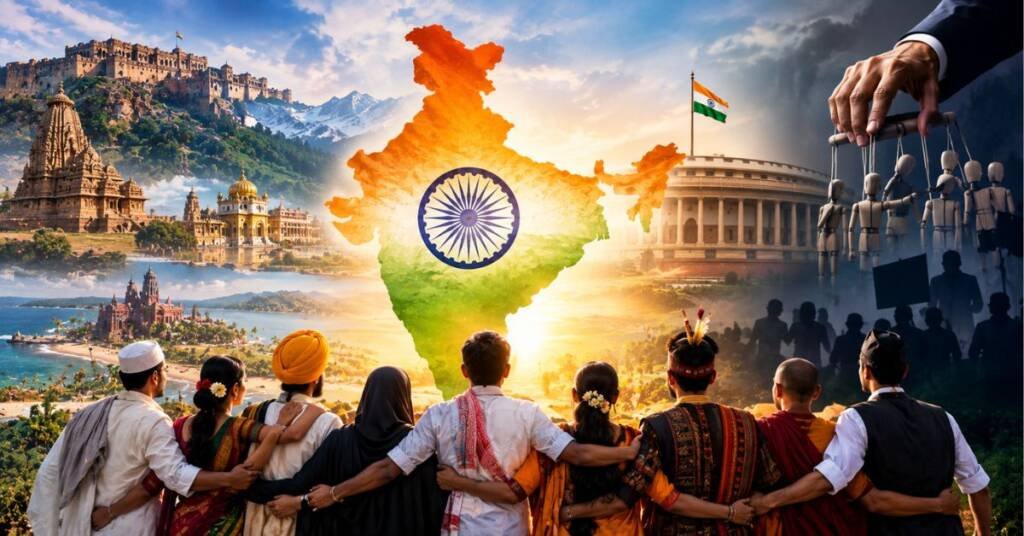
Summary
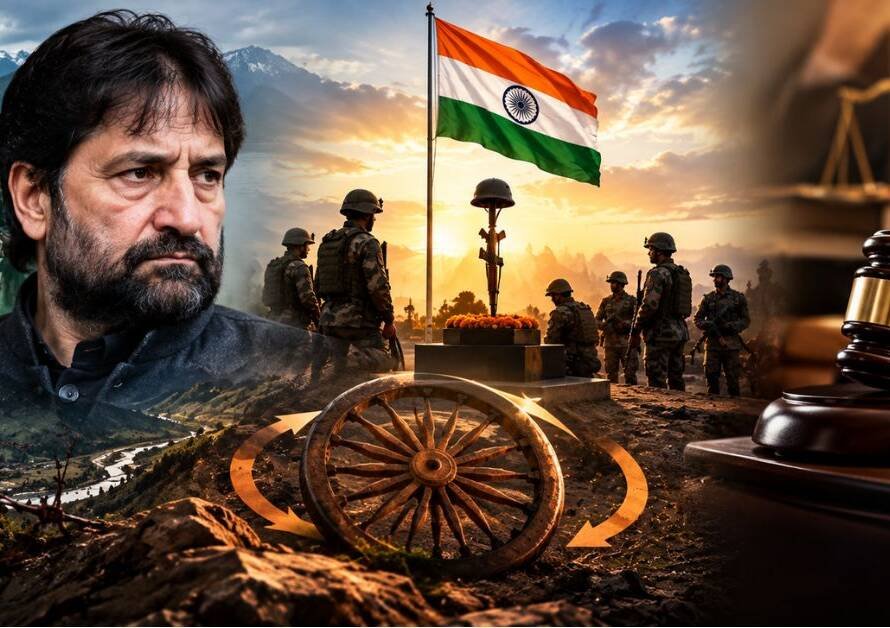
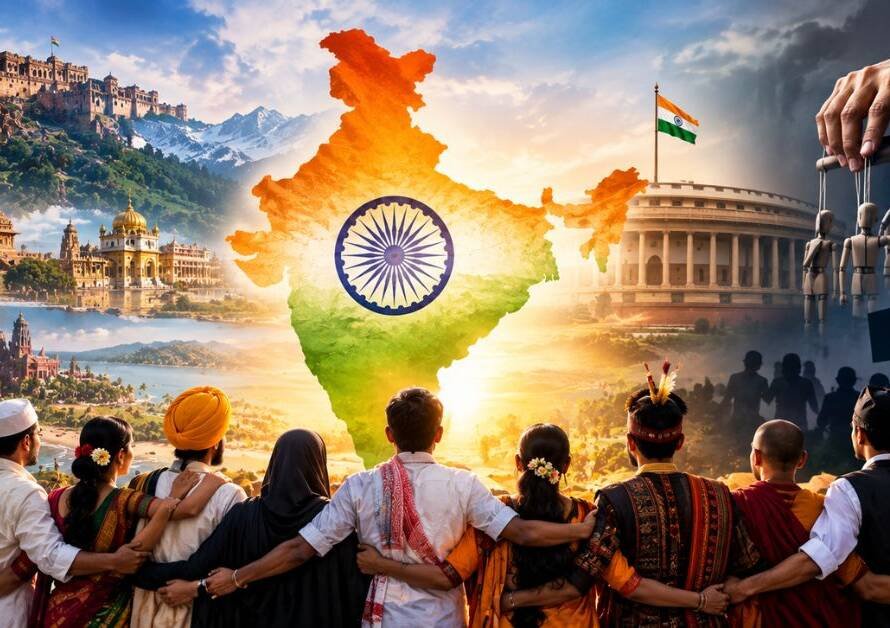
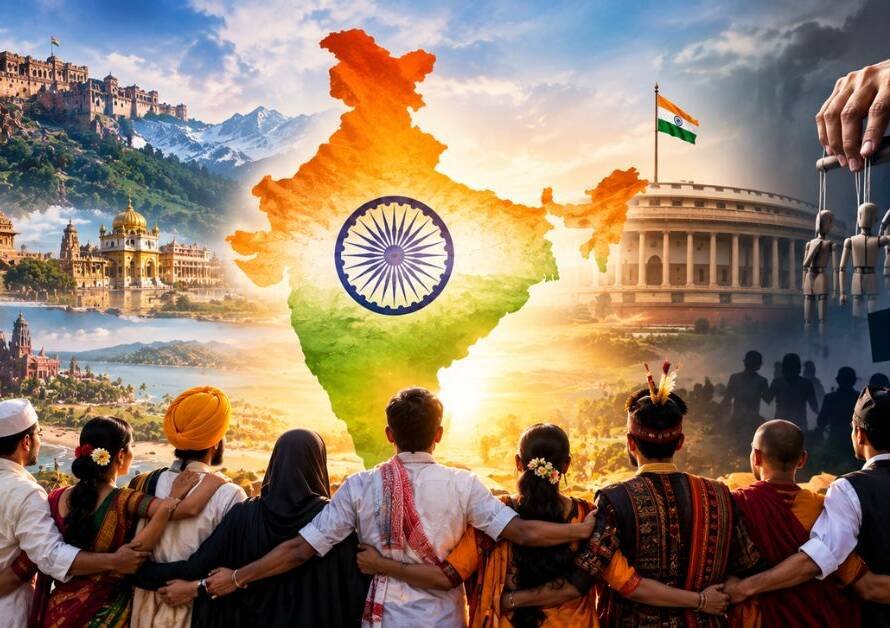
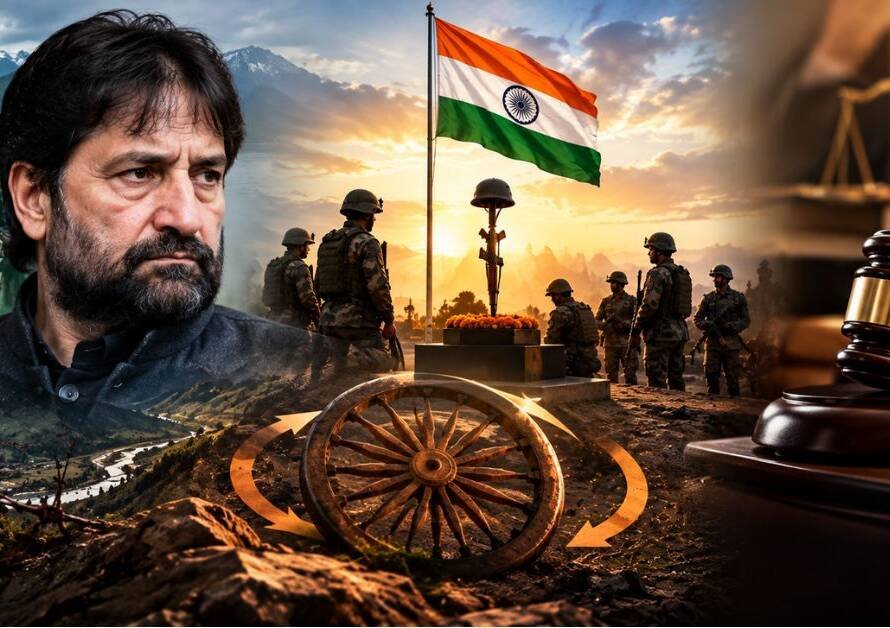
- This article presents a comprehensive analysis of the deepening social, ideological, and political divisions in contemporary India.
- Historically, caste-based parochialism, regional identity (North vs. South), linguistic disputes, and sectarian differences have weakened the internal fabric of society. For decades, Indian politics saw strategies aimed at keeping Hindu society divided into castes while securing vote banks through one-sided Muslim appeasement.
- However, the aware voters of modern India have now seen through these old divisive formulas and are consistently rejecting them. In this state of political desperation, attempts are being made to use sensitive issues like NEET, UGC, and reservations to incite youth and communities onto the streets and create instability in the country.
- This essay posits that national progress is possible only through a positive development agenda, a shared civilizational identity, social harmony, and organized national unity.
Akhand Bharat & Social Integration
Major Internal Forms of Division in Society
- Caste Politics, Ego, and the Discourse Around Caste Census
- The historically evolved division of labor turned over time into false pride of superiority and inferiority, fostering mutual distrust among various sections.
- Discourse surrounding the caste census and sub-categorization of reservations is being used to deepen political wedges among people sharing the same civilization.
- Instead of finding scientific and social solutions to historical grievances, they are being turned into the foundation for present-day animosity and electoral calculations.
- Regional and Linguistic Parochialism (North vs. South)
- Respect for regional culture and languages is natural, but when it turns into parochialism, it damages national sovereignty and the social fabric.
- Artificial controversies surrounding parliamentary delimitation, allocation of central taxes, and Hindi versus regional languages are stoked to promote a divisive “Us vs. Them” mindset.
- The blind race to prove one’s language or region superior to another destroys mutual harmony among citizens.
- Sectarian, Philosophical, and Ideological Polarization
- Followers of various streams, sects, and traditions arising from the same great civilization waste energy refuting other perspectives, treating their own path as the sole truth.
- One section rejects its cultural and historical roots in the name of modernity, while another resists necessary social reforms out of orthodoxy.
- In the digital era, social media algorithms and misleading narratives amplify ideological rigidity, eliminating direct dialogue between differing viewpoints.
The End of Traditional Politics of Division and Appeasement
- Seven Decades of Appeasement and the Vote-Bank Model
- Since independence, a strategy was employed for decades to keep Hindu society divided into castes and sub-castes to remain in power.
- On the other hand, policies of appeasement were run to use the Muslim community as a consolidated vote bank, prioritizing symbolic politics over genuine development.
- This appeasement model neither brought about real socio-economic empowerment for the minority community nor allowed the majority society to unite.
- Failure of Old Political Formulas
- Recent electoral trends clearly demonstrate that the electorate no longer makes decisions solely based on traditional caste equations or the arithmetic of appeasement.
- A new voter base that prioritizes education, infrastructure, good governance, and national security has fully understood these divisive tactics.
- Politics based on appeasement and social division has lost its relevance, and the public has outright rejected these outdated frameworks.
Desperate Attempts at Instability Through Sensitive Issues
- Politicization of NEET, UGC, and Reservations
- With traditional vote-bank equations failing, sensitive issues such as the NEET exam, new UGC guidelines, and reservations are being weaponized as political tools.
- These subjects have needed administrative and systemic reforms for decades, yet today they are being exploited not for policy improvement, but to stoke social discontent.
- Instead of seeking genuine solutions to the real concerns of youth, students, and various social groups, they are being incited to take to the streets and stage protests.
- Strategy to Destabilize the Country and Its Failure
- Lacking a solid, progressive, and visionary roadmap for development, opposing institutional decisions has become the primary political agenda.
- Attempts are being made to derail national systems and create an atmosphere of chaos by provoking public sentiments.
- Despite all these efforts, an aware populace and youth refuse to fall for such provocative politics, causing these attempts to fail repeatedly.
Lack of a Development Agenda and a Clear Message from Voters
- Absence of Positive Alternatives
- Political factions entangled in the politics of opposition have failed to present any constructive blueprint for the country’s economic progress, technological revolution, or rising global posture.
- Relying solely on negativity and anti-government campaigns has steadily eroded public trust in these parties.
- Consistent Rejection by Aware Voters
- Election results across local, state, and national levels over the past few years have made it clear that Indian citizens choose stability, decisive leadership, and development.
- By repeatedly rejecting those who engage in provocation and division, voters have sent a clear message that the country intends to move forward only on the path of progress and nation-building.
The Path to Integration and Social Harmony in the Current Scenario
- Understanding the Difference Between Matbhed (Difference of Opinion) and Manbhed (Animosity of Heart)
- In a vast democracy, differences in policies, ideas, and perspectives (matbhed) are natural and healthy.
- However, preventing ideological differences from turning into personal hostility, social bitterness, or animosity of the heart (manbhed) is the duty of every citizen.
- Civilizational Identity and Practical Social Harmony
- Rising above variations in caste, region, language, and sect, every citizen must embrace their primary identity as “One Culture, One Society, and One Nation.”
- Moving beyond theoretical rhetoric, it is imperative to completely eradicate caste discrimination, untouchability, and notions of high and low in daily life.
- Balanced Development and Organized Mutual Support
- Translating the spirit of “Together with all, Development for all, Trust of all” into reality requires ensuring equitable access to development opportunities down to the last person in society.
- Rather than pulling each other down or weakening one another, holding hands and moving forward together is the only way to realize the dream of an organized, capable, and united India.
🇮🇳Jai Bharat, Vandematram 🇮🇳
Read our previous blogs 👉 Click here
Join us on Arattai 👉 Click here
👉Join Our Channels👈
Reads & Views: 42