Preface: Introspection and Moral Awakening (Author: Sachcha Sanatani)
- After centuries of struggle and external pressures, contemporary Hindu society finds itself standing at a unique historical crossroads. While India is emerging as a global and economic power, the internal framework of its society is suffering from moral laxity, cultural superficiality, and social fragmentation.
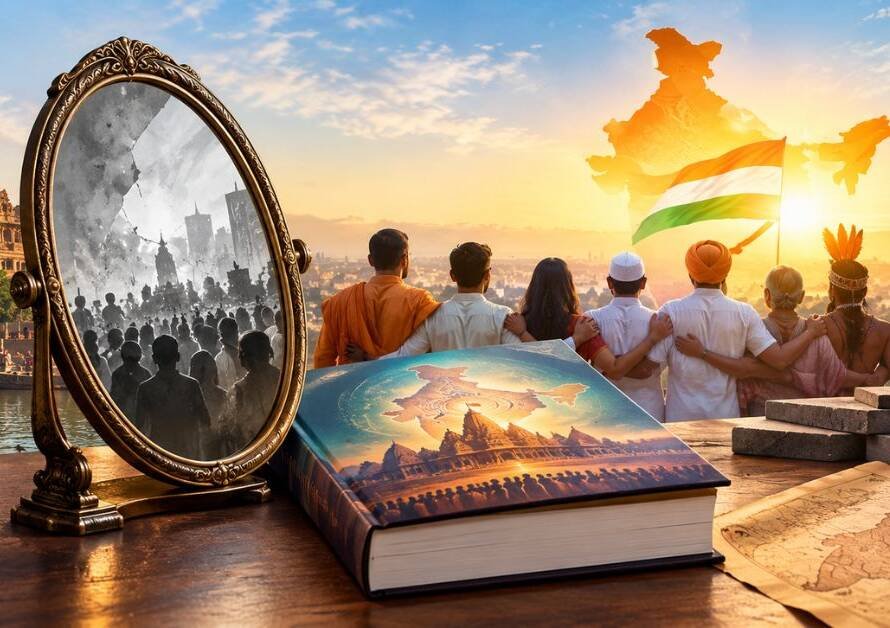
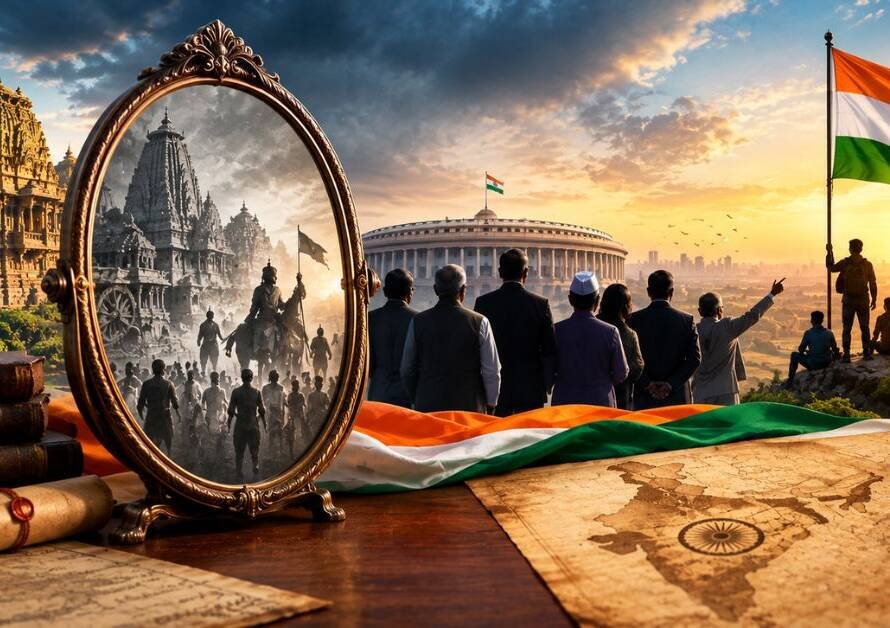
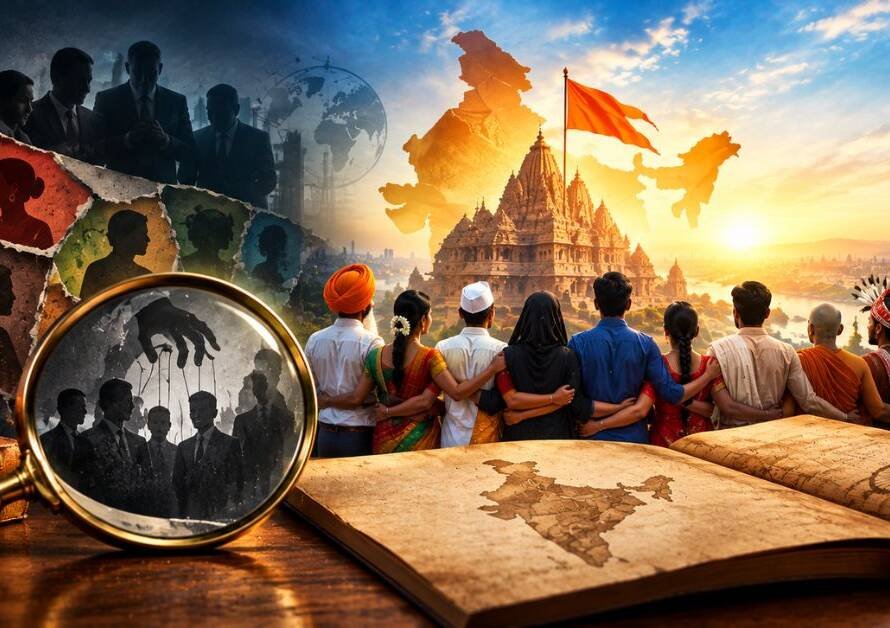
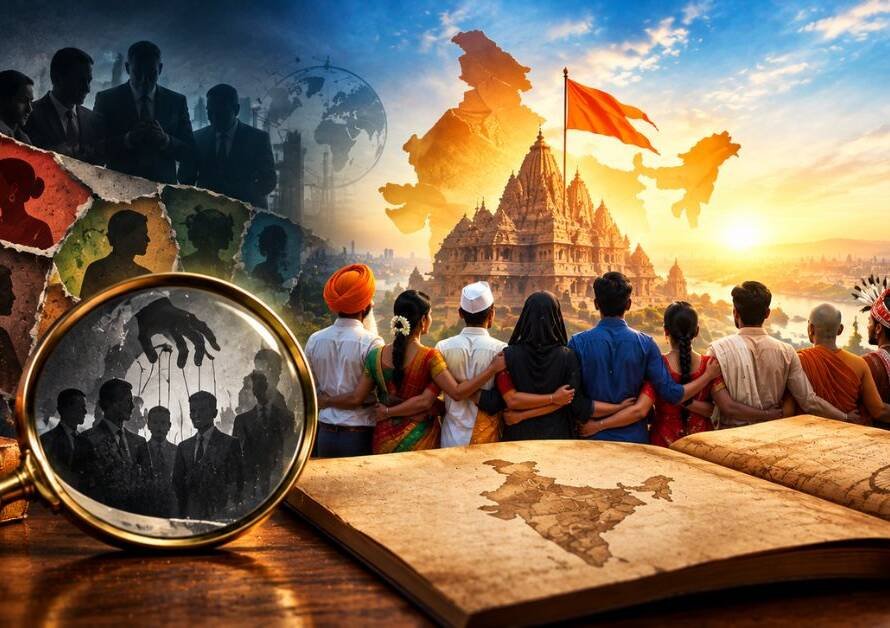
- Mirror of Hindu Society is not an abstract philosophical treatise; rather, it is a fearless attempt to present an objective, sharp, and practical mirror before Hindu society.
- This book clarifies that the resurgence of any civilization is not possible merely through external achievements or state policies, unless society itself acknowledges and rectifies its internal flaws.
- Renouncing superficial religiosity, blind imitation, and the lack of civic discipline to build a strong, united, and strategically conscious society is the core objective of this work.
- It inspires every alert citizen to understand and fulfill their cultural, social, and moral responsibilities.
Part I: Internal Fragmentation and Self-Oblivion
- The first part deeply analyzes the internal divisions, social hierarchies, and historical oblivion prevalent in Hindu society. Centuries of caste fragmentation and mutual distrust have repeatedly left society helpless before external forces.
- This section highlights how, even in modern times, regional, linguistic, and caste loyalties override civilizational solidarity. The tendency not to learn lessons from history and the sense of inferiority arising from a colonial mindset weaken the collective consciousness of society.
- Part I emphasizes that until society openly accepts its internal shortcomings, genuine social harmony and cultural security will remain impossible.
Part II: Conduct, Civic Discipline, and ‘Temple vs. Street’
- This part outlines the crisis of moral conduct and discipline in daily life within society. The principle of ‘Temple vs. Street’ (Devalaya vs. Vithi) illustrates how an individual demonstrates extreme religiosity and purity inside temples, yet fails to observe civic duty, cleanliness, and adherence to the law in public life and on the streets.
- Here, there is a strong rebuttal of the idea that ritualism and formal obligations alone constitute Dharma. True Dharma manifests in public life through truth, honesty, civic discipline, and respect for others.
- Part II reminds society that the hallmark of a cultured civilization is not its grand monuments, but the daily conduct and social discipline of its citizens.
Part III: Economic Mindset, Work Culture, and Professional Efficiency
- Cultural awakening alone is not sufficient for civilizational stability; a strong, self-reliant, and ethical economic foundation is vital. This part critically reviews the current economic mindset of Hindu society, the tendency to seek quick profits, and the disregard for a quality work culture.
- This section calls for a shift away from the blind adoration of white-collar jobs and the dismissive attitude toward skill-based labor or craftsmanship. Achieving leadership in professional excellence, scientific innovation, manufacturing, and global trade can truly make society self-reliant.
- Part III establishes economic self-reliance not merely as financial success, but as a national and moral duty (Dharma).
Part IV: Social Structure, Deprived Classes, and Cultural Inclusivity
- This part draws attention to those sections of society that have been isolated from mainstream cultural and social processes for centuries. The neglect of rural, tribal, and underprivileged communities in particular has weakened the fabric of civilizational security.
- Part IV provides concrete suggestions on how to implement genuine social harmony on the ground. Only by expanding education, healthcare, and cultural pride in deprived and tribal areas can the challenges of external proselytization and ideological conversion be countered.
- Social solidarity does not mean rhetoric on paper, but actual brotherhood, respect, and real equality of opportunities.
Part V: Youth, Media Landscape, and Ideological Awareness
- In the modern information age, the greatest crisis facing society is at the intellectual and narrative levels. This part presents a serious analysis of the growing cultural apathy, digital distraction, and skepticism toward one’s own traditions among the younger generation.
- This section offers a strategy to resolutely counter the one-sided narratives crafted by the media, entertainment industry, and modern education systems.
- Youth must be prepared to defend their cultural identity not merely emotionally, but based on logic, history, and evidence. Part V emphasizes cultivating intellectual leadership and fearlessly presenting the truth through modern digital mediums.
Part VI: Strategic Citizenship and the Duty of a ‘Saccha Sanatani’
- The final part guides society away from the role of a silent spectator toward becoming active, alert, and ‘strategic citizens.’ Here, the definition of a ‘Saccha Sanatani’ is freed from narrowness and presented in a comprehensive and responsible form.
- Strategic citizenship means obeying the law, contributing to social harmony, protecting the environment, and remaining vigilant regarding problems tied to the national interest.
- When every section of society fulfills its individual responsibilities as national duty (Rashtra Dharma), society becomes fully capable of handling any internal or external crisis.
Epilogue: A Resolve Towards Resurgence
- Mirror of Hindu Society is not merely a text highlighting shortcomings, but a clear guide for constructive and long-term reform.
- Self-criticism is the first step toward improvement, and only when a society resolves to rectify its flaws does it advance on the path of resurgence.
- The book concludes with a firm call to action: Hindu society must initiate change at an individual level to preserve and enrich its great civilizational heritage.
- Only when character building, social harmony, civic discipline, and the national interest are woven into a single thread will India truly be established as a Jagadguru and a strong civilizational nation.
🇮🇳Jai Bharat, Vandematram 🇮🇳
Read our previous blogs 👉 Click here
Join us on Arattai 👉 Click here
👉Join Our Channels👈
Reads & Views: 47