Summary:
- This comprehensive article provides a deep and candid analysis of nationalist discourse, the shifting priorities of the majority community, and the political behavior of the upper-caste and Hindu segments in modern Indian politics.
- It highlights how immediate discontent and group-specific interests (such as opposition to reservation policies) are leading the very community that benefited from the Modi government’s historical cultural, strategic, and economic decisions over the past decade to oppose Narendra Modi.
- Set against the backdrop of the 2024 general election setbacks—particularly in Uttar Pradesh and Ayodhya—this piece warns that if the community allows its unity to fracture, the future will prove self-defeating from cultural, social, and political standpoints.
The Political Future of India
1. A New Chapter of Ingratitude and the Clash of Self-Interest
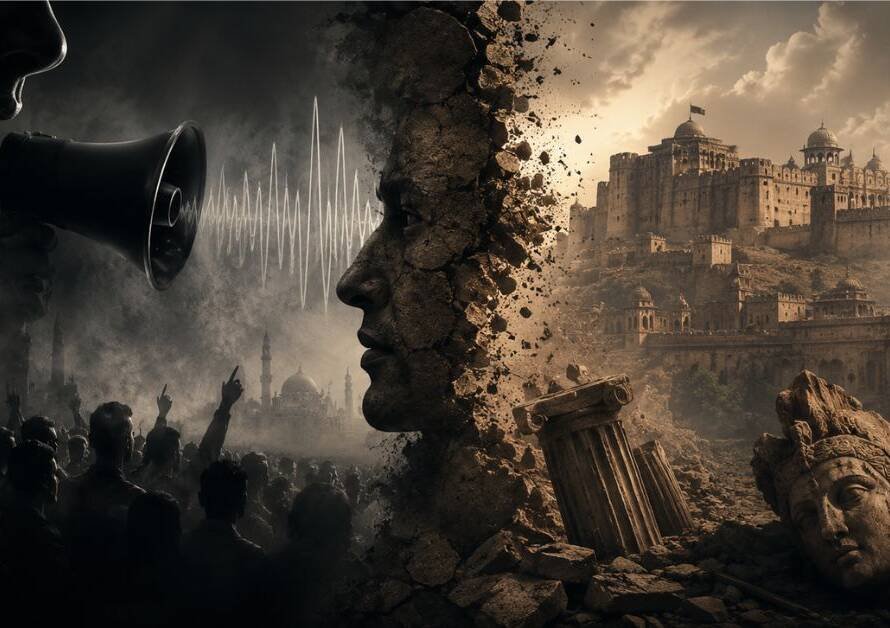
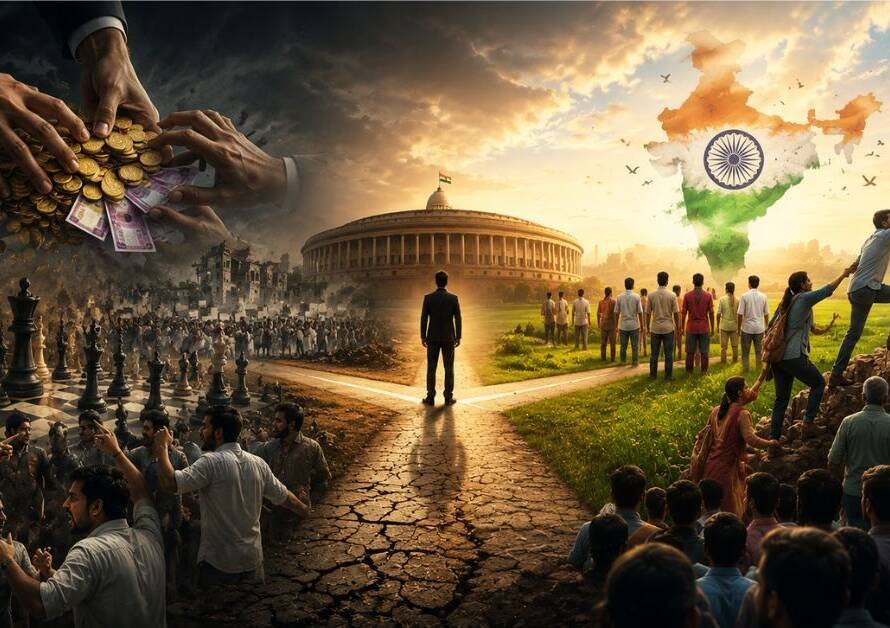
There was a time in the history of Indian politics when the desire to remove Narendra Modi from power was shared primarily by opposition parties, left-leaning ecosystems, and specific vote banks driven by appeasement policies. Today, however, the stark reality is that a significant section of the Hindu and upper-caste population has begun using that very same language. This situation reflects a civilizational lapse where short-term individual or caste-based self-interest takes precedence over long-term national interests:
- Alienation from Nation and Faith: Few seem concerned about the direction in which the nation is heading or what kind of secure future is being left behind for coming generations. Every group is evaluating government performance through the narrow lens of immediate personal gain and entitlements.
- The Politics of Short-Term Gain: When a society’s worldview shrinks to ‘what did I get?’, it hesitates little before sacrificing its own cultural and national protectors.
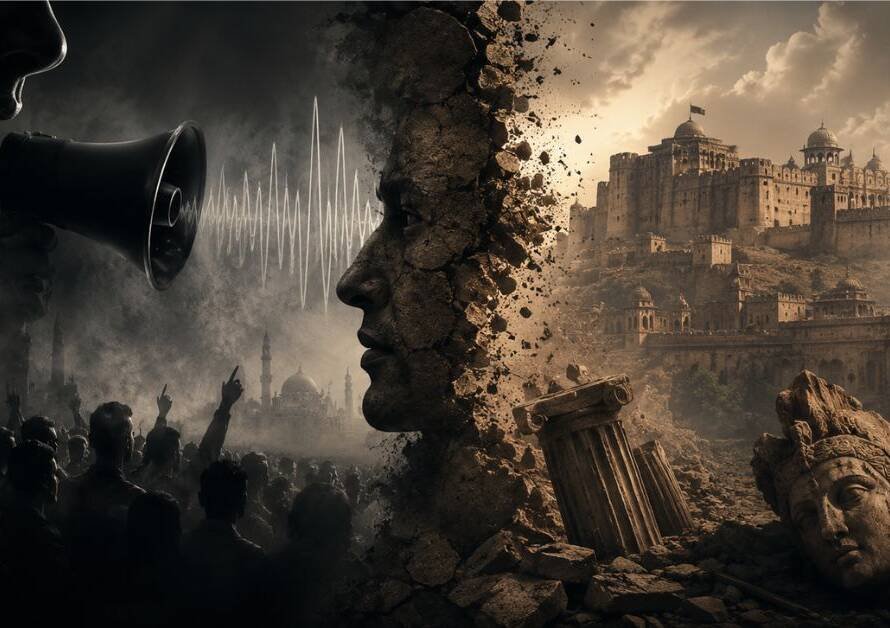
- Political Shortsightedness: History demonstrates that whenever the majority community becomes entangled in micro-level internal differences while ignoring existential and cultural realities, national sovereignty suffers severe blows.
2. A Decade of Unprecedented Work and Societal Indifference
The landmark transformations witnessed across the country over the past decade are currently being dismissed or overlooked simply because they do not immediately satisfy certain personal aspirations. Viewed objectively, the decisions of the Modi government were designed not for any single group, but to fortify the foundation of the entire nation:
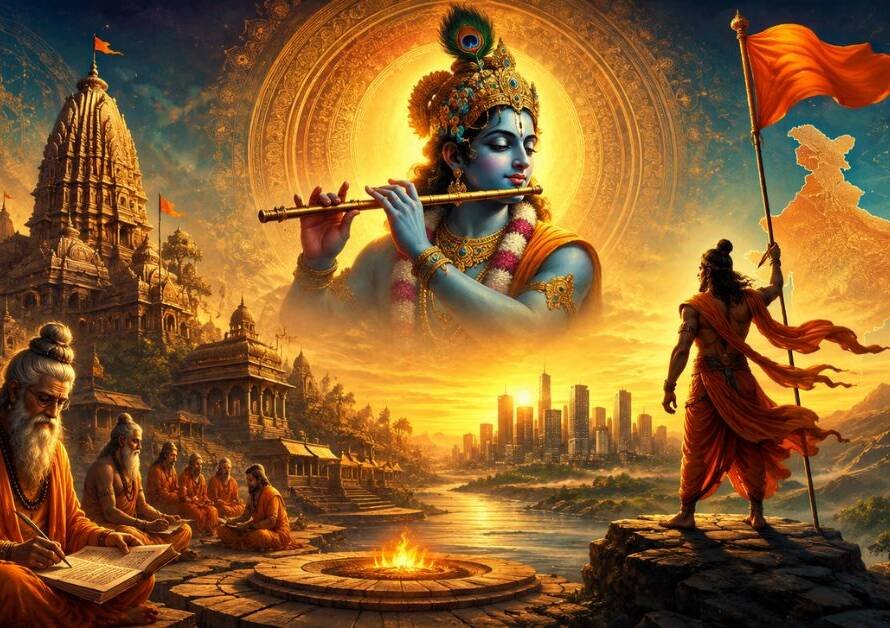
- Civilizational and Cultural Renaissance:
- Construction and consecration of the grand Shri Ram Janmabhoomi Temple in Ayodhya following 500 years of struggle and legal battles.
- Revitalization of the Kashi Vishwanath Dham, Ujjain’s Mahakal Lok, and Kedarnath-Badrinath, restoring India’s cultural soul.
- National Security and Constitutional Reforms:
- Historic abrogation of Articles 370 and 35A in Jammu & Kashmir, fully integrating the nation’s territorial and constitutional integrity.
- Direct counter-strikes against cross-border terrorism via surgical and air strikes, alongside clamping down on internal extremist networks.
- Military Empowerment and Global Standing:
- Boosting indigenous defense production under ‘Make in India’, equipping the armed forces with modern weapons, fighter jets, and naval vessels.
- Elevating India’s international image from a seeking nation to an established global power.
- Economic and Social Inclusion:
- Direct benefits providing pucca housing, sanitation facilities, Ujjwala gas connections, and tap water access to millions of underprivileged citizens.
- Connecting every citizen to the formal banking system via Jan Dhan accounts, dealing a blow to corruption through technology-driven Direct Benefit Transfers (DBT).
- Executing the world’s largest free vaccination drive for 1.4 billion citizens and running the largest free food security program during the global COVID-19 pandemic.
3. From Jantar Mantar to Reservation: Contradictions and Historical Apathy
The contradiction visible today among a section of the upper-caste and Hindu community is politically shortsighted:
- The Misleading Narrative on Reservation: Those opposing Modi at Jantar Mantar or on social media over the non-abolition of reservations overlook the historical fact that the constitutional framework of reservations was not enacted by Narendra Modi.
- The Risk of Aligning with Opposing Forces: In seeking alternatives to Modi over reservation concerns, sections of society are unwittingly leaning toward political coalitions whose core philosophy centers on caste-based censuses, expanding reservation limits, and identity-driven appeasement.
- The Reality of Political Arithmetic: If a government were to end reservations, there is no guarantee that marginalized and tribal communities would remain passive. Should those demographics pivot elsewhere, it is questionable whether today’s dissatisfied upper-caste voter would remain a firm base.
4. The 2024 Election Results: A Stern Warning
The reduction of the Bharatiya Janata Party’s tally from 303 to 240 seats in the 2024 Lok Sabha elections represents more than a routine electoral shift—it signals growing internal fragmentation within the Hindu fold:
- The Setback in Ayodhya: In the very constituency of Ayodhya, for which generations sacrificed over centuries, an electoral loss sent a surprising signal globally.
- The Mandate in Uttar Pradesh: Seat losses in a state led by a resolute administrator and prominent cultural figure like Yogi Adityanath indicate that local caste equations and immediate grievances overshadowed national and cultural consciousness.
- Exploitation of Internal Rifts: When nationalist forces fragment, anti-national and radical elements organize to leverage the political vacuum to their advantage.
5. National Service at Age 76 and Societal Indifference
At 76 years of age, working tirelessly without taking a single day off in service of the nation, the societal indifference shown toward a public leader reflects a form of cultural apathy:
- Online commentators, political analysts, and social media users frequently use harsh language against leadership.
- Extremely low-level and offensive remarks are directed at personal life and even deceased family members.
- Despite this, decisions continue to be taken quietly, rooted in the belief that the nation’s security-conscious and cultural core stands firm.
However, when every section prioritizes narrow self-interest above all else, individual dedication alone cannot easily sustain collective consciousness.
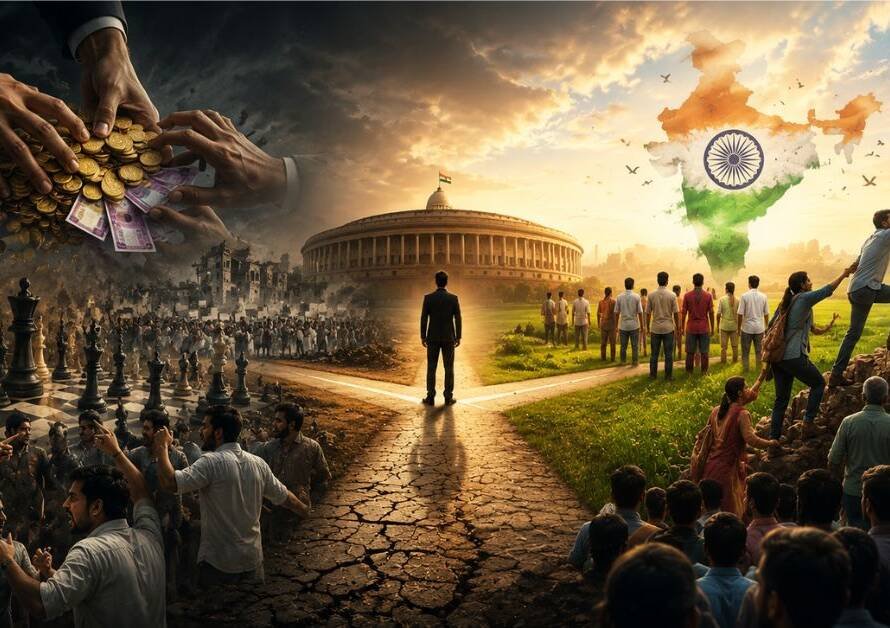
6. A Warning for the Future: ‘India After Modi?’
Every forward-looking citizen must contemplate what India’s political and social landscape might look like once Narendra Modi is no longer in office:
- The Illusion of Caste-Based Protection: Caste entity or social status alone will not guarantee political or physical security.
- The Return of Appeasement Politics: The political forces positioned to gain power after Modi have a documented track record of relying on selective appeasement, suppressing cultural symbols, and deepening caste divisions.
- Internal Security Risks: A return to policy-level appeasement allows radical and anti-national elements space to re-emerge, impacting the very sections of society currently expressing short-term dissatisfaction.
- Current times demand decisions based on long-term national vision rather than immediate personal grievances.
- History rarely forgives societies that weaken their own protectors during critical junctures due to minor internal differences.
- Decisions must be made keeping in mind the integrity of the nation, the safety of future generations, and our cultural identity.
🇮🇳 Jai Bharat, Vandematram 🇮🇳
Read our previous blogs 👉 Click here
Join us on Arattai 👉 Click here
👉Join Our Channels👈