Summary
- This comprehensive analytical narrative evaluates the national security landscape of Bharat, detailing the interplay between intelligence interdiction, counter-subversion, and institutional leadership transition.
- The analysis details how security agencies executed a synchronized multi-state operation to dismantle the Pakistan-based, ISI-backed Shahzad Bhatti Network, apprehending over 200 operatives across 14 states and seizing military-grade ordnance.
- Parallel to neutralizing cross-border modules, the narrative examines the IB-led operation at Delhi’s Jantar Mantar, where authorities safely transferred activist Sonam Wangchuk to Safdarjung Hospital in full compliance with judicial mandates, maintaining a zero-casualty posture to thwart manufactured martyrdom plots.
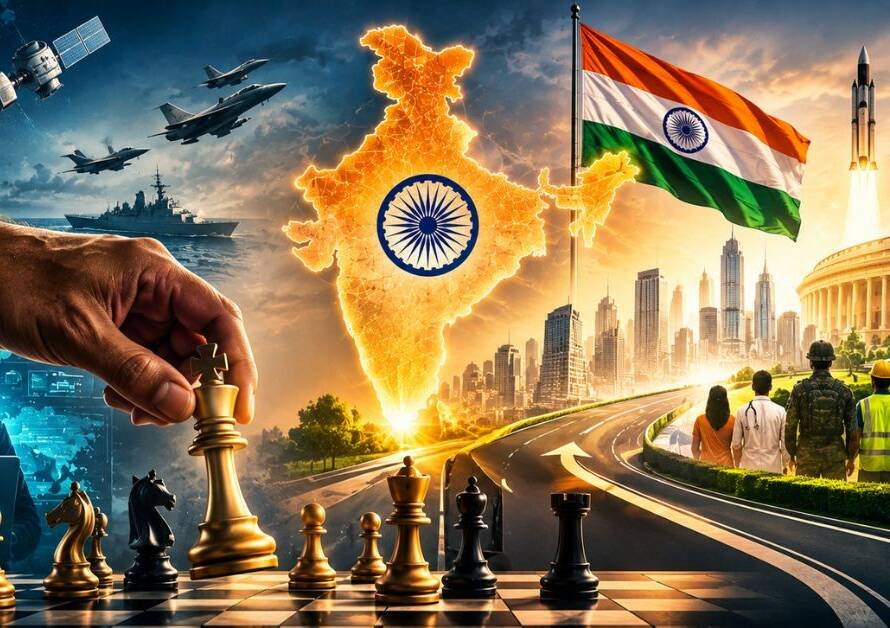
- The piece advocates for maintaining central leadership continuity anchored by Prime Minister Narendra Modi and Home Minister Amit Shah to preserve geopolitical deterrence and ensure that emerging regional leaders—such as Yogi Adityanath, Himanta Biswa Sarma, Pushkar Singh Dhami, and Suvendu Adhikari—have adequate operational runway to mature before stepping into higher national governance roles.
Strategic Continuity and the Future of Bharat’s Governance
I. The Mechanics of Internal Subversion & The Jantar Mantar Interdiction
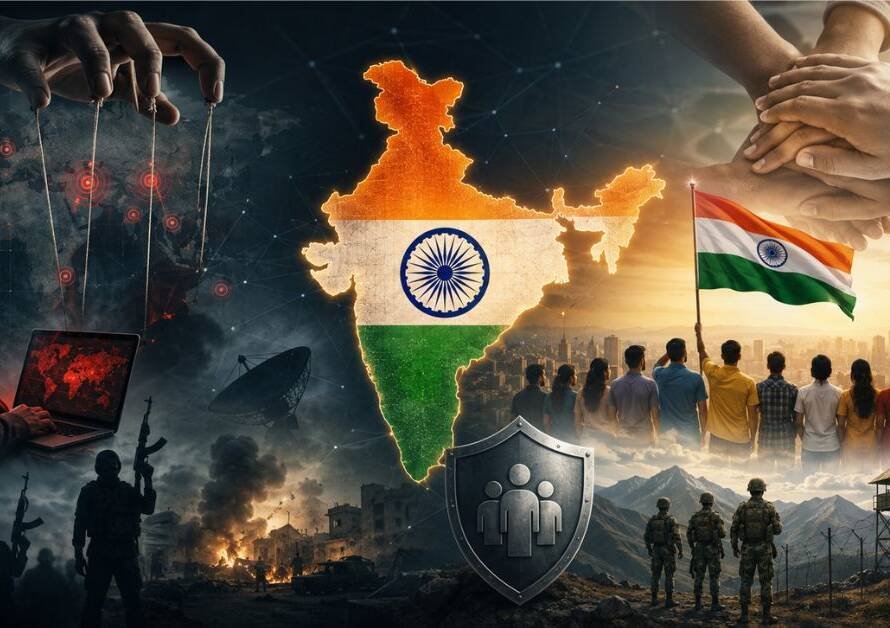
The high-voltage agitation at Delhi’s Jantar Mantar—involving activist Sonam Wangchuk’s extended hunger strike and the “Chalo Sansad” push—exposed a calculated blueprint executed by foreign-funded toolkits, political opportunistic groups, and domestic subversive elements (“deemaks”).
- Weaponization of Public Agitations: Localized grievances were co-opted by radical outfits and urban subversives to transform a targeted demonstration into a volatile constitutional confrontation aimed directly at New Delhi’s administrative corridors.
- The Manufactured Martyrdom Strategy: Subversive handlers actively discouraged medical intervention and pushed Wangchuk to persist in an indefinite fast. By exploiting his deteriorating physical condition (over 9 kg weight loss and severe dehydration), these handlers sought to manufacture a tragic emotional flashpoint to trigger street violence.
- Attempting Cross-Border Instability Models: The timing of the “Sansad Chalo” march was planned to coincide with the opening of Parliament, seeking to provoke law enforcement into lethal confrontation and replicate street-led regime instability seen in neighboring nations.
- Deployment of Global Disinformation Toolkits: When authorities intervened under judicial mandates to safely transfer Wangchuk to Safdarjung Hospital for specialized care, foreign-funded NGOs and deep-state networks unleashed coordinated narratives alleging state oppression to damage Bharat’s global reputation.
II. Predictive Intelligence and Zero-Casualty Law Enforcement
The central executive responded to the escalating security threat with an intelligence-driven operation designed to protect human life while asserting sovereign order.
- Strategic Shift to Predictive Policing: The appointment of IPS officer Anurag Kumar—a veteran with over two decades of leadership as Special Director in the Intelligence Bureau (IB)—as New Delhi Police Commissioner signaled a structural shift toward predictive intelligence, interception of illegal funding pipelines, and real-time counter-subversion.
- Synchronized Medical Interdiction: Operating under strict compliance with Delhi High Court orders and expert medical panels, security forces executed an early-morning operation to transfer Wangchuk safely to Safdarjung Hospital, neutralizing attempts to exploit his health crisis.
- Zero Casualty Execution: By establishing strict containment cordons and exercising maximum tactical restraint without deploying lethal force, law enforcement completely cleared the site without a single casualty. This operation effectively dismantled the plan to incite public riots.
III. Cross-Border Security Operations: Dismantling the Shahzad Bhatti Network
Parallel to addressing urban subversion, the central security architecture executed a multi-state operation dismantling the Pakistan-based, ISI-backed Shahzad Bhatti Network.
- Mass Multi-State Crackdown: Union Home Minister Amit Shah announced that coordinated operations across 14 states led to the detention and arrest of over 200 operatives linked to the syndicate, frustrating planned attacks ahead of national celebrations.
- Seizure of Military-Grade Assets: Security agencies recovered substantial contraband, including Improvised Explosive Devices (IEDs), grenades bearing Pakistan Ordnance Factory markings, illegal firearms, and surveillance equipment used for espionage against sensitive infrastructure.
- Neutralizing Cross-Border Recruitment: Investigations revealed that the module paid local conduits to conduct reconnaissance of defense, police, and religious sites, proving direct state-sponsored cross-border coordination.
- Preserving a Well-Functioning System: The current central leadership—headed by Prime Minister Narendra Modi and Home Minister Amit Shah—functions as a synchronized security mechanism. Disrupting this core team risks creating operational friction during a period of high global geopolitical volatility.
IV. Regional Leadership Synergy and Policy Replication
While the central government establishes overall strategic policy, key regional Chief Ministers and leaders serve as vital pillars for internal security, border management, and administrative discipline.
- Yogi Adityanath (Uttar Pradesh): Established a comprehensive zero-tolerance model against organized crime, illegal encroachments, and mafia networks, restoring law and order across India’s most populous state.
- Himanta Biswa Sarma (Assam): Executed firm administrative measures to counter illegal border crossings, demographic distortions, and insurgent infrastructure across the Northeast.
- Pushkar Singh Dhami (Uttarakhand): Championed legislative frameworks targeting land preservation, demographic balance, and civil governance reforms to safeguard border regions.
- Suvendu Adhikari (West Bengal): Spearheaded opposition efforts against political violence, institutional corruption, and unmonitored border infiltration dynamics in eastern India.
- Inter-State Administrative Policy Exchange: These leaders must actively collaborate with other NDA-governed states to share operational strategies, implement clean-up campaigns against anti-national ecosystems, and enforce uniform law enforcement standards across the country.
V. Geopolitical Realities, Continuity of Leadership, and Strategic Roadmap
Maintaining executive continuity at the central level is a primary strategic imperative to navigate complex international shifts and safeguard national sovereignty.
- Global Geopolitical Deterrence: Prime Minister Narendra Modi’s global stature functions as an essential shield against foreign intervention, economic pressure campaigns, and ideological subversion during periods of global realignment.
- Providing Maturation Runway for Emerging Leaders: Maintaining the current executive team allows second-tier national and regional leaders to gain necessary experience in complex policy design, foreign relations, and strategic adminisration before stepping into higher national responsibilities.
- Merit-Based Governance: National leadership must be determined strictly by administrative competence, strategic vision, and sovereign resolve, ensuring long-term civilizational stability and growth.
🇮🇳Jai Bharat, Vandematram 🇮🇳
Read our previous blogs 👉 Click here
Join us on Arattai 👉 Click here
👉Join Our Channels👈