Summary
- This comprehensive narrative presents an in-depth analytical evaluation of two fundamentally opposing political paradigms shaping modern India: performative optics driven by vote-bank appeasement and short-term freebie politics versus progressive, capability-driven governance dedicated to national sovereignty, fiscal discipline, and institutional equality.
- Examining the historical legacy of selective regulations—from the suppression of constitutional directives like Article 44 to the creation of parallel structures like the Waqf Act—this commentary contrasts decades of state-level wealth depletion and systemic leakages with a progressive administration’s focus on economic resilience, infrastructure, direct benefit transfers, and global stature.
- By evaluating political branding, digital media scrutiny, and the influence of vested external interests, this document outlines the imperative for an informed electorate to reject unsustainable subsidy politics and support honest, capable, and progressive leadership to ensure India’s trajectory toward becoming a resilient global superpower.
Performative Politics and Public Image
1. Performative Leadership vs. Progressive Capability
The defining division in contemporary Indian politics lies between curated public relations and measurable administrative execution. Modern democratic governance requires an electorate that can distinguish between staged symbolic gestures and actual policy capability.
- Elevating Spectacle Over Substance: Performative leadership relies heavily on staged physical displays—such as standing in the rain during a speech, taking a dive in the ocean, riding a motorcycle through remote regions, or organizing dramatic outdoor protests—which are routinely amplified by partisan networks to construct an illusion of leadership capability.
- The PR-Policy Disconnect: Physical endurance and curated photo opportunities require no fiscal planning, legislative compromise, or administrative execution. Conflating political PR stunts with the complex qualifications needed to govern a diverse nation of 1.4 billion people reveals a fundamental flaw in partisan logic.
- Progressive Execution vs. Theatrical Display: While a performative paradigm relies on constant self-eulogy and manufactured optics, progressive leadership operates silently to build digital public infrastructure, modernise physical connectivity, streamline national taxation, and strengthen defense capabilities without relying on media-driven spectacle.
- Direct Benefit Transfer and Zero-Leakage Governance: Under a progressive administration, governance systems operate with plug-and-play transparency. By eliminating corrupt middlemen and plug-in points for administrative siphoning, national development is driven by leak-proof execution where public funds directly reach intended projects and beneficiaries rather than illicit private pockets.
- The Sycophancy Engine: Partisan echo chambers transform routine public relations into historic events, measuring political loyalty by a supporter’s willingness to defend the spectacle rather than evaluate tangible governance outcomes.
2. The Freebie Illusion: Decades of Loot and Economic Dependency
For nearly seven decades, performative leadership maintained electoral control by redistributing a fraction of public wealth as populist handouts while draining the national state exchequer.
- The Subsidy Trap: By offering short-term freebies funded by the public treasury, performative leaders kept large sections of the population financially dependent and structurally impoverished, ensuring a reliable, generation-spanning vote-bank cycle.
- Fiscal Bankruptcy in State Administration: States currently governed by performative opposition coalitions face severe economic distress. Due to unfunded welfare guarantees and fiscal imprudence, several state governments struggle to meet basic administrative obligations, including paying utility bills, funding infrastructure, and disbursing employee salaries.
- Institutionalized Leakage: Under performative governance, state resources were systematically siphoned off at multiple layers of government, leaving the public dependent on minor welfare doles while vast wealth was extracted by entrenched political networks.
- The Existential Risk to National Sovereignty: If performative leadership were to regain power at the national level, the reintroduction of unchecked freebie economics, systemic corruption, and fiscal irresponsibility could regress India’s hard-won economic gains within one to two decades—risking the country’s transformation into a fragile, economically distressed nation similar to regional neighbors like Pakistan or Bangladesh.
3. Historical Contradictions and Distorted Secularism
The distorted model of secularism adopted in post-independence India created deep social divisions by prioritizing selective policy implementation over equal protection under the law.
- The Contradiction of Partition: The 1947 Partition took place under the ‘Two-Nation Theory’ based on religion. When a separate nation was carved out, continuing policies that offered special privileges based on the same religious identity created long-standing institutional inconsistencies in remaining India.
- Selective Constitutional Compliance: While Article 44 of the Constitution explicitly directs the State to implement a Uniform Civil Code (UCC), past performative administrations kept it dormant out of political expediency while imposing selective reforms like the Hindu Code Bill on the majority community.
- Parallel Systems: Non-constitutional bodies were granted authority to prioritize faith-based personal laws in civil matters such as marriage, divorce, and property inheritance, undermining the principle of a single, sovereign legal framework for all citizens.
- Weaponization of Division: Performative leaders consolidated minority blocs as unified vote-banks while deliberately fragmenting the majority community along caste, regional, and linguistic lines to prevent the rise of a cohesive, demanding electorate.
4. Institutional Asymmetry and Fiscal Double Standards
The contrast between performative governance and a progressive administration is clearly reflected in how institutions, public resources, and religious properties have been managed across the country.
- Double Standards on Religious Places: While rich Hindu temples were brought under direct state control through ‘Hindu Religious and Charitable Endowments’ (HR&CE) laws—with their revenues diverted to state accounts or non-religious uses—other places of worship enjoyed complete administrative and financial autonomy.
- The Waqf Act (1995): The creation and expansion of the Waqf Board granted unbridled powers to declare private, public, or historical properties as Waqf without standard judicial review in civil courts, creating an autonomous property framework above standard legal scrutiny.
- Asymmetry in Educational Governance: Laws like the Right to Education (RTE) Act were strictly enforced on majority-run educational institutions, burdening them with regulatory compliance, while minority-run institutions were granted exemptions, creating a tilted educational landscape.
- Reforming Structural Asymmetry: A progressive government seeks to dismantle these unbalanced frameworks by advancing a Uniform Civil Code, proposing comprehensive Waqf board reforms, freeing temples from state interference, and establishing uniform legal and fiscal standards across all communities.
5. Media Architecture, Rhetoric, and Foreign Interference
The evolution of the media landscape has altered how political credibility is tested, exposing the gap between manufactured narratives and empirical reality.
- Pre-2014 Legacy Branding vs. Post-2014 Digital Scrutiny: Prior to 2014, legacy media networks often shielded designated political heirs from unscripted testing. The rise of decentralized digital platforms has subjected all public figures to real-time fact-checking, archival comparisons, and parliamentary scrutiny.
- Factual Inaccuracies and Narrative Warfare: When performative rhetoric relies on mathematical absurdities—such as referencing 750 crore students in a country of 1.4 billion—or contradicts past policy stances, public credibility erodes rapidly.
- Alignment with Vested External Interests: Having lost sustained domestic support, performative opposition rhetoric increasingly aligns with foreign deep-state networks, biased international rankings, and unverified data to discredit India’s economic growth, subvert democratic outcomes, and tarnish the nation’s global image.
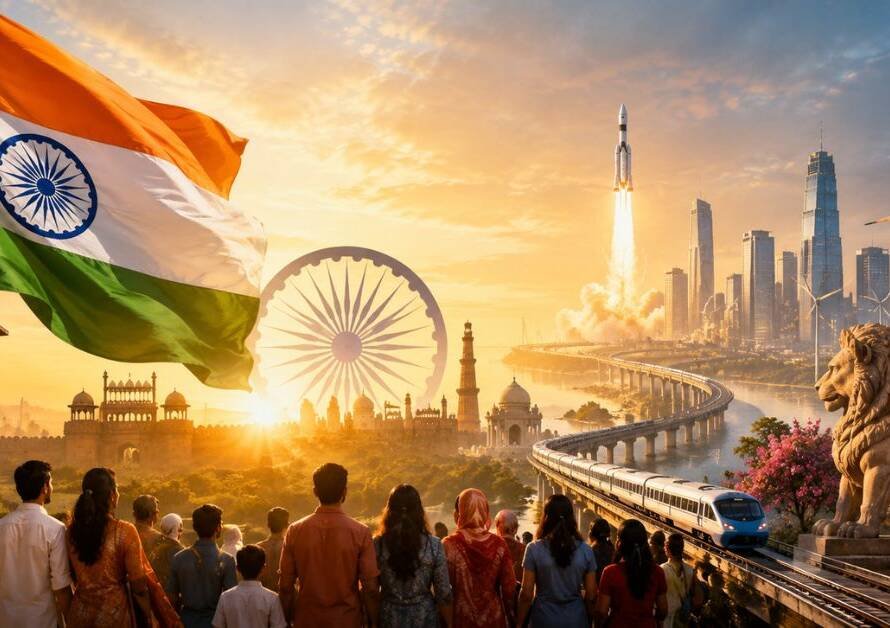
- Elevating India’s Global Stature: In contrast, progressive leadership’s quiet diplomacy, strategic autonomy, and fiscal discipline have established India as a major engine of global economic growth and a decisive, respected leader in multilateral global forums.
6. Cultural Resurgence and National Security
A nation’s sovereignty depends on protecting its border integrity, internal security, and authentic cultural heritage from political subversion and narrative distortion.
- Addressing Demographic Threats: In border states, historical leniency toward illegal infiltration for vote-bank arithmetic altered local demographics and strained national resources. Progressive administration has prioritized border fencing, biometric identification, strict monitoring, and demographic security.
- Firmness on National Security: Past hesitations in countering terrorism out of fear of losing electoral bases have been replaced by a zero-tolerance policy toward subversion, cross-border terrorism, and radicalization, greatly bolstering the morale of national security agencies.
- Reclaiming Cultural Pride: Distortion in historical narratives—where foreign invaders were glorified while national icons like Chhatrapati Shivaji Maharaj, Maharana Pratap, and Lachit Borphukan were marginalized—is being actively corrected through a broader cultural renaissance that honors India’s authentic civilization.
7. The Path to Becoming a Superpower
For India to achieve its destiny as a global superpower, the nation must make a decisive, permanent break from performative leadership and unsustainable populist handouts.
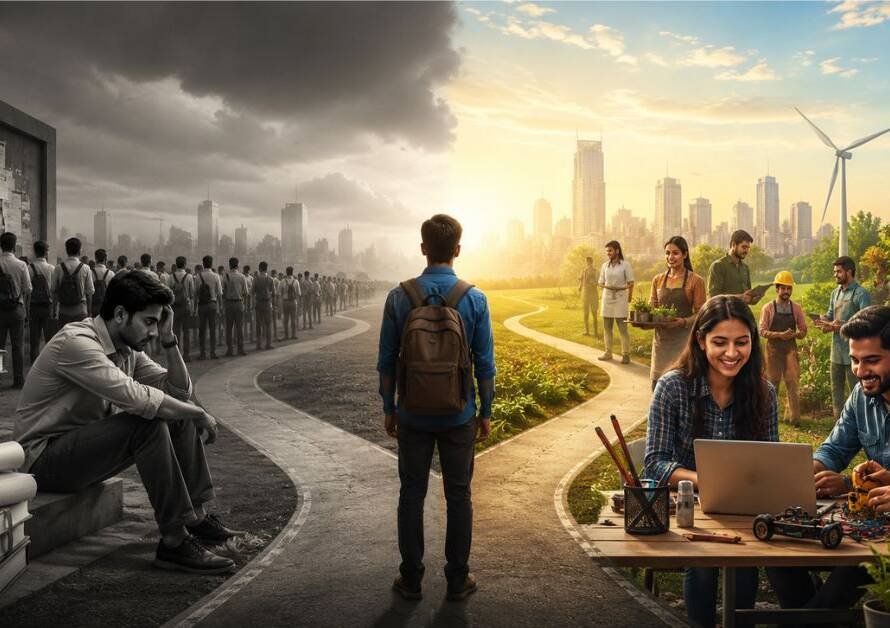
- Rising Above Freebie Politics: Long-term national prosperity requires shifting public expectations from short-term state subsidies to sustainable economic empowerment, fiscal discipline, skill development, and robust infrastructure.
- Sustaining Progressive Performance: Building a resilient nation demands supporting honest, capable progressive leadership for the coming decades—one that eliminates corruption, protects national sovereignty, enforces equal laws, and fosters innovation.
- Substance Over Spectacle: A mature democracy thrives when its citizens reject narrative warfare, demand factual integrity, and support policies that safeguard the nation’s unity, economic health, and global standing.
“Think critically, evaluate on merit, reject freebie culture, and demand substance over spectacle in the service of the nation!”
🇮🇳 Jai Bharat, Vandematram 🇮🇳
Read our previous blogs 👉 Click here
Join us on Arattai 👉 Click here
👉Join Our Channels👈