Summary:
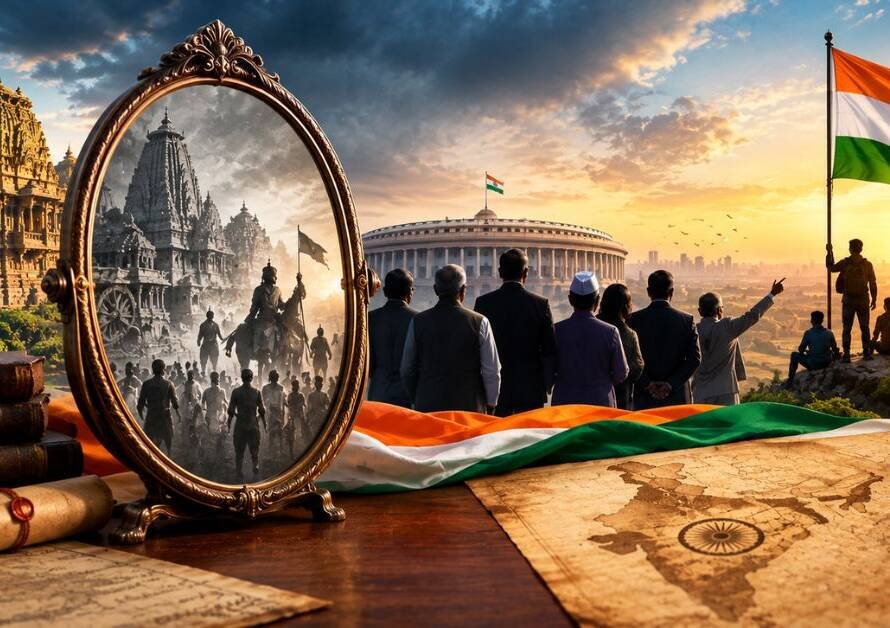
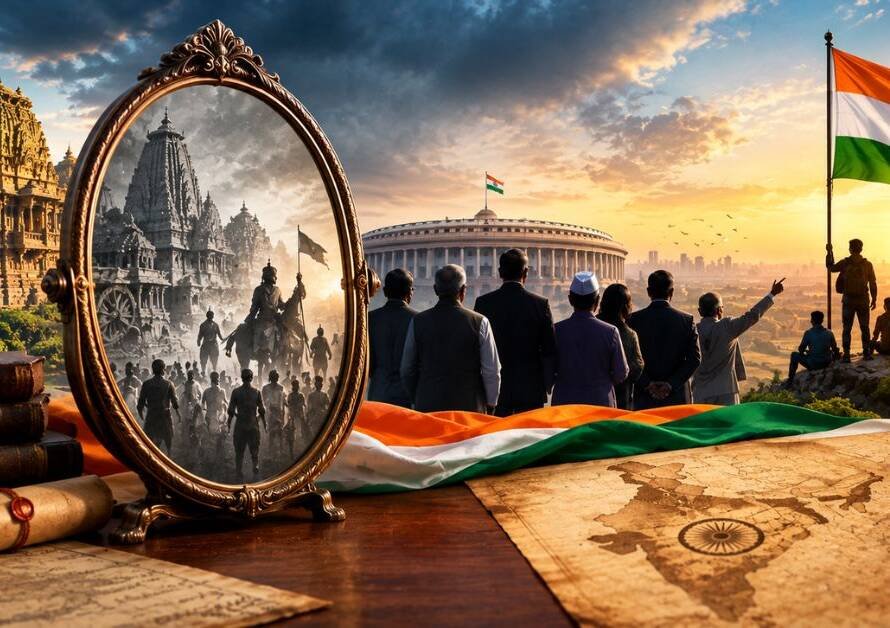
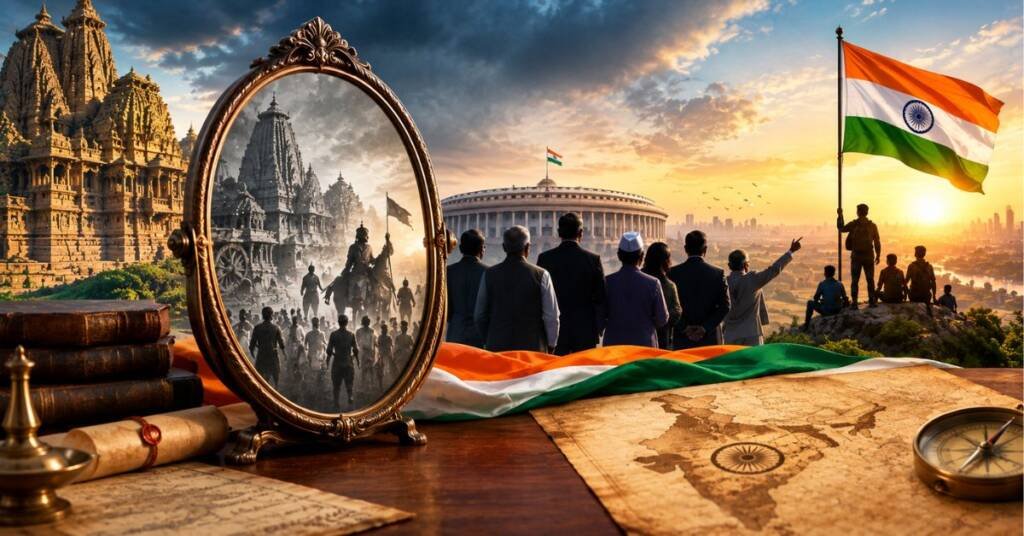
- This analysis contrasts the socio-political, security, economic, and infrastructural challenges of pre-2014 India with the structural transformations of the post-2014 era.
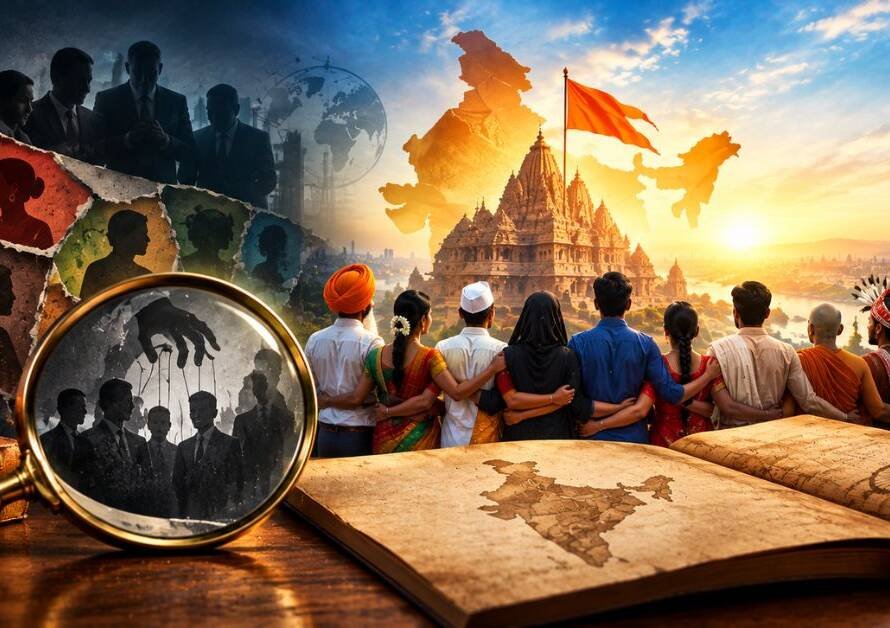
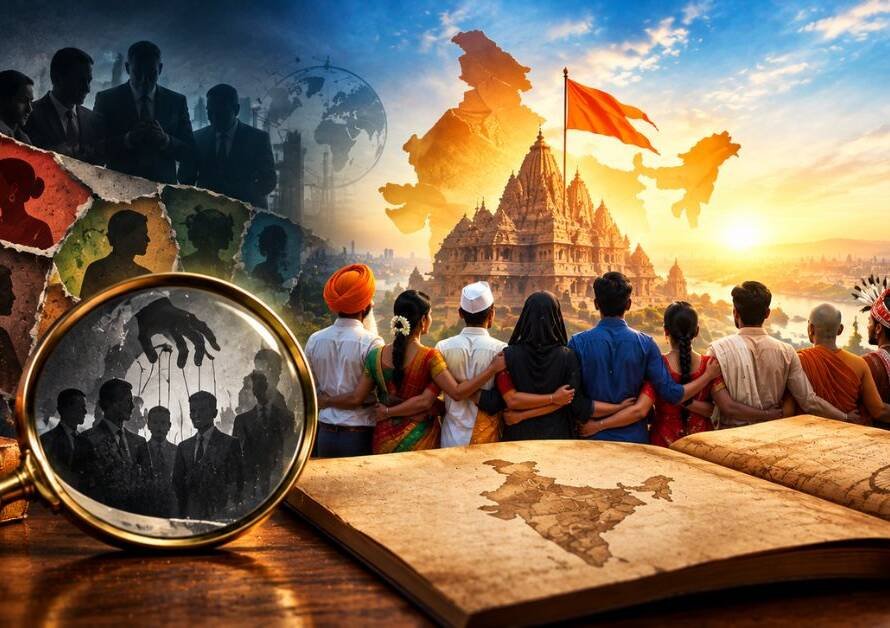
- It dismantles the narrative pushed by former rulers who attempt to conceal their failures while questioning the progress of the last 12 years.
- By examining historical wounds, administrative paralysis, and border vulnerabilities, this document highlights how decisive leadership, Atmanirbhar Bharat (Self-Reliant India), and active civic duty are shaping the nation into a strong global superpower.
History, Political Irony & India’s Transformation
I. Political Irony: Dynastic Rhetoric vs. Global Reality
- The Paradox of Pre-2014 Rulers:
- Dynastic Enrichment: For decades prior to 2014, public resources were systematically diverted toward enriching political dynasties and entrenching patronage networks rather than building national assets.
- Questioning 12 Years of Progress: The very leaders who drove the nation into economic stagnation and administrative paralysis now claim that nothing has been achieved in the last 12 years, falsely projecting the pre-2014 era as a better period.
- Ground Realities vs. Propaganda: Contrary to opposition propaganda, ordinary citizens today experience modern infrastructure, digital connectivity, Direct Benefit Transfer (DBT), and enhanced national security.
- Global Astonishment at India’s Rise:
- Unprecedented Growth Rate: International institutions and global economists stand astonished by India’s remarkable economic growth post-2014, which has established it as the world’s fastest-growing major economy.
- Shift in Global Perception: India has permanently moved out of the “Fragile Five” economies to become a primary engine of global growth, innovation, and digital transformation.
II. Historical Wounds and State Failures
- Historical Repression and State Failure:
- Firing on Ram Devotees (1990): The police firing and use of lethal force against unarmed Kar Sevaks in Ayodhya, marking a painful chapter of state-sponsored violence in modern Indian history.
- The Emergency (1975–1977): The imposition of an authoritarian Emergency, during which fundamental constitutional rights were suspended, press freedom was muzzled, and opposition leaders were jailed.
- 1984 Anti-Sikh Riots: The targeted violence against the Sikh community following the assassination of Prime Minister Indira Gandhi, leaving thousands dead and victims waiting decades for basic justice.
- Exodus of Kashmiri Hindus (1990): The targeted killings and mass displacement of Kashmiri Pandits from the Kashmir Valley, rendering them internal refugees within their own country.
- Rampur Tiraha Firing (1994): The violent police crackdown on peaceful activists advocating for a separate Uttarakhand state.
- Security Collapse and Terror Threats:
- Urban Bombings: Recurring, unpunished terror attacks targeting major metropolitan centers, public transit, markets, and places of worship across India.
- Politics of Appeasement: Soft handling of national security, epitomized by political sympathy over terror encounters (such as the Batla House controversy) and respectful references to global terrorists (“Osama Ji” or “Kasab Ji”).
- The Red Corridor Crisis: The unchecked expansion of Naxalism and Left-Wing Extremism (LWE), resulting in heavy casualties among security forces and tribal communities.
- Insurgency in the Northeast: Decades of unresolved ethnic conflicts, violent blockades, and militant dominance across several Northeastern states.
III. Administrative Paralysis, Corruption, and Lawlessness
- Scams and Institutional Weakness:
- Major Scandals: A continuous cycle of mega-scams—including the 2G spectrum, Coal Block allocation, Commonwealth Games (CWG), and AgustaWestland scams.
- Corruption in Jobs: Widespread bribery, nepotism, political patronage, and paper leaks in public sector recruitment and competitive examinations.
- The Attestation Trap: Mandatory requirement for Gazetted Officers to attest basic personal documents, fueling a widespread culture of petty bribery.
- Politicization of Investigating Agencies: Heavy political interference in central investigating agencies, leading the Supreme Court to famously describe the CBI as a “caged parrot.”
- Breakdown of Law and Order:
- Political Protection for Mafias: Organized crime figures and mafia dons (such as Atiq Ahmed and Mukhtar Ansari) operating with explicit political patronage and electoral influence in North India.
- Communal Riots: Recurring communal violence (such as the 2013 Muzaffarnagar riots) alongside administrative bans on traditional cultural and religious processions.
- Lack of Technological Surveillance: Absence of basic CCTV infrastructure, enabling high crime rates, unpunished offenses, and organized auto-theft rings operating out of hubs like Sotiganj.
- Cattle Smuggling: Rampant cattle theft in rural belts, supporting illegal slaughterhouses and organized smuggling networks across state borders.
IV. Infrastructural Deficits and Public Discomfort
- Paralyzed Transportation:
- Inadequate Roads: Poor maintenance and single-lane roads routinely causing a simple 250 km highway journey to take 8 to 9 hours.
- Decaying Railways: Multi-hour train delays, frequent catastrophic rail accidents, train robberies in remote zones, and unsanitary station facilities.
- Energy and Communication Crisis:
- Power Shortages: Daily 10 to 12-hour load-shedding in rural and semi-urban areas, forcing heavy reliance on expensive backup generators.
- Communication Bottlenecks: Long queues outside public STD/PCO booths, exorbitant call tariffs, and complete reliance on imported cellular hardware.
- Scarcity Economy: Years-long waiting lists and queues for basic necessities like LPG cylinders, landline connections, and routine banking or postal services.
V. Defense Preparedness, Border Security, and Foreign Policy
- Border Vulnerabilities:
- Equipment Shortages: Unfenced international borders alongside severe shortages of critical military equipment, including basic bulletproof vests, modern helmets, and ammunition for front-line troops.
- Territorial Encroachments: Incremental incursions along the Line of Actual Control (LAC) and historical territorial concessions (such as ceding Katchatheevu island).
- Cross-Border Provocations: Brutal attacks on Indian patrols along the Line of Control (LoC) met with diplomatic protest letters rather than decisive military responses.
- Economic Fragility & Disaster Management:
- 1991 Economic Crisis: Pledging national gold reserves abroad to prevent default, accompanied by political rhetoric asserting that “money does not grow on trees.”
- Delayed Disaster Response: Sluggish state machinery during natural disasters (such as the 2013 Kedarnath tragedy), where relief operations suffered from coordination breakdowns.
VI. Decisive Governance and Resurgence
- Decisive Execution & Modernization:
- Determined Leadership: Executive leadership aligned to execute long-pending national priorities, build world-class infrastructure, and realize the vision articulated by leaders like Atal Bihari Vajpayee.
- Infrastructure Expansion: Rapid construction of access-controlled expressways, deployment of high-speed Vande Bharat trains, universal electrification, and digital banking integration through the Jan Dhan-Aadhaar-Mobile (JAM) trinity.
- Active Deterrence Policy: Implementation of surgical and air strikes against cross-border terror launchpads, rapid border infrastructure development along the LAC, and defense indigenization (Make in India Defense).
- Political Realignment:
- Once-dominant political dynasties have faced severe electoral displacement, finding their influence largely confined to parliamentary opposition while the nation shifts toward an outcomes-based governance model.
VII. Conclusion
- The contrast between pre-2014 stagnation and post-2014 resurgence proves that national progress is fundamentally driven by decisive leadership, clear ideological vision, and institutional integrity.
- While critics attempt to conceal historical failures and dismiss current achievements, ground realities—ranging from world-class infrastructure and robust border security to global economic leadership—speak for themselves.
- India has permanently transitioned from a reactive, resource-drained state into a resilient, self-reliant global superpower.
VIII. The Way Forward: Active Citizenship over Passive Criticism
- Active Civic Duty: Citizens must move away from being passive armchair critics who merely point out flaws, actively collaborating with government initiatives and fulfilling civic responsibilities.
- Unwavering National Commitment: Demonstrating pride and discipline in national development—whether by supporting indigenous industries (Vocal for Local), maintaining public cleanliness, or contributing to economic productivity.
- Economic & Technological Autonomy: Expanding domestic manufacturing (Atmanirbhar Bharat), investing heavily in Next-Gen R&D (AI, semiconductors, green energy), and reducing reliance on global supply chains.
- Security & Cultural Renaissance: Maintaining border infrastructure integration, accelerating indigenous defense production, and celebrating Bharat’s cultural heritage as the foundation of national unity (Viksit Bharat @2047).
🇮🇳Jai Bharat, Vandematram 🇮🇳
Read our previous blogs 👉 Click here
Join us on Arattai 👉 Click here
👉Join Our Channels👈
Reads & Views: 44