Summary
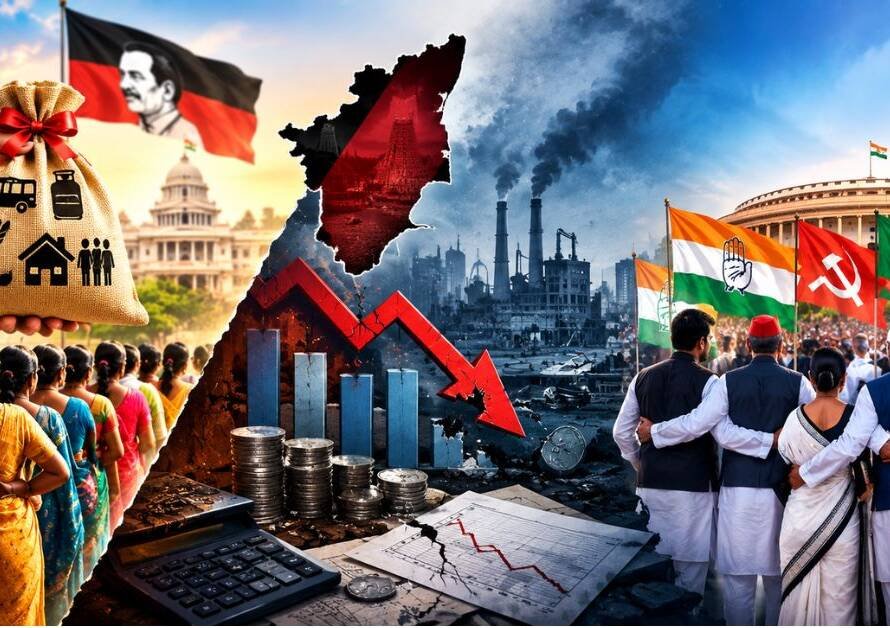
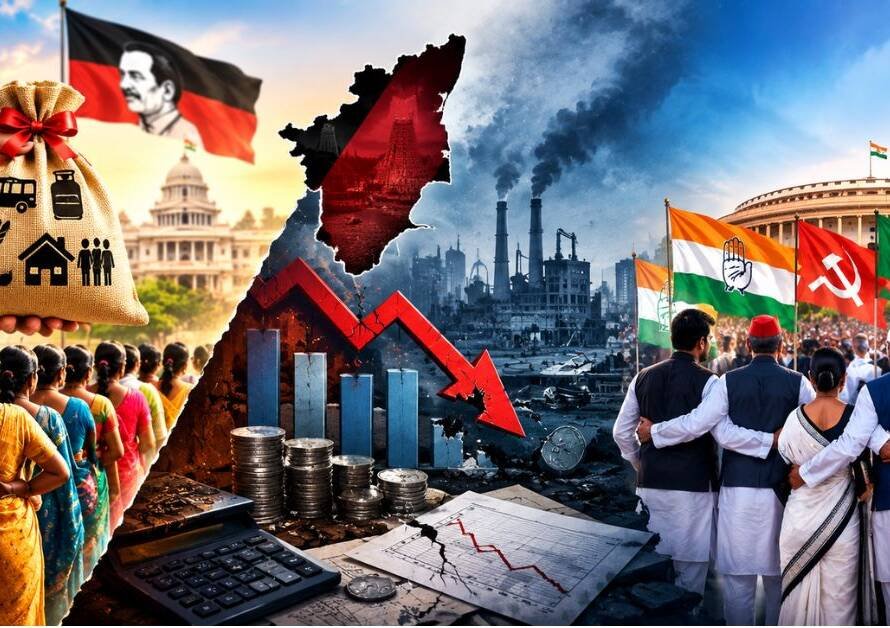
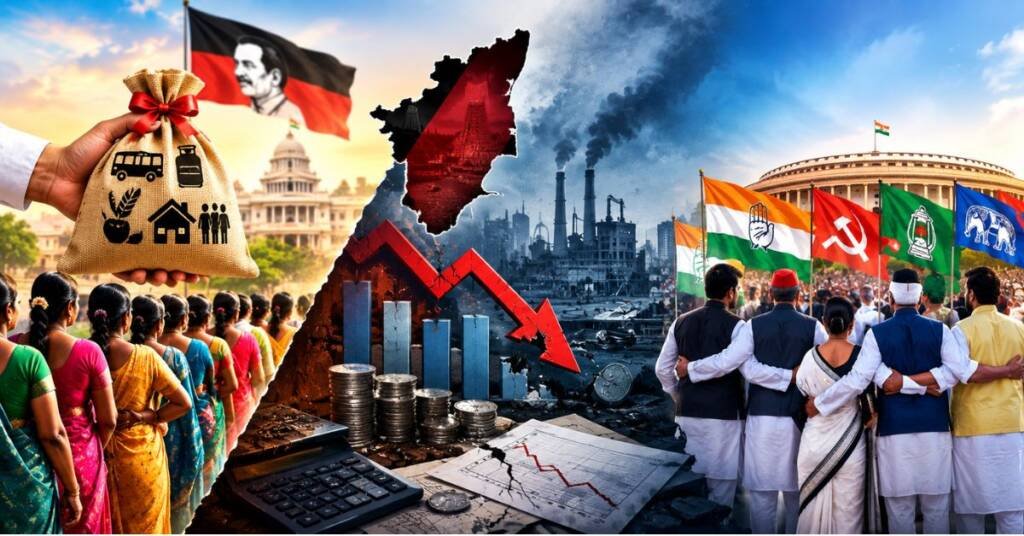
- From the regional policy preferences in Tamil Nadu to the various states governed by the Congress party and opposition alliances (“Thugbandhan”), a dangerous social and economic model is being implemented under the guise of welfare schemes and “guarantee” freebies.
- State treasuries are being recklessly squandered for electoral gains and minority appeasement, pushing the financial health of several major states to the brink of bankruptcy. Specific faith-based priorities have not only marginalized and neglected the majority population in their own states, but have also brought capital expenditure and infrastructure development to a complete standstill.
- A primary example of this appeasement politics is the minority welfare package recently announced by the Tamil Nadu government—which includes full tuition fee waivers up to graduation, the extension of Wakf Board scholarships, special minority-centric skill development schemes, and a ₹100 crore interest-free fund for commercial assets and religious places.
- This detailed report analyzes the ground realities of Tamil Nadu alongside the distressed financial landscape of opposition-ruled states, offering a clear national roadmap forward.
A Detailed National Analysis from Tamil Nadu to Opposition Coalitions
1. Minority Appeasement and the Marginalization of the Majority
- Key Policy Example in Tamil Nadu: The Tamil Nadu government recently decided to waive tuition fees up to graduation exclusively for female students from the minority (Muslim) community. Additionally, the Wakf Board scholarship has been extended from classes 1–8 up to classes 9–10, with an annual financial assistance of ₹2,000.
- Unilateral Allocation in Institutions and Skill Development: A new government girls’ college is being established in Chennai with multi-crore fund allocations, catered exclusively to non-Hindu/minority communities. Furthermore, targeted practical skill development schemes for 10,000 minority youth have been launched across sectors like IT, automobile, beauty & wellness, garments, and embroidery, while needy youth from the majority community remain entirely excluded.
- State Funds for Commercial & Religious Assets: An interest-free loan corpus of ₹100 crore has been prepared for the development of minority religious properties, Wakf assets, and church premises, aimed at building commercial revenue streams like shops, malls, and marriage halls.
- National Replication across Opposition States: This same pattern is visible in opposition-ruled states like Karnataka, Telangana, and Himachal Pradesh, where massive financial packages and budgetary allocations are made exclusively for specific vote-banks, leaving behind poor (EWS) and general category youth from the majority community.
2. Empty Treasuries: From Employee Salaries to Infrastructural Collapse
- Failure to Pay Salaries, Pensions, and Bills: Due to the heavy financial burden of non-productive freebie schemes (“guarantee schemes”), state treasuries have been severely depleted. In states like Himachal Pradesh, Karnataka, Telangana, and Tamil Nadu, governments are facing severe difficulties in paying timely salaries and pensions to government employees, teachers, and transport workers.
- Development Work at a Complete Standstill: Budgets meant for capital expenditure—such as building roads, bridges, power plants, hospitals, and industrial parks—have been drastically slashed. Pending bills worth thousands of crores belonging to contractors remain unpaid due to a lack of state funds.
- Future Pushed into a Debt Trap: To retain short-term political power, opposition governments have pushed state Debt-to-GDP ratios to dangerously high levels, leaving future generations to bear the financial burden.
3. Exploitation of Hindu Temples and the Plight of Religious Assets
- 12,000 Temples Closed, 34,000 in Ruins: According to reports by the state’s own Hindu Religious and Charitable Endowments (HR&CE) department, nearly 12,000 historic temples in Tamil Nadu have shut down due to a lack of maintenance and financial support, while over 34,000 temples face severe financial distress.
- Siphoning of Revenue and Land Transfers: While state governments maintain administrative control over the donations and revenues of large, prosperous Hindu temples, not a single fraction of that revenue is utilized for the revival of small rural temples or the welfare of priests. On the contrary, temple lands and assets are routinely alienated or repurposed.
- Policy Contradictions: While Hindu temple funds remain under state control, non-Hindu religious institutions are granted interest-free funds and direct subsidies from the state treasury to expand their commercial income.
4. Historical Fallout of Dravidian and Regional Politics
- Linguistic Separatism and Cultural Erosion: The language-based and Dravidian politics seeded in Tamil Nadu during the 1960s attempted to cut the state off from the national mainstream. Unnecessary friction was created against neighboring states and Indian languages.
- Systematic Opposition to Sanatan Values: In the name of Dravidian reform movements, native Sanatan traditions, Hindu symbols, and religious beliefs were systematically denigrated. Individuals who should have been called out for anti-Hindu rhetoric were instead elevated as icons.
- The Resulting Loss for the Majority: The very regional identity and culture invoked to secure public support has ultimately resulted in a system where the 87% majority population feels policy-wise and financially marginalized in its own homeland.
5. Solutions and Future Political Consciousness
- Welfare Policies Based Solely on Economic Need: All government schemes, scholarships, and skill development programs must be distributed strictly on the basis of a family’s economic status (Economic Deprivation), without any discrimination based on religion or community.
- Strict Financial Discipline on Freebie Culture: To safeguard state economies from collapse, strict constitutional and legal limits must be placed on vote-bank-driven, non-productive election promises and freebie schemes.
- Liberation of Hindu Temples from State Control: Hindu temples and their religious assets must be freed from the administrative control of state governments and HR&CE departments, and their management handed over to local Sanatan bodies.
- Majority Consciousness and Decisive Political Choice: The majority community must exercise its political power constructively against appeasement, economic ruin, and anti-Sanatan agendas. Choosing a strong, unified political alternative committed to national interest, economic stability, cultural security, and equal rights is the only permanent solution.
🇮🇳Jai Bharat, Vandematram 🇮🇳
Read our previous blogs 👉 Click here
Join us on Arattai 👉 Click here
👉Join Our Channels👈
Reads & Views: 31