Summary
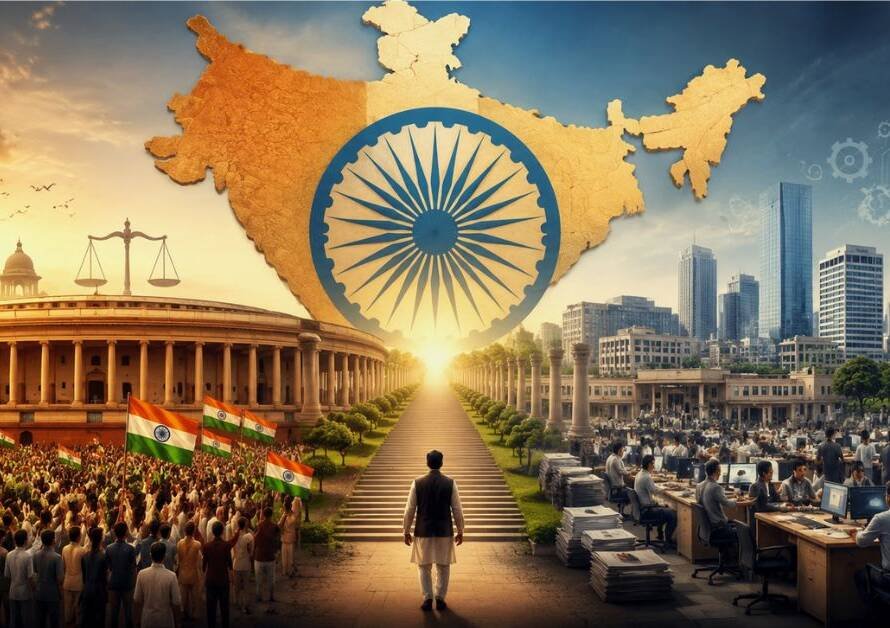
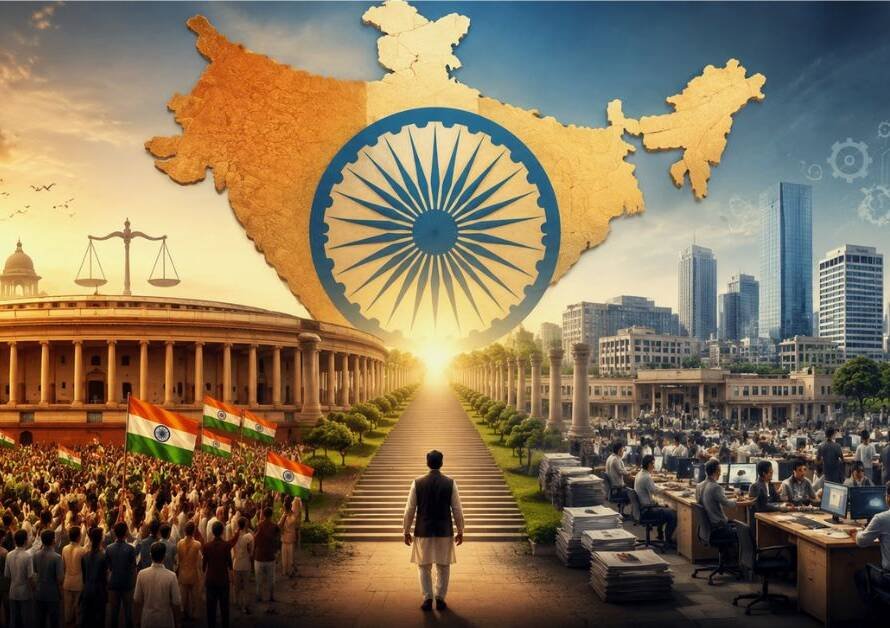
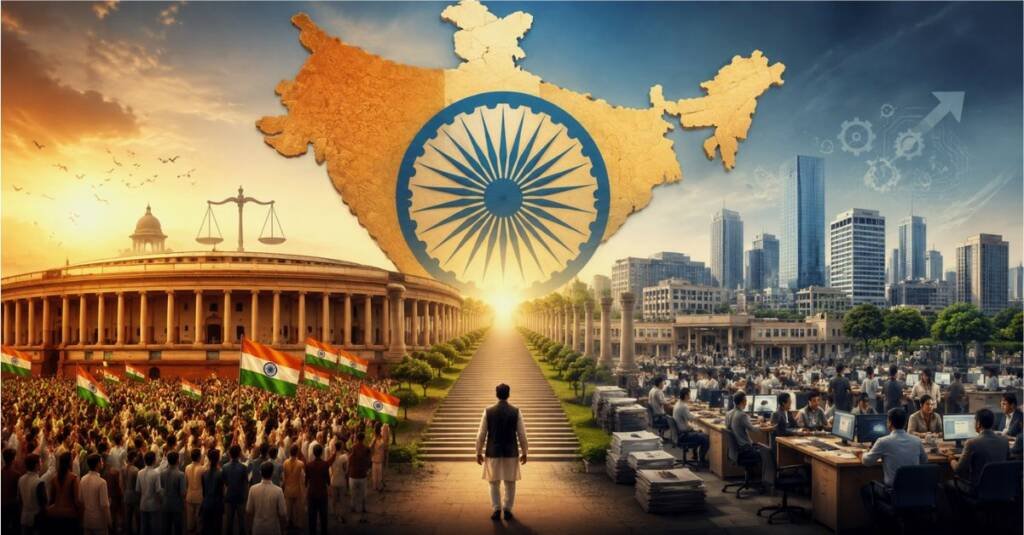
This article analyzes the far-reaching political and administrative shifts in India post-2014, examining how the long-standing “parallel system of power,” VIP culture, mafia dominance, and opaque financial practices collapsed with the change in political authority. The core analysis covers four pillars:
- End of VIP Culture: Stopping state-sponsored grand events and public displays of personal wealth.
- Rule of Law vs. Organized Crime: Dismantling mafia networks in key states through firm political will.
- Financial Transparency: Institutionalizing reforms to curb artificial agricultural tax exemptions and illegal land transactions.
National Security & Constitutional Integrity: Eliminating unconstitutional power centers to establish transparent, nation-first governance
Introduction: Change of Power vs. Change of System
In political science, changing a government is meaningful only when it replaces a decaying, corrupt system with a transparent framework. The year 2014 marked a major shift in India’s political history, transitioning from an era of political patronage and legal double standards to an operational model focused on systemic accountability.
1. VIP Culture and the Display of Public Funds
For decades, public resources were frequently treated as personal property by political leaders:
- Saifai Mahotsav: The annual state-funded spectacle in Uttar Pradesh deployed massive public resources for private entertainment. Its sudden discontinuation post-regime change proved it relied on state patronage rather than cultural preservation.
- Personal Celebrations: Massive public displays during leadership birthdays reflected an artificial political aura supported by government machinery.
Post-2014 reforms, including the removal of red beacons from official vehicles, signaled that no official or leader stands above the ordinary citizen.
2. Collapse of Mafia Rule and Restoration of Law
Organized crime once held immense sway over state machinery, running parallel administrations from prison cells:
- Dismantling State-Level Syndicates: Key figures who once held political protection and influence faced decisive state action in Uttar Pradesh after 2017. Under a zero-tolerance policy, the state targeted illegal financial structures, seized unlawful assets, and expedited long-pending judicial prosecutions.
- Elimination of Underworld Networks: Similarly, long-standing overseas-directed syndicates in Mumbai were neutralized through strengthened financial intelligence networks and strict counter-organized crime policies.
3. Financial Transparency and Closing Illicit Channels
Prior to 2014, systemic loopholes were routinely exploited to legitimize illicit wealth:
- Agricultural Tax Exemptions: Highly unrealistic income claims from modest agricultural holdings were used to channel black money into tax-free assets. Advanced data analytics deployed by tax agencies have largely closed these avenues.
- Real Estate & Political Patronage: Land transactions leveraged through administrative influence to alter land-use permissions without personal capital faced strict regulatory oversight post-2014.
- Overvalued Art Transactions: Inflated valuations of artwork to mask informal political favors and regulatory concessions have faced intense scrutiny by enforcement agencies.
4. Constitutional Integrity and National Security
The UPA era (2004–2014) introduced an extra-constitutional setup where decision-making authority largely resided with un-elected bodies like the National Advisory Council (NAC).
- Eliminating Parallel Power: Unchecked authority and exemptions from standard security protocols presented serious national security concerns.
- Restoring PMO Authority: Post-2014 governance restored executive authority to the Prime Minister’s Office, ensuring direct accountability to Parliament and the public.
5. Information Warfare and ‘Deep State’ Challenges
As India expands its economic and geopolitical footprint, it faces hybrid warfare and information operations aimed at internal destabilization:
- Digital Unrest: External actors and domestic proxies frequently leverage social media algorithms to stir artificial discontent and incite public protests.
- Necessity of Regulation: Modernized digital rules and content blocking orders serve as crucial protective measures to preserve national sovereignty and civil stability against coordinated disinformation campaigns.
- The structural shifts post-2014 highlight a transition from an era of VIP privileges, systemic corruption, and extra-constitutional authority toward transparent governance, law enforcement, and national security.
- Sustaining this trajectory requires an informed citizenry committed to national sovereignty and the rule of law.
🇮🇳 Jai Bharat, Vandematram 🇮🇳
Read our previous blogs 👉 Click here
Join us on Arattai 👉 Click here
👉Join Our Channels👈