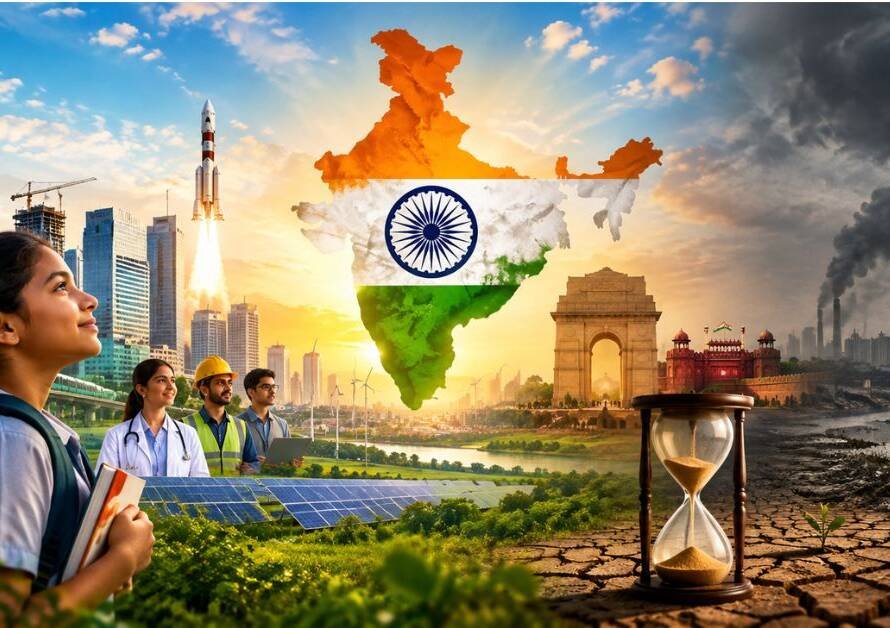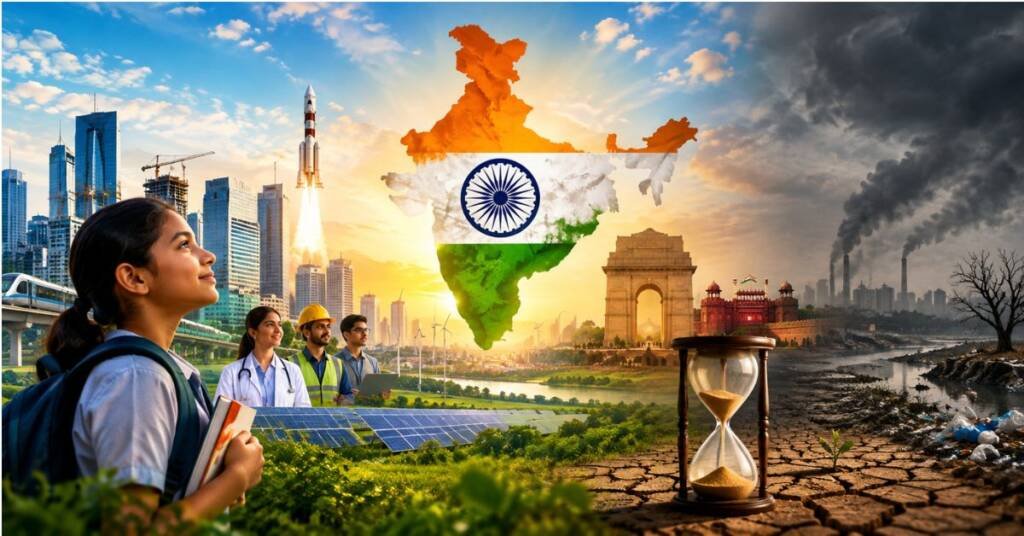
Summary
- India stands at a pivotal juncture in its civilizational journey. Over the past twelve years, unprecedented nationalistic leadership, economic momentum, digital public infrastructure, and strategic self-reliance (Atmanirbharta) have elevated India into a global powerhouse and a beacon of inspiration for the developing world.
- However, rapid material and technological progress alone cannot guarantee permanent sovereignty. History offers a stark, timeless warning: great nations fall not primarily from foreign aggression, but from internal ethical decay, short-term selfishness, civic complacency, and manufactured social divisions.
- While high-cohesion societies such as Japan, Germany, China, and Israel demonstrate a deep-seated cultural willingness among citizens to endure personal hardship for collective national strength, India continues to grapple with a fragile civic conscience. To fully transition from an economic power into an unshakeable global leader,
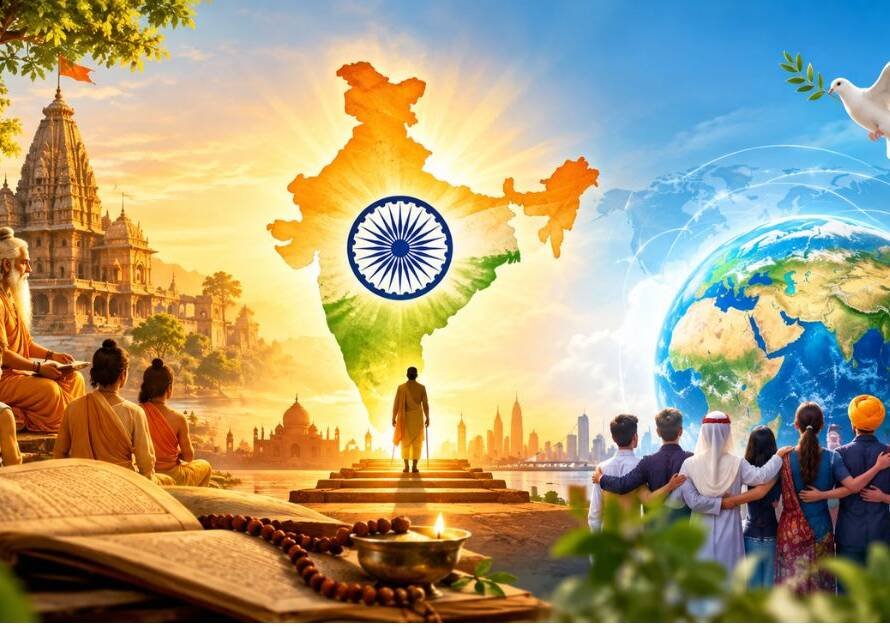
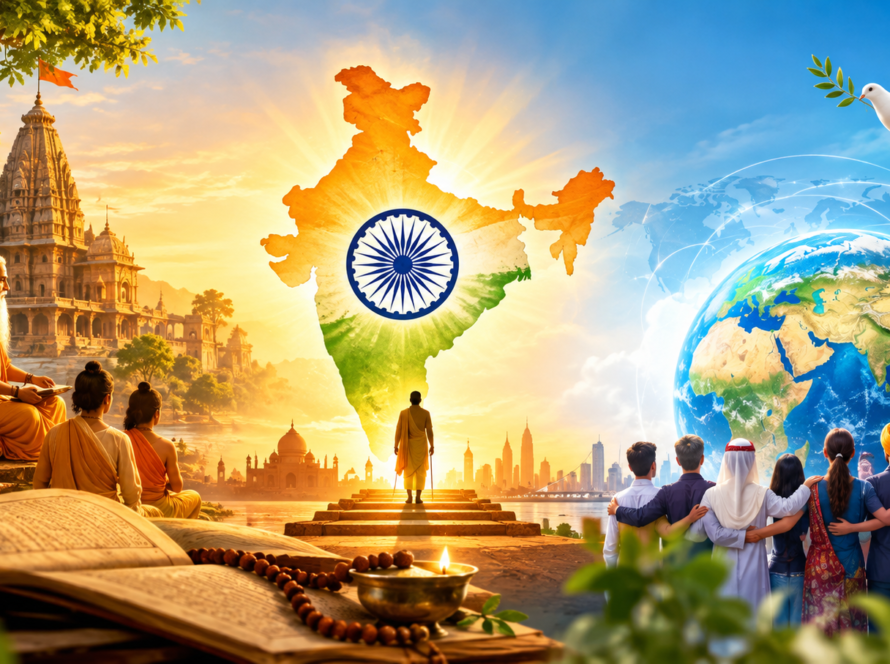
- India’s citizens must match state-led development with uncompromising personal character, active civic duty, and absolute loyalty to long-term national sovereignty over short-term personal gain.
India’s Emerging Power and the Timeless Lessons from History
1. The Japanese Mirror: A Historical Dialogue on Character
- A Lesson from Ashes: Following the utter devastation of World War II, Japan rebuilt itself without begging for international aid or sympathy. It relied on an unshakeable sense of national pride, collective discipline, and self-respect to become an industrial and technological giant.
- History as a Warning, Not Just Inspiration: When asked how the world views India’s historical trajectory, a seasoned Japanese observer noted that while India’s cultural heritage is vast, its political history serves as a grave warning regarding the consequences of internal division.
- The Mathematical Parodox of Subjugation: Foreign rule in India—whether under Central Asian dynasties or British imperialists—was never sustained by overwhelming foreign numbers. A few thousand occupiers managed to govern over three hundred million people because local actors were repeatedly enticed to trade collective sovereignty for personal survival, titles, or silver.
- Enforcers of Their Own Oppression: Key tragic moments in Indian history highlight how internal actors executed the commands of foreign oppressors. From local informants betraying revolutionaries like Chandrashekhar Azad to native troops enforcing imperial mandates, historical subjugation relied heavily on the fracturing of domestic unity.
- Contrast with High-Cohesion Societies: In contrasting historical settings such as Singapore or Hong Kong, local populations often refused military enlistment under colonial banners. In India, foreign rulers successfully leveraged internal rivalries and systemic fragmentation to build administrative and military apparatuses.
2. The Modern Resurgence: India as a Global Inspiration (2014–2026)
- Infrastructure and Physical Transformation: Over the last twelve years, India has executed a massive overhaul of its physical landscape. High-speed expressways, modern port facilities, regional airport expansion, and dedicated freight corridors have built the physical backbone of a modern economy.
- Digital Public Goods and Governance Leadership: Through the integration of the JAM Trinity (Jan Dhan, Aadhaar, Mobile) and the Unified Payments Interface (UPI), India has set a global benchmark for digital financial inclusion. Direct Benefit Transfers (DBT) have drastically reduced administrative leakage and middleman exploitation.
- Defense Self-Reliance (Atmanirbharta): India has systematically shifted from being one of the world’s largest defense importers toward indigenous design, domestic manufacturing, and defense exports, safeguarding strategic autonomy on the global stage.
- Space and Technological Milestones: From lunar and solar exploration to breakthroughs in indigenous computing, green energy transitions, and pharmaceutical production, India’s scientific scale inspires developing nations across the Global South.
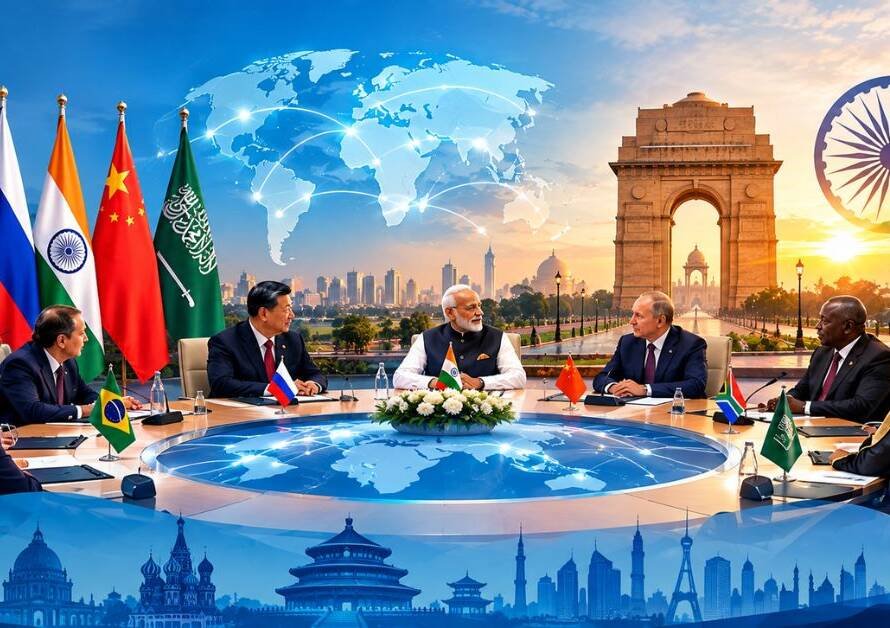
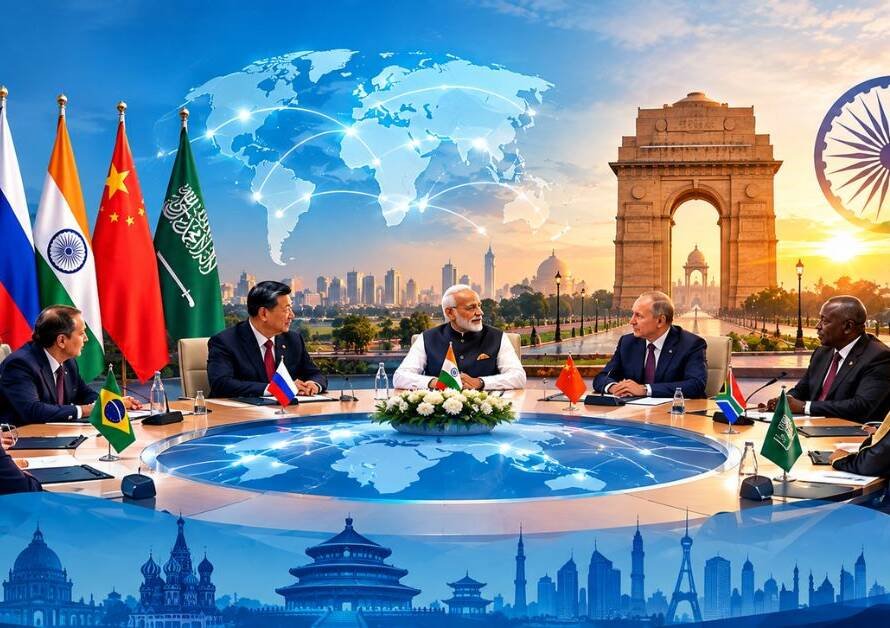
- Civilizational Confidence: A renewed sense of cultural pride and assertive diplomacy has repositioned India on the world stage—no longer as a passive participant in international affairs, but as a decisive pole in global multipolarity.
3. The Unresolved Vulnerability: Short-Term Gain vs. National Interest
- The Threat of Freebie Culture (“Revdi Politics”): Despite rising national wealth, the socio-political ecosystem remains vulnerable to short-term electoral bribes. Citizens are frequently tempted to trade long-term economic stability and state sovereignty for immediate handouts, free concessions, and personal conveniences.
- Manufactured Fault Lines: Opportunistic internal elements and anti-national networks routinely exploit artificial caste, regional, and religious grievances. By manufacturing social instability, these groups attempt to destabilize the nation for narrow political power at the expense of social harmony.
- Individual Convenience over Civic Duty: Everyday civic duty—such as strict adherence to law, tax honesty, maintenance of public sanitation, and protection of public property—lags behind technological infrastructure. Emotional patriotism during national events must evolve into consistent daily civic responsibility.
- Fragility of the Social Fabric: When personal or family interests consistently take precedence over societal and national well-being, the nation remains vulnerable to subversion from within.
4. The Global Comparative: Cultivating National Solidarity
- The Ethos of High-Cohesion Nations: Countries like Japan, Israel, Germany, and China possess a civic culture where individual citizens are conditioned to put national survival and sovereignty above individual comfort during crises.
- Willingness to Sacrifice: In these high-cohesion societies, national security and public order are viewed as personal responsibilities. Citizens willingly bear temporary economic hardships or personal sacrifices to preserve the nation’s long-term integrity.
- The Missing Link in India: While India possesses unmatched human capital and genius, the collective willingness to suffer for the nation’s long-term sovereign interest—rather than seeking immediate personal or community exemptions—remains a crucial area requiring cultural transformation.
5. Strategic Roadmap: Building Unshakeable Civic Character
- From State-Led Growth to Citizen-Led Character: Physical infrastructure and policy frameworks created by a strong nationalistic government provide the foundation, but the true defense of the nation lies in the moral character of its citizens.
- Institutionalizing Value-Based Education: Primary and secondary education must integrate rigorous civic training, national history, public ethics, and practical social responsibility alongside academic subjects.
- Transitioning from Freedom Fighters to Freedom Keepers: Winning independence required courage against external rulers; preserving independence requires daily discipline, vigilance, integrity, and the refusal to succumb to internal divisive rhetoric.
- Rejection of Subversive Narratives: Citizens must actively reject manufactured outrage, illegal disruptions, and political efforts that prioritize short-term group identity over unified national progress.
- A Moral Pledge for Sovereignty: Every individual must adopt the principle that national security, societal harmony, and the dignity of the country precede all personal, political, or familial considerations.
🇮🇳 Jai Bharat, Vandematram 🇮🇳
Read our previous blogs 👉 Click here
Join us on Arattai 👉 Click here
👉Join Our Channels👈
Reads & Views: 39