Summary
- This analysis presents a detailed, strategic, and multi-dimensional review of the historical success of the BRICS Summit held in New Delhi.
- In an era marked by conflict, ideological polarization, economic uncertainty, and intense pressure from the US and Western nations, India has demonstrated its independent ‘India First’ foreign policy by uniting 11 member countries—representing 45% of the world’s population, 40% of global GDP, 36% of landmass, and 25% of global trade—on a single platform.
- The article details the evolution of BRICS, India’s geopolitical balancing act, high-stakes India-China talks, the consensus behind the 140-clause ‘New Delhi Declaration’, and the widespread acclaim in international media.
- Furthermore, it highlights the sharp contrast between Prime Minister Narendra Modi’s strategic efforts to promote Indian vegetarian traditions and boost exports, and the opposition’s petty, desperate controversy surrounding the summit’s dinner menu.
India’s Rising Role On The Global Stage
1. The Historic Journey Of BRICS And The Shifting Global Balance Of Power
What began as an economic forecasting concept has today evolved into the world’s most influential multilateral organization.
- Origin and Evolutionary Timeline: In 2001, Goldman Sachs economist Jim O’Neill coined the acronym ‘BRIC’ to group four major emerging economies—Brazil, Russia, India, and China. It transformed into a formal political group in 2009, and became ‘BRICS’ in 2011 with the inclusion of South Africa.
- Historic Expansion (BRICS+): In 2024 and 2025, the group underwent unprecedented expansion as Egypt, Ethiopia, Iran, the UAE, and Indonesia became full members. Key oil-producing and Islamic nations like Saudi Arabia and Malaysia also established strong engagements with the platform.
- Challenging Western Hegemony: The BRICS summit proved that global governance is no longer dictated solely by the G7 or Western powers. As the leading voice of the ‘Global South’, India has guided this coalition in a manner that has left Western media and global think tanks astonished.
2. India’s Unprecedented Geopolitical Balance (Diplomacy Pro Max)
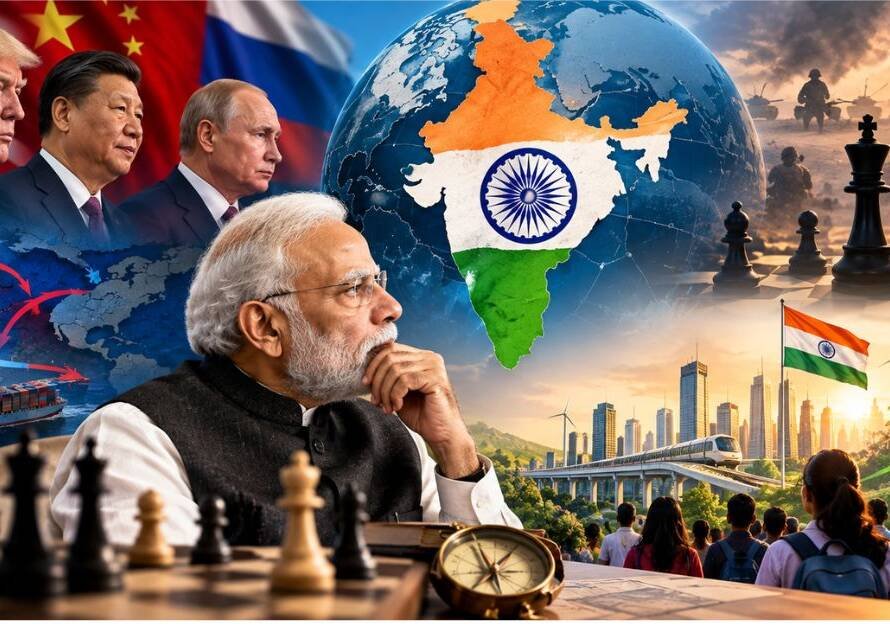
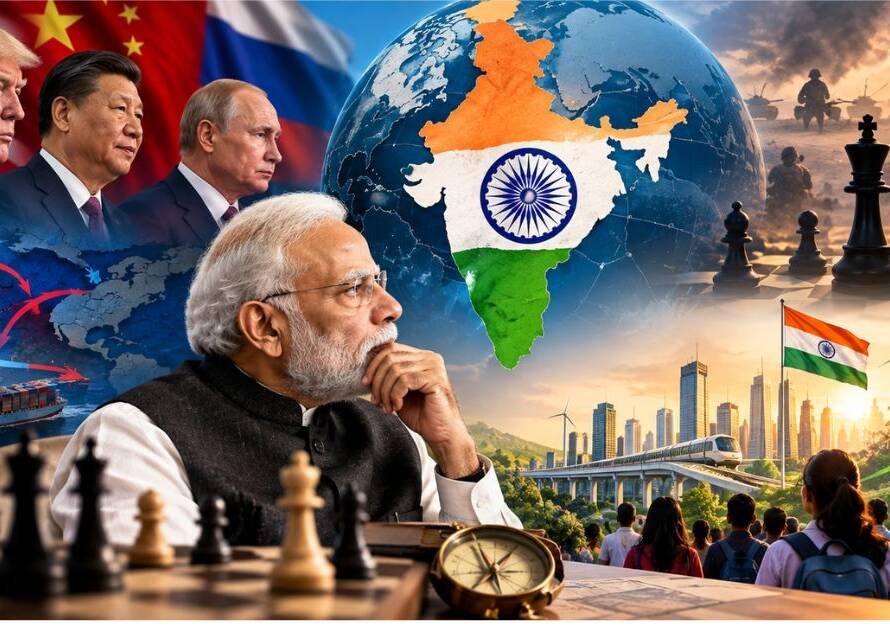
At a time when the world is splitting into rigid geopolitical camps, India has set a benchmark for sovereign diplomacy rather than aligning as a junior partner to any bloc.
- Parallel Engagement with Rival Blocs: India actively strengthens its strategic and defense partnership with QUAD and the United States, while simultaneously continuing to purchase discounted crude oil and defense hardware from Russia despite Western sanctions.
- Balancing the Middle East and China: India accelerated the construction of the strategic Chabahar Port in Iran, maintained deep defense cooperation with Israel, and simultaneously anchored key leadership roles in the China-led SCO and BRICS.
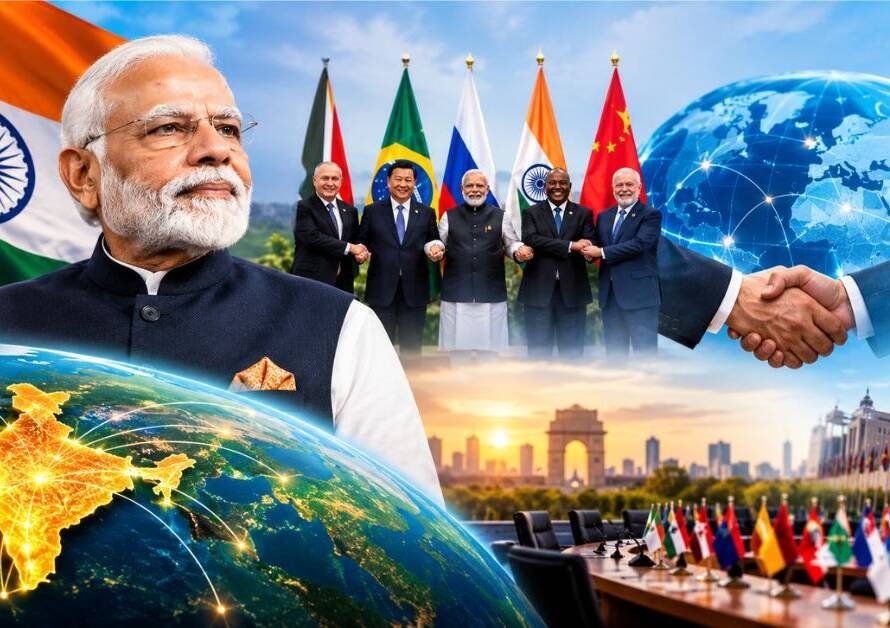
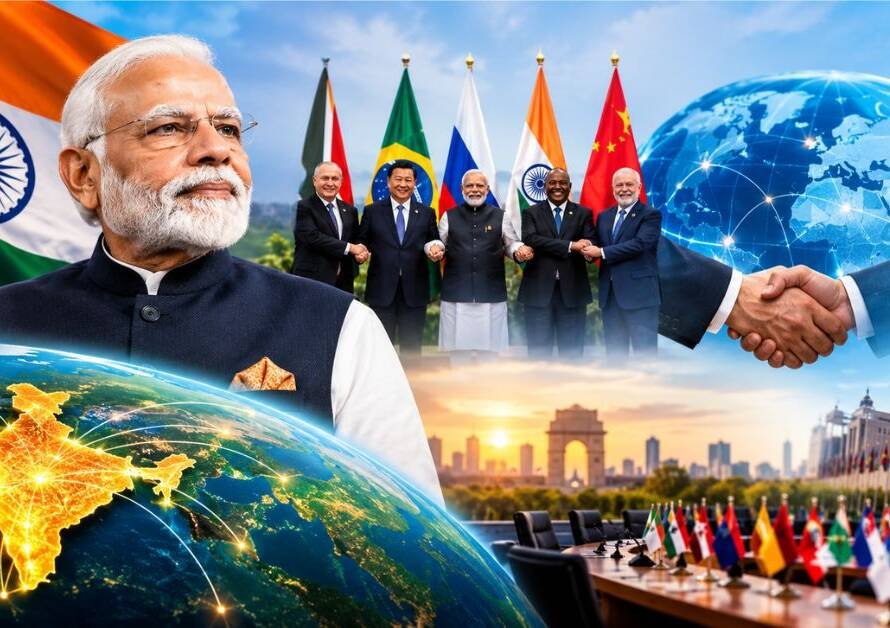
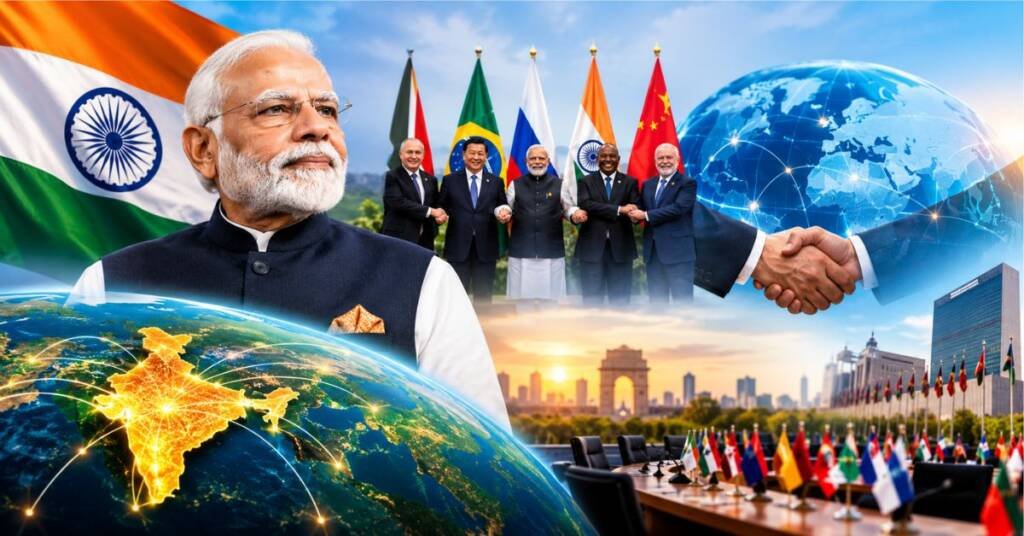
- Opposing Powers on a Single Platform: Rejecting explicit Western demands to “Choose a Side,” India conducted diplomacy strictly on its own terms. As a result, the President of Iran, Russian President Vladimir Putin, Chinese President Xi Jinping, the Crown Prince of the UAE, the Foreign Minister of Saudi Arabia, and the UN Secretary-General were seated together at the same table in New Delhi.
3. India-China Bilateral Dialogue And Major Breakthroughs
The most pivotal diplomatic turn at the BRICS Summit was the direct engagement between the top leadership of India and China, reshaping global diplomatic dynamics.
- Historic 50-Minute Dialogue: Following the 1962 war and recent border standoffs, Delhi witnessed its first 50-minute direct bilateral meeting between the leaders of the two Asian giants (Modi and Xi Jinping) aimed at normalizing relations.
- The Modi-Xi-Putin Chemistry: Photographs of the three leaders holding hands drew intense interest from the West. Xi Jinping’s first visit to India in seven years and Putin’s participation in an international summit outside Russia following the Ukraine conflict underscored India’s central diplomatic leverage.
- China’s Four-Point Formula: During the talks, China signaled alignment on four key principles: strategic understanding (viewing each other as development opportunities rather than rivals), mutually beneficial cooperation, maintaining peace and respect along border regions, and multilateral coordination at the UN, SCO, and G20.
- Strategic Vigilance: While complete reliance on China’s intentions would be unwise, opening formal diplomatic channels over active border confrontation represents a significant win for Indian foreign policy.
4. Key Achievements Of The ‘New Delhi Declaration’
Achieving unanimous consensus among all 11 member states on the 140-clause ‘New Delhi Declaration’ was a major triumph, especially given that the preceding foreign ministers’ meeting failed to issue a joint statement.
- Sovereignty and Territorial Integrity: The declaration emphasized respect for national sovereignty, territorial integrity, and the peaceful resolution of disputes through dialogue, in alignment with the UN Charter.
- Trade in Local Currencies: BRICS nations pledged to gradually reduce reliance on the US Dollar in bilateral trade by promoting transactions in local currencies.
- Global Financial and Technological Security: Member states agreed on joint international action against organized cyber fraud, dark web activities, money laundering, and establishing regulatory frameworks for Artificial Intelligence (AI) risks.
- International Media Acclaim: Major publications including The Washington Post, Global Times, Al Jazeera, and The New York Times lauded India’s leadership, hailing the summit as a historic victory for the Global South.
5. Global Stature vs. The Petty Politics Of The ‘Disgruntled Uncles’
While Prime Minister Narendra Modi used the global platform to showcase India’s rich vegetarian heritage, cuisine, and traditional arts to international dignitaries—aiming to position Indian culture as a global brand and boost exports—the domestic opposition engaged in a petty and embarrassing distraction.
- The Trivial Non-Veg Menu Controversy: Unable to stomach this historic international triumph, domestic political detractors (“disgruntled uncles”) sought to vent their frustration by questioning why non-vegetarian dishes were excluded from the official state banquet at Bharat Mandapam.
- Grievance Over Missing Invitations: Crucially, these political figures were not even invited to the official state dinner hosted under strict international protocol. Those who were not on the guest list spent their time complaining about a menu they were never meant to taste.
- Contradictory Political Rhetoric: Leaders claiming that a vegetarian menu insulted 80% of the population exposed their own ideological contradictions. While they invoke ‘Bahujan’ identities when seeking to divide voters against the general demographic, they pivot to acting as guardians of minority interests when national heritage or cultural identity is involved.
- Lack of Strategic Understanding: These critics lack the foresight to comprehend a diplomatic strategy that leverages cultural heritage to expand market access for Indian agriculture and handicrafts. Having historically relied on corruption, commissions, and import cutbacks during their own tenure, their inability to grasp strategic statecraft comes as no surprise.
6. Conclusion
- Securing a unanimous ‘New Delhi Declaration’ while bringing together conflicting powers like Iran, Saudi Arabia, Brazil, Russia, China, and the UAE proves that India is no longer a passive observer on the global stage.
- India has emerged as a central powerhouse of international diplomacy. Following the success of the G20, the BRICS Summit stands as definitive proof of India’s decisive leadership and a golden era in its foreign policy.
🇮🇳 Jai Bharat, Vandematram 🇮🇳
Read our previous blogs 👉 Click here
Join us on Arattai 👉 Click here
👉Join Our Channels👈