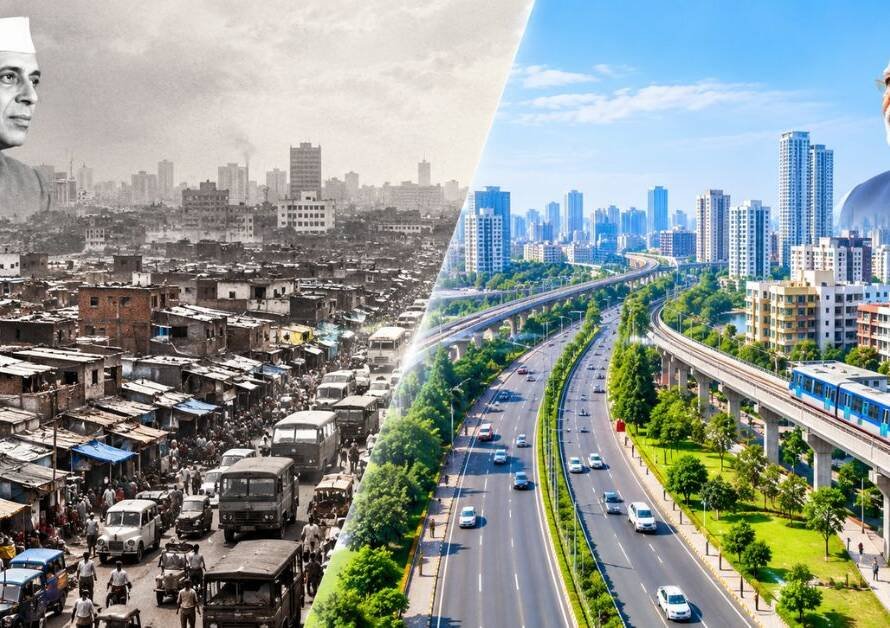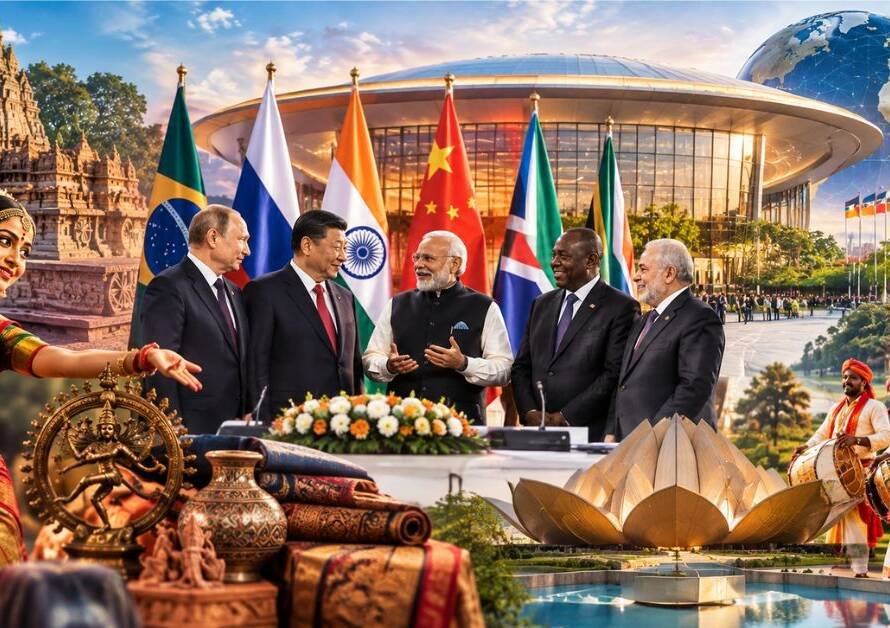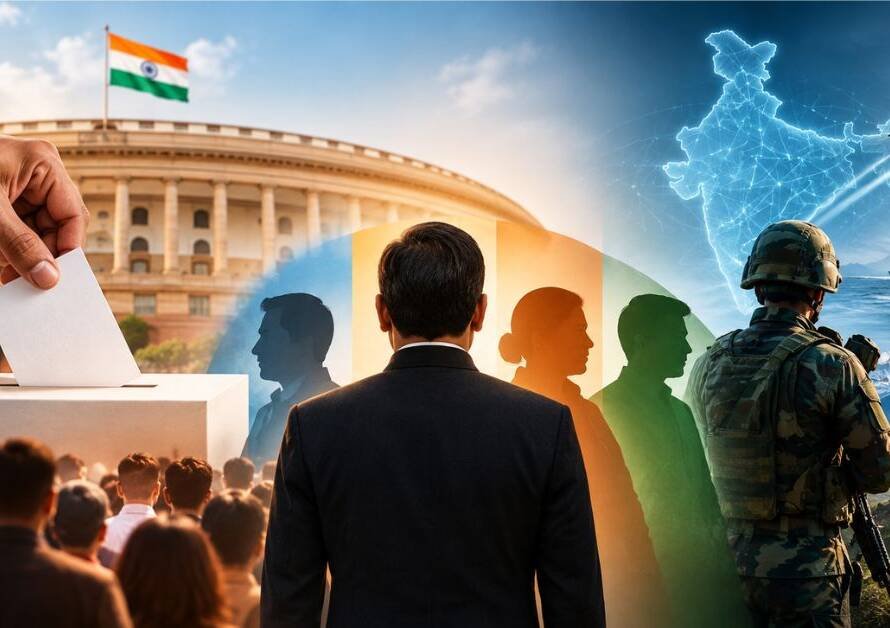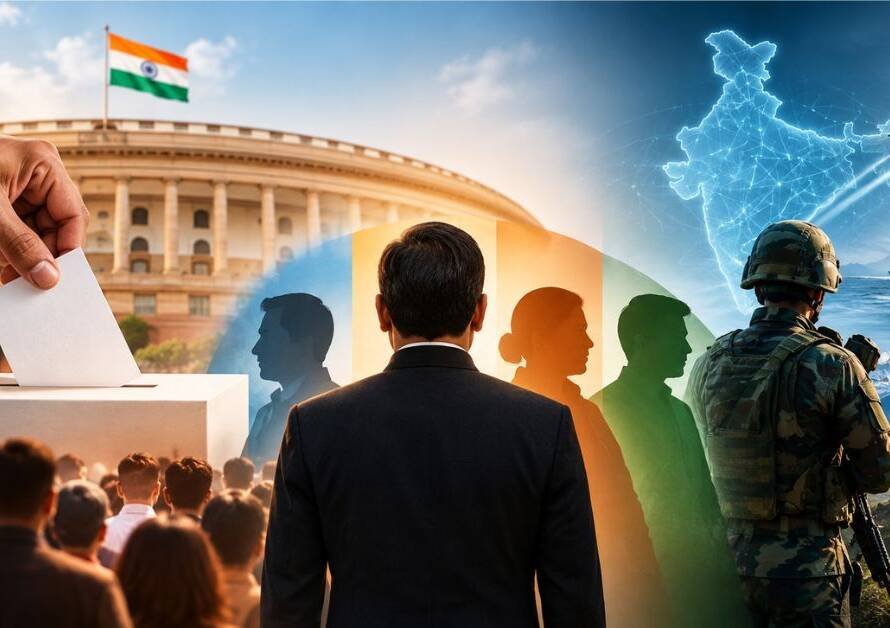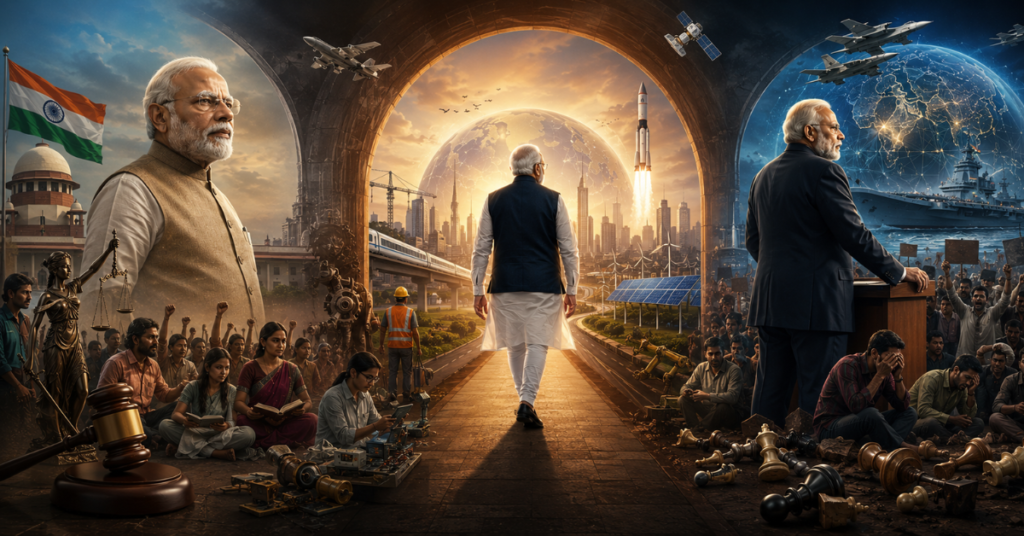
- This definitive political-strategic analysis maps the evolutionary trajectory of the Modi administration across three distinct governance phases, culminating in a critical forward-looking assessment of India’s political landscape leading toward 2029 and beyond. The transformation of India since 2014 is not merely a chronicle of democratic regime change; it represents a profound, civilizational reconstruction of an ancient society into a modernized global superpower.
- By deconstructing the past twelve years of administrative execution and projecting the nation’s developmental trajectory, this narrative categorizes the Modi era into three distinct ideological and structural paradigms (Modi 1.0, 2.0, and 3.0). Furthermore, this analysis addresses the existential crisis gripping the political opposition.
- It evaluates whether regional and national contrarian parties can survive to contest the political horizon of Modi 4.0, or if their persistent reliance on negative narratives, institutional boycotts, and structural inertia has permanently confined them to the political graveyard they have systematically dug for themselves.
1. Modi 1.0 (2014–2019): Antyodaya, Structural Foundation, and Dignity
The foundational phase of the Modi administration was defined by the philosophical principle of Antyodaya—the upliftment of the last individual standing at the absolute periphery of society. Operating under the governance doctrine of “fundamental needs first,” the administration prioritized subaltern welfare, systematically dismantling the institutionalized neglect that had characterized post-independence governance.
Infrastructure of Dignity
- Welfare was re-engineered not as a political handout, but as an infrastructure of human dignity. The Swachh Bharat Abhiyan achieved the construction of over 110 million household toilets, drastically mitigating a systemic public health and security crisis for rural women.
- Simultaneously, the Pradhan Mantri Awas Yojana (PMAY) transitioned millions from hazardous, temporary dwellings to concrete, climate-resilient homes, while the Pradhan Mantri Ujjwala Yojana delivered clean cooking gas to over 100 million households, liberating rural populations from the toxic respiratory hazards of traditional biomass fuel.
The Financial Inclusion Revolution
- Before 2014, India’s financial architecture was inherently exclusionary, leaving the impoverished vulnerable to predatory informal credit networks. The launch of the Pradhan Mantri Jan Dhan Yojana (PMJDY) initiated a banking revolution, opening over 500 million low-barrier accounts.
- This structural integration laid the pipeline for the Direct Benefit Transfer (DBT) paradigm. By linking Jan Dhan bank accounts, digital public identities, and cellular connectivity, the central government bypassed deeply entrenched bureaucratic middle networks, eradicating systemic leakage and corruption.
Digital Democratization
- This epoch witnessed the structural birth of Digital India and the Unified Payments Interface (UPI). While global tech monopolies argued that digital financial instruments were unfeasible for a developing, partially literate population, the administration democratized digital payments.
- By lowering data acquisition costs and building an open-source, public-rail digital infrastructure, India laid the foundation to lead the world in real-time digital transactions, turning financial technology into a mass-utility asset.
2. Modi 2.0 (2019–2024): Structural Reforms, Sovereignty, and Civilizational Renaissance
Securely backed by an enhanced democratic mandate in 2019, the second phase of the Modi administration transcended basic welfare expansion to execute deep, systemic, and historically sticky structural, legal, and constitutional reforms. This period became the ultimate manifestation of unyielding political willpower, resolving disputes that had paralyzed the Indian state for decades.
Geopolitical and Constitutional Consolidation
- The definitive legislative milestone of this era was the abrogation of the temporary provisions of Article 370, fully integrating Jammu and Kashmir into the constitutional framework of the Indian Union. This move permanently dismantled the dual-citizenship paradigm and established uniform sovereign law across the territory.
- Concurrently, the enactment of the Citizenship Amendment Act (CAA) provided a legal sanctuary for persecuted religious minorities from neighboring states, while the abolition of Triple Talaq fortified gender justice and uniform legal protections for minority women under secular statutory law.
Economic Formalization and Manufacturing Stimulus
- Modi 2.0 aggressively drove the formalization of the Indian economy. The implementation of the Insolvency and Bankruptcy Code (IBC) institutionalized credit discipline, preventing promoter capital hoarding and cleaning up corporate balance sheets.
- To reposition India within changing global supply architectures, the administration launched the Production Linked Incentive (PLI) scheme across critical industrial sectors, catalyzing domestic manufacturing, enhancing export complexity, and minimizing import dependencies on hostile trade partners.
Civilizational Renaissance and PM GatiShakti
- The cultural high point of this epoch was the legally clean, peaceful construction and consecration of the Ram Janmabhoomi Mandir in Ayodhya, signaling a profound civilizational renaissance and national psychological decolonization. This cultural restoration was matched by an unprecedented physical infrastructure rollout via the PM GatiShakti National Master Plan.
- By breaking bureaucratic silos across ministries, GatiShakti facilitated the synchronous construction of high-speed highways, dedicated freight corridors, modern railway terminuses, and regional airports at a pace never before recorded in developing Asia.
3. Modi 3.0 (2024–2029): Global Scale, Technological Autonomy, and the Roadmap to 2047
The current administrative phase operates on a canvas that extends far beyond domestic remediation. The focus has structurally shifted from basic national development to establishing India as a Viksit Bharat (Developed Nation) by the centenary of its independence in 2047. The objective is clear: achieving systemic technological autonomy and undisputed global scale.
Deep Tech and Frontier Autonomy
- Modi 3.0 prioritizes absolute self-reliance within critical, dual-use future technologies. The National Quantum Mission, the IndiaAI Mission, and the multi-billion-dollar Semiconductor Mission are designed to ensure that India is not merely a consumer of global tech infrastructure, but a primary architect.
- By establishing domestic fabrication facilities, advanced packaging units, and open-source sovereign AI datasets, the state is insulating its financial, civil, and defense infrastructure from external supply-chain coercion.
Sovereign Supply Chain Hegemony
- As multinational corporations actively diversify out of East Asian manufacturing hubs under “China Plus One” strategies, India is positioning itself as the primary alternative global manufacturing powerhouse.
- Through systemic regulatory simplification, massive corporate tax rationalization, and deep-water port expansions, the administration is transforming the subcontinent into a critical node for global electronics, defense hardware, pharmaceuticals, and automotive assembly.
Green Growth and Climate Geopolitics
- The state is pioneering an alternate paradigm of industrialization through Green Growth. India has emerged as the only major G20 economy to exceed its Paris Agreement climate goals ahead of schedule.
- Through massive state-backed deployments in utility-scale solar arrays, the National Green Hydrogen Mission, and aggressive electric vehicle infrastructure networks, India is rewriting the geopolitics of energy, positioning itself to export clean energy technology to the Global South.
4. The Existential Crisis of the Opposition: Survival or Political Extinction in Modi 4.0?
As the nation races along this trajectory toward the end of the decade, a fundamental question emerges regarding the structural architecture of Indian democracy: Will the traditional opposition parties survive as functional entities to contest the elections for Modi 4.0, or have they permanently confined themselves to the political graves they have been digging for the last twelve years?
The Anatomy of the Self-Dug Political Grave
For over a decade, the opposition’s political strategy has suffered from a profound cognitive failure. Instead of offering a coherent, alternative policy blueprint for national development, they chose a path of absolute obstructionism. They systematically dug their own political grave through three distinct structural errors:
- The Anti-Development Trap: By opposing critical infrastructure projects—ranging from high-speed rail networks and new legislative complexes to land acquisition and labor formalization—the opposition inadvertently branded itself as an impediment to national aspiration. To an aspirational, youthful electorate, blocking development is no longer seen as legitimate dissent; it is viewed as an ideological assault on the nation’s future.
- The Fallacy of Institutional Boycotts: From boycotting the inauguration of the New Parliament Building to staging mass walkouts during critical legislative sessions and skipping NITI Aayog development reviews, the opposition systematically abdicated its constitutional duties. This strategy of institutional exit backfired dramatically. By refusing to sit at the governance table, they alienated their own state electorates, leaving their states vulnerable to being politically and developmentally bypassed by the center’s direct technological interfaces.
- Anachronistic Identity Politics: While the central government constructed a unified, subaltern electorate transcending traditional lines through non-discriminatory digital welfare (DBT) and civilizational pride, the opposition remained trapped in twentieth-century caste-fragmentation paradigms. They failed to realize that an individual who has received a concrete house, clean water, digital banking, and formal employment is no longer easily manipulated by regressive social-engineering formulas.
Can They Survive the Horizon of Modi 4.0?
As the landscape shifts toward the horizon of Modi 4.0, the survival capacity of these traditional political formations appears deeply compromised. If they continue on their current trajectory, they risk facing absolute structural containment and irrelevance for several structural reasons:
- The Superhit Delivery vs. Flop Drama Paradigm: The Indian electorate has grown highly sophisticated. The old toolkits of political theater, manufactured grievances, and the “victim card” no longer yield electoral dividends. In an era where governance is measured by real-time digital delivery, measurable infrastructure completion, and global macroeconomic standing, the opposition’s reliance on empty rhetorical drama remains completely out of sync with public expectations.
- The Collapse of Feudal Dynasties: The core structure of the primary opposition parties relies heavily on centralized, dynastic family governance. The Modi-Shah paradigm has institutionalized a ruthless, data-driven meritocracy within political administration. As these dynastic entities fail to produce competent, ideologically grounded, and hardworking second-tier leadership, they are collapsing under the weight of their own internal contradictions and structural inertia.
- The Global Scale Disconnect: As India projects its power globally—navigating complex multi-aligned geopolitics, securing supply chains, and demanding institutional reforms at the UN and WTO—the opposition’s political discourse remains embarrassingly localized, regressive, and petty. Their inability to articulate a coherent vision for India’s role as a global pole leaves them fundamentally disqualified in the eyes of a globally conscious citizenry.
Unless the remaining opposition factions undergo an immediate, radical ideological mutation—abandoning routine obstructionism, shedding dynastic dependencies, and presenting a concrete, performance-oriented counter-model to the electorate—they will find themselves completely phased out. They will remain permanently confined within the historical graves dug by their own short-sightedness, while the unstoppable momentum of a changing India marches forward into the milestone of Modi 4.0.
Conclusion: The Architecture of an Unstoppable India
- When the historical timeline of this century is recorded, the period spanning from 2014 to 2029 and beyond will be remembered as the era when India permanently broke free from post-colonial hesitation and administrative paralysis. The strategic coordination between Prime Minister Narendra Modi’s civilizational vision and Home Minister Amit Shah’s administrative execution has established an entirely new operating system for the nation.
- The evolution from the basic welfare expansion of Modi 1.0, through the deep structural consolidation of Modi 2.0, to the frontier technological scale of Modi 3.0 represents a single, continuous, and logical trajectory. This journey is designed to culminate in a fully realized, sovereign global superpower during the Amrut Kaal of 2047.
- The old political systems built on patronage, corruption, institutional boycotts, and empty rhetoric have been rendered obsolete. In this transformed landscape, only one political currency remains valid: uncompromising, high-velocity delivery on the ground.
🇮🇳Jai Bharat, Vandematram 🇮🇳
Read our previous blogs 👉 Click here
Join us on Arattai 👉 Click here
👉Join Our Channels👈