Summary
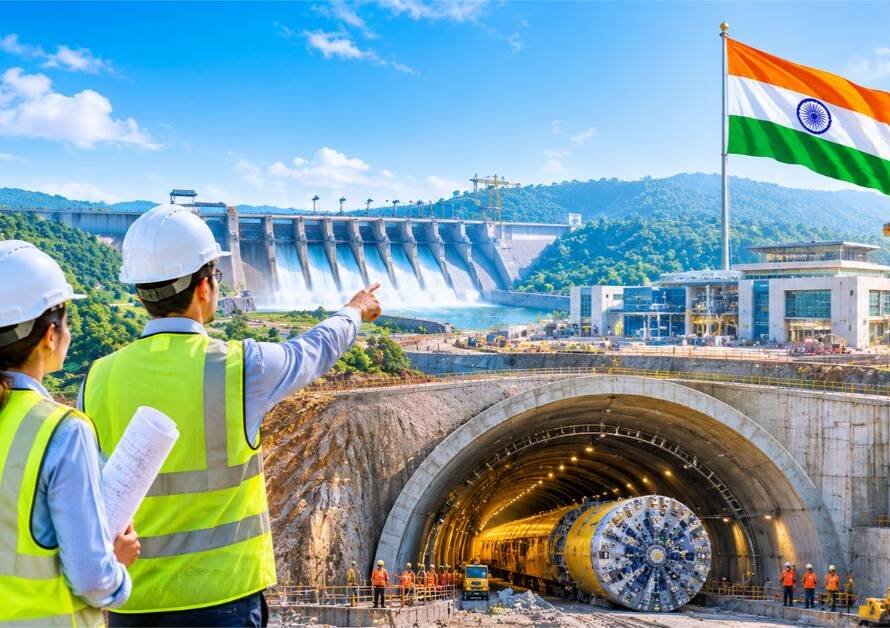
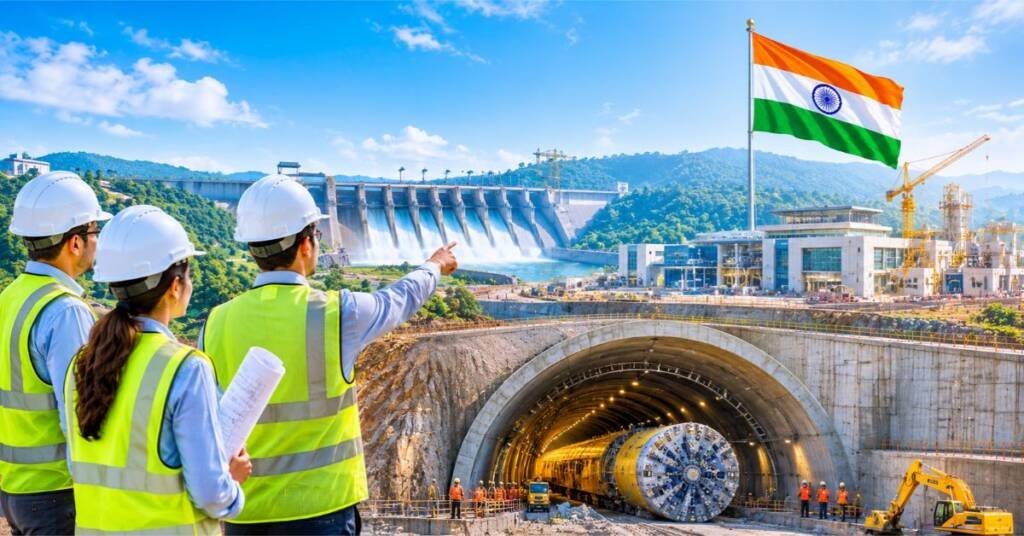
- Taking shape across the chest of the Gulf of Khambhat in Gujarat, the Kalpasar Project is an epoch-making engineering revolution set to permanently transform India’s water security, infrastructure, and socio-economic landscape.
- By constructing a massive 30-kilometer-long concrete dam to block out saline sea water, the project will store the runoff of 12 rivers, including the Narmada, Sabarmati, Mahi, and Tapi. This will create the world’s largest coastal freshwater lake right in the middle of the sea.
- This multi-faceted project will prove to be a lifeline for more than 1 million hectares of arid and barren agricultural land across Saurashtra and North Gujarat. Additionally, a 10-lane super expressway built atop the dam will reduce the 225-kilometer distance between Bhavnagar and Surat to a mere 20 to 30 minutes.
- This unprecedented convergence of green energy production (tidal and solar), industrial development, and coastal groundwater improvement realizes the government’s visionary outlook, turning the adage of “one arrow, many targets” into a grand ground-level reality.
- This visionary mindset stands in stark contrast to the policy paralysis of previous governments. Past administrations were occupied with maintaining dynastic control through scams, corruption, and appeasement, while shielding anti-social and extremist elements.
- Under current good governance, mega-projects like Kalpasar are being brought to life with a multi-dimensional, far-sighted, and nation-first policy.
1. The World’s Largest Freshwater Marine Lake and Water Security
- 30-Kilometer Long Concrete Dam: A massive 30-kilometer concrete dam is being constructed right across the sea at the mouth of the Gulf of Khambhat, converting a vast expanse of the gulf into an unprecedented water reservoir.
- Catchment of 12 Rivers: By blocking out saline sea water, this colossal dam will naturally harvest the fresh water of 12 major rivers, including the Narmada, Sabarmati, Mahi, Tapi, and Dahar.
- Massive Coastal Water Reserve: This process will create the world’s largest coastal freshwater lake in the middle of the sea, setting a new global benchmark for water conservation.
- Groundwater Improvement and Salinity Control: By preventing the ingress of saline sea water into coastal regions, the project will improve coastal water tables and provide pure drinking water to millions of citizens.
2. Agricultural Revolution and the Socio-Economic Rejuvenation of Saurashtra
- Permanent Relief from Water Scarcity in Saurashtra: For the entire Saurashtra and North Gujarat regions—historically plagued by droughts, famine, and water crises—this project will prove to be a permanent lifeline.
- Irrigation for Over 1 Million Hectares: This massive reservoir will supply irrigation water to more than 1 million hectares (10,000 square kilometers) of dry and barren land, sparking a new green and agricultural revolution in the region.
- Multi-Cropping Cycle and Farmer Prosperity: The expansion of irrigation facilities will convert single-crop regions into multi-cropping agricultural zones, drastically boosting the local agrarian economy and farmers’ incomes.
- Industrial and Drinking Water Supply: Alongside agriculture, this reservoir will ensure an uninterrupted supply of treated industrial water for industrial corridors across Bharuch, Surat, and Bhavnagar, alongside safe drinking water for local populations.
3. Revolution in Logistics and Connectivity: An 8-Hour Journey Reduced to Minutes
- 10-Lane Super Expressway: A state-of-the-art 10-lane super expressway will be built atop this 30-kilometer-long massive dam structure.
- Historic Reduction in Distance and Time: Currently, traveling from Bhavnagar (Saurashtra) to Surat (South Gujarat) requires taking a 225-kilometer detour around the gulf, taking 7 to 8 hours. This expressway will cut travel time down to just 20 to 30 minutes.
- Reduction in Fuel Consumption and Carbon Emissions: By eliminating over 190 kilometers of highway transit daily for commercial and private vehicles, millions of liters of fuel will be saved, alongside a sharp drop in carbon emissions.
- Regional Trade and Ro-Ro Services: Direct connectivity between Saurashtra and South Gujarat will provide unprecedented momentum to commercial activities, port-based logistics, and coastal transport.
4. A New Hub for Green Energy and Industrialization
- Harnessing Tidal Power: The Gulf of Khambhat experiences one of the highest tidal ranges in the world (8 to 11 meters). By integrating turbines directly into the dam structure, thousands of megawatts of clean, green tidal electricity will be generated.
- Floating Solar Micro-Grids: Floating solar panels will be installed across the vast surface area of the freshwater lake, preventing water evaporation while producing clean solar energy.
Industrial Corridors and Job Creation: The development of new industrial zones, agro-processing hubs, and tourism centers around the Kalpasar reservoir and expressway will generate millions of direct and indirect employment opportunities.
5. Visionary Good Governance vs. Past Misrule: Fundamental Differences in Vision
- The Grand Reality of “One Arrow, Many Targets”: While ordinary policies address a single problem at a time, the current government’s visionary planning tackles multi-dimensional challenges—water scarcity, logistical bottlenecks, green energy demands, and agricultural irrigation—simultaneously through a single mega-structure.
- Past Policy Paralysis and Scams: Previous administrations completely lacked a national vision. Most of their tenure was consumed by policy paralysis, corruption, scams, and the plunder of public resources, making the conception of such bold projects impossible.
- The End of Appeasement and Dynastic Control: Past rulers prioritized minority appeasement, protecting anti-social and extremist elements, and retaining dynastic control over the nation rather than securing its long-term civilizational and physical development.
Awakening of National Capacity: Discarding vote-bank and appeasement politics, current good governance has advanced historic projects like Kalpasar purely on the principles of ‘Nation First’ and ‘Development First’, showcasing India’s true capabilities.
6. Global Engineering and Strategic Significance
- A Marvel of Complex Hydraulic Engineering: Constructing a 30-kilometer marine dam capable of withstanding fierce sea waves, high siltation rates, and seismic forces places Indian civil engineering at the very top of the global stage.
- A New Model for Global Water Management: The Kalpasar model of storing river water within coastal areas before it goes to waste in the ocean serves as an exemplary blueprint for coastal nations worldwide grappling with water scarcity and rising sea levels.
Conclusion
- The Kalpasar Project proves that a resurgent India does not merely make plans; it possesses the strength to shape the world’s most complex and daring infrastructure projects.
- Leaving behind an era of policy helplessness, corruption, and appeasement, today’s India is resolving multiple long-term challenges in tandem.
- This convergence of environmental conservation, water security, green energy, logistics revolution, and economic prosperity is laying the foundation for a strong, autonomous, and prosperous India for generations to come.
🇮🇳Jai Bharat, Vandematram 🇮🇳
Read our previous blogs 👉 Click here
Join us on Arattai 👉 Click here
👉Join Our Channels👈
Reads & Views: 57