Summary
- The political journey of the Bharatiya Janata Party (BJP) has been primarily rooted in a strong nationalist ideology, organizational discipline, and a commitment to cultural resurgence.
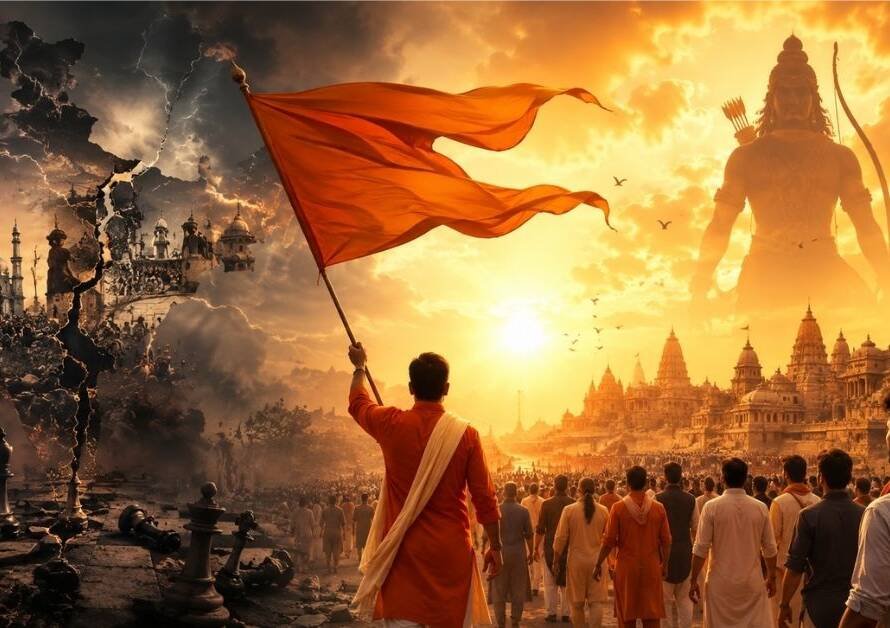
- While administrative approaches across Indian central governments have evolved over time, a fundamental and qualitative shift in the nation’s development model and strategic priorities has been distinctly visible after 2014. From fulfilling the basic, long-pending primary needs of citizens to constructing modern, world-class infrastructure, India has gained unprecedented momentum.
- On one hand, armed Naxalism and traditional terrorism, which had taken deep root for decades in remote tribal and inaccessible regions, have been decisively struck down and integrated into the mainstream of development.
- On the other hand, the nation faces a new and far more complex challenge: ‘Ideological Naxalism’ (Urban and Ideological Naxalism) and institutional disruption. Anti-national elements and vested interest groups—for whom personal political and economic interests override the country—are working 24×7 to push India back toward pre-2014 conditions of instability, poverty, policy paralysis, and subjugation to foreign interests.
- Due to the intense internal resistance and global narratives generated by these forces, the far-reaching outcomes of reforms and development are taking longer than expected to fully manifest on the ground. At this historic juncture, it has become critically important for patriotic citizens and nationalists to avoid impatience, exercise deep patience, and firmly support the government both politically and socially. This detailed analysis presents a thorough, point-by-point evaluation of India’s multifaceted development journey, core nationalist principles, and the modern ideological warfare.
The Challenge of ‘Ideological Naxalism’
1. The Post-2014 Development Paradigm: From Basic Needs to Global Leadership
Prior to 2014, a vast population in India was in a continuous struggle for basic human amenities and the fundamental necessities of a dignified life. The new administrative framework put into practice the principle of extending development to the absolute last mile of the nation.
- Fulfillment of Primary Needs: Millions of underprivileged and marginalized families received basic amenities for the first time, including toilets (Swachh Bharat Mission), permanent housing (Pradhan Mantri Awas Yojana), tap water in every household, 100% electricity connectivity, and free cooking gas (Ujjwala Yojana).
- Unprecedented Balance of Demand and Supply: A concerted effort was made to meet the laws of demand and supply at both domestic and global levels. Sectors that suffered from negative growth rates or administrative stagnation for decades are now recording positive growth of over 50%.
- Economic Growth Amidst Adversity: Despite complex global conditions such as the pandemic, economic slowdowns, and international conflicts, the pace at which India has maintained its GDP growth rate and manufacturing capacity has astonished global policymakers.
- New Framework of Social Welfare: Through Direct Benefit Transfer (DBT) and digital infrastructure, the intermediary system was dismantled, delivering 100% of benefits directly to recipients and placing a historic check on administrative corruption.
2. Highways of Progress and Initial Obstacles: The Journey Beyond ‘Potholes’
In the comprehensive transformation and rebuilding process of any nation, initial friction, legacy system flaws, or practical challenges are natural occurrences.
- Filling Historical Potholes: The work of filling the ‘potholes’ left by neglected policies and administrative laxity over the previous seven decades was undertaken on a war footing. Any new administrative or technical friction encountered amidst this massive construction journey remains purely temporary.
- Long-Term Vision (Highways of Progress): Attention cannot be diverted from the nation’s overarching, long-term goals due to minor political or administrative speed bumps. Today, a robust network of world-class expressways, bullet train projects, state-of-the-art mountain tunnels, 100% railway electrification, and new airports is being established across India.
- Unprecedented Infrastructure Revolution: The construction of roads, bridges, and strategic tunnels in border areas has not only simplified life for ordinary citizens but has also provided unprecedented strength to national security and defense force mobility.
3. Strike on Armed Naxalism: From Jungles to the Mainstream of Development
Decisive and stringent strategic measures have been taken against armed Naxalism and Left-Wing Extremism, which served as the single largest threat to internal security for decades.
- Return to Mainstream from Jungles: In remote regions such as Bastar, Dantewada, and Gadchiroli—once considered strongholds of the Red Corridor—the deployment of security forces went hand-in-hand with a fresh wave of development. IED blasts and violence have been replaced by paved roads, schools, mobile towers, and primary healthcare centers.
- Resolute Political Will: A coordinated model combining targeted operations by security forces with welfare scheme integration for local communities has virtually eradicated the armed network.
- Contrast with Past Governance: Previous administrations lacked both a clear strategy and the political will to achieve a permanent solution, allowing the issue to expand for decades. The current framework broke the back of this network by simultaneously enforcing security and driving development.
4. ‘Ideological Naxalism’, Institutional Disruption, and Anti-National Plots
When armed extremism driven by weapons and violence was defeated in the forests, it shifted its battlefield toward urban centers, academic institutions, and intellectual forums. This ideological extremism is termed ‘Ideological Naxalism’ (Urban/Ideological Naxalism).
- Ideological Attacks in Parliament and Streets: Whenever major, historic legislation concerning national interest, economic reforms, or internal security is passed in Parliament, orchestrated disruptions and misleading narratives are manufactured from the floors of Parliament to the streets.
- Attempts at Institutional Disruption: Political groups losing ground and increasingly irrelevant parties now leverage this ideological and urban Naxalism to disrupt administrative stability and impede the pace of national development.
- Subjugation to Vested Foreign Interests: These anti-national elements and vested interest groups operate 24×7 in an attempt to push India back to the pre-2014 state—where the nation was poor, weak, internationally dependent, and internally unstable. For them, national development, security, and societal well-being are entirely secondary, while narrow political and economic gains remain paramount. They actively block progress to serve foreign agendas and vested interests.
- Disputes Over Cultural Symbols: The inability to achieve complete consensus even decades after independence regarding national cultural heritage and the national song ‘Vande Mataram’—as embedded in the original copy of the Constitution—demonstrates how deeply rooted ideological subjugation had become.
5. The Patriot’s Duty: The Imperative for Political-Social Support and Patience
Due to the intense resistance, legal hurdles, and global narratives orchestrated by anti-national forces, the full impact of reforms and development takes longer to become visible on the ground. At this historical crossroad, the role of patriotic citizens becomes paramount.
- Need for Patience and Foresight: Nation-building is a complex, time-intensive endeavor. When opposing forces work around the clock to weaken the country, patriots must display immense patience rather than falling prey to impulsiveness or transient dissatisfaction.
- Steadfast Political and Social Support: It has become vital for every patriotic citizen and nationalist group to stand firmly with the government. Whether on social media, intellectual platforms, or in everyday social discourse, countering anti-national narratives and extending full political and social support to national policies is the need of the hour.
- Ideological Vigilance: Intellectual alertness is required to combat urban Naxalism and misleading propaganda, ensuring that manufactured discontent and divisive agendas are thwarted in time.
6. Global Identity and the Path Ahead
India’s resurgence is not merely limited to physical infrastructure; it is a journey of national cultural self-respect, economic self-reliance, and intellectual renaissance.
- Political Maturity of Citizens: An aware Indian populace is increasingly adept at understanding the true motives behind ideological roadblocks, deceptive narratives, and narrow political rhetoric.
- The Path to Self-Reliance: Despite severe resistance from anti-national elements, as long as citizens stand united with patience in the interest of the nation, all attempts to render India poor and dependent will fail.
- Advancing Toward Global Leadership: Driven by security, technology, world-class infrastructure, and cultural pride, India continues to move forward as a self-reliant and globally formidable nation that no internal or external plot can stall.
🇮🇳 Jai Bharat, Vandematram 🇮🇳
Read our previous blogs 👉 Click here
Join us on Arattai 👉 Click here
👉Join Our Channels👈