Summary
- This comprehensive analytical essay presents a deep evaluation of a highly sensitive topic in contemporary Indian politics—the balance between democratic discontent and civilizational security.
- Analyzing the discontent brewing within a section of the majority community following the 2024 Lok Sabha election results and the mindset of moving “from 303 to 240, and then 240 to 0,” this document highlights that the ultimate cost of inflicting political punishment is borne not by a political party or its leaders, but by civil society itself and the nation’s socio-cultural fabric.
- Referencing historical tragedies such as the 1946 ‘Direct Action Day’, the 1947 Partition, the 1984 Anti-Sikh Riots, and the 1990 exodus of Kashmiri Hindus, this study makes it clear that turning political discontent into electoral fragmentation has consistently forced ordinary citizens to pay with their security, property, and very existence.
- The essay calls upon citizens to exercise their democratic rights (asking questions and criticizing) while remaining united on polling day to prioritize national sovereignty.
Hindu Unity, Historical Lessons, and National Sovereignty
1. Introduction: The 2024 Mandate and the Reality of Political Discontent
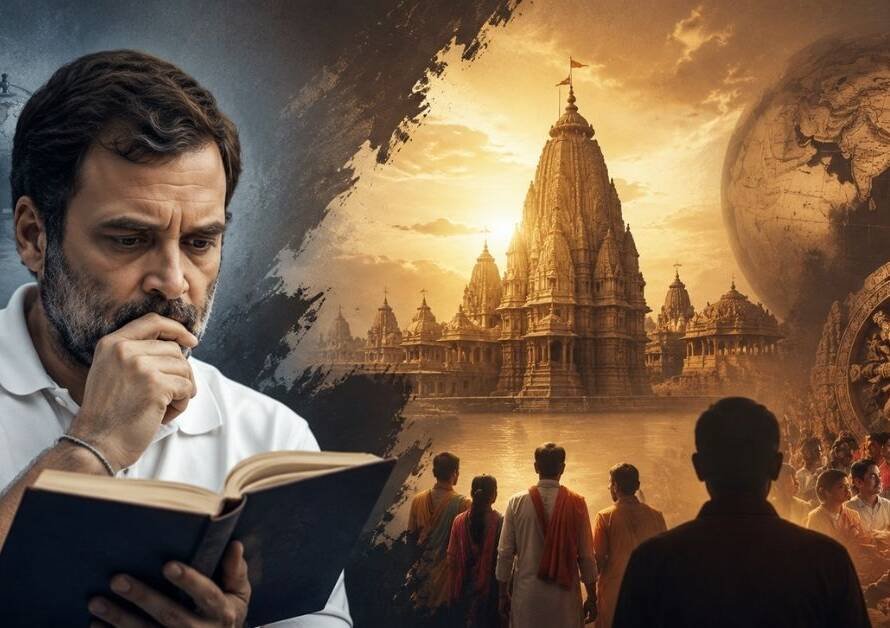
A new debate has emerged in Indian politics following the 2024 Lok Sabha election results. After the ruling party’s tally dropped from 303 seats to 240 seats, discontent over various issues has been observed among its core supporter base.
- Nature of the Mandate: In a democracy, fluctuations in seat counts are a natural process. The 240-seat figure reflects partial public discontent alongside high expectations from the government.
- Psychology of Discontent: Grievances within the majority community—such as “the government did not fulfill all our demands” or “firm steps were not taken on our issues”—are a legitimate democratic right.
- Arrogance vs. Reality: Sentiments like “we brought them down from 303 to 240, now we will bring them down to 0” reflect momentary outrage. However, believing that reducing a political party to zero harms only that party is a grave error.
- Dynamics of the Political Class: Political parties and their leaders can sit in the opposition after a loss, alter their strategies, or take on new roles. However, the primary and most severe impact of policy and security collapse falls upon citizens at the grassroots level.
- Complexity of Electoral Arithmetic: When supporters become passive and stay home on election day, they inadvertently grant a decisive lead to the organized vote-banks of opposing forces.
2. Analytical Overview of Historical Tragedies: When Society Fragmented, Destruction Followed
History provides objective evidence that whenever the majority community has been politically divided or has lost sight of its security priorities, it has suffered unprecedented tragedies.
- August 16, 1946 – Direct Action Day (The Horrific Calcutta Killings):
- Following the Muslim League’s call for ‘Direct Action’ to demand a separate Pakistan, a campaign of mass bloodshed was unleashed on the streets of Kolkata.
- Due to state administrative inaction and societal fragmentation, thousands of innocent citizens were slaughtered within a few days.
- This event serves as a warning that whenever law and order and societal vigilance weaken, radical forces immediately dominate.
- The 1947 Partition of India and Pakistan:
- During the division of the country on religious grounds, over 1 million people were killed and millions were displaced.
- Those forced to flee, leaving behind their centuries-old roots, lands, and properties, were not leaders of any single political party, but ordinary citizens.
- The failure of political decisions and the lack of social unity forced innocent families to pay with their lives and dignity.
- The 1984 Anti-Sikh Pogrom:
- Following the assassination of the then-Prime Minister, attacks on the innocent Sikh community in the national capital and other cities served as a painful example of administrative failure and political retribution.
- When the state machinery falls silent due to political self-interest, law and order collapses like a house of cards, leaving innocent citizens helpless.
- The 1990 Exodus of Kashmiri Pandits:
- Nearly 500,000 Kashmiri Hindus were forced to flee their homeland overnight amid warnings issued from mosque loudspeakers across the Kashmir Valley.
- The only crime of the Kashmiri Pandits was that they remained connected to their cultural roots and were numerically scattered across the valley.
- This event stands as the largest internal displacement in modern India, proving that when demographic balances shift and state authority slackens, exodus becomes the ultimate fate.
3. The Concept of an Ideological and Political Shield
To protect any society or civilization, it is essential to have a political, legal, and administrative framework that acts as a ‘shield’ for its cultural and physical security.
- Importance of the Shield: The current political framework is not merely a single party’s organizational structure; it serves as a robust ideological shield protecting the cultural, religious, and national interests of the majority community.
- Questioning the Shield vs. Destroying It: If the shield has shortcomings or is not functioning according to your expectations, questioning it and applying pressure for reform is wisdom. However, destroying the shield out of anger is a suicidal step.
- Risk of Direct Attack: If this ideological shield breaks or collapses politically to zero, the direct attack of opposing and radical forces will fall upon every home, shop, and individual in society.
- The Threat of ‘Kashmir in Every City’: Rapidly shifting demographic statistics across several states and districts in India indicate that if complacency sets in at the central and state levels, many other regions could face a 1990-Kashmir-like situation.
- Lack of Institutional Security: Without a strong administrative shield, safeguarding religious festivals, cultural events, and basic civil rights becomes exceedingly difficult.
4. Discontent vs. Electoral Fragmentation: The Need for Prudent Balance
The duty of a mature and vigilant citizen is not merely to express anger, but to assess the far-reaching consequences of their political choices.
- Preserve the Right to Criticize: Asking the government, “Why haven’t Kashmiri Pandits been rehabilitated?”, “Why wasn’t a Uniform Civil Code (UCC) implemented nationwide immediately?”, or “Why wasn’t economic relief provided?” is entirely legitimate and necessary.
- Distinction Between Grievance and Discord: Having grievances against your own government or representative is natural, but this discontent must not grow so severe that it creates an advantage for forces opposed to your very existence and culture.
- Election Day Strategy: Ask tough questions during campaign season and highlight administrative failures on social media and public platforms, but adopt the policy of “Vocal for Criticism, United for Vote.”
- Fragmentation Means Destruction: If the majority community breaks apart based on caste, language, region, or temporary economic dissatisfaction, it directly benefits organized vote-banks that vote with complete unity.
- Social Media vs. Ground Reality: Campaigns demeaning your own protective framework on digital platforms break the morale of supporters on the ground, leading to lower voter turnout.
5. Conclusion: ‘United You Stand Safe’
- Modern India stands at a critical historical crossroads today. On one side lies the dream of becoming a global superpower alongside a cultural renaissance; on the other lie the challenges posed by internal and external disruptive forces.
- Failing to learn from historical mistakes—whether Calcutta in 1946, Partition in 1947, or Kashmir in 1990—would be the ultimate folly. Political parties will come and go, governments will change, but India’s civilizational identity and the safety of its citizens must remain intact.
- Destroying your own protective system out of temporary anger or arrogance is not wisdom. Exercise your democratic rights with complete vigor, but remember on polling day that your unity is your greatest security.
“Express your discontent, ask tough questions, hold the government accountable, but never weaken your social unity and national security shield—because if the shield breaks, the strike will land directly on you!”
🇮🇳Jai Bharat, Vandematram 🇮🇳
Read our previous blogs 👉 Click here
Join us on Arattai 👉 Click here
👉Join Our Channels👈