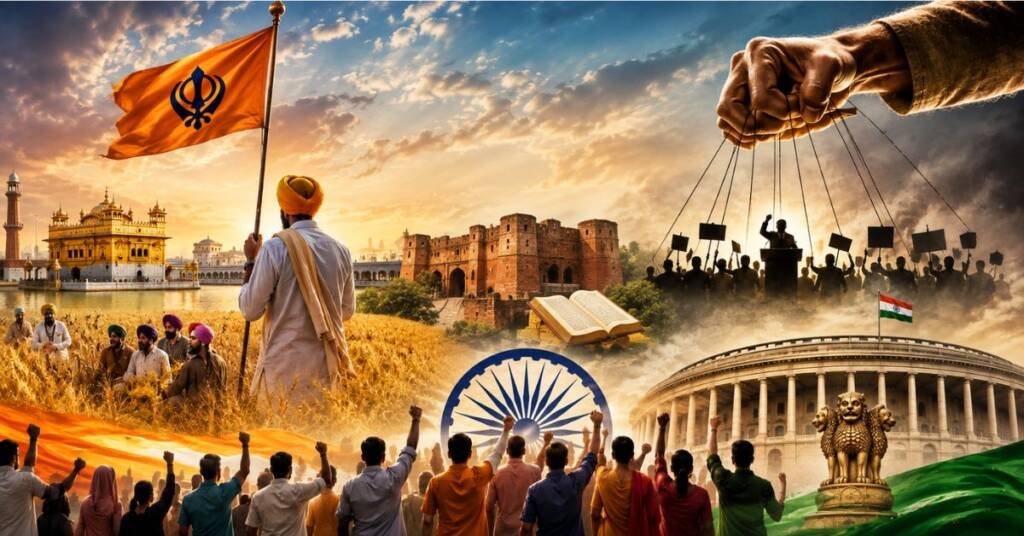
Summary:
- This comprehensive analytical narrative synthesizes Punjab’s acute multidimensional crisis—spanning administrative breakdown, radicalization, economic disruption, and deep-seated cultural subversion—with the broader dynamics of Indian democratic governance.
- Punjab is a critical border state, the sacred soil of the Sikh Gurus, and a vital shield for national sovereignty. Today, administrative laxity and political appeasement under the Aam Aadmi Party (AAP) have emboldened extremist elements, eroded law and order, and fostered targeted intimidation against non-Sikh communities.
- Simultaneously, unchecked foreign-funded missionary conversions, protection of illegal immigrants, and Pakistan-sponsored narco-terrorism threaten the shared Sanatani-Sikh heritage and demographic stability of the state. Nationally, opposition forces have sought to exploit local discontent, youth agitations, and foreign-backed toolkits to trigger civil instability akin to recent events in Bangladesh and Nepal.
- However, India’s democratic foundations remain unyielding. By evaluating the historical imperatives of anti-Congress politics, the necessity of a BJP-Akali Dal alignment (Bhai-Charak Sanjh), and the urgent duty of the electorate to root out anti-national elements, this analysis outlines why national security, state stabilization, and the preservation of Sanatana culture must take precedence over short-term political opportunism.
The Resilience of Indian Democracy
SECTION 1: Administrative Collapse in Punjab—Appeasement and the Return of Micro-Extremism
The history of Punjab bears witness to the grave costs of compromising with radicalism for narrow electoral gains. The appeasement tactics of the 1980s pushed the state into a decade of violence and instability. Under the current Aam Aadmi Party (AAP) administration, a similar pattern of administrative hesitation and political indulgence has allowed subversive elements to re-emerge.
1.1 Free Rein to Radical Elements and Breakdown of Law Enforcement
- Institutional Paralysis: Political patronage and a lack of executive resolve have constrained law enforcement agencies, leading to a visible erosion of police authority across the state.
- Proliferation of Micro-Extremism: Extremist narratives are no longer isolated; they are manifesting at local neighborhood levels, where radicalized groups routinely challenge state authority without facing swift legal consequences.
- Lawlessness Surpassing Historic Highs: Given Punjab’s position as a sensitive border state, the current breakdown of public order poses far greater national security risks than conventional law-and-order challenges in non-border jurisdictions.
1.2 Targeted Vulnerability of Non-Sikhs and Potential Communal Fallout
- Targeted Harassment: Non-Sikh populations—including shopkeepers, small business owners, religious representatives, and migrant laborers—face escalating threats, extortion, and social intimidation.
- Unchecked Vigilantism: Extremist factions operate with near-impunity, brandishing weapons in public spaces and attempting to enforce extra-judicial authority.
- Risk of National Escalation: Any sustained targeting of non-Sikh communities inside Punjab risks triggering severe socio-political reactions across neighboring states, playing directly into the hands of hostile foreign actors seeking to ignite widespread communal friction.
SECTION 2: The Triad of Collapse—Economic Ruin, Narco-Terrorism, and Cultural Subversion
Punjab is currently confronting three simultaneous structural crises that threaten its physical, economic, and cultural foundation:
- Industrial Exodus: Major industrial hubs in Ludhiana, Jalandhar, and Mohali are witnessing a steady exit of manufacturing, textile, and engineering units to more stable investment destinations like Uttar Pradesh, Haryana, and Rajasthan.
- Deterrence of Fresh Capital: Unstable law and order, recurring blockades, and extortion demands prevent both domestic conglomerates and international investors from committing long-term capital to the state.
- Youth Brain Drain: As legitimate economic avenues vanish, the state’s youth are increasingly drawn to illegal emigration routes (“donkey routes”), leaving behind an aging, economically distressed population.
2.2 Pakistan’s Trans-Border Narco-Warfare
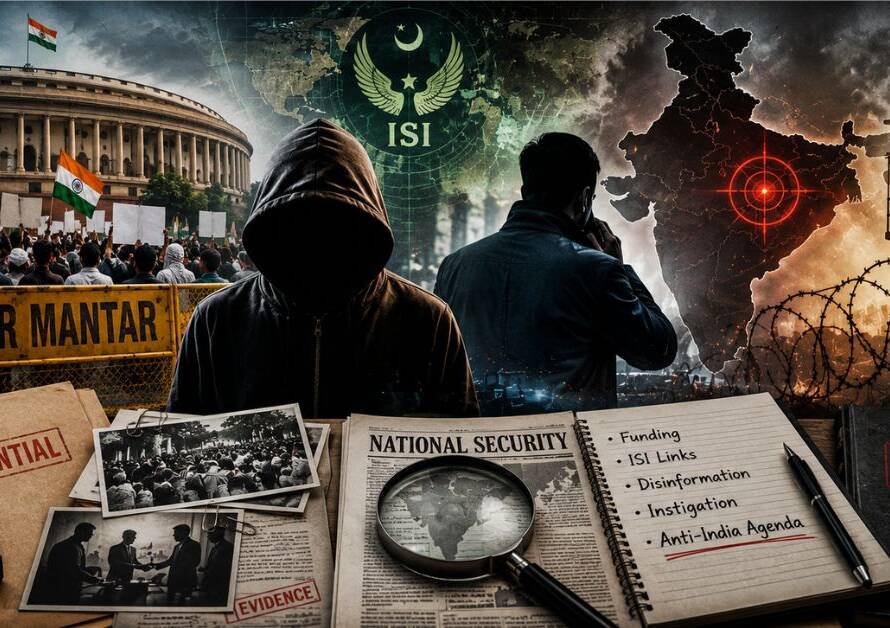
- Drone-Serviced Contraband Pipelines: Pakistan’s ISI continues to deploy advanced drone technologies to flood Punjab’s border districts with synthetic drugs, illegal firearms, and contraband.
- Devastation of Demographics: Substance abuse has expanded beyond rural male populations to impact urban youth, women, and school-aged children, threatening the long-term health of future generations.
2.3 Subversion of Sanatani-Sikh Heritage Through Silent Conversions and Illegal Immigrants
- Targeted Missionary Expansion: Taking advantage of economic hardship and social distress, foreign-funded missionary organizations conduct wide-scale conversion drives across rural Punjab through inducements and faith-healing promises.
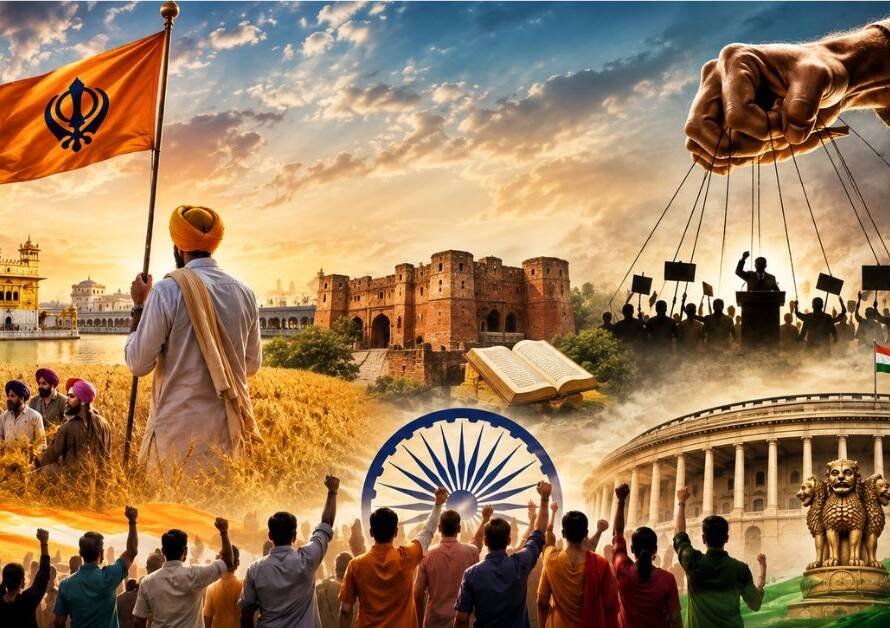
- Erosion of Shared Civilizational Roots: The spiritual tradition of the Sikh Gurus was historically established to defend Dharma, Sanatana values, and national sovereignty. Unchecked conversion drives seek to sever these shared roots and permanently alter the state’s cultural and demographic character.
- Patronage to Illegal Settlers: Administrative apathy toward illegal immigrants further distorts local demographics, taxing public infrastructure and introducing new security vulnerabilities along a sensitive border.
SECTION 3: Manufactured Agitations, Foreign Toolkits, and the Bangladesh/Nepal Model
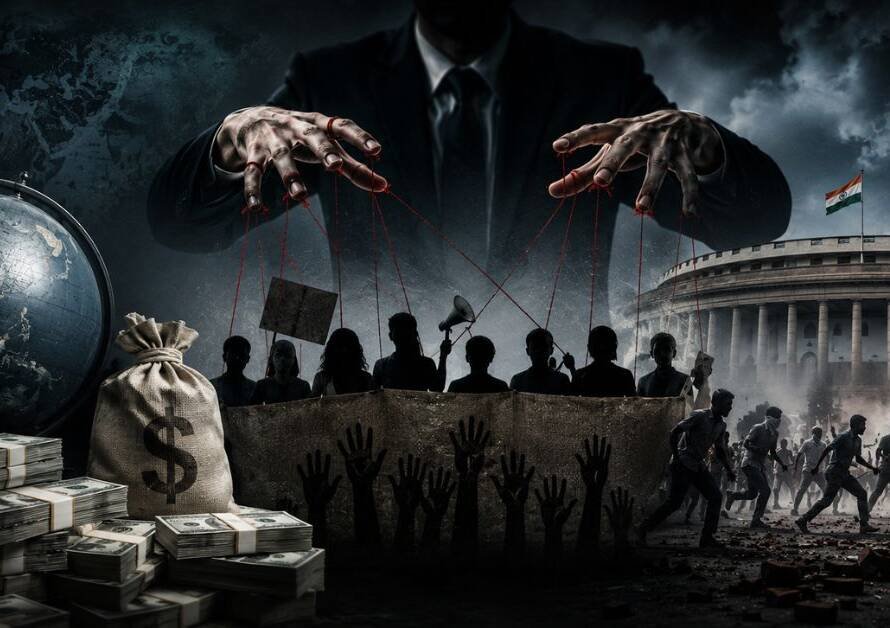
To counter India’s growing geopolitical stature and economic momentum, an organized network of domestic opposition elements, foreign-backed toolkits, and deep-state interests continuously seeks to manufacture street-level instability.
3.1 Exploitation of Agitations and “Sacrificial Pawns”
- Infiltration of Movements: Localized protests—such as student-led demonstrations or environmental fasts like Sonam Wangchuk’s at Jantar Mantar—are systematically infiltrated and weaponized by opposition networks.
- The Strategy of Manufactured Crisis: Activists are encouraged to maintain prolonged standoffs to generate volatile health crises. Opposition handlers then exploit these emotional flashpoints to provoke police confrontations, whip up public anger, and project India as an unstable state.
- The Civil Unrest Template: The ultimate objective behind orchestrating marches to Parliament or street blockades is to replicate the rapid, street-led political collapses recently executed in Nepal and Bangladesh.
3.2 Foreign Funding and Deep-State Interdiction
- Opaque Financial Pipelines: Substantial funding originating from opaque international NGOs, global deep-state entities (such as George Soros-linked networks), and foreign anti-India portals flows into domestic agitation hubs.
- Patronage for Subversives: Domestic political opportunists extend tacit protection to radical separatists, illegal immigrants, and foreign-funded networks, attempting to use street vetoes to bypass democratic mandates.
SECTION 4: Democratic Resilience, Gen-Z Engagement, and Historical Imperatives
Despite attempts to engineer civil unrest, the structural stability of Indian democracy remains intact, supported by institutional strength and proactive leadership.
4.1 Direct Leadership Engagement with Gen-Z
- Modern Dialogue Platforms: Recognizing attempts by opposition networks to mislead younger demographics (“Gen-Z”), the government has adopted direct, modern communication channels—including late-night digital outreach on platforms like Instagram—to address youth concerns directly.
- Democratic Flexibility vs. Sponsored Opposition: The administration has consistently demonstrated a willingness to adapt policy based on genuine public feedback while maintaining a firm stance against sponsored disorder. As legislative sessions conclude, artificial street movements lose momentum and dissolve.
4.2 The Historical Contradiction of Anti-Congress Politics
- Origins of Non-Congress Coalitions: Modern regional parties currently aligning with the Indian National Congress contradict their own foundational histories. From Ram Manohar Lohia’s anti-Congress doctrines to the Jayaprakash Narayan movement, non-Congress political streams emerged precisely to challenge single-party authoritarianism.
- Ideological Foundations: The Bharatiya Jana Sangh was founded in 1952 by Dr. Syama Prasad Mookerjee in explicit opposition to the centralizing policies of the early Congress cabinet. In 1989–90, national and regional factions united specifically to keep Congress out of power. Surrendering ideology merely for executive office exposes the intellectual fragility of modern opposition alliances.
4.3 Target Leadership: The Strategic Imperative
- Focus on Key Figures: Strategic campaigns orchestrated by opposition toolkits consistently target the core decision-making apparatus—specifically Prime Minister Narendra Modi and Home Minister Amit Shah—whose political stability and policy execution remain the primary obstacles to foreign-funded subversion.
SECTION 5: Realigning Punjab’s Political Architecture—Party Expansion vs. Electorate Duty
As national leadership evaluates political strategies in Punjab, including potential alliances between the Bharatiya Janata Party (BJP) and the Shiromani Akali Dal (SAD), national security considerations and voter awareness must guide the state’s future.
5.1 The Risk of Independent Contests and Vote Fragmentation
- Dividing the Nationalist Vote: While contesting all seats independently allows a party to expand its organizational footprint, in a multi-cornered contest, it risks fragmenting the urban, nationalist, and anti-establishment vote share.
- Benefiting Incumbent Disruption: Vote fragmentation directly aids the incumbent AAP administration or Congress, allowing destabilizing political entities to retain power on a divided mandate and prolonging Punjab’s administrative decay.
5.2 Re-establishing the Bhai-Charak Sanjh (Social Harmony)
- A Historic Social Bridge: The alliance between the BJP and the Shiromani Akali Dal has historically functioned as more than an electoral understanding; it represents a crucial social bridge unifying Sikh and Hindu communities (Bhai-Charak Sanjh).
- A Structured National Alternative: Realignment offers a stable political framework capable of countering radical narratives, ending administrative laxity, curbing illegal conversions, and restoring economic predictability to the state.
SECTION 6: The Imperative for the People of Punjab: Unmasking the Opposition and Reclaiming Stability
It is now paramount for the citizens of Punjab to recognize the coordinated games being played by opposition parties. To secure power at any cost, these factions have actively shielded and promoted anti-national forces, pushing the state toward comprehensive ruin.
- Recognizing the Opposition’s Tactic: The electorate must see through the dangerous strategy of supporting Khalistani radicals, foreign-funded missionaries, and illegal immigrants. Throughout their current tenure, these elements have been given tacit support to weaken Hindu culture, fracture societal unity, and erode the sacred Sanatani heritage intrinsically linked with the Sikh tradition.
- Following the National Precedent: Just as voters across the rest of the country have repeatedly rejected divisive, anti-national alliances to safeguard the nation’s integrity, development, and cultural identity, the people of Punjab must act decisively at the ballot box.
- Rooting Out Anti-National Elements: Restoring order and securing Punjab’s future requires completely uprooting those political entities that harbor subversives. By rejecting these forces, Punjab can stabilize its economy, secure its borders, safeguard its shared heritage, and reclaim its position as India’s premier shield of prosperity and national pride.
- India’s democracy is anchored in ancient civilizational values, institutional strength, and sovereign resolve. Punjab is the nation’s protective shield, agricultural backbone, and spiritual heartland.
- It cannot be surrendered to political opportunism, foreign-funded toolkits, or radical subversion. Preserving Punjab’s stability and securing national integrity transcends short-term party expansion.
- The people of Punjab hold the ultimate key: by unmasking anti-national syndicates, rejecting political appeasement, and reaffirming their shared Sanatani-Sikh heritage, they will ensure that Punjab remains secure, prosperous, and undivided.
🇮🇳 Jai Bharat, Vandematram 🇮🇳
Read our previous blogs 👉 Click here
Join us on Arattai 👉 Click here
👉Join Our Channels👈