Summary:
- This detailed analysis outlines the constitutional boundaries of peaceful protests in Indian democracy, the principle of “purity of means,” and the serious national challenges arising from recent violent demonstrations.
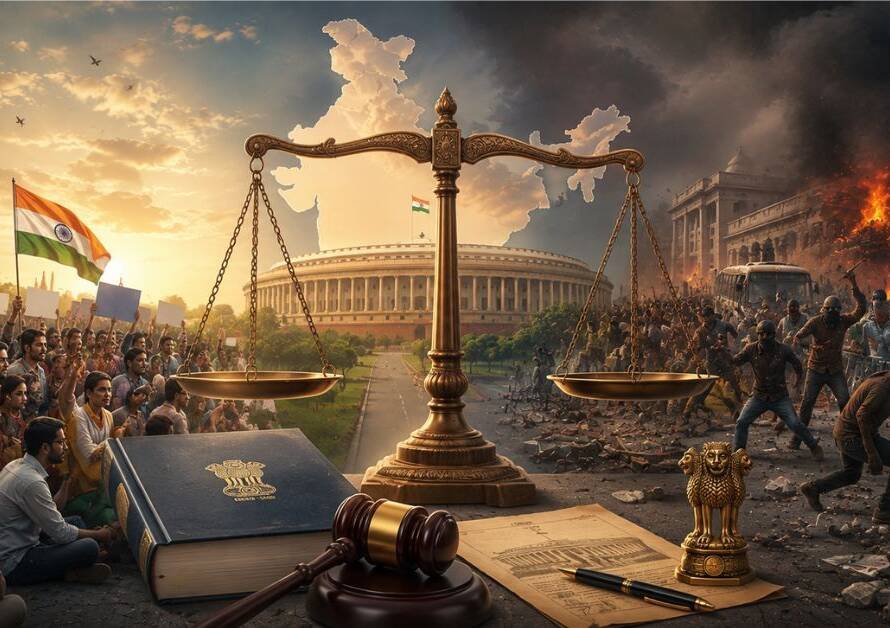
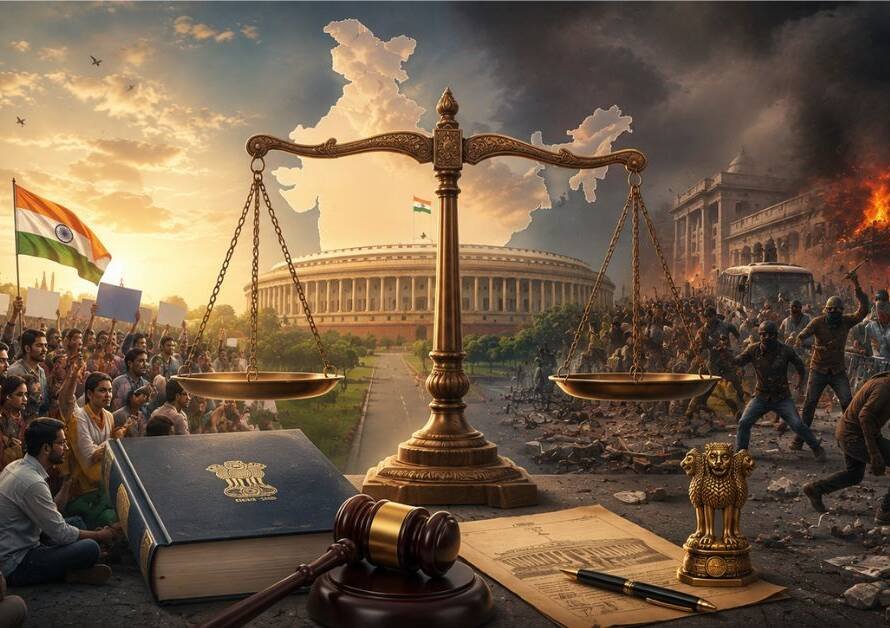
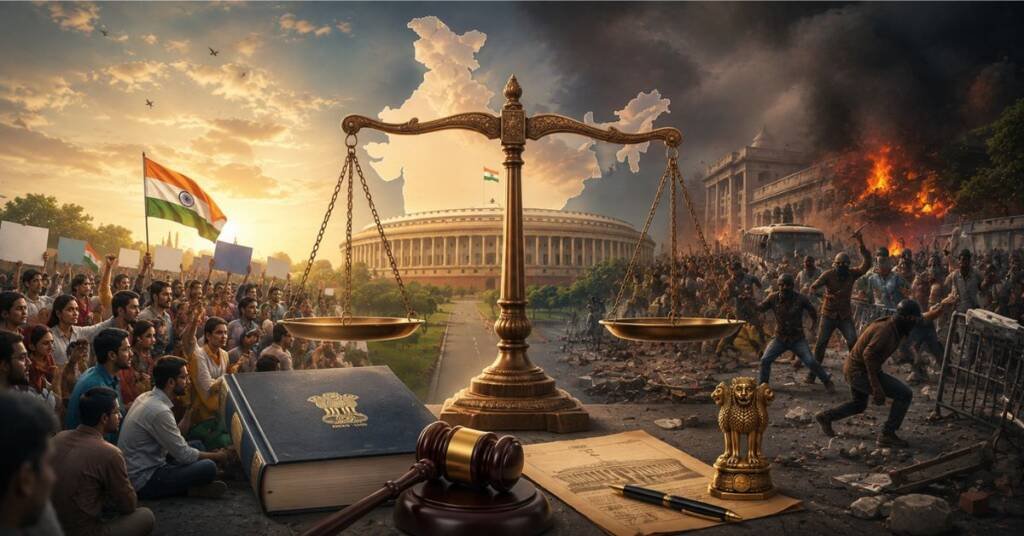
- It clarifies that while dissent and peaceful protest are the core of a functioning democracy, violence, destruction of public property, and compromising the security of supreme constitutional institutions like Parliament lead to “mobocracy.”
- The article emphasizes a compassionate approach toward youth (such as community service and counseling) alongside enforcing “personal accountability” for the key instigators of violence.
- It warns that withdrawing criminal cases due to political pressure weakens the “Rule of Law” and sets a dangerous precedent for future generations (Generation Alpha, Generation Beta).
A Detailed Analysis of the Constitutional Balance Between Rights and Responsibilities
I. Constitutional Rights, the ‘Purity of Means’, and the Threat of Mobocracy
The Constitution of India grants citizens the complete right to express their views and dissent against government policies. However, a democracy functions not merely by demanding rights, but through the civic duties and responsibilities attached to them.
- Article 19 and Reasonable Restrictions: Article 19(1)(a) and 19(1)(b) of the Constitution guarantee citizens the fundamental rights to freedom of speech and expression, and to assemble peaceably and without arms. However, Article 19(2) explicitly clarifies that these rights are not absolute. Reasonable restrictions can be imposed in the interest of public order, the security of the State, and national sovereignty.
- Purity of Means: The core of Mahatma Gandhi’s political philosophy was that no matter how noble the objective of an agitation, its means must be equally pure and non-violent. If the ‘purity of means’ is compromised, every group or pressure society will begin taking the law into its own hands to enforce its demands.
- Acceptance of Demands vs. Criminal Accountability: If stone-pelting occurs, police officers are attacked, or national property is set on fire during an agitation, perpetrators cannot be exonerated simply because the government later accepted the protesters’ demands. The acceptance of an agitation’s underlying cause does not legitimize criminal acts committed in its name.
II. Political Appeasement and the Erosion of the Rule of Law
Withdrawing criminal cases filed during violent demonstrations due to electoral calculations or political pressure is a highly dangerous precedent for the long-term health of democracy.
- A Dangerous Precedent: If criminal cases against violent protesters are withdrawn today under political pressure, the same benchmark will be applied to every future agitation across the country. Any organization could assume that it can block roads, paralyze the capital, breach Parliament, and indulge in violence—expecting that cases will ultimately be dropped under political leverage.
- Impact on Future Generations (Gen Alpha, Gen Beta): The concerns raised by advocates before the Supreme Court regarding incidents like the Farmers’ Protest, Shaheen Bagh, or Jantar Mantar are immensely relevant. If the message spreads that legal consequences can be evaded through violent pressure, coming generations—Generation Alpha and Generation Beta—will also choose the path of anarchy under the guise of exercising their rights.
- Erosion of the Rule of Law: When the State hesitates to exercise its lawful authority or when offenders receive political patronage, the concept of the ‘Rule of Law’ weakens, causing citizens to lose faith in the justice system.
III. No Compromise on National Security: The Dignity of Parliament
Parliament is not merely a structure of concrete, bricks, and mortar; it symbolizes the sovereignty, democratic aspirations, and legislative authority of India’s 1.4 billion citizens.
- Mandate of Security Agencies: If an uncontrolled mob attempts to breach the security perimeter of an ultra-sensitive institution like Parliament, it ceases to be a routine law-and-order issue and becomes a direct violation of national security. In such scenarios, security agencies are compelled to take strict measures, which can lead to tragic outcomes.
- Need for Preventive Action: To avoid such catastrophic situations, the law must be strictly enforced at the initial stages without any discrimination, appeasement, or laxity. No violent mob can be permitted to hold sovereign national institutions hostage.
IV. Sensitivity vs. Accountability: A Reformative and Just Approach
Youth energy and student power represent the greatest asset of any nation. Young people possess passion and impulse, making them vulnerable to misguidance; however, a clear line must be drawn between ‘sensitivity’ and ‘permission for anarchy’.
- Reformative Measures for First-Time Offenders: Rather than imposing harsh prison sentences on minors or students who commit a mistake for the first time due to misguidance, a reformative approach should be adopted. They should be guided through community service, mandatory counseling, and social responsibility rehabilitation programs.
- Breaking the Cycle of Crime: It is an established fact that every hardened criminal begins with a minor first offense. If breaking the law carries no accountability the first time, this sense of impunity encourages the individual to become a major offender or an anarchic element over time.
- Cracking Down on Instigators of Anarchy: Exercising unlimited leniency toward key conspirators who deliberately incite violence, stone-pelting, and arson at places like Jantar Mantar or on public streets is self-destructive. Such laxity effectively grants a license to future generations to become undisciplined, anti-law, and anti-national.
V. Destruction of Public Property and Personal Accountability
The burning of buses, trains, and government buildings during protests has become a frequent occurrence in India, even though this property is built through the hard-earned money of taxpayers.
- Personal Financial Accountability: Initiating criminal proceedings alone is insufficient. In line with Supreme Court directives, the financial loss caused to public property during demonstrations must be recovered directly from the personal assets of the individuals involved and the primary organizers of the agitation.
- Limits of Organizer Responsibility: Organizations and leaders calling for an agitation must submit an undertaking that they will remain responsible for maintaining peace during the demonstration. If the protest turns violent, direct moral and legal accountability must rest upon the organizers.
VI. Future Strategy: Balancing Dialogue, Restraint, and Justice
In a mature democracy, the government, the judiciary, and society must collectively build a framework where peaceful protests are respected, but a policy of Zero Tolerance is maintained against violence.
- Role of the Government: The State must keep avenues for civic dialogue continuously open so that grievances can be resolved peacefully before they escalate.
- Approach of the Judiciary: The judiciary should maintain a reformative and empathetic outlook toward youth, while simultaneously ensuring that no political compromises are made with the Rule of Law.
- Responsibility of Society: Civil society, parents, and educational institutions have a duty to educate the youth not only about their rights but also about their civic duties and constitutional boundaries.
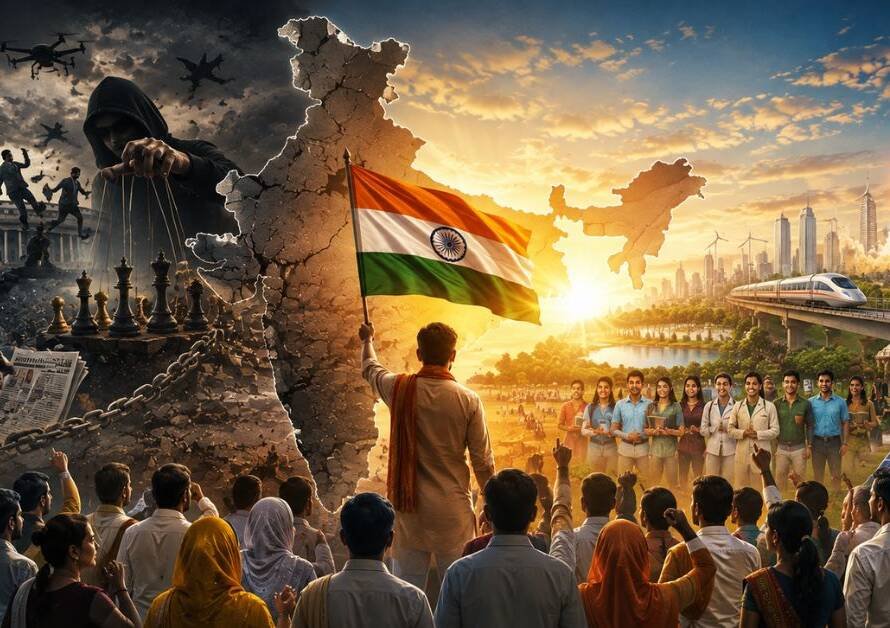
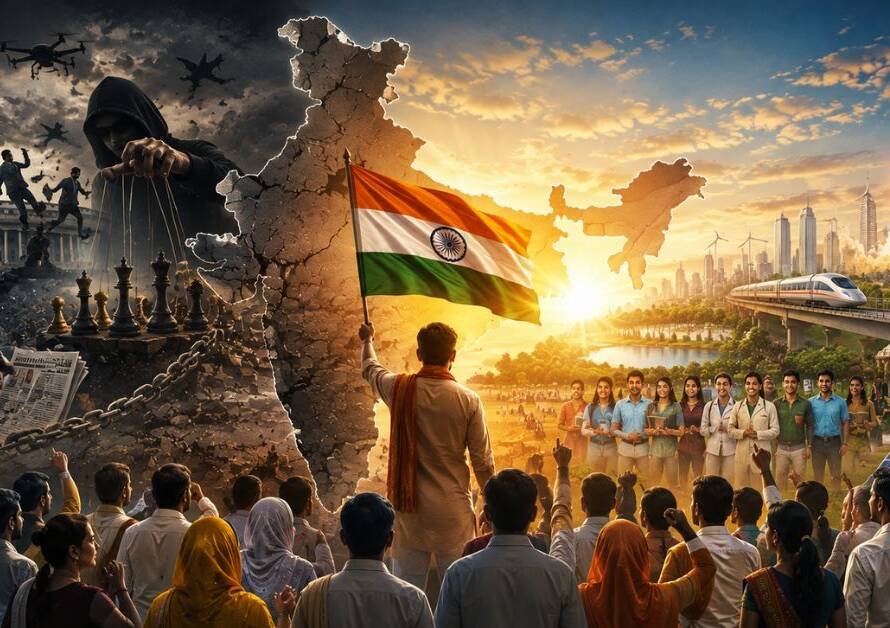
- The Constitution of India grants the right to protest and express dissent, but it under no circumstances permits anarchy, violence, or damage to national property.
- In a democracy, rights and responsibilities are two sides of the same coin. If we defend only our rights while ignoring our responsibilities, we will establish a dangerous precedent for coming generations.
- Peaceful protests must always be respected, but only by enforcing personal accountability on those who spread violence and chaos can we safeguard Indian democracy as a robust and secure constitutional state.
🇮🇳 Jai Bharat, Vandematram 🇮🇳
Join us on Arattai 👉 Click here
👉Join Our Channels👈