Summary
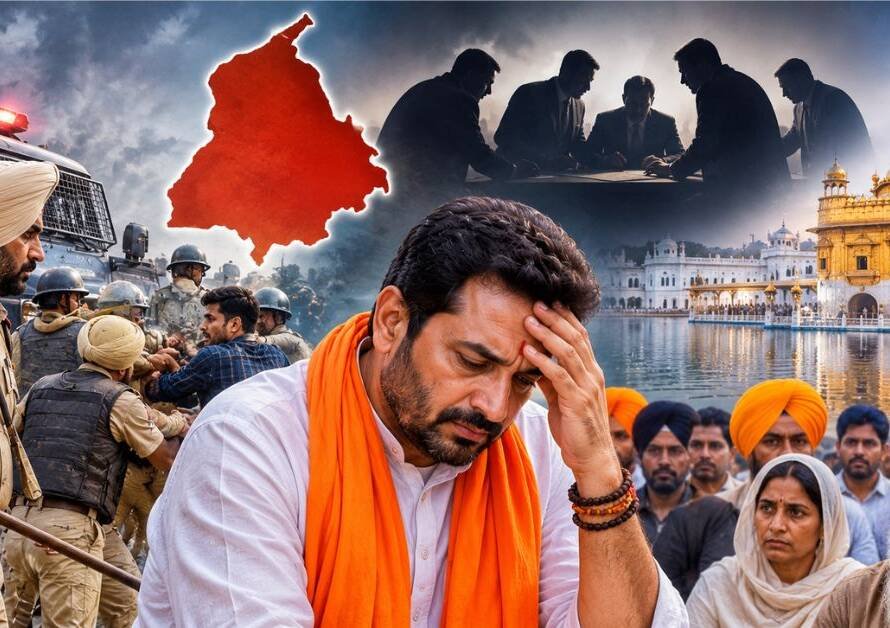
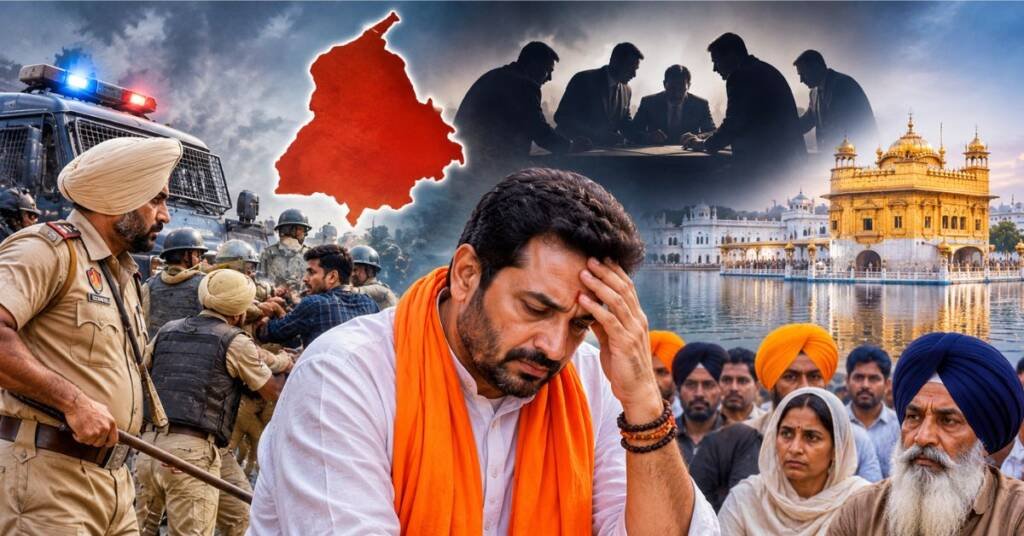
- This comprehensive narrative provides an in-depth socio-political and legal-administrative evaluation of a recent incident in Khanna, Punjab, involving Mahant Kashmir Giri, a prominent Shiv Sena leader and respected Hindu saint.
- The case—involving a targeted police raid and the deliberate planting of illicit narcotics at his residence—serves as a stark illustration of the dangerous weaponization of state law enforcement machinery against specific social and religious representatives.
- Rather than standing as an isolated instance of police corruption or administrative malfunction, the incident highlights a broader pattern of Narrative Warfare and institutional bias designed to defame Hindu religious leadership, undermine Sanatana Dharma activists, and distract the public from systemic governance failures regarding the state’s escalating drug crisis.
- Through a detailed examination of indisputable CCTV evidence, administrative accountability, historical parallels of manufactured narratives, and the urgent necessity for judicial deterrence, this document underscores the imperative to uphold the Rule of Law and safeguard innocent citizens from state-sponsored victimization.
Punjab’s Administrative Crisis and Hindu Leadership
1. The Khanna Incident: A Pre-Planned Conspiracy Exposed by CCTV Evidence
The events that unfolded at the residence of Mahant Kashmir Giri in Khanna, Punjab, stand as a chilling demonstration of state power being deployed for malicious, pre-planned framing rather than legitimate law enforcement.
- Execution of a Targeted Raid: A specialized team from the local police department conducted a high-profile raid on the residential premises of Mahant Kashmir Giri. While ostensibly portrayed as a routine anti-narcotics operation, the underlying objective was to orchestrate a public arrest that would brand a prominent religious figure as a drug trafficking operative.
- The Decisive Intervention of Technology: Had it not been for functioning CCTV cameras installed within the premises, an innocent religious leader would have been dragged into a prolonged judicial nightmare. The recorded surveillance footage unequivocally captured Assistant Sub-Inspector (ASI) Sukhdev Singh surreptitiously placing a small, suspicious packet beneath a mattress in the Mahant’s living area.
- Manufactured Discovery and Immediate Arrest: Moments after planting the evidence, the raiding officers claimed to “discover” 30 grams of heroin from the exact spot where the packet was placed, immediately taking Mahant Kashmir Giri into custody.
- Public Exposure and Subsequent Legal Relief: Upon the public release and viral dissemination of the CCTV footage, the state apparatus was forced into damage control. The implicated officer was suspended, a Special Investigation Team (SIT) was constituted, and the judiciary promptly discharged Mahant Kashmir Giri of all manufactured charges.
2. Punjab’s Drug Epidemic, Administrative Failure, and Scapegoating Strategy
Punjab has been grappling with a severe and escalating narcotics epidemic for over a decade. However, the administrative machinery’s failure to dismantle actual drug syndicates has led to dangerous alternative tactics.
- Diversion from Real Cartels: Having struggled to dismantle international smuggling networks, cross-border supply chains, and entrenched drug cartels, elements within the administrative and law enforcement setup have resorted to scapegoating. Creating high-profile arrests of respected figures creates a illusion of law enforcement activity while distracting the public from systemic failures.
- Systemic Targeting of Hindu Leadership: Hindu saints, monks, and social activists in Punjab who actively speak out against drug addiction, work toward cultural preservation, and advocate for national integration are increasingly targeted. Framing such figures serves to suppress their social influence and destroy their public credibility.
- Erosion of Public Trust in Law Enforcement: When uniformed officers tasked with preserving order become active participants in fabricating evidence and framing citizens, public trust in the state’s law enforcement apparatus is completely undermined.
3. From ‘Saffron Terror’ to ‘Drug Syndicate’: Patterns of Manufactured Narratives
The attempt to frame Mahant Kashmir Giri is not an isolated event; it aligns with a long-standing pattern of narrative construction employed by specific political ecosystems.
- Historical Echoes of Political Deception: Just as concerted efforts were made in previous decades to construct misleading narratives like ‘Saffron Terror’ for short-term political gains and appeasement, recent actions reflect a similar strategy aimed at associating Hindu religious leaders with illicit activities.
- Proxy Narrative Warfare: When anti-national elements and ideological extremists face defeat in direct social or political encounters, they frequently utilize sympathizers within administrative and police structures to wage proxy narrative warfare.
- Psychological and Social Subjugation: The primary objective behind manufacturing these scandals is to force the majority community and Sanatana institutions onto the defensive, inducing social stigma and weakening their collective advocacy for cultural rights.
4. Legal Imperatives: The Need for Exemplary and Deterrent Punishment
The powers vested in law enforcement officers are intended to protect citizens and enforce justice, not to be weaponized for extortion, political hit jobs, or character assassination.
- Inadequacy of Routine Suspension: Placing false evidence to incarcerate a citizen is a grave criminal act involving conspiracy and fabrication under the Bharatiya Nyaya Sanhita (BNS). Departmental suspensions or internal inquiries are grossly insufficient responses to such systemic misconduct.
- Prosecution of All Co-Conspirators: The rogue officers directly involved, along with any administrative or political handlers operating behind the scenes, must face formal FIRs, immediate arrest, and rigorous prosecution under the full weight of criminal law.
- Independent Judicial Monitoring: Given the involvement of local police officials, any investigation must be supervised by an independent agency or monitored directly by the High Court to ensure that the broader network behind the incident is fully exposed and held accountable.
5. Conclusion: Vigilance, Truth, and Upholding the Rule of Law
The Khanna incident serves as a critical warning regarding how state authority can be abused to target religious identity, violate personal dignity, and compromise social harmony.
- The Imperative of Vigilance: While truth triumphed in this instance due to CCTV surveillance and judicial intervention, it highlights a deeply concerning question: how many citizens lacking surveillance infrastructure have fallen victim to similar administrative fabrications?
- Community Awareness and Mobilization: Social organizations, legal bodies, and citizens must maintain heightened vigilance against attempts to defame religious leadership. Coordinated legal, social, and intellectual responses are essential to dismantle such conspiracies effectively.
- Establishing Judicial Precedent: Unless the judiciary and executive authorities enforce severe, exemplary punishment against officers who abuse their badge, institutional integrity cannot be restored. The uniform must remain a symbol of protection for the innocent, never an instrument for persecution.
🇮🇳Jai Bharat, Vandematram 🇮🇳
Read our previous blogs 👉 Click here
Join us on Arattai 👉 Click here
👉Join Our Channels👈