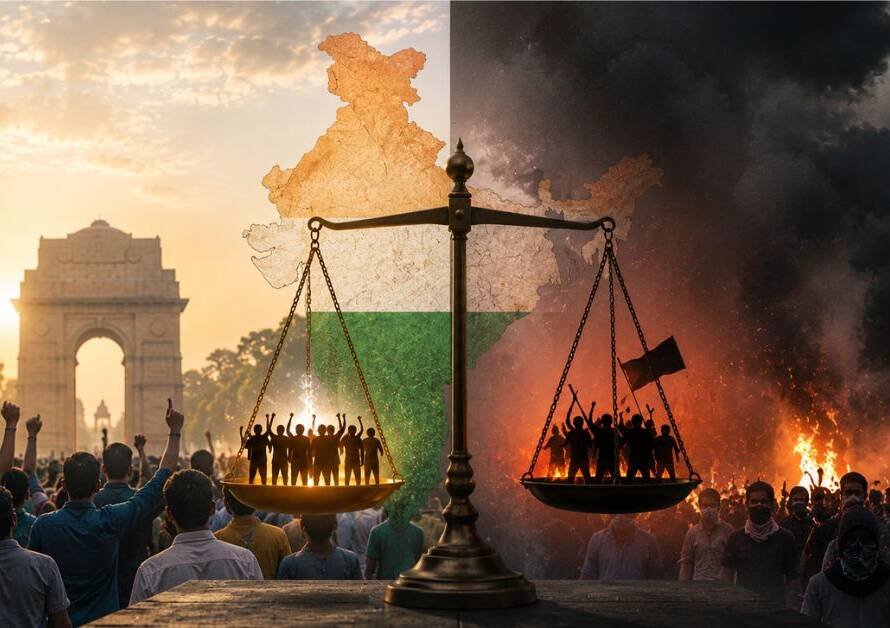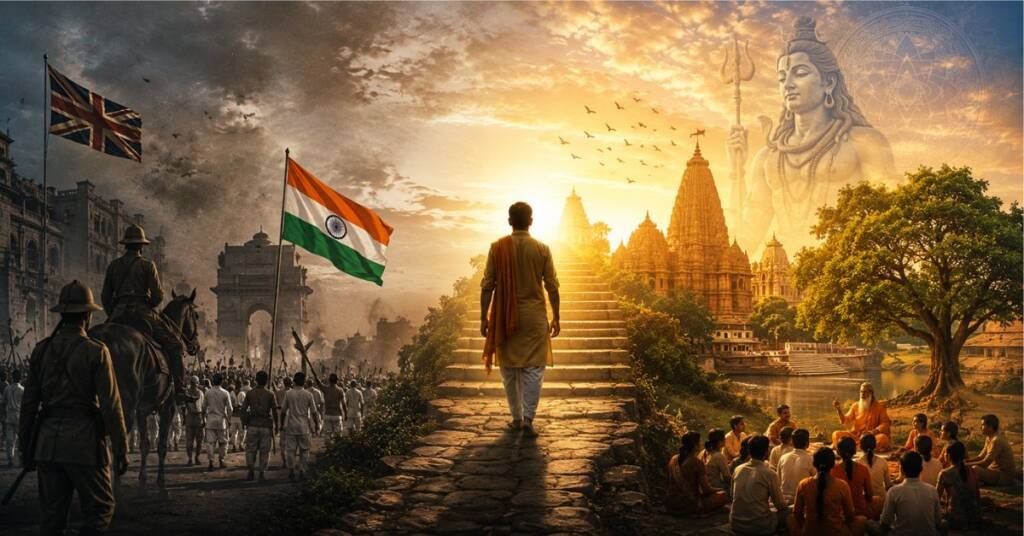
SUMMARY
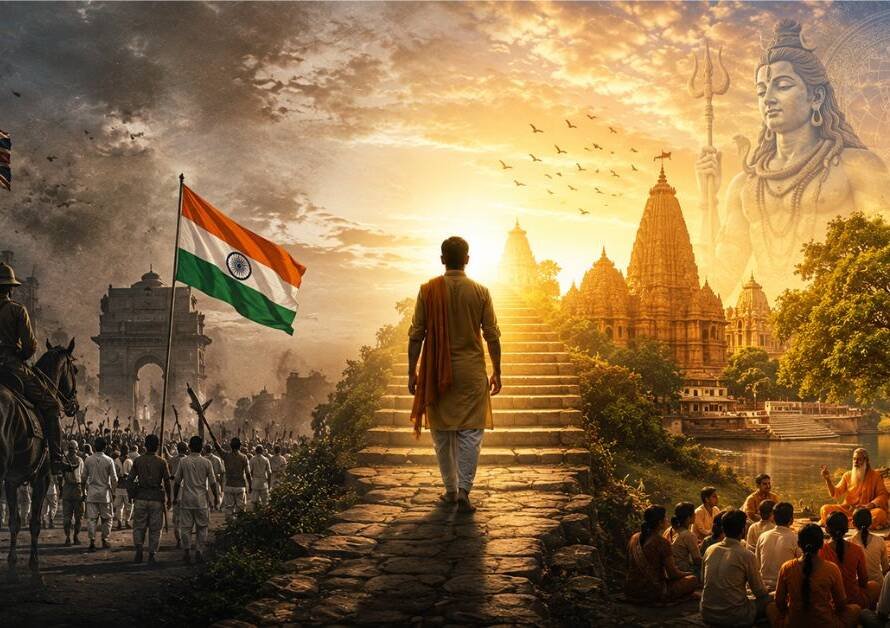
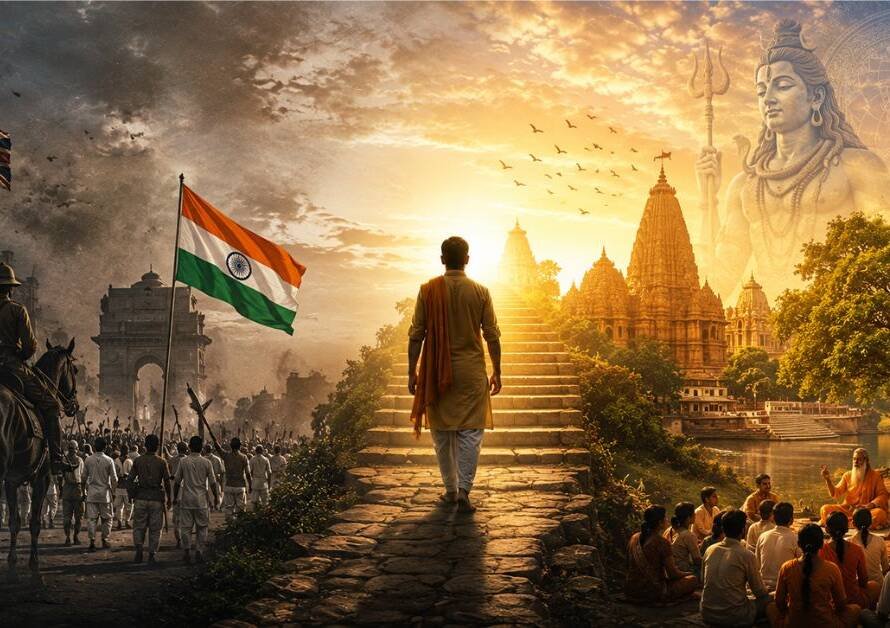
- While August 15, 1947, secured physical independence from British rule, India remained ideologically, administratively, and culturally shackled by colonial systems and post-independence political patronage.
- For decades, the civilizational ethos of Sanatana culture was systematically marginalized, leaving the nation vulnerable to corruption, territorial losses, and internal subversion.
- The political shift in 2014 marked a decisive turning point, initiating systemic decolonization, cultural resurgence, and the reclamation of national pride.
- However, achieving complete liberation requires overcoming entrenched internal ecosystems through societal unity beyond caste, active civic vigilance, and a concerted social, political, and economic stand against anti-national forces.
From Territorial Freedom to Civilizational Sovereignty: The Journey of Bhartiya Sanatana Awakening
Section 1: The Illusion of 1947 and the Colonial Legacy
- The transfer of power on August 15, 1947, marked a crucial victory in freeing the physical land of India, but it failed to liberate the national mind or dismantle the institutional frameworks established by the British Empire.
- Instead of establishing governance rooted in the civilizational ethos of the land, post-independence policy frameworks retained colonial legal codes, administrative structures, and educational paradigms designed specifically to control, divide, and weaken indigenous self-respect.
- For over six decades, political power remained concentrated within dynastic networks and opportunistic political coalitions that operated on patronage, appeasement, and systemic resource extraction.
- The foundational bedrock of Indian civilization, Sanatana culture, was systematically marginalized under the guise of distorted secularism, creating a systemic disconnect between the state and the majority population.
- Weak governance and a hesitant security apparatus led to severe strategic vulnerabilities, resulting in historic territorial losses to foreign adversaries like China and Pakistan and leaving the nation exposed to internal and external threats.
Section 2: Corruption, Cultural Marginalization, and National Erosion
- Under the rule of long-standing political alliances, national resources were routinely siphoned off through large-scale corruption, stalling infrastructure growth and weakening economic sovereignty.
- Institutional mechanisms were deployed to fracture Hindu society along caste, regional, and linguistic fault lines, ensuring that a unified civilizational identity could never challenge the ruling political status quo.
- Spiritual hubs, heritage sites, and traditional cultural institutions were neglected, heavily regulated, or subjected to state control, effectively suppressing the organic expression of Sanatana Dharma.
- The prevailing narrative within academia, media, and public policy actively denigrated indigenous traditions while validating ideologies that sought to erode national integrity and cultural cohesion.
- Decades of this administrative neglect left the population feeling culturally disenfranchised and economically exploited within their own homeland.
Section 3: 2014: The Paradigm Shift and Decolonization
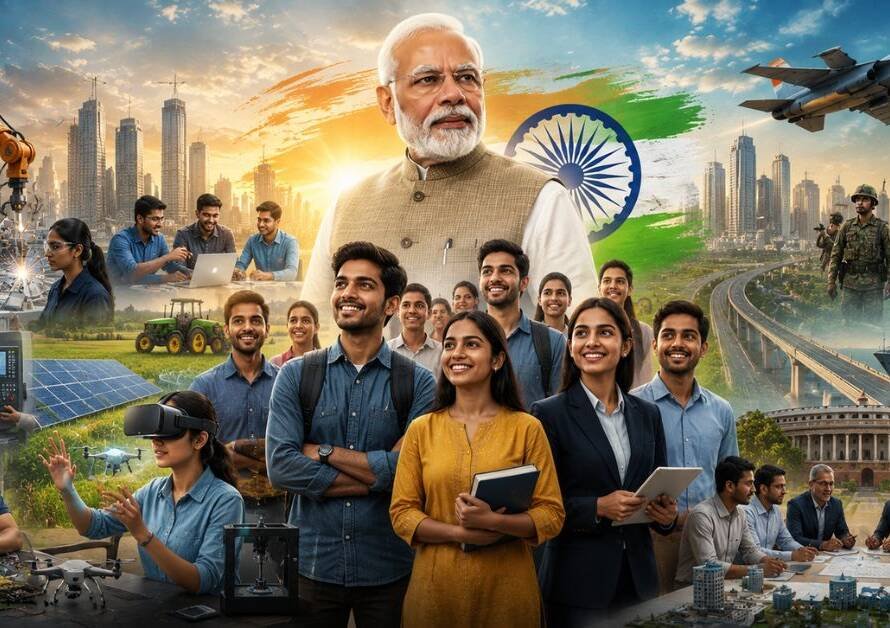
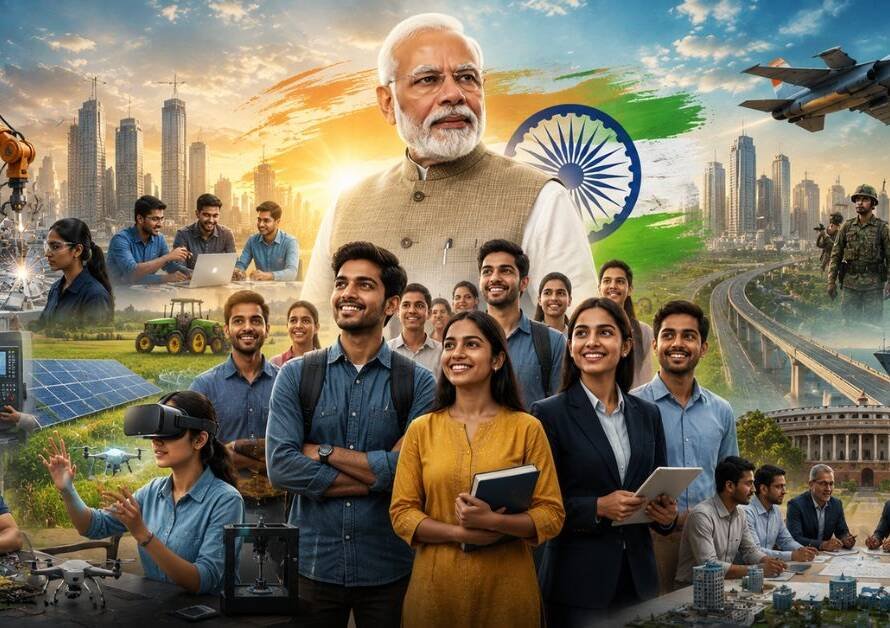
- The year 2014 marked a watershed moment in modern history, signifying the end of ideological subjugation and the beginning of genuine national decolonization under the leadership of Narendra Modi.
- A decisive public mandate replaced decades of political patronage with a governance framework prioritizing national security, economic self-reliance, and civilizational pride.
- Outdated British-era laws and redundant administrative mechanisms were systematically repealed or modernized to create a transparent, accountable, and technology-driven governance structure.
- Systemic corruption was aggressively curtailed through direct administrative reforms, ensuring that public resources were channeled directly into national development, border infrastructure, and public welfare.
- The state abandoned its hesitant foreign policy posture, adopting an assertive national security doctrine capable of defending territorial integrity and responding decisively to external provocation.
Section 4: The Resurgence of Sanatana Dharma and Electoral Shifts
- Following 2014, Sanatana culture experienced an unprecedented revival, transitioning from a state of defensive preservation to an active, confident national resurgence.
- Major cultural and historical landmarks across the country were restored, reinstating dignity to indigenous heritage and fostering a renewed sense of self-respect among millions.
- A critical turning point in this awakening occurred around 2016 and expanded through subsequent state elections, where the public demonstrated a growing political consciousness.
- Grassroots political realignments in key states, including Bihar and West Bengal, reflected a widespread rejection of entrenched political alliances, Marxist influences, and left-leaning ideological ecosystems.
- Voters increasingly rallied behind a political vision that prioritized national integration, cultural preservation, and societal stability over opportunistic politics and caste-based division.
Section 5: The Unfinished Struggle Against Internal Ecosystems
- Despite significant political and cultural milestones, the journey toward complete freedom remains incomplete due to deeply embedded internal resistance networks.
- An entrenched ecosystem comprising political opposition networks, far-left ideologues, pseudo-secular intellectuals, and extremist elements continues to operate within the country’s social and narrative spheres.
- These anti-national elements actively seek to obstruct national progress by exploiting internal fault lines, weaponizing caste identity, and stoking social unrest to prevent societal unification.
- Global and domestic platforms are frequently leveraged by these networks to discredit national institutions, delegitimize cultural resurgence, and weaken public trust in the state.
- The presence of these subversive elements within academic, social, and political frameworks poses a persistent threat to internal security, economic development, and social harmony.
Section 6: The Roadmap to Complete Liberation
- Achieving true independence requires a comprehensive national strategy that moves beyond electoral outcomes to encompass social, political, and economic action.
- Hindu society must achieve absolute internal unity by dismantling barriers of caste, sect, and region to build an unshakable civilizational front.
- Citizens must maintain active vigilance, identifying and exposing internal forces that seek to weaken national sovereignty, manipulate public narrative, or sow internal division.
- A coordinated social, political, and economic boycott of entities, organizations, and networks that actively work against the country’s integrity and cultural heritage must be implemented by civil society.
- Absolute support for decisive governance and national security policies is essential to ensure that internal subversion is rooted out and national interests remain paramount.
- Physical freedom was the gift of 1947, but ideological, cultural, and spiritual liberation is the responsibility of the present generation—a vision that can only be fulfilled through unwavering resolve, cultural pride, and total unity.
🇮🇳Jai Bharat, Vandematram 🇮🇳
Join us on Arattai 👉 Click here
👉Join Our Channels👈
Reads & Views: 35