Summary
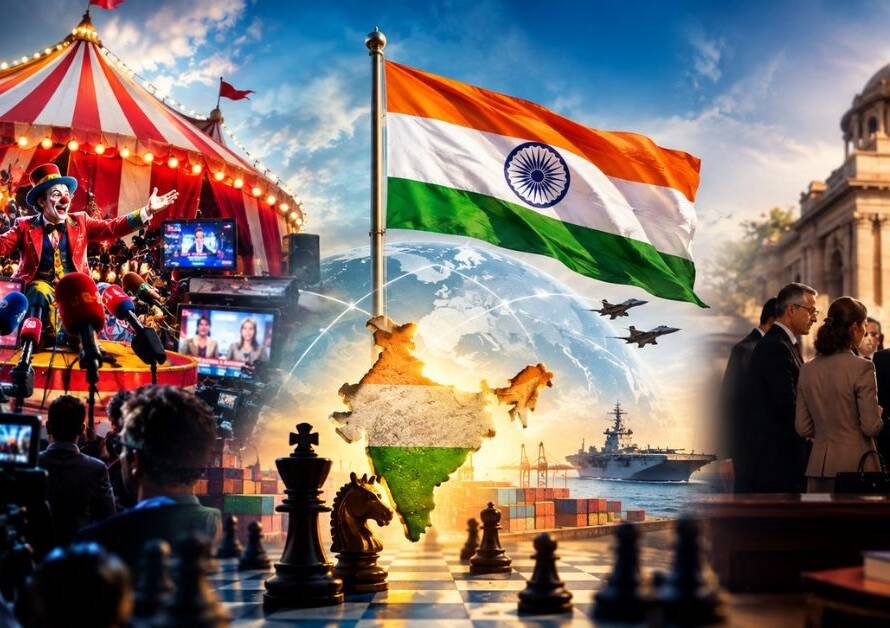
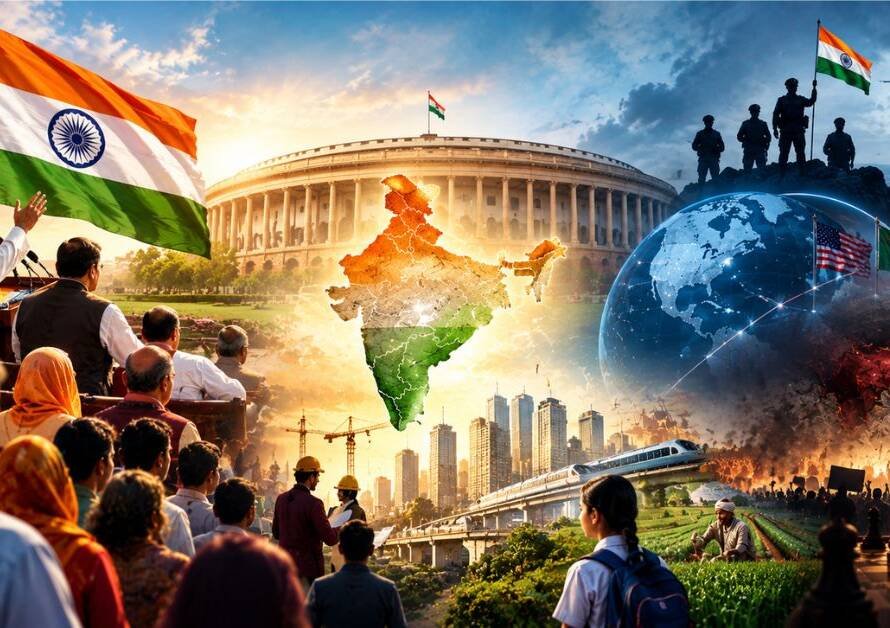
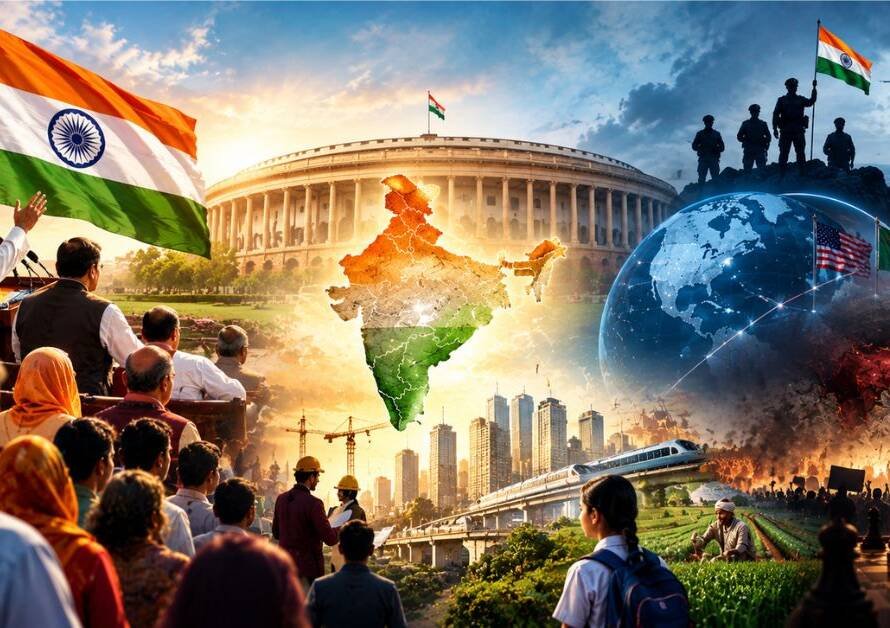
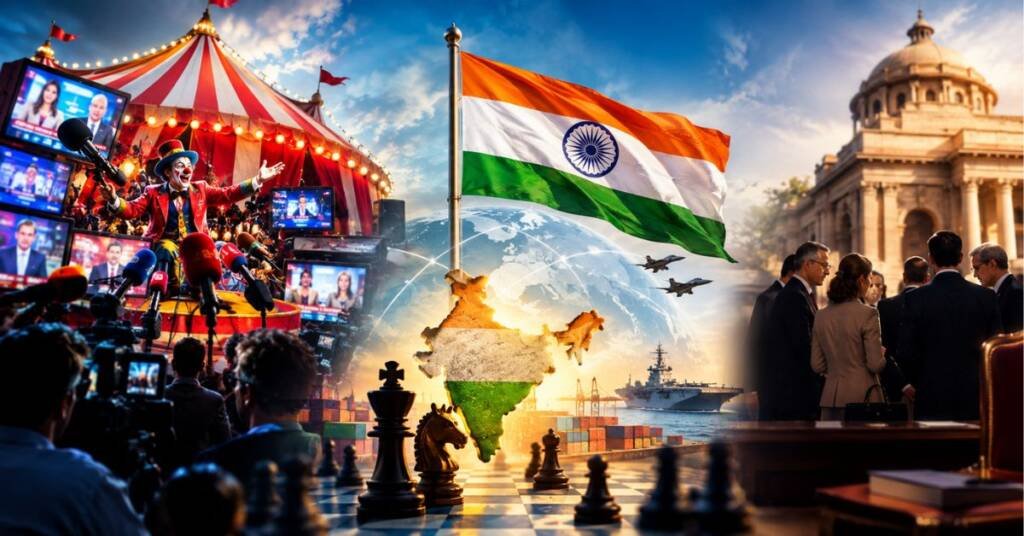
- This article presents a comprehensive and in-depth analysis of the agenda-driven approach of India’s mainstream and Lutyens media, India’s growing strategic autonomy on the global stage, and the frustration of the opposition and anti-national ecosystem.
- On one hand, India is challenging the dominance of the US and Western powers through the SCO Summit, Chabahar Port, de-dollarization, and an “India First” foreign policy.
- On the other hand, a segment of the nation and biased media is engaged in conspiring to destabilize society by suppressing national achievements. This article highlights that India’s electorate is now vigilant, and recent electoral outcomes clearly demonstrate that the nation’s progress and self-respect remain paramount.
Media, Strategic Sovereignty & Lutyens Ecosystem
1. The Decline of Mainstream and Lutyens Media: News vs. Agenda
Today, India’s media has forgotten its fundamental responsibility of delivering unbiased information. Journalism has ceased to be a means of informing the public and has instead transformed into a tool for agenda building.
- A Divided Media: While one section of the media unconditionally supports the government, a large part of the Lutyens media remains absorbed in spreading negativity and denying national progress.
- Ignorance of National Interests: When India executes historical agreements on the international stage, the media, instead of conducting research-based discussions, converts local and superficial incidents into 24/7 sensationalism.
- The Tendency to Capitalize on Flaws: Instead of praising a 500-kilometer-long modern expressway, attempting to label the entire project a failure by highlighting a single pothole caused by rain on a tiny stretch reflects this exact mindset.
2. The Corrupt ‘Thugbandhan’ and the Economic Crisis of the Ecosystem
The primary cause behind the frustration of the Lutyens media and its supported political faction (referred to as the ‘Thugbandhan’) is the elimination of their financial and political opportunities.
- The End of the Era of Scams and Loot: During the rule of the Congress and its allied parties, open opportunities existed for scams worth thousands of crores and the plundering of state resources.
- Closure of Backdoor Channels: Due to the strict administrative reforms and digital transparency (Direct Benefit Transfer) of the current government, the profits of middlemen and corrupt networks have been completely cut off.
- Desperation to Return to Power: Ever since the financial funding of these systems stopped, they have become entirely unsettled. Their sole objective now is to unseat the Modi government by any means necessary, so that the old era of looting and scams can be revived.
3. The SCO Summit and Chabahar: A Direct Challenge to US Dominance
India’s moves at the Shanghai Cooperation Organisation (SCO) Summit were not merely diplomatic formalities; they were strong messages capable of shifting the global balance of power.
- Restoration of Relations with Iran: In the meeting between Prime Minister Modi and the President of Iran, a resolve was made to fully revitalize India-Iran’s historic commercial and diplomatic ties.
- Strategic Operation of Chabahar Port: To bypass Pakistan and establish direct access to Central Asia, Afghanistan, and Europe, the development of Chabahar Port was accelerated.
- Defying US Sanctions: The decision to increase trade with Iran, despite Washington’s unilateral sanctions, stands as proof of India’s independent and fearless foreign policy.
4. US Threats and India’s Firm Response on Tariffs
Panicked by India’s rising global influence and deepening ties with Iran and Russia, the US employed its traditional threats of tariffs and economic sanctions. However, present-day India does not operate under pressure from any superpower.
- Piyush Goyal’s Historical Message: India’s Commerce Minister, Piyush Goyal, stated firmly from a public platform that no trade deal is possible until the US reduces its unfair tariffs on Indian goods.
- Refusal to Accept Bullying: India made it clear that commercial relations must be based on the principles of equality, not on any country’s dominance or terms.
5. ‘De-Dollarization’ and the Roadmap to Freedom from US Dependence
Over the past few years, India has been quietly working under a strategic plan to end Western and American financial hegemony.
- Expansion of BRICS and SCO: These multilateral platforms are being utilized to build a multipolar world.
- International Trade in Indian Rupee (INR): Transactions in local currencies have commenced with several nations via special Vostro accounts, posing a direct challenge to the supremacy of the US dollar.
- Strategic Trade with Russia and China: Prioritizing national interests, the import of discounted crude oil from Russia was maintained to ensure energy security.
- Global Footprint of UPI: By expanding the indigenous digital payment network (UPI) across multiple countries, reliance on Western financial systems (such as SWIFT) is systematically being reduced.
6. Conspiracies to Destabilize the Nation and the Electorate’s Fitting Reply
When the anti-national ecosystem realized that they could not return to power by winning elections through democratic and constitutional means, they initiated dangerous conspiracies to destabilize the country from within.
- Attempts to Instigate Social Discord: Attempts are made to create a rioting atmosphere by inciting students or spreading confusion among various communities over reservation and other social issues.
- Misleading Campaign of “Modi is Compromised”: To suppress major headlines, superficial statements are bombarded by opposition leaders, which the Lutyens media broadcasts 24/7 in an effort to hide key strategic victories.
- Rejection of Conspiracies by the Public: India’s vigilant voters are no longer going to fall into the trap of this sold-out media and opportunistic ‘Thugbandhan’.
- Clear Message from Electoral Outcomes: Recent electoral trends and results, from Maharashtra to Bihar and Bengal, have proven that the public stands firmly with an honest, visionary, and nationalist government, having completely uprooted anti-national forces.
7. Conclusion: India First
- No matter how much negativity the Lutyens media spreads or how many economic threats global powers issue, the hard reality remains that 21st-century New India does not formulate its policies at the behest of any foreign master or internal corrupt cartel.
- India’s foreign policy and internal strategies are guided purely and unyieldingly by the principle of “India First.”
🇮🇳Jai Bharat, Vandematram 🇮🇳
Read our previous blogs 👉 Click here
Join us on Arattai 👉 Click here
👉Join Our Channels👈