Summary
- This analysis presents an in-depth view of the multidimensional nature of the current Indian political landscape.
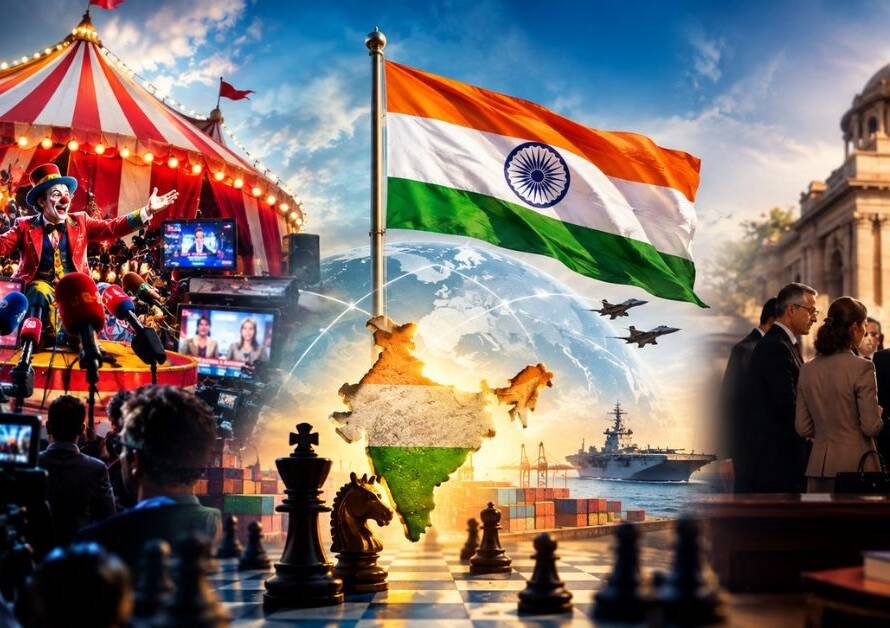
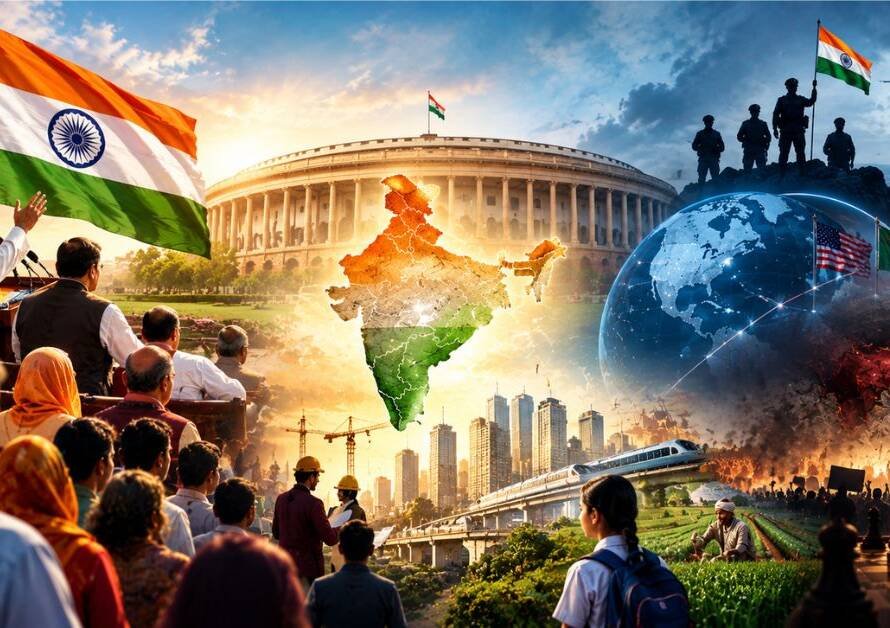
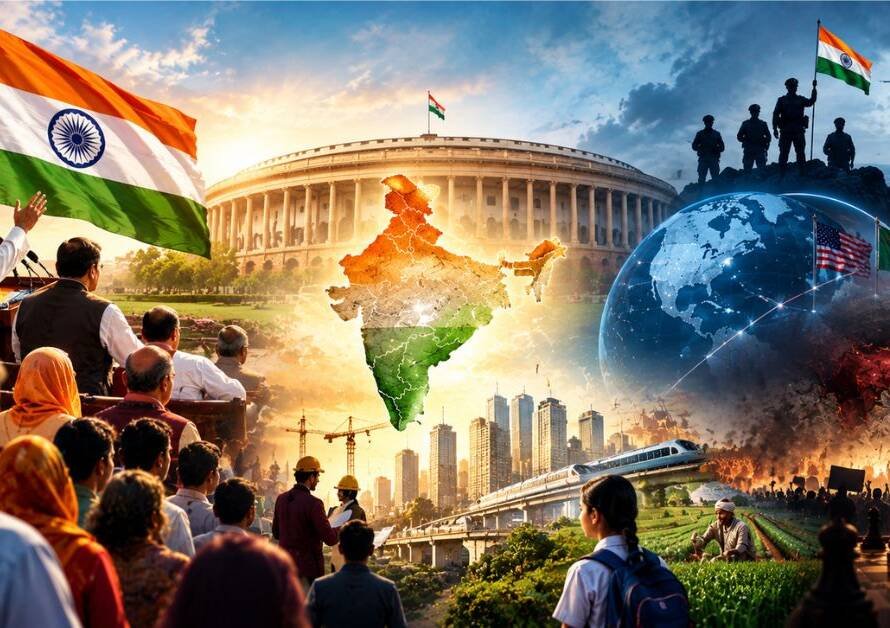
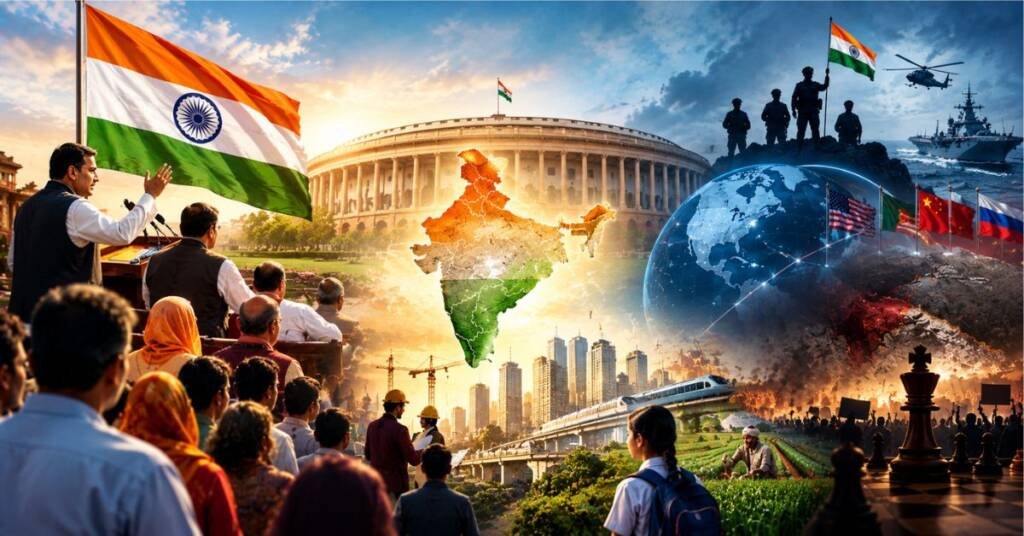
- On one hand, India is advancing rapidly on the strength of an unprecedented economic resurgence, modern infrastructure, transparent governance, self-reliant defense manufacturing, and global diplomatic credibility. On the other hand, it faces internal challenges such as undemocratic movements, sponsored instability, and anti-development agendas.
- This narrative provides a comprehensive account of national security, constructive opposition versus negative politics, electoral dynamics (NDA vs. Opposition), institutional debates like delimitation and caste census, and the widespread impact of welfare policies.
India’s Political Landscape & Strategic Direction
1. Nation Building, Economic Resurgence, and Global Credibility
Economic and Structural Progress
- From Fragile 5 to Top 5 Economies: Over the past decade, India has emerged from the ‘Fragile-5’ status to solidify its position among the world’s fastest-growing major economies.
- World-Class Infrastructure: The construction of national highways, expressways, state-of-the-art railway networks (Vande Bharat), new airports, and seaports has transformed the country’s logistics and trade capabilities.
- Digital Revolution and Financial Inclusion: Financial inclusion has reached the last mile through UPI, Jan Dhan Yojana, and Digital India, setting a new global benchmark.
Self-Reliance and Defense Manufacturing
- Self-Reliance in Defense: India is no longer merely an importer of defense equipment; it is achieving new milestones in defense exports by manufacturing indigenous fighter jets, warships, and missile systems.
- Curbing Middlemen and Corruption: Through Direct Benefit Transfer (DBT), 100% of scheme funds reach beneficiaries’ bank accounts directly, eliminating middlemen and systemic corruption.
Diplomatic Influence and National Security
- India’s Leadership on the Global Stage: India’s strong presence at international forums like G20, BRICS, and QUAD proves that it is no longer just a spectator in global decision-making, but a direction-setter.
- Integrity and Zero Tolerance: A firm stance against cross-border terrorism, rapid development of border infrastructure, and policies strengthening internal security have made national sovereignty unshakeable.
2. Constructive Opposition vs. Politics of Instability and Conspiracy
Limits of Protest in a Democracy
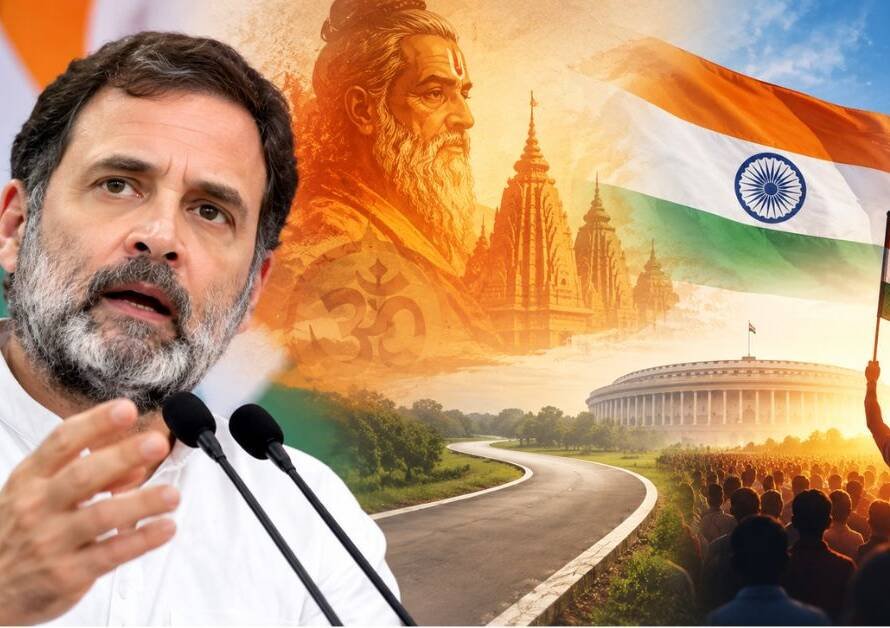
- Welcoming Constructive Criticism: In a vibrant democracy, reviewing government policies, highlighting shortcomings, and offering constructive suggestions in the public interest fall within the fundamental scope of the opposition and civil society.
- Priority of National Interest: Opposition and dissent are logical and justified only as long as they do not harm national sovereignty, economic stability, and citizen safety.
The Reality of Sponsored Movements
- Anarchy and Obstruction to Development: When key national routes are blocked indefinitely under the guise of Shaheen Bagh, farmers’ protests, UGC issues, or reservation debates, it severely damages national income, trade, and daily life.
- Attempts to Tarnish the Image Internationally: When the main objective of protests becomes halting internal development, affecting foreign investment, and damaging India’s image globally through toolkit networks, it appears to be a deep conspiracy rather than an ordinary demonstration.
- Vested Political Interests: Elements defeated through democratic means and ousted from power obstruct national progress when they attempt to reopen their political shops by destabilizing the country.
3. Electoral Dynamics: Ruling Coalition vs. Fragmented Opposition
Political Dominance of the Ruling NDA
- Public Trust in Stability and Continuity: Under the leadership of the Bharatiya Janata Party (BJP), the National Democratic Alliance has provided transparent, decisive, and nationalist leadership.
- Grip at Regional and National Levels: From the Hindi-heartland states of North India to various parts of the country, the NDA has consistently proven its electoral superiority, which is viewed as a public endorsement of development and nationalism.
Ideological Challenges of the Opposition Alliance (‘INDIA’)
- Internal Contradictions and Leadership Crisis: While opposition parties claim an alliance at the national level, their regional interests and leadership differences come to light at the state level.
- Absence of a Positive Alternative: Politics based solely on opposing a leader or government has failed to attract voters, as the electorate now demands a solid development model and strong leadership.
A Clear Message from the Mandate
- Defeat of Negative Politics: Through repeated elections, India’s aware citizens have sent a message that there is no place in a democracy for forces that destabilize the country, spread division, and halt progress.
- Resolve of Nation First: Continued public support demonstrates that Indians want to move forward unhindered on the path of development, national security, and self-reliance.
4. Major Institutional, Constitutional, and Social Debates
Delimitation and Regional Balance
- Demographics and Representation: Serious policy deliberations continue regarding the balance of representation between North and South Indian states ahead of the Lok Sabha constituency redrawing by the upcoming Delimitation Commission.
- Development-Based Incentives: Concerns from South Indian states—that their political representation should not decrease due to their success in population control—remain an important institutional issue requiring national consensus.
Social Justice, Caste Census, and Welfare Politics
- Social Balance and Policies: There is intense competition among political parties regarding the demand for a caste census and issues related to social justice.
- The New Welfare Model: Direct Cash Transfers, free rations, housing schemes, and women-centric welfare policies have become the mainstay of today’s electoral politics.
Electoral Transparency and Trust in Technology
- Credibility of Constitutional Institutions: Debates surrounding EVMs, the functioning of the Election Commission, and electoral funding are regularly discussed in the Supreme Court and democratic forums, proving the vitality of Indian democracy.
5. Concluding Message: Aware Citizenship and Nation Building
- Vigilance is Security: It is the duty of every citizen to identify misleading information, sponsored toolkit agendas, and forces that divide society.
- Protecting Development: National progress is not solely the government’s responsibility; protecting the country’s infrastructure, economic resources, and social fabric must be every citizen’s resolve.
- United India, Great India: Political differences have their place, but when it comes to the security, sovereignty, and honor of the nation, the entire country stands with one voice on the principle of ‘Nation First’.
🇮🇳Jai Bharat, Vandematram 🇮🇳
Read our previous blogs 👉 Click here
Join us on Arattai 👉 Click here
👉Join Our Channels👈