Summary
- Recent commentary in global platforms like The New York Times highlights the rising stature and outcome-driven nature of Prime Minister Narendra Modi’s foreign policy.
- Shifting away from historical models that often settled for symbolic statements, India’s strategic diplomacy operates on hard metrics, concrete economic deliverables, and mutual respect.
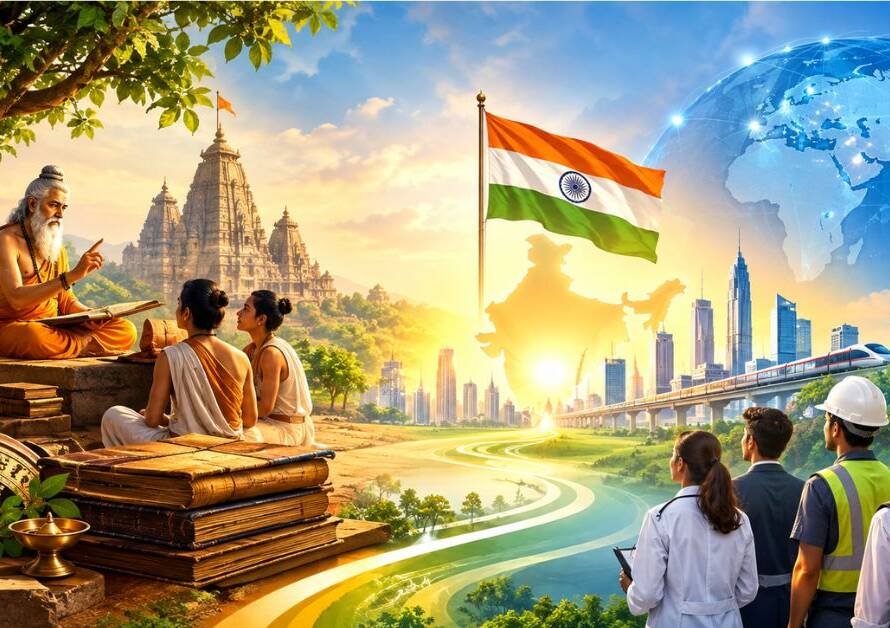
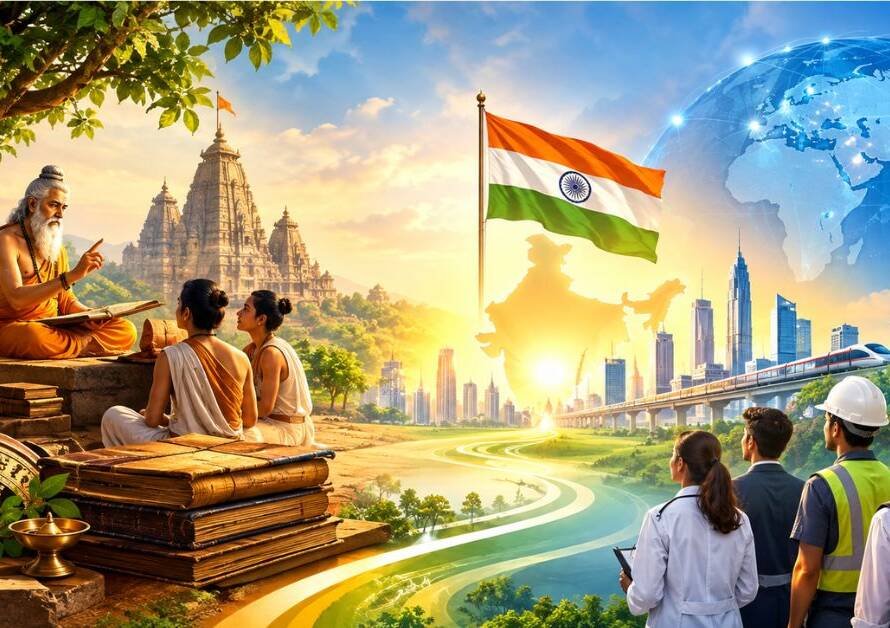
- Crucially, the superlative success of this modern statecraft is rooted in the practical revival of ancient Sanatana principles—seamlessly blending the tactical realism of Chanakya Neeti with the ethical governance of Vidur Neeti. These are the exact foundational ethos that established ancient India as a civilizational superpower and Vishwaguru millennia ago.
- Under PM Modi’s strategic vision, India is reviving this statecraft to champion Vasudhaiva Kutumbakam (The World is One Family) and Sarve Bhavantu Sukhinah.
- By ensuring Indian national interests remain paramount while safeguarding global stability, India is positioning itself to once again become a leading global superpower and Vishwaguru in the years to come.
The Spiritual and Strategic Framework of Indian Diplomacy: Sanatana Ethos, Chanakya Neeti, and Global Stature
1. Introduction: The NYT Perspective on India’s Evolving Global Stature
Recent coverage and commentary in prominent global platforms like The New York Times have drawn heightened attention to India’s unique geopolitical position and outcome-driven diplomatic trajectory.
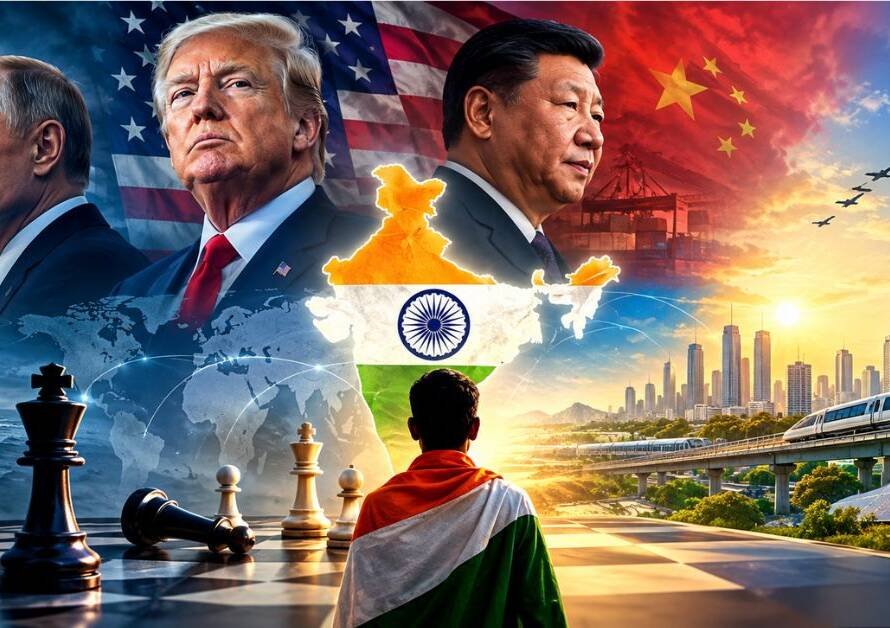
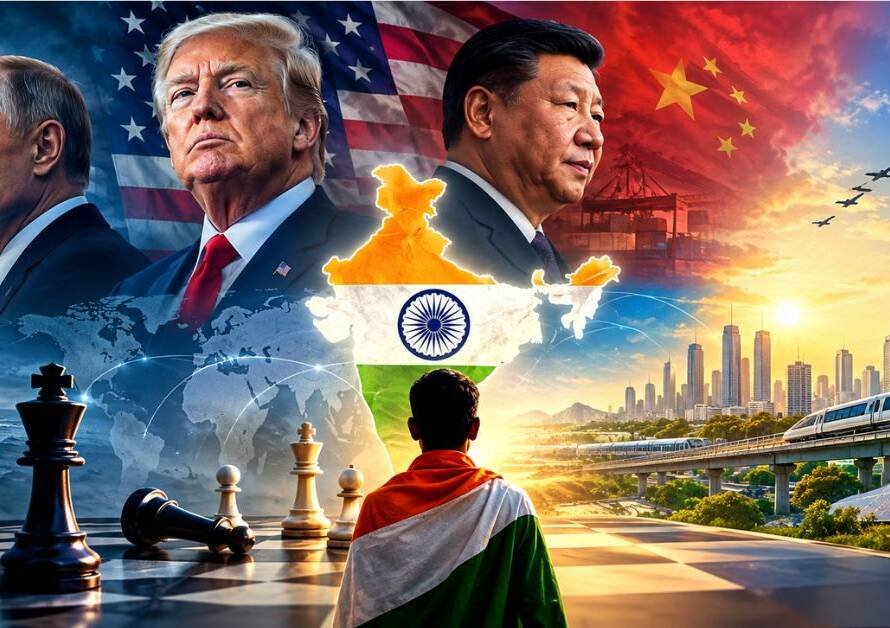
- Recognition of Strategic Autonomy: International analysts increasingly acknowledge that India no longer conforms to traditional Cold War bloc alignments or rigid Western-centric alliances, prioritizing a fierce commitment to strategic autonomy.
- A Pragmatic Global Power: Global reports highlight how Prime Minister Narendra Modi has successfully projected India as an indispensable economic engine, a decisive voice for the Global South, and a pragmatic mediator in a deeply divided multipolar world.
- Shift to Result-Oriented Diplomacy: International coverage acknowledges that Indian statecraft has evolved beyond ceremonial photo-ops into a highly disciplined machinery that leverages economic weight and geopolitical leverage to secure tangible national benefits.
2. The Historical Legacy: Reviving the Ethos of Ancient Superpower and Vishwaguru
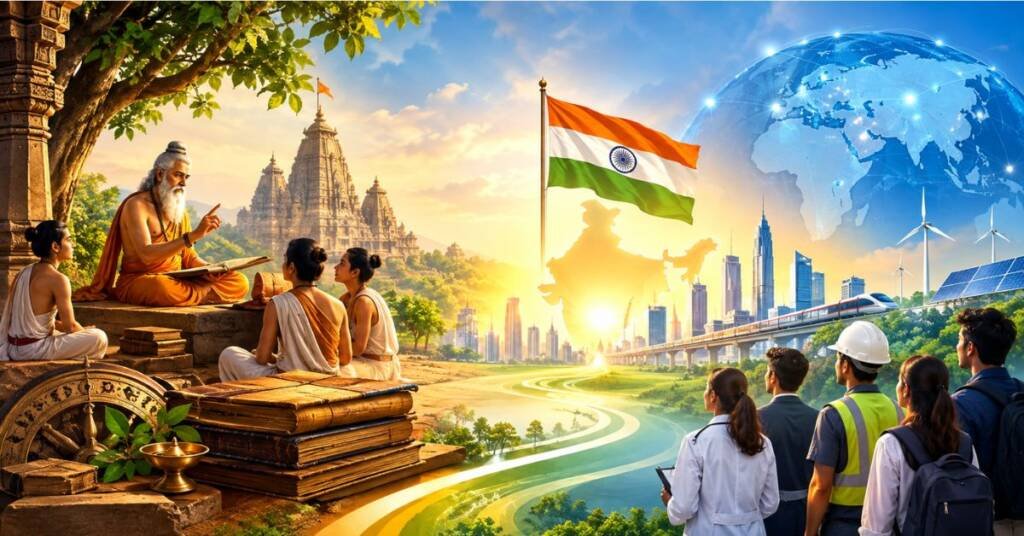
The principles guiding modern Indian statecraft are not newly invented theories; they represent a conscious revival of the civilizational framework that made ancient India a golden epicenter of global leadership.
- The Ancient Foundation of Civilizational Supremacy: Two thousand years ago, India flourished as an economic, cultural, and intellectual superpower (Vishwaguru). This stature was not achieved through colonial conquest or territorial aggression, but through the moral authority, economic richness, and scientific mastery of Sanatana statecraft.
- Revival Under Strategic Leadership: Under Prime Minister Narendra Modi’s leadership, India is intentionally reviving this Sanatana ethos in modern governance and foreign policy, bridging ancient wisdom with contemporary geopolitical needs.
- The Path Back to Vishwaguru: By anchoring statecraft in timeless principles of righteousness and strength, India is steadily building the strategic capacity, economic self-reliance, and moral authority required to emerge as a leading superpower and Vishwaguru in the years ahead.
3. The Philosophical Foundation: Sanatana Principles in Global Statecraft
India’s foreign policy under PM Modi is anchored in timeless Sanatana values that view statecraft through a moral, balanced, and holistic lens.
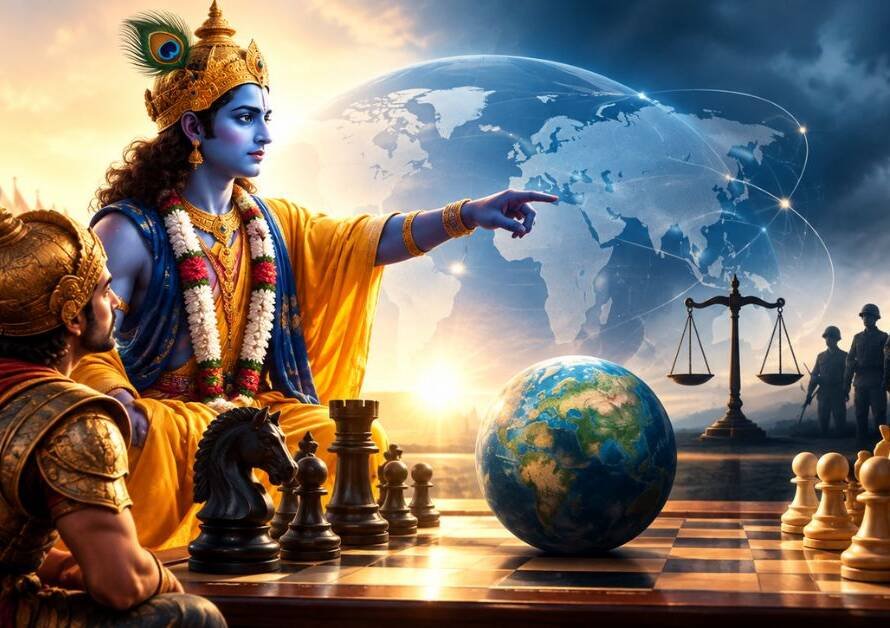
- Vidur Neeti (Ethical Governance & Righteousness): Vidura’s principles mandate duty, transparency, moral integrity, and long-term stability over short-term political expediency. Applied internationally, this guarantees that India acts as a reliable, honest, and principled global partner.
- Chanakya Neeti (Strategic Realism & Strength): Chanakya’s tactical framework (Saam, Daam, Danda, Bhed) provides the foundation for national defense, economic self-reliance, and firm negotiation. It ensures that while India continuously seeks global peace, it does so from an unshakeable position of sovereign strength.
- Harmonious Dual Alignment: By synthesizing Vidura’s moral grounding with Chanakya’s sharp strategic realism, India successfully navigates a volatile world without succumbing to external coercion or compromising its core values.
4. Vasudhaiva Kutumbakam: Global Welfare Without Exploitation
The hallmark of India’s diplomatic model is the realization of Vasudhaiva Kutumbakam—the understanding that humanity shares an interconnected destiny.
- India First, But Not India Alone: Indian national security and economic interests are non-negotiable and always take priority. However, unlike historical Western colonial models or expansionist doctrines, India’s rise does not come at the expense of any other nation.
- Win-Win Global Partnerships: Whether providing humanitarian assistance, offering digital public infrastructure, ensuring food security during international crises, or engaging in joint technological development, India’s statecraft is deliberately structured so that no partner’s legitimate interests are compromised.
- A Moral Alternative to Hegemony: By advocating for equitable economic growth, climate justice, and decentralized global supply chains, India presents a constructive, non-exploitative alternative to zero-sum global politics.
5. Target-Driven Diplomacy and Reciprocal Engagement
Building upon the international media spotlight, India’s bilateral engagements reflect a systemic operational shift toward hard deliverables.
- Departure from Vague Declarations: Historical foreign visits by heads of state frequently concluded with broad, generalized joint statements. Modern Indian statecraft prioritizes quantifiable deliverables, specific numerical targets, tariff rationalizations, and technology transfers.
- Bi-Directional High-Level Engagement: Alongside extensive international visits by PM Modi, foreign heads of state consistently travel to India to build long-term, reciprocal economic and security partnerships grounded in mutual respect.
6. Quantifiable Gains: Defense, Technology, and Trade Achievements
Every bilateral engagement is engineered to yield tangible benefits for India’s domestic economy, industrial capacity, and national security.
- Defense & Advanced Manufacturing: Securing transfer of technology for German submarine collaboration and establishing partnerships with South Korea to build commercial and specialized vessels within Indian shipyards to boost the Make in India vision.
- AI & Frontier Technologies: Deepening strategic cooperation with France in artificial intelligence and digital standards, ensuring India co-authors global tech governance frameworks.
- Trade & Tariff Rationalization: Achieving historic trade milestones, including tariff reductions on Indian textiles in the UK market under comprehensive trade agreements, streamlined student visa pathways with France, and optimized negotiations with the European Union.
- Job Creation & Industrial Growth: Aligning with international partners on long-term investment commitments aimed at generating domestic industrial employment.
- Indo-Pacific & Maritime Security: Strengthening bilateral and multilateral frameworks with Japan, Australia, and New Zealand to safeguard critical sea lines of communication and enhance maritime domain awareness.
7. Resilience and Strategic Autonomy Amid Global Volatility
The ultimate test of a Sanatana-guided foreign policy is its resilience during international instability, conflicts, and economic pressures.
- Insulation from Economic Shocks: By prioritizing national interest—such as sourcing energy based strictly on domestic cost-efficiency during West Asian conflicts—India has successfully protected its 1.4 billion citizens from hyper-inflation.
- Unyielding Stance on Economic Interests: Despite global trade uncertainties and tariff pressures imposed by major Western economies, India maintains a firm position to safeguard its domestic manufacturing and agricultural sectors.
- Soft Power and Personal Rapport: Cultural outreach and respectful engagement—from traditional cultural exchanges to direct personal outreach with global leaders—add an authentic human warmth behind hard-nosed strategic bargaining.
8. The Sovereign Path to Global Leadership
The supreme success of India’s modern statecraft proves that realistic strategy and ancient ethics are not mutually exclusive. By placing Indian interests first while actively working for the well-being of all (Sarve Bhavantu Sukhinah), Prime Minister Modi’s diplomacy has given vibrant modern expression to Vasudhaiva Kutumbakam. By reclaiming the timeless Sanatana principles that defined its golden past, India is reclaiming its rightful position as a trusted global power (Vishwa Bandhu) and re-emerging as a leading Vishwaguru for the modern era.
🇮🇳 Jai Bharat, Vandematram 🇮🇳
Read our previous blogs 👉 Click here
Join us on Arattai 👉 Click here
👉Join Our Channels👈