Summary:
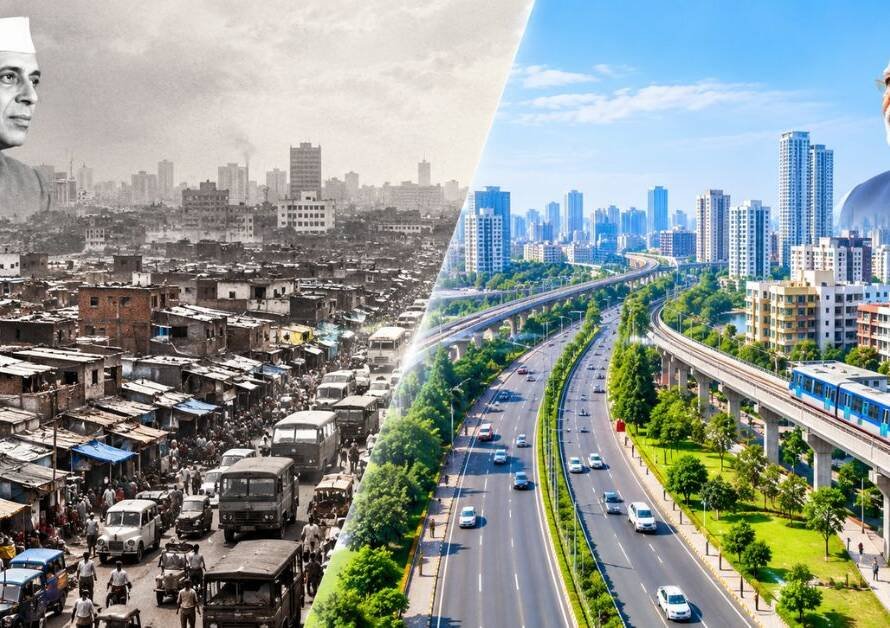
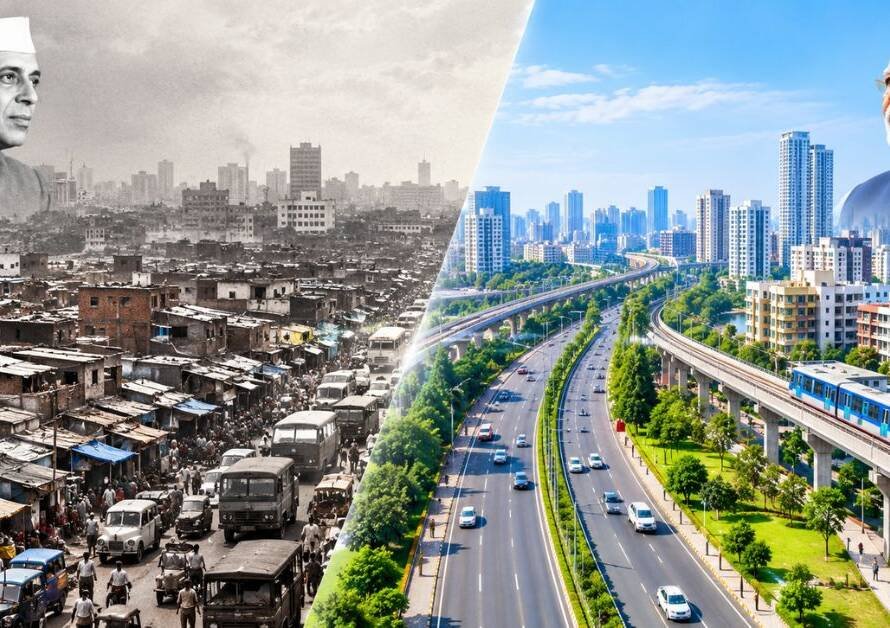
- This detailed analysis examines the structural changes in Indian politics between 2014 and 2026.
- The discourse focuses specifically on the strategies of the “Thugbandhan” (opportunistic opposition alliances) that rely on ‘Freebie Culture,’ ‘Loot of Public Resources,’ and ‘Appeasement’ to fill a lack of ideological depth.
- The rise of Thalapathy Vijay (TVK) in Tamil Nadu and the opportunistic support from the Congress Party are analyzed as part of this pattern.
- The primary conclusion of this research is that after being momentarily “confused” during the 2024 Lok Sabha elections, Indian voters—especially from the Muslim community—have made a decisive return toward developmental and nationalistic politics, as evidenced from the Haryana elections to the 2026 state polls.
A Research-Based Grand Narrative (2014–2026)
1. Introduction: The Emergence and Ideological Crisis of ‘Thugbandhan’ (2014–2026)
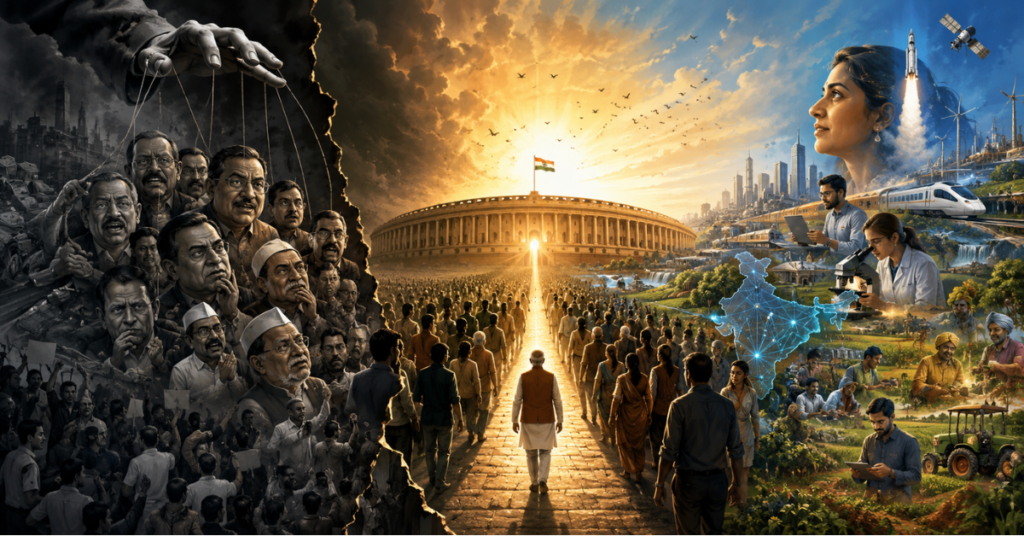
The rise of a stable nationalist government in 2014 created an existential crisis for opposition parties. In response, a brand of politics termed “Thugbandhan” was born, characterized by the following:
- Anti-Modism as the Sole Policy: From 2014 to 2026, various alliances (UPA, Mahagathbandhan, INDI Alliance) shared no common developmental vision, with the singular goal of removing Narendra Modi from power.
- Ideological Contradictions: The hypocrisy of this politics is evident in how the Left and Congress fight each other in Kerala but embrace in Delhi and Bengal, effectively deceiving the public.
- The Trade of Delusion: In the 2024 elections, false narratives such as “The Constitution is in danger” were used to mislead the public—a deception that was quickly exposed by the administrative failures in opposition-ruled states.
2. Tamil Nadu 2026: Analysis of ‘New Mask, Old Loot’
The victory of Thalapathy Vijay (TVK) and his swearing-in as Chief Minister on May 10, 2026, marks a pivotal moment in state politics.
- Vijay’s ‘Kejriwal Style’: Vijay presented himself as a ‘Messiah’ promising a corruption-free system, but his promises (₹2,500 monthly aid, free electricity) are a direct repetition of the ‘Freebie Culture.’
- Congress Opportunism: The support extended to Vijay by Rahul Gandhi proves that Congress has become a ‘parasitic’ party. Having supported the DMK until 2024, Congress immediately switched sides to secure a ‘Share in Government.’
- The Loot Model: This alliance between Vijay and Congress appears to be a new “Thugbandhan” designed to control Tamil Nadu’s resources (sand, liquor, government contracts), continuing old corrupt policies under the guise of ‘change.’
3. Economic Bankruptcy and ‘Freebie Culture’
Since 2014, opposition-ruled states have prioritized ‘Cash Distribution’ over development, posing a grave threat to the country’s future:
- The Lesson of Karnataka and Himachal: In Karnataka, the ‘Five Guarantees’ have drained the state treasury. Infrastructure projects are at a standstill, and per capita debt has surged.
- Violation of Fiscal Discipline: Due to ‘Khatakhat’ (instant) promises, Capital Expenditure has been severely slashed. When money is spent solely on buying votes through cash doles, investment for the future (education, defense, research) becomes zero.
- Attack on the Middle Class: To fund these free schemes, prices of fuel, electricity, and milk are being hiked, which is a major betrayal of the common taxpayer.
4. Voter Maturity: From the ‘Deception’ of 2024 to the ‘Awakening’ of 2026
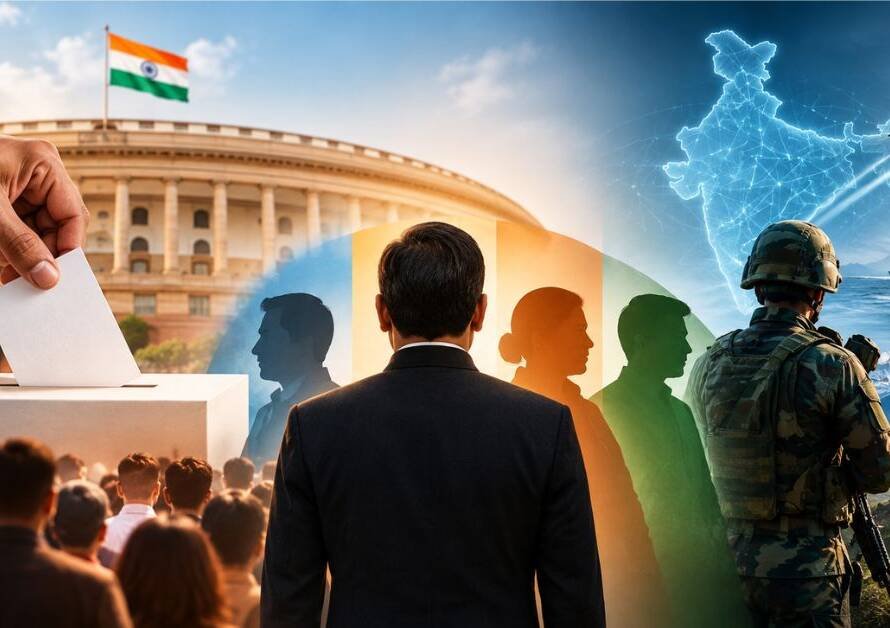
While the Indian voter was momentarily misled in the 2024 Lok Sabha elections by propaganda such as “The Constitution will be changed” or “Reservation will end,” the Haryana elections completely demolished this narrative.
- Haryana 2024: This election was the turning point for the defeat of the ‘Thugbandhan.’ Voters refused to fall for caste division and appeasement, choosing developmental policies instead.
- Maharashtra and Delhi: The public in Maharashtra rejected the opportunism of the ‘MVA,’ and in Delhi, they sent a message to the ‘corruption-laden’ AAP that votes are now cast on ‘track records,’ not just promises.
- The 2026 Mandate: Recent results in Tamil Nadu and West Bengal show that the voter now understands the importance of “Stable Nationalism” over “Unstable Alliances.”
5. Revolutionary Shift in the Muslim Vote-Bank: Victory of Development
The most significant research finding in recent elections (especially in West Bengal and Bihar) is the shift of Muslim voters toward the BJP and developmental politics:
- End of Appeasement: Muslims, victims of ‘fear-based’ politics for decades, now realize that the ‘Thugbandhan’ treats them only as a vote-bank, whereas the benefits of Modi government schemes (Ujjwala, Ayushman, Awas) reach them without discrimination.
- Data from Bengal and Bihar: In the 2026 West Bengal elections, the BJP won several Muslim-majority seats. The growing base in Malda and Murshidabad proves that Muslim youth now desire education and employment rather than radicalism and appeasement.
- Pasmanda Muslim Consciousness: In Bihar, backward Muslims (Pasmanda) have realized that their real progress lies in ‘Nation First’ policies and transparent governance, not in the hollow promises of the ‘Thugbandhan.’
- Support for Waqf Reforms: Common Muslims have welcomed the Center’s steps toward transparency in the Waqf Board, as it reduces the influence of corrupt middlemen.
6. The Future of ‘Thugbandhan’ and the Threat to the Nation
The journey of opposition alliances from 2014 to 2026 has been a history of mere lust for power, with alarming effects on the country:
- Compromise on National Security: Questioning security forces for vote-bank gains or demeaning India on international platforms highlights the anti-national tendencies of this ‘Thugbandhan.’
- The Model of Anarchy: These alliances seek power by dividing society along caste and religious lines rather than focusing on development.
- Shield for the Corrupt: Since most opposition leaders face corruption charges, these alliances are merely a tool (Thug-bandhan) to protect one another from legal action.
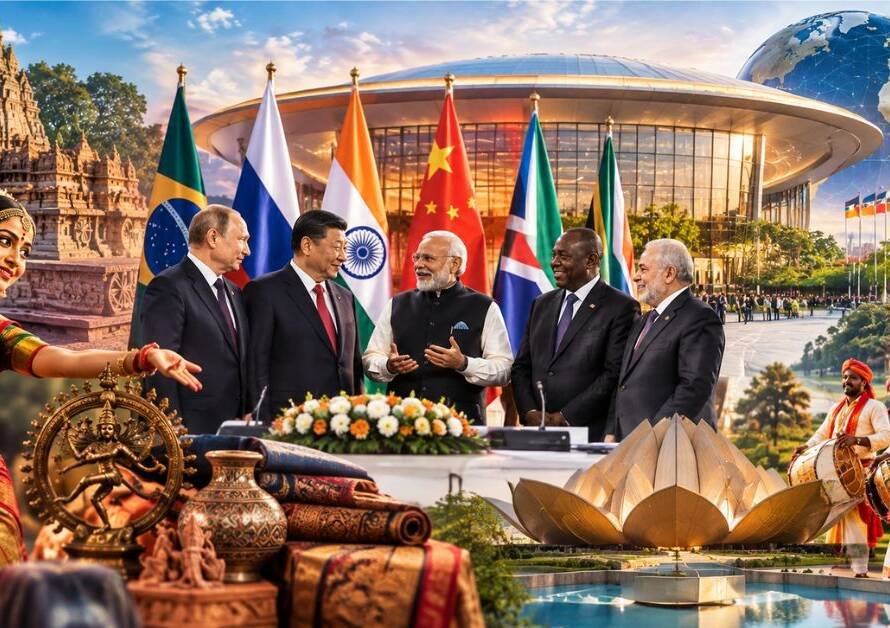
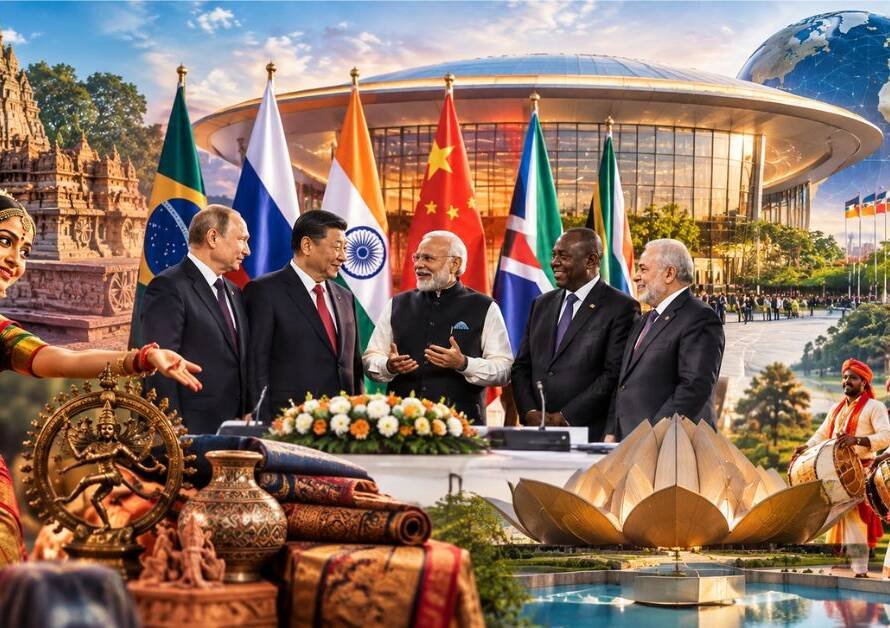
7. India 2026—Leading Toward ‘Vishwaguru’ Status
The 2026 mandate makes it clear that India has moved past the era of “Khichdi (patchwork) governments” and “Thugbandhans.”
- The public has realized that “The government has no money of its own; it is simply the distribution of the public’s hard-earned wealth.”
- While Vijay may be a new face in Tamil Nadu, his association with Congress is dragging him into the same swamp of ‘Loot and Appeasement.’
- India’s future is secure only under stable leadership, a nationalist vision, and appeasement-free governance. The voters who were misled in 2024 have clarified by 2026 that India does not want ‘Khatakhat’ promises; it wants to be ‘Strong’ and ‘Self-reliant.’
Key Research Insights:
- Ideological Decay: The shift of Congress from the DMK to TVK marks the end of principles.
- Economic Crisis: The situation in Karnataka and Himachal serves as a major warning against ‘Freebie Culture.’
- Social Harmony: The alignment of Muslim voters with developmentalism is the greatest sign of maturity in Indian democracy.
- National Interest: Post-2014 politics has become a battle of “Development vs. Destruction.”
Sanatan Dharma and National Interest Above All!
🇮🇳 Jai Bharat, Vandematram 🇮🇳
Read our previous blogs 👉 Click here
Join us on Arattai 👉 Click here
👉Join Our Channels👈