Summary
- This wide-ranging and deep essay presents a detailed analysis of the problem of casteism in contemporary Indian society, its historical background, its misuse by politics, and its impact on Hindu unity.
- Through the perspectives of saints and thinkers—especially the nation-first and farsighted ideas of Dr. Bhimrao Ambedkar—it highlights how caste discrimination and political self-interest are fracturing the majority society.
- Explaining the fundamental difference between the varna system and the birth-based caste system, the essay sheds light on the importance of the ancient gurukul tradition, cultural values (sanskars), and social harmony.
- It also clarifies how Babasaheb kept national interest supreme, rejected foreign inducements, and safeguarded the country’s integrity through the Constitution.
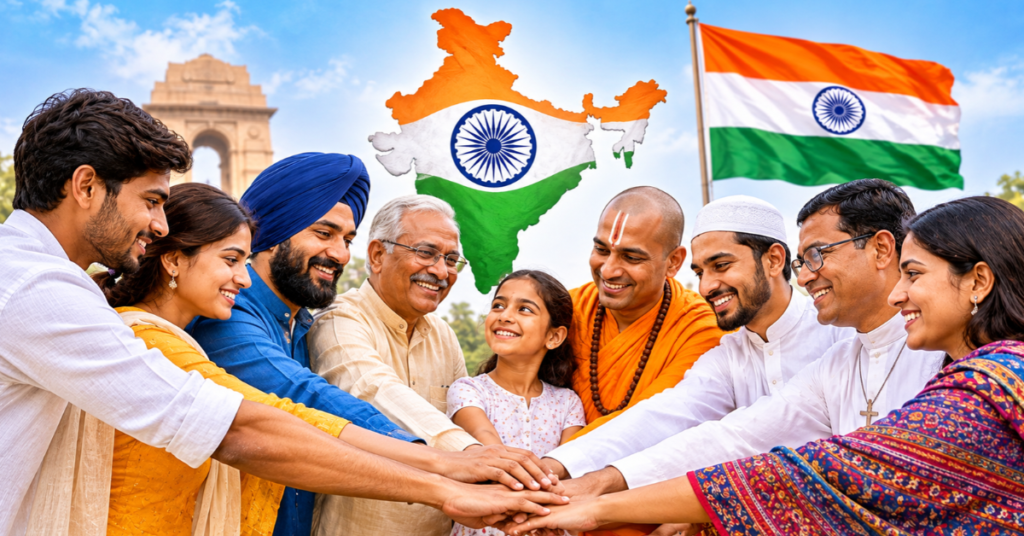
- Finally, it makes a firm call for society to rise above the narrow walls of castes and classes and bind together in a thread of sattvik living, spiritual consciousness, and nationalism.
A Comprehensive Panorama of History, Reality, and Solutions
1. The Problem of Casteism and the Current Political Landscape
In today’s era, casteism has not remained merely a social evil, but has become a major weapon of electoral politics and power acquisition.
- Political Use and Polarization: Currently, political mileage is being gained under a “Divide, Rule & Loot” policy by dividing society into castes and sub-castes. Some people are working to increase hostility among various castes and provoke the public for their personal and political self-interest.
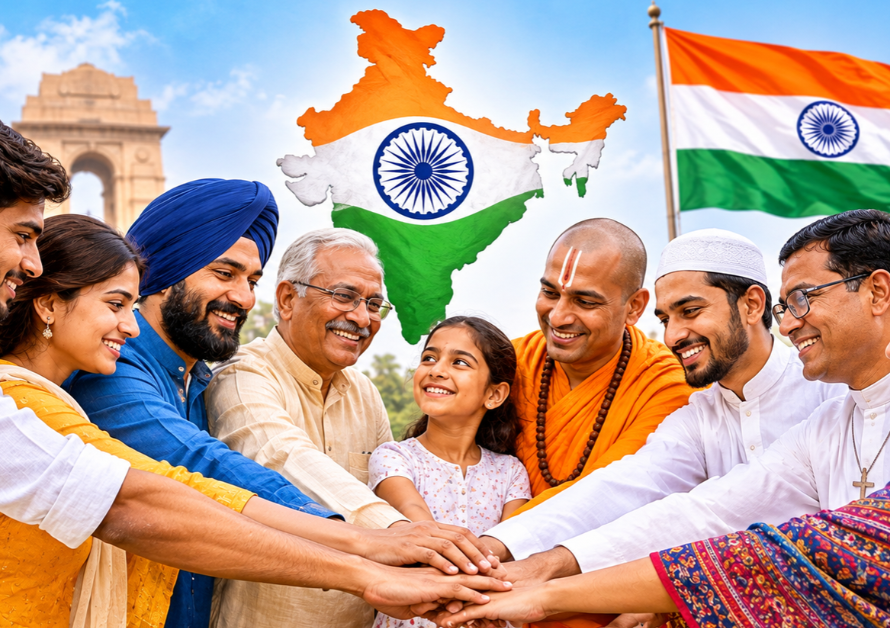
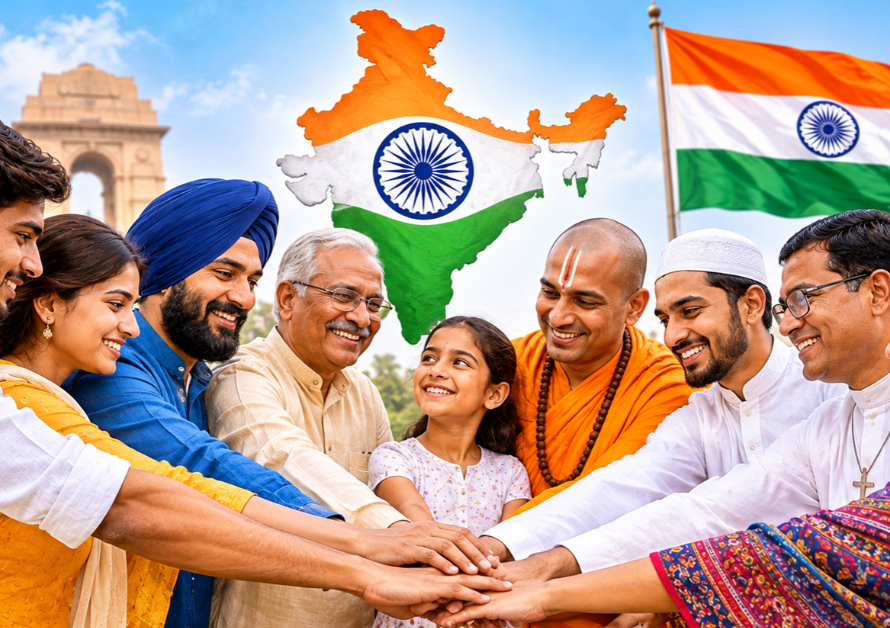
- Obstacle to Hindu Society’s Unity: As long as society remains entangled in caste conflicts and narrow identities, building a strong and united national consciousness will remain difficult. The time has come to rise above this divisive mindset and reflect.
2. Historical Perspective, Farsighted Thinking, and Rejection of Foreign Inducements
According to saints and thinkers, an objective analysis of past events makes clear which values have played a vital role in maintaining national integrity.
- Resisting Historical Inducements and Pressures: History bears witness that despite immense pressures and inducements, nation-builders showed ideological firmness to prevent the country’s cultural and geographical unity from being fractured.
- Cultural Security: Had narrow and destructive tendencies been encouraged at that time, the country’s geographical and social situation today could have been extremely sensitive. Keeping national interest supreme should be every citizen’s foremost duty.
3. The Fundamental Difference Between the Varna System and the Birth-Based Caste System
In Indian Sanatan scriptures, the varna system was ordained to organize society, based not on birth, but on an individual’s qualities (guna), deeds (karma), and nature (svabhava).
- Karma- and Guna-Based Varna: In ancient times, society was divided into four main parts—Brahmana (knowledge and research), Kshatriya (security and justice), Vaishya (trade and economy), and Shudra (service and operations). All of these were essential and complementary parts of society, with none being inferior or superior.
- Emergence of the Birth-Based System: During thousands of years of foreign invasions, under Mughal and British rule, when the gurukul system and centers of knowledge were destroyed, a “birth-based caste system” took root in society. The original purpose of the birth-based gotra and lineage system was to avoid hereditary disorders and maintain social discipline, not to prove any group inferior or superior.
- Modern Equality: Even today, people work across various fields (such as medicine, administration, and technology) according to their merit and interest. Therefore, any person’s greatness is determined not by birth, but by deeds and character.
4. Dr. Bhimrao Ambedkar’s Contribution to the Nation and Farsighted Outlook
Dr. Bhimrao Ambedkar’s (Babasaheb’s) contributions are often viewed through a narrow political lens, yet his ideas were sharply focused and imbued with a “nation first” spirit:
- Rejecting Foreign Faiths: Babasaheb faced heavy pressure and inducements from several foreign powers and religious groups to convert. He knew that if his community accepted such faiths, India’s integrity and cultural fabric would be torn apart. He chose the path of Lord Buddha (Buddhism), a sattvik, non-violent, and spiritual path born from the soil of India itself.
- Original Purpose of Reservation in the Constitution: Babasaheb provided for social justice and reservation for Scheduled Castes (SC) and Scheduled Tribes (ST) in the Constitution. At the same time, he established a clear legal and constitutional provision that if a person from this category converts to faiths that have historically been rulers or oppressors, their caste-based reservation benefit would end.
- Nationalist Outlook: Babasaheb strongly opposed Article 370 because he knew that this provision would keep Kashmir isolated from India’s mainstream. He also fearlessly criticized the appeasement policies of that era and the ideological currents responsible for the partition of the country.
5. Sattvik Lifestyle and National Consciousness
To elevate human life, the Vedas and Puranas describe sattvik, rajasik, and tamasik qualities in detail.
- Importance of Sattvik Living: Qualities such as social service, self-restraint, benevolence, and patriotism come from a sattvik lifestyle. Only when an individual gives up ego and narrowness and adopts a sattvik path is true harmony established in society.
- True Nationalism: To counter anti-national forces and a divisive mindset, it is essential that the country’s youth and enlightened society connect with their ancient cultural roots and move forward together.
Conclusion
Casteism is an internal wound of Hindu society that external destructive forces have always exploited. By adopting Dr. Bhimrao Ambedkar’s nation-first ideals and walking on the path of Vasudhaiva Kutumbakam and harmony from our core Vedic culture, society can keep its unity, security, and integrity intact. Let us abandon the narrow walls of caste and class and contribute to building a strong, secure, and prosperous nation.
🇮🇳Jai Bharat, Vandematram 🇮🇳
Read our previous blogs 👉 Click here
Join us on Arattai 👉 Click here
👉Join Our Channels👈