Summary
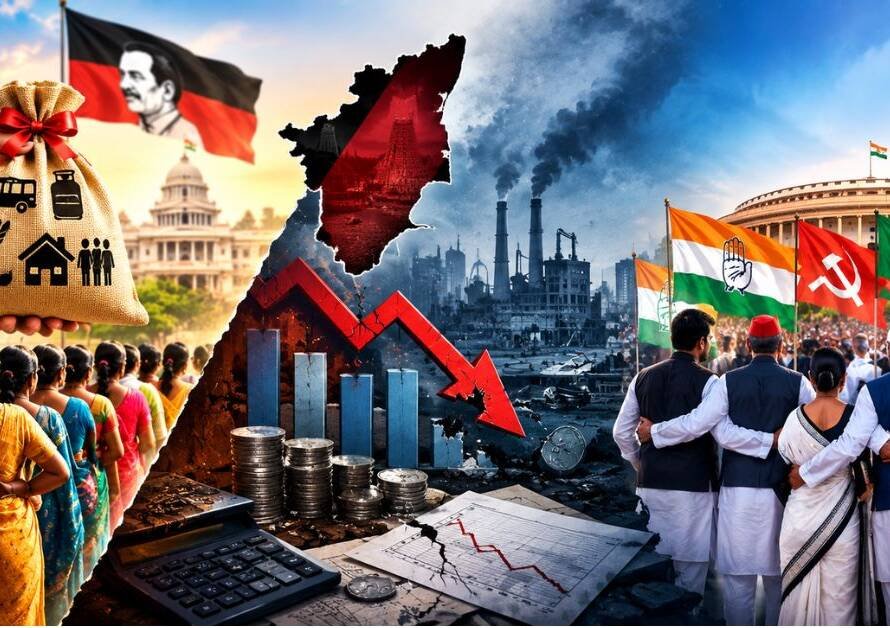
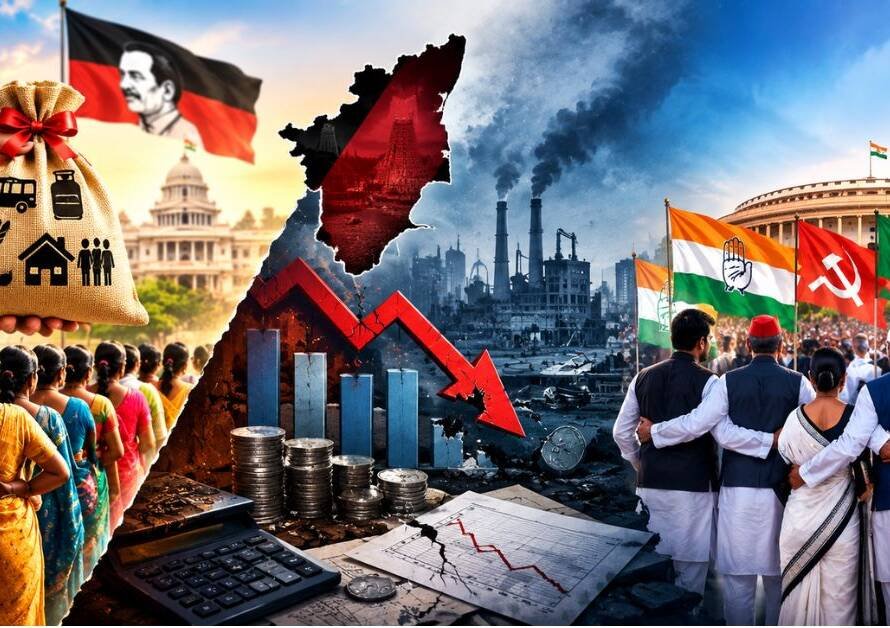
- This detailed article offers an authentic analysis of the largest structural shift in voting patterns and social consciousness in the history of independent India.
- It outlines how decades-old politics of ‘caste and sub-caste’ (the Mandal era) is becoming irrelevant in the face of national security and cultural pride (the Kamandal era).
- Using the historic 2026 judicial verdict on the 2011 Kannur bomb attack as a cornerstone, the article exposes ideological violence and ‘selective outrage.’
- Finally, by uncovering manufactured illusions like ‘Thagbandhan’ (alliance of thugs) politics and the ‘Saffron Terror’ narrative, it sounds a loud clarion call for a “lax” Hindu society chasing careers and wealth to swiftly awaken and protect its ‘land and faith.’
The Question of a Civilization’s Security
1. Core Discourse: The Demise of Traditional Caste Politics and the New Grammar
Looking at the current changing political landscape of the country, it has become entirely clear that the lifespan of traditional caste-based politics within India’s electoral battleground is no longer very long.
- Expansion of Identity: For a long time, India’s electoral mathematics revolved around castes, sub-castes, and regional equations. However, over the last few years, the center of political discourse has shifted completely.
- The New Ultimate Question: In electoral debates, it is no longer vital to ask “which caste is aligning with whom”; rather, the prominent question is becoming “who stands with which ideology, nationalism, and their core identity.”
- Ideological Poles: Indian politics now appears to be moving rapidly toward two distinct ideological and religious poles, where the space for a middle political path or the pretense of pseudo-secularism is shrinking continuously.
2. The End of the Mandal Era and the ‘Saturation Point’
It was only a few decades ago when the entire politics of North India revolved around the axis of ‘social justice’ and the Mandal Commission. Everything from ticket distribution to rally slogans was decided by calculating caste equations.
- Collapse of Established Formulas: Elections that were previously considered settled by established formulas like the “MY (Muslim-Yadav) equation,” “Dalit-Muslim alliance,” or “Upper Caste vs. Backward Classes” are now proving to be ineffective and demolished on the political ground of the New India.
- Internal Discontent: Traditional caste politics brought power and benefits to a few select and influential castes, but it permanently left the Most Backward Classes (MBCs) and Maha-Dalits of the same category marginalized. This internal resentment has been completely bridged by the broader narrative of cultural nationalism.
- Aspirational Generation: Today’s youth, regardless of their background, are not going to be satisfied merely with the ‘narrow pride of caste.’ They demand world-class infrastructure, digital opportunities, national security, and India’s rising stature on the global stage. When it comes to national interest, caste loyalties naturally take a backseat.
3. The ‘Umbrella Narrative’ of Cultural Nationalism
The cultural chain of events that began with the Ram Mandir movement is no longer limited to the construction of a physical temple; rather, it has brought the majority society together under a shared and unbreakable cultural umbrella narrative.
New Irreversible Issues Established at the Center of Politics:
- The cultural and spiritual resurgence of Ayodhya, Kashi, and Mathura.
- The implementation of the Uniform Civil Code (UCC) and comprehensive amendments to the Waqf Act.
- Existential challenges such as demographic imbalance, illegal conversions, and ‘Love Jihad.’
- Collective resistance against political assaults on Sanatan culture.
These protective and cultural issues have performed the historic task of elevating millions of voters above their narrow caste boundaries, uniting them under a broad and glorious religious identity.
4. The Kannur Bomb Attack: The Reality of Ideological Violence and Selective Silence
When we speak of protecting land, demography, and identity, the Kannur district of Kerala emerges as the most blood-soaked and living example.
- Historic Judicial Verdict (2026): The court verdict delivered in April 2026 regarding the horrific and planned 2011 bomb attack on Rashtriya Swayamsevak Sangh (RSS) workers by CPI(M) cadres in Kannur, Kerala, is not just the end of a legal process.
- Justice Stamped on Crime: The court sentencing 10 workers associated with the CPI(M) to 25 years of rigorous imprisonment proves that what the leftist ecosystem often justified under the guise of ‘class struggle’ or ‘ideological revolution’ was actually a brutal criminal conspiracy to take innocent lives. This attack was carried out simply because an RSS shakha had been started there.
- Silence of the Lutyens Ecosystem: Even after this historic verdict and the long 25-year imprisonment handed down to communist leaders, a mysterious silence prevails among the country’s so-called ‘progressive’ intellectual class and mainstream media. This selective outrage proves that violence becomes a matter of concern for them only when it serves their political agenda.
5. The ‘Victim’ vs. ‘Perpetrator’ Narrative and the Conspiracy of “Saffron Terror”
Since Independence, an extremely dangerous intellectual and political ‘toolkit’ has been operating within the country, whose primary objective has been to shield actual perpetrators and put the victims themselves in the dock.
- Decades of Pseudo-Discourse: Under this narrative, every jihadi or violent activity occurring within the country was labeled as ‘discontent’ or ‘revolution,’ effectively painting the culprits as “victims” (peedit) or “revolutionaries” (krantikari). Meanwhile, the Hindu, persecuted on their own land, was consistently depicted as the “aggressor” or “criminal.”
- The Foul Play of “Saffron Terror”: The most grotesque form of this suicidal narrative was witnessed when full preparations were made to pin the blame for the 26/11 Mumbai terror attacks on the RSS and Hindu organizations. Books and discourses were kept ready for this exact purpose.
- Kasab Caught Alive: At that time, only one move of the anti-national forces backfired—and that was the brave Mumbai Police personnel catching Pakistani terrorist Ajmal Kasab alive. Had Kasab not been caught alive and had he not confessed to the truth about Pakistan, the political ‘Thagbandhan’ and the leftist machinery of this country would have permanently recorded the false narrative of “Saffron Terror” in the history books.
- Persecution of Saints: Under this very politics of appeasement, several top revered Hindu saints and religious gurus of the country were framed in false and fabricated cases, thrown into jails, and tortured for years to break the morale of the majority society. Although the courts completely dismissed all those charges decades later, a deep psychological blow had already been dealt to the society by then.
6. Ideological Desperation of the Opposition and the Compulsion of ‘Soft-Hindutva’
This shifting ideological and religious polarization has triggered a deep crisis within the opposition camp, especially among parties relying heavily on appeasement.
- Token Pretense: Regional parties that once openly mocked majority sentiments or considered appeasement their sole policy have now resorted to visiting temples as soon as elections approach, wearing sacred threads over their coats, and staging dramas to adopt Hindu symbols.
- Frustration of Defeat and Linguistic Degradation: The public now fully understands this hypocrisy. When it becomes impossible to defeat this wave of nationalism through democratic means and votes, the opposition’s frustration drops to the lowest level of rhetoric. When policy debates are abandoned and opponents are compared to insects or cockroaches, understand that the total ruin and downfall of that political thought is guaranteed in the future.
7. Internal Crisis: The “Laxity” of Hindu Society and a Faint Renaissance
An even greater danger than external enemies and false narratives is the internal weakness and gross apathy within Hindu society itself.
- Decades of Deep Slumber: It is highly unfortunate that despite centuries of atrocities, the horrors of Partition, and craving even for a cremation ground on their own land (as is happening with Hindus in neighboring countries), Hindu society remained fast asleep for decades.
- Pathetic Pace: A ‘renaissance’ and awakening have certainly visible within the society over the last few years, but its pace is extremely slow and pathetic.
- The Trap of Career and Money: Today’s modern Hindu middle class is blindly preoccupied with gathering personal careers, packages, MNC jobs, and material riches. Their interest in the security of society and the nation is near zero. Their mindset has become: “As long as my personal home is safe, why should I worry about society?”
- Reactionary Mindset: This class remains silent until the crisis knocks directly on the door of their own house. When their own family or property is affected due to ‘Love Jihad,’ demographic pressure, or land transfers, they suddenly wake up from their slumber. However, instead of introspecting on their previous silence, they instantly begin cursing the “government and security agencies.”
- The Bitter Truth: No government or security agency can ever protect a society that is itself indifferent to its own security and, out of greed for a few rupees, sells its ‘wealth and land’ to forces that will cause its destruction in the future. Countries like China and Japan are completely safe and at peace today because along with their governments, the ordinary citizens there stand firm on a policy of ‘Zero Tolerance’ toward their cultural identity and national security.
The Question of Survival for Future Generations
- The 25-year sentence verdict of Kannur and the truth of Kasab being caught alive warn us that the time to wake up at a ‘slow pace’ is over.
- Extremist forces and the Khilafat toolkit are operating with a long-term blueprint, while the common Hindu is merely planning for the next financial quarter.
- If the ‘land’ itself slips away from our hands, all this accumulated wealth and career will only serve the migration of future generations.
Take a Pledge Today:
- Ideological Clarity: Rise above the narrow quicksand of castes and make ‘Cultural Nationalism’ your permanent political and social default.
- Protection of Land: Never sell your ancestral property and land to non-believers out of immediate financial greed—land is your ultimate strength.
- Collective Responsibility: Abandon the mindset of depending entirely on the government and become vigilant guardians of your own society, culture, and faith.
🇮🇳 Jai Bharat, Vandematram 🇮🇳
Read our previous blogs 👉 Click here
Join us on Arattai 👉 Click here
👉Join Our Channels👈