Summary
- This policy and geopolitical analysis evaluates the fundamental and strategic shifts in India-China relations following the 2020 Galwan clash. Moving beyond the emotional responses and historical illusions of the past, both nuclear-armed neighbors are transitioning toward a pragmatic, cold, and calculated approach.
- This analysis clarifies that in the contemporary global landscape, bilateral relations will not progress on traditional paradigms of “absolute peace” or “harmony,” but rather on a new model of “Controlled Rivalry.”
- Under this model, an uncompromised strategy is at play—maintaining unprecedented military vigilance and aggressive infrastructure development on the border, while keeping channels of diplomatic and economic communication open. Most importantly,
- Beijing now recognizes that India’s current nationalist leadership is impervious to personal inducements or appeasement, and stands fully capable of delivering a swift, decisive response to any border misadventure.
The Rise of Strategic Realism
- The June 2020 clash in the icy terrain of the Galwan Valley in Ladakh permanently altered the trajectory of India-China relations. That conflict shattered decades of diplomatic illusion which suggested commercial and political ties could advance normally without clearly defining peace on the border.
- Today, six years after that watershed event, a new geopolitical reality is emerging between the two nations. Both sides have exited the mode of emotionalism or transient “anger” regarding national security and global aspirations, entering a phase of pure “calculus” and strategic realism.
- The ground reality remains complex and sensitive. Troops on both sides of the Line of Actual Control (LAC) are deployed with full alertness, bunker networks are being reinforced, the construction of roads, bridges, and airstrips continues at a wartime pace, and the deployment of advanced missile and radar systems is steadily increasing.
Yet, amidst this unprecedented military buildup and tension, diplomatic and military officials from both nations consistently sit at the negotiating table from Beijing to New Delhi. This is the ultimate paradox and the new normal of 21st-century Asia: “Coexistence of tension and dialogue.”
1. Beyond the Mountains: The New Frontiers of Multi-Dimensional Warfare
Strategists in both India and China understand perfectly that the real battle between two superpowers in the modern era is not confined to hoisting a tricolor or a red flag on mountain peaks. In the contemporary global order, the frontiers of sovereignty and dominance have fundamentally shifted:
- Global Supply Chains: Challenging China’s monopoly in global supply chains post-COVID-19 and establishing India as an alternative manufacturing hub forms a core component of India’s long-term strategy—a domain where China fiercely guards its dominance.
- Technological Sovereignty: Securing a lead in Artificial Intelligence (AI), 5G/6G communication technology, semiconductor chips, and quantum computing defines the true power of a future superpower. India’s ban on Chinese apps and the stringent scrutiny of Chinese tech investments are direct components of this technological warfare.
- Manufacturing and Maritime Routes: In response to China’s increasing submarine presence in the Indian Ocean Region (IOR) and its attempts to exert influence over India’s strategic Sea Lines of Communication, India is strengthening its security encirclement through groupings like the Quad.
- The Race for Regional Influence: Expanding respective spheres of influence in the developing nations of South Asia, the Middle East, and Africa through infrastructure development and credit strategies remains an invisible goal for both sides.
If the border remains in a state of perpetual total war or conflict, the economies of both nations will pay a price heavy enough to divert them from internal development and global objectives. No nation can realize its superpower ambitions without first fortifying its economic and technological foundation.
2. Ideological and Leadership Shifts: China’s Altered Assessment
The most critical factor behind this new geopolitical model is that China’s assessment of Indian leadership has undergone a complete transformation. Beijing deeply acknowledges the reality that New Delhi’s current leadership does not operate on old patterns—it cannot be influenced via personal or financial favors, nor can it be induced to compromise national interests through the web of diplomatic pleasantries.
- Nationalist and Resolute Government: India is governed by a firm, sovereignty-driven nationalist administration with clear priorities. This governance neither bows to China’s aggressive or expansionist policies nor accepts the status quo in silence.
- Eye-to-Eye Diplomatic Posture: From Doklam to Galwan, India has proven it possesses the resolve to engage China eye-to-eye. The current leadership has sent an explicit message: any military misadventure or aggression on the border will meet an immediate, equally forceful, and strong retaliation.
- National Interest Over Inducements: While Chinese diplomacy has historically leveraged personal financial benefits or political influence to compel leadership in various nations to compromise national interests, the unyielding stance of the current Indian leadership has made it clear that India’s sovereignty is not up for negotiation. This ideological and strategic shift has forced China to recalibrate its traditional coercive diplomacy.
3. The Emerging Pattern of ‘Deterrence’ and ‘Management’
Observing the progressive trajectory of diplomatic negotiations between both sides over the last few years reveals a highly mature and calculated pattern:
- Phased Disengagement: The process began by successfully pulling back troops from highly sensitive friction points such as Pangong Tso, Gogra-Hot Springs, and Demchok.
- Military-Level Talks: This was followed by sustained Corps Commander-level military talks to ensure any accidental confrontation or local skirmish on the border could be managed immediately.
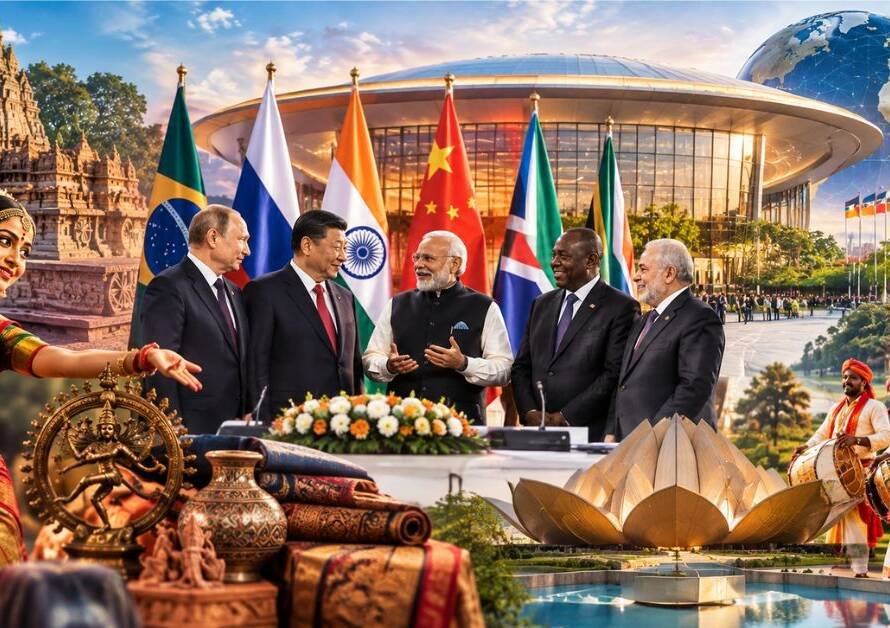
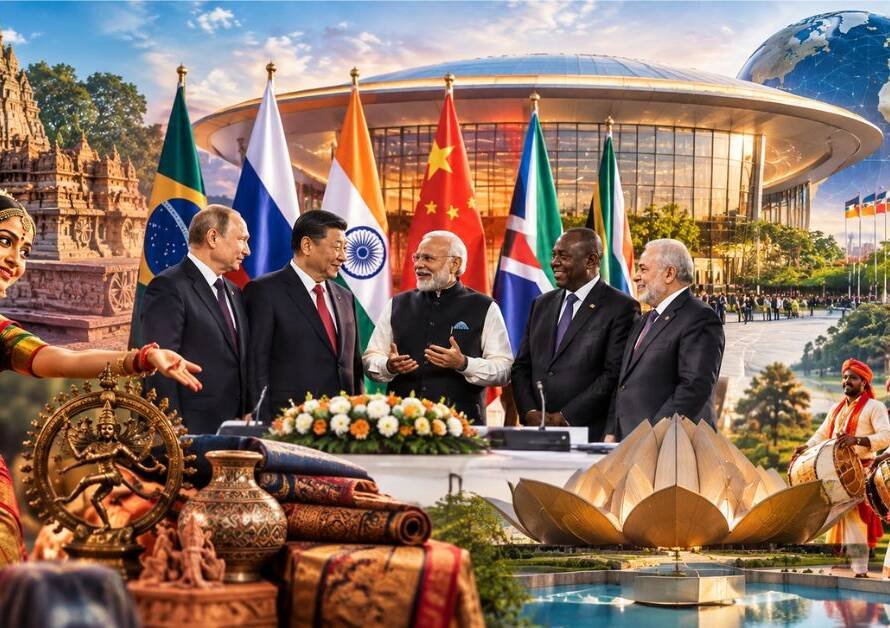
- Top-Tier Diplomacy: Subsequently, direct meetings took place between the heads of state on the sidelines of international forums (such as BRICS or the SCO), leading to the current continuous cycle of formal border dialogue.
- This shifting pattern does not signify a return to old friendships or the romanticized, fictional era of “Hindi-Chini Bhai-Bhai” from the 1950s. The historical illusions of that time caused severe strategic damage to India. Today’s era is entirely practical and realist, where both nations are learning “Deterrence with Management.”
It is a framework where overwhelming military strength prevents the adversary from attempting misadventures, while active diplomacy manages the crisis to keep it from escalating out of control.
4. Low Trust, High Preparedness: The Philosophy of Controlled Rivalry
The foreign policy of a new India rests firmly on strategic autonomy and the paramount security of national interests. India no longer places legacy trust in China’s peaceful assurances, understanding that stability in bilateral relations comes not from diplomatic treaties, but from the balance of military and economic power.
- Strategic Infrastructure: Border vigilance, electronic surveillance, and military readiness remain at the highest level 24/7. The construction of mountain tunnels, all-weather roads, and forward posts progresses rapidly without compromise.
- Escalation Control: Both sides recognize that an uncontrolled and unexpected military escalation would prove to be the most self-destructive and expensive outcome for both nations. This pragmatic understanding drives both sides to keep the diplomatic doors of communication open.
- Preventing Miscalculations: The objective of sustained dialogue is to ensure that no local or commander-level misunderstanding snowballs into a broader, devastating conflict
This environment represents neither traditional peace nor total war; it is a textbook phase of Controlled Rivalry, where both players recognize each other’s boundaries and execute their moves with deep calculation.
The New Normal of the 21st Century
- The future of India-China relations over the coming decades will operate on this realist model—an environment where competition and cooperation, tension and dialogue, coexist.
- For India, the policy for this new era must remain crystal clear: low trust, high preparedness, fortifying manufacturing capacity, and never closing the door to dialogue.
- By becoming economically self-reliant and consolidating its military power, India must ensure that the option of war remains prohibitively expensive and impractical for China.
- Strength is the greatest guarantee of peace, and diplomacy is the medium to guide that strength. Guided by this mature and nationalist vision, India stands fully prepared to confront the defining geopolitical challenge of the 21st century.
🇮🇳 Jai Bharat, Vandematram 🇮🇳
Read our previous blogs 👉 Click here
Join us on Arattai 👉 Click here
👉Join Our Channels👈