Summary
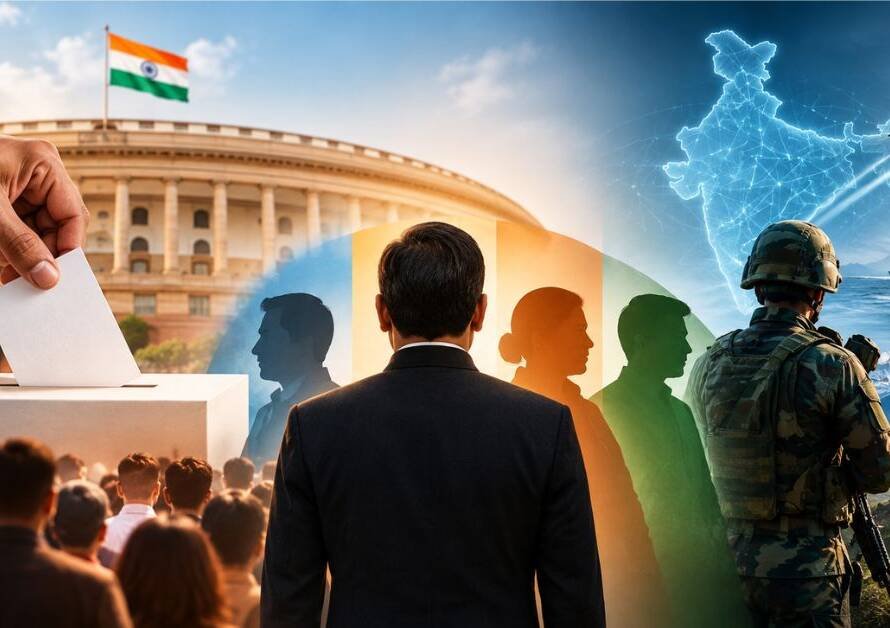
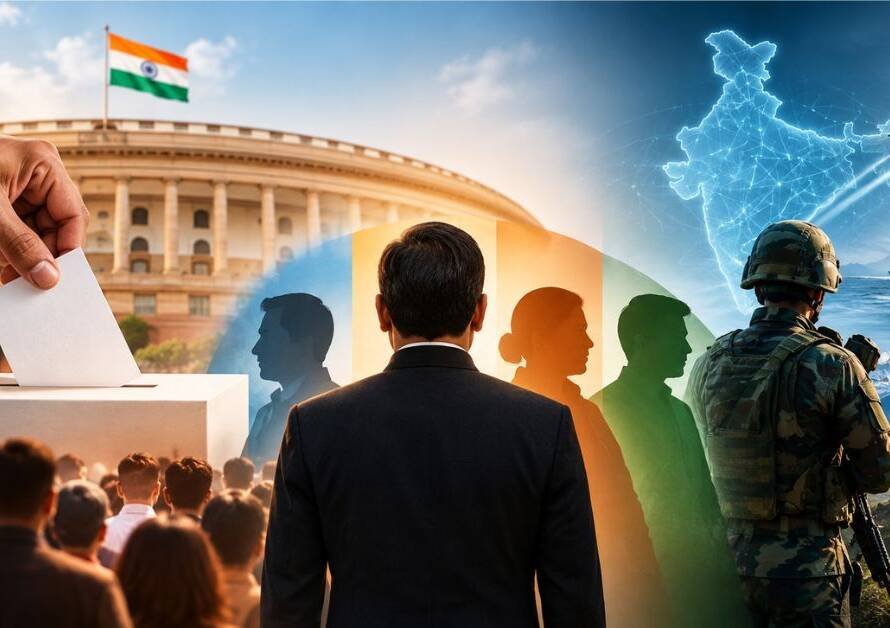
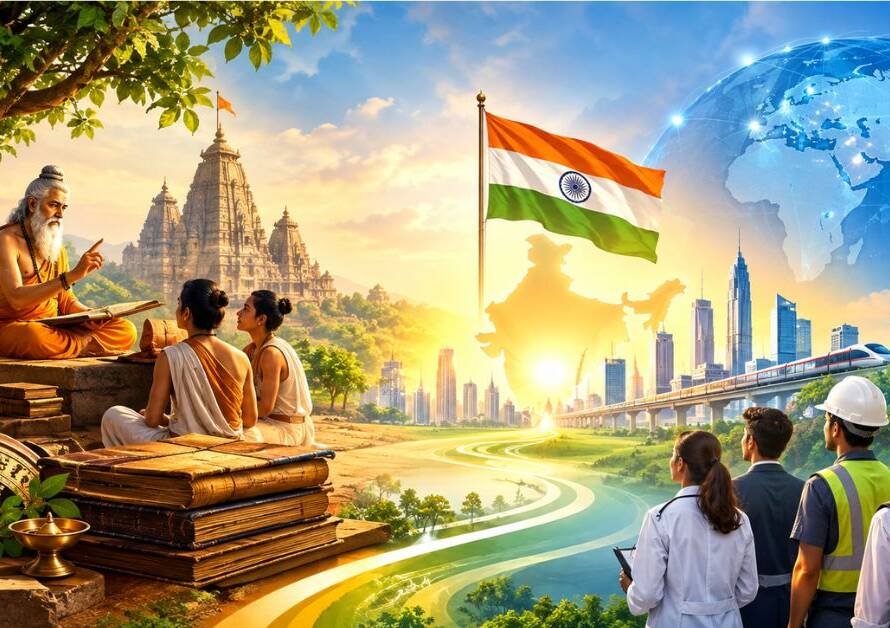
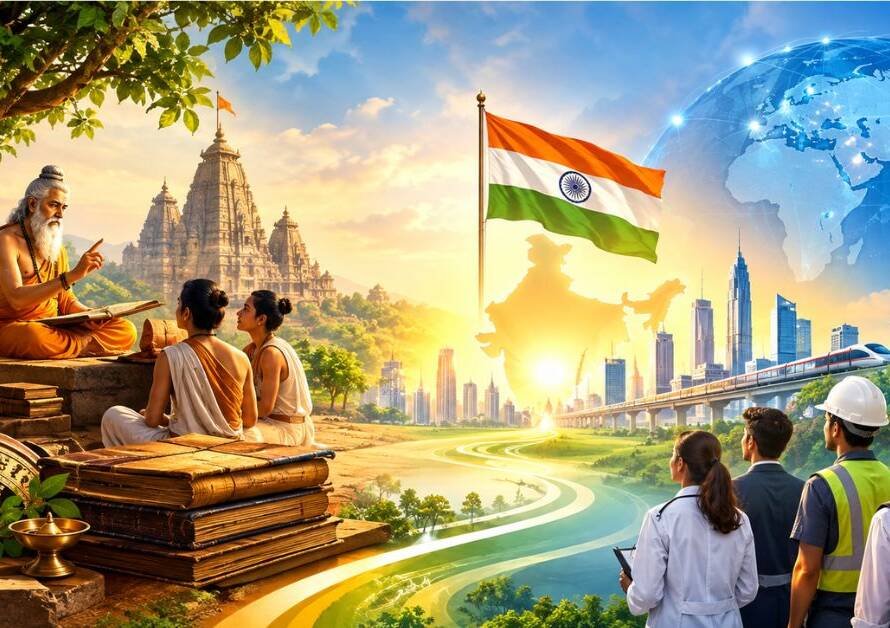
- This detailed defense analysis presents a blueprint of India’s emergence as a major global military-industrial superpower (Military-Industrial Power). With the inauguration of a state-of-the-art defense production facility by Defense Minister Rajnath Singh in Shirdi, Maharashtra, India has set a historic target to become the world’s largest arms exporter over the next 25 to 30 years.
- Driven by unprecedented policy reforms in the defense sector, the ‘Positive Indigenization List,’ Public-Private Partnerships (PPP), and a robust ecosystem of startups, India’s defense exports have shattered records by crossing the ₹38,424 crore mark.
- This narrative highlights how India is no longer restricted to exporting minor equipment like bulletproof jackets. Instead, it is supplying massive indigenous combat platforms—such as the BrahMos missile, Akash Air Defense, and the ‘Suryastra’ rocket system—to more than 80 countries worldwide.
India’s Vision to Become the World’s Largest Arms Exporter
1. A New Defense Resolve and Global Vision for Atmanirbhar Bharat
In the history of South Asian and global geopolitics, India was long categorized as one of the world’s largest arms buyers and importers. However, over the past few years, the nation has entirely overhauled its defense production strategy. India is no longer just an importer; it is establishing itself as an aggressive, self-reliant manufacturer and exporter.
- A Historic Declaration: While inaugurating a massive, state-of-the-art defense production unit in Shirdi, Maharashtra, Union Defense Minister Rajnath Singh placed India’s future roadmap before the world. He explicitly declared that given the rapid pace at which India has achieved self-reliance in defense, the nation will emerge as the world’s largest arms exporter within the next 25 to 30 years.
- Strategic Autonomy: The Defense Minister emphasized that a nation that manufactures its own weapons writes its own destiny. India will no longer limit itself to merely fulfilling its own security needs; it aims to lead the global defense market.
- A Message to Global Powers: This shift sends a clear signal to global superpowers that India is no longer dependent on foreign defense supply chains (Supply Chain) or vulnerable to external geopolitical pressures.
2. Private Sector Participation and Historic Policy Reforms
Until a few years ago, the role of the private sector (Private Sector) in India’s defense production was considered negligible. However, major structural and policy reforms by the current administration have completely reversed this paradigm.
- Ambitious 50% Participation Target: Previously, private company participation in defense production was nominal, but today it has risen to nearly 25 to 30 percent. The government’s explicit vision is to aggressively push this share past the 50 percent mark in the near future.
- Positive Indigenization List: To implement self-reliance on the ground, the government has curated a comprehensive list of over 5,000 defense items. Under this policy, it is legally mandatory for the Indian Army, Air Force, and Navy to procure these components domestically, giving local industries a guaranteed market and the confidence to invest.
- Simplification of FDI Rules: Foreign Direct Investment norms in defense have been streamlined, encouraging global tech giants to partner with Indian firms and manufacture (Manufacturing) directly within the country.
- An MSME and Startup Revolution: Over 16,000 MSMEs are currently integrated into the defense sector. Furthermore, schemes like ‘iDEX’ (Innovation for Defence Excellence) are actively linking tech startups and youth with military innovation, directly contributing to the surge in exports.
3. Shirdi’s Mega-Factory and the Unveiling of the ‘Suryastra’ Rocket System
The newly established defense production unit in Shirdi, Maharashtra, stands as a living symbol of India’s growing industrial capacity. It is not just a manufacturing center but a strategic stronghold designed to meet future warfare requirements.
- A Massive 200-Acre Campus: This modern factory spans a vast, highly secure, and technologically advanced 200-acre complex.
- Multi-Dimensional Production Capabilities: This unit will primarily manufacture artillery bombshells, advanced rocket systems, missile components, space technology hardware, and fully automated defense platforms for the Indian Armed Forces.
- Global Unveiling of ‘Suryastra’: The inauguration marked the global debut of India’s first ‘Suryastra‘ (Universal Rocket Launching System). This cutting-edge system boasts an pinpoint strike range of 300 kilometers, capable of causing deep devastation in enemy territory. Concurrently, the foundation stone for an advanced missile complex was laid at the site.
- Presence of Top Leadership: Chief of Defence Staff (CDS) General Anil Chauhan and Maharashtra Chief Minister Devendra Fadnavis attended this historic event. Chief Minister Fadnavis highlighted how ‘Operation Sindhu‘ successfully demonstrated the valor of Indian soldiers and the devastating precision of India’s indigenous weaponry on the global stage.
4. Global Conflicts, Technological Modernization, and ‘Operation Sindhu’
Citing the ongoing Russia-Ukraine war and intense conflicts in West Asia (Middle East), India’s defense leadership shed light on the changing rules of modern warfare.
- Manpower vs. Technological Superiority: Defense Minister Rajnath Singh clarified that future wars cannot be won by numbers alone. Moving forward, modern weaponry, Artificial Intelligence (AI), cybersecurity, automation, and advanced technology will play the decisive roles on the battlefield.
- Strategic Demonstration via ‘Operation Sindhu’: India successfully demonstrated this precise technological proficiency and real-time combat coordination (Combat Coordination) of its indigenous systems during ‘Operation Sindhu,’ leaving global observers stunned.
- The Weaponization of Supply Chains: In the modern era, global trade, supply chains, and even rare earth minerals are being used as geopolitical weapons. If a nation stops supplying critical components or raw materials during a crisis, a country’s security is instantly compromised. Therefore, self-reliance is no longer just about war preparation; it is a mandatory prerequisite for national sovereignty, peace, development, and economic strength.
5. Record Export of ₹38,424 Crore: India Captures the Global Market
India’s surging defense export figures are concrete proof that ‘Make in India’ is no longer just a tagline, but a ground reality on the global stage.
- Highest Historic Peak: India’s defense exports have soared to an all-time record high of ₹38,424 crore, a massive leap that has taken established global arms exporters by surprise.
- Trusted by Over 80 Nations: India currently supplies military equipment, missile systems, ammunition, and aerospace components to more than 80 countries worldwide.
- Strategic Buyer Network:
- USA and France: Even the world’s most technologically advanced nations are now purchasing Indian aerospace components and high-end engineering goods, validating global acceptance of Indian manufacturing quality.
- Armenia: This strategic nation in the Caucasus region has placed immense faith in Indian systems, securing major deals for the Pinaka Multi-Barrel Rocket Launcher and the Akash Air Defense system.
- Philippines and Indonesia: Amid rising geopolitical tensions in the South China Sea, these Southeast Asian nations have selected India’s BrahMos supersonic cruise missile system to defend their maritime borders.
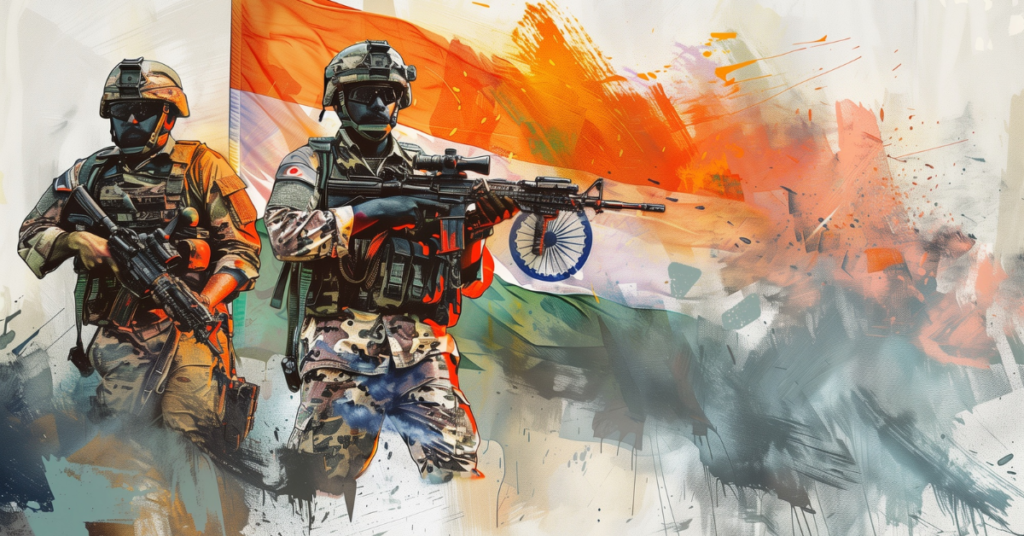
- Delivery of Lethal Military Platforms: India has graduated from selling basic gear like bulletproof jackets and helmets to exporting massive, sophisticated combat assets, including BrahMos missiles, Akash Air Defense units, Pinaka rocket launchers, and advanced artillery guns to international buyers.
- The laying of the missile complex foundation stone in Shirdi and the rise of technologies like ‘Suryastra’ mark more than just the opening of a new factory.
- It sounds the trumpet of a new, self-respecting 21st-century India capable of shifting global security equations in its favor.
- Backed by unyielding political will, liberal yet strict policy reforms, and a unique Public-Private Partnership (PPP Model), India has taken a decisive step toward becoming a supreme global military and industrial superpower over the next two and a half decades.
🇮🇳 Jai Bharat, Vandematram 🇮🇳
Read our previous blogs 👉 Click here
Join us on Arattai 👉 Click here
👉Join Our Channels👈