Summary
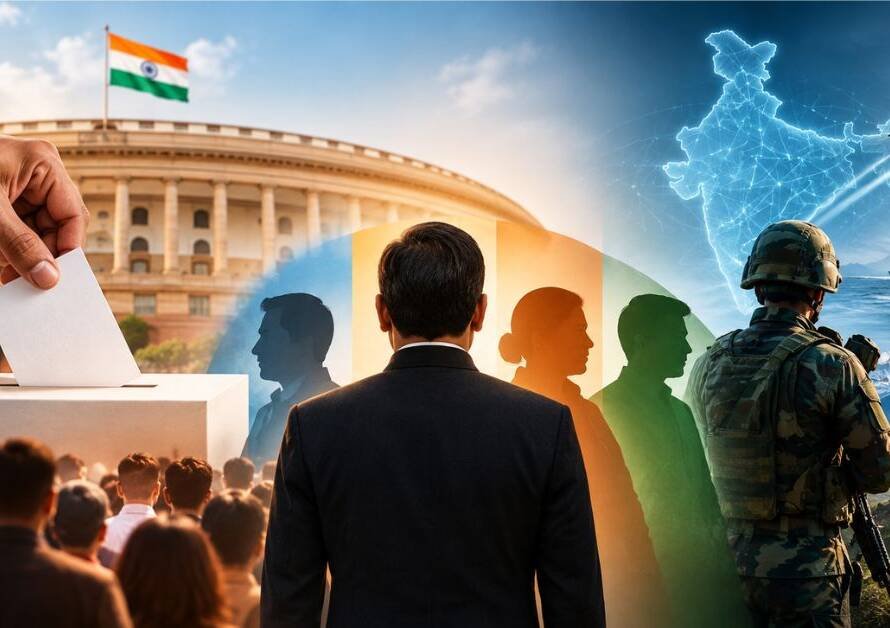
- This detailed historical report presents a comprehensive political and strategic analysis of an unprecedented and sensitive security crisis that emerged in India’s capital, Delhi, in September 1947.
- Amid the horrors of Partition, this text provides a chronological account of how a secret intelligence input received by Home Minister Sardar Vallabhbhai Patel at midnight on September 9 altered the course of the nation’s history.
- This report highlights the emergency military deployments, cordons and searches conducted across various clandestine hideouts, the seizure of massive stockpiles of modern weaponry, and the critical aspects of civic and administrative vigilance that ultimately saved Delhi from a massive civil war and a potential second partition.
A Detailed Historical Analysis of Capital Security
I. Strategic Background: Delhi’s Fragile Situation in the Early Weeks of Independence
Although India achieved independence on August 15, 1947, the tragedy of Partition brought with it unprecedented administrative instability and massive law-and-order challenges. During that transitional phase, the nation’s new capital, Delhi, stood at its most vulnerable crossroads.
- Limited Security Resources: Immediately after independence, the number of regular troops deployed to maintain law and order in Delhi was extremely low. Most military units were heavily engaged in securing borders or managing refugee camps.
- Internal Challenges in the Administrative Structure: The contemporary police and intelligence apparatus had not yet been fully reorganized. Divided loyalties among certain elements within the police force posed a major hurdle in delivering internal intelligence to the government’s top leadership in a timely manner.
- Limitations of the Colonial Command: The military command was still under the British Commander-in-Chief, Field Marshal Claude Auchinleck, whose approach often prioritized technical procedures and practical administrative limitations over the ground realities of Indian conditions.
II. Midnight of September 9, 1947: The Intelligence Input That Changed History
On the night of September 9, 1947, a highly critical and covert event concerning the security of independent India took place when sensitive information reached Home Minister Sardar Vallabhbhai Patel through a civic intelligence network of volunteers.
- The Plan for an Armed Coup: According to the intelligence input, a widespread armed coup was being prepared inside Delhi for September 10. The conspiracy plotted to target the Parliament House (then the Constituent Assembly), assassinate key ministers, and capture the Red Fort to declare it as a separate political symbol.
- Sardar Patel’s Swift Decision: Recognizing the sensitivity of the information, Sardar Patel decided to act immediately without losing a single moment. He summoned the then Governor-General Lord Mountbatten and Commander-in-Chief Auchinleck for an urgent emergency meeting.
- Ideological Clash Over Military Mobilization: When Auchinleck expressed an inability to summon troops immediately from outlying cantonments due to technical constraints and a shortage of time, the Home Minister took a firm stand. He issued explicit orders to Auchinleck to dispatch all available additional units from various cantonments across the country to Delhi immediately via air and rail routes.
III. Military Action (Combing Operations) and the Massive Weapon Haul
Due to Sardar Patel’s uncompromising stance, additional military contingents from external regions began arriving in Delhi on the evening of September 9. By the following morning, sufficient forces were available to stabilize the situation, marking the commencement of the largest search operation in Delhi’s history.
- Raids in Targeted Zones: The military cordoned off and simultaneously raided all suspicious locations and buildings mentioned in the intelligence input. These primarily included several complexes in Pahar Ganj, Sabzi Mandi, and Mehrauli.
- Seizure of Advanced Military Equipment: The raids uncovered sophisticated military weaponry rather than ordinary traditional arms. Troops recovered large quantities of Sten guns, Bren guns, mortars, wireless transmitters, and heavy ammunition.
- The Historic Battle of the Kakwan Building: Located in the Sabzi Mandi area, the ‘Kakwan Building‘ served as a primary strategic stronghold for the conspiracy. Elements hidden inside opened fire on the army with modern weapons. The Indian Army had to conduct a continuous operation lasting over 24 hours just to secure this single multi-story building.
- Exploitation of Strategic Sites: Security forces were also fired upon with Sten guns from a large mosque in Mehrauli. The army engaged in a fierce four-to-five-hour struggle to bring the situation under control and secure the premises.
IV. Historical Memoirs of Acharya Kripalani: Contemporary Evidence
The confirmation and gravity of this entire sequence of events are also reflected in the written memoirs of the then Congress President, Acharya J.B. Kripalani. He documented this crisis extensively in his book ‘Gandhi: His Life and Thought’ (Pages 292-293).
- Unearthing of Illegal Arms Factories: According to Kripalani, the searches uncovered not only massive stockpiles of weapons but also led to the bust of illegal underground factories manufacturing firearms and bombs inside Delhi.
- Disaffection Within the Police Force: He explicitly noted that the loyalties of certain officers and personnel within the Delhi Police were highly questionable at the time. Several policemen fled with their government-issued weapons and uniforms to join the insurgents.
- Emergency Assistance from Other Provinces: To counter this internal disaffection and the law-and-order crisis, the Government of India had to summon additional police forces and military companies from other states (provinces) on an emergency basis before the situation could be brought under absolute control.
V. The Masterminds Behind the Plot: A Network of High-Ranking Officials
This was not an ordinary civil riot or a localized disturbance; rather, it was driven by a highly organized, high-level administrative network operating from within the country to paralyze the system.
- Administrative Complicity: The architects of the conspiracy blueprint included some senior contemporary police officers of Delhi and high-ranking administrative personnel from Delhi University, who were generally not suspected by the government.
- Documentation of the Covert Plan: The entire plan for the coup and the capture of Delhi had been meticulously prepared in writing. These highly classified strategic documents were kept heavily secured in a safe located inside the bungalow of a senior official at Delhi University.
- The Intelligence Operation by Volunteers: Civic volunteers operating in disguise managed to infiltrate the suspicious activities and caught wind of this safe and the documents hidden inside. A daring team led by a volunteer named ‘Khosla‘ deceived the guards under the pretense of a new shift duty arriving from Aligarh, loaded the entire safe onto a truck in the dead of night, and brought it to a secure location.
- Analysis of the Documents: When the papers were unsealed, the leadership was stunned by the scale of the sweeping conspiracy recorded inside. Immediately thereafter, a team rushed directly to Sardar Patel’s residence at midnight to apprise him of the actual situation, successfully neutralizing the entire plot just in time.
VI. Historical Conclusion and Strategic Lessons
This September 1947 episode stands as a critical turning point in the history of independent India. It demonstrates how fragile the geographical and internal sovereignty of a nascent nation can be, and underscores the profound significance of firm decisions in preserving it.
- Defining the Boundaries of Partition: Had that daring intelligence operation not occurred on the night of September 9, and had Sardar Patel not shown absolute resolve in mobilizing the military cantonments, the Government of India would have been forced to temporarily relocate its capital outside of Delhi. In such a scenario, the nation’s geography and the final boundaries of Partition might look very different today.
- Coordination Between Citizens and the Military: This saga serves as a living example that when alert citizens and administrative leadership (the military and the Ministry of Home Affairs) work in perfect alignment, even the gravest internal crises can be thwarted with minimal damage.
🇮🇳 Jai Bharat, Vandematram 🇮🇳
Read our previous blogs 👉 Click here
Join us on Arattai 👉 Click here
👉Join Our Channels👈