Summary
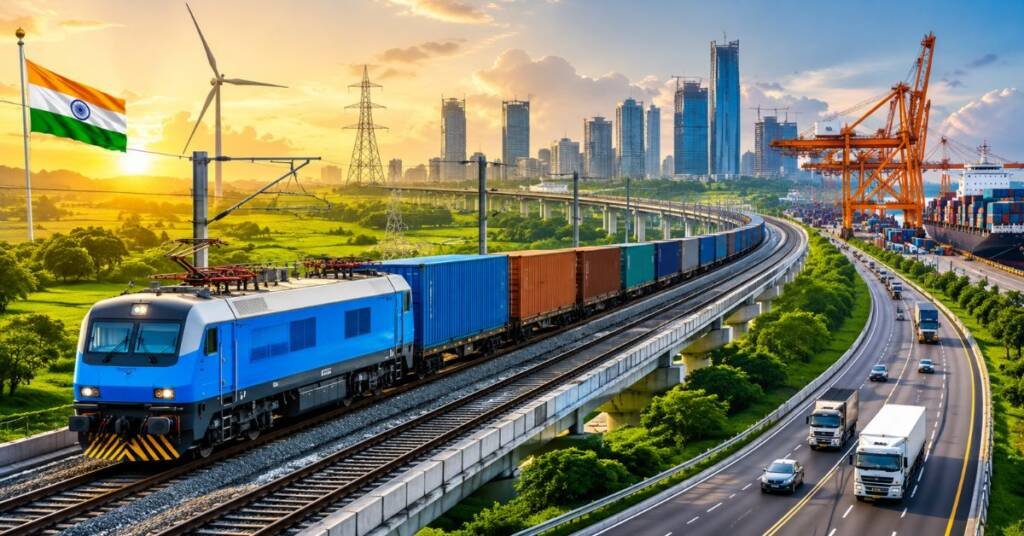
- This policy and infrastructure analysis presents an in-depth evaluation of the monumental transformation in India’s transport landscape—the Dedicated Freight Corridor (DFC) network. This network is proving to be a massive game-changer in realizing the national vision of building a $5 Trillion+ Economy.
- The analysis exposes how the Policy Paralysis and slow, indifferent administrative mindset of previous eras kept the nation’s logistics sector completely crippled.
- Conversely, it highlights how the decisive administrative vision and Mission Mode execution post-2014 successfully made both the Eastern and Western corridors fully operational by March 2026.
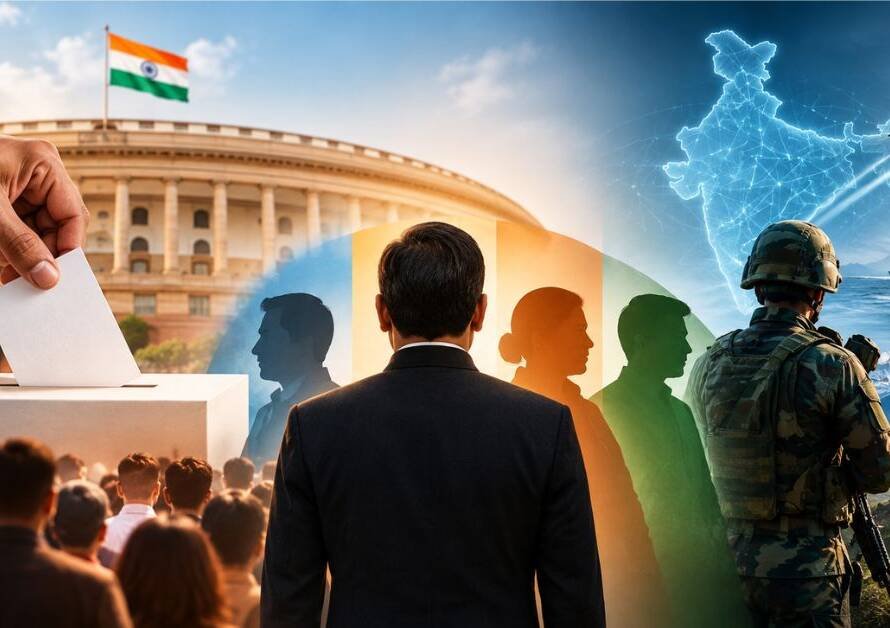
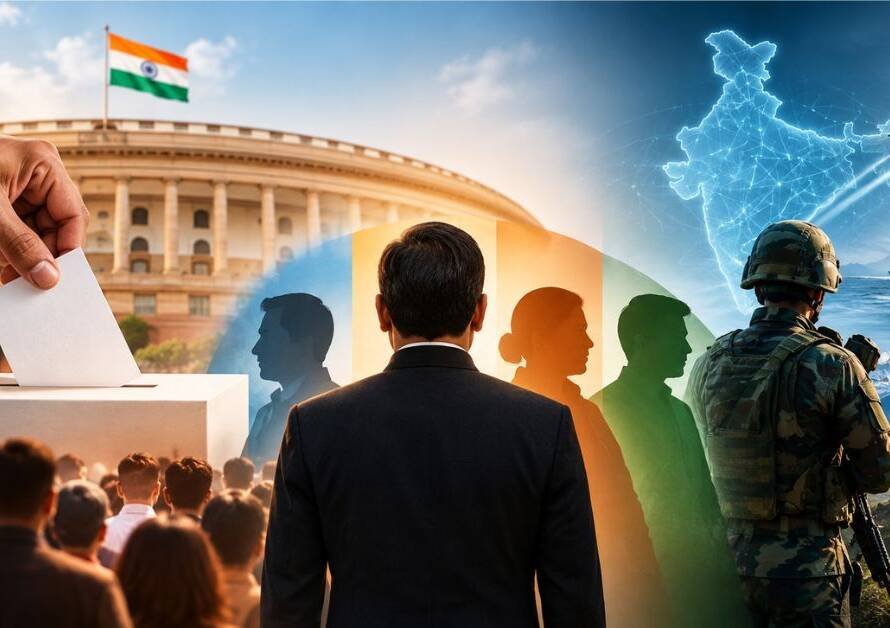
- Finally, it deconstructs the desperate “toolkit propaganda” of anti-development elements who try to use students as human shields to disrupt India’s economic progress.
DFC Network: A Major Transformation in India’s Logistics Sector
1. Operational and Upcoming Corridors: Redefining India’s Logistics Map
To bring railway infrastructure at par with modern global standards, exclusive high-speed tracks are being laid across the country specifically for freight trains.
A. Fully Operational Corridors (Current Status – 2026)
- Eastern Dedicated Freight Corridor (EDFC): The 1,337-kilometer route stretching from Ludhiana (Punjab) to Sonnagar (Bihar) is completely finished and operational. A future extension to Dankuni (West Bengal) is planned. This corridor provides seamless high-speed connectivity to heavy mineral and agri-rich states like Punjab, Haryana, Uttar Pradesh, and Bihar.
- Western Dedicated Freight Corridor (WDFC): The 1,506-kilometer route linking Dadri (Uttar Pradesh) to the Jawaharlal Nehru Port Trust (JNPT) in Navi Mumbai is 100% completed. Passing through Uttar Pradesh, Haryana, Rajasthan, Gujarat, and Maharashtra, its final and most complex 102-km section (Vaitarna to JNPT link) successfully commenced commercial operations in March 2026.
B. Under-Construction and Planned Corridors (Future Blueprint)
- East-West Dedicated Freight Corridor (EWDFC): A 2,052-kilometer route from Dankuni (West Bengal) to Surat (Gujarat) that will connect the industrial hubs of West Bengal, Odisha, Chhattisgarh, Madhya Pradesh, Maharashtra, and Gujarat.
- East Coast Dedicated Freight Corridor (ECDFC): A 1,100-kilometer track from Kharagpur (West Bengal) to Vijayawada (Andhra Pradesh), linking eastern coastal ports to the hinterland.
- North-South Dedicated Freight Corridor (NSDFC): A 975-kilometer route connecting Itarsi (Madhya Pradesh) – Nagpur (Maharashtra) – Vijayawada (Andhra Pradesh), cutting freight transit times between North and South India by half.
2. From Policy Paralysis to Infrastructure Revolution: The Bitter Truth
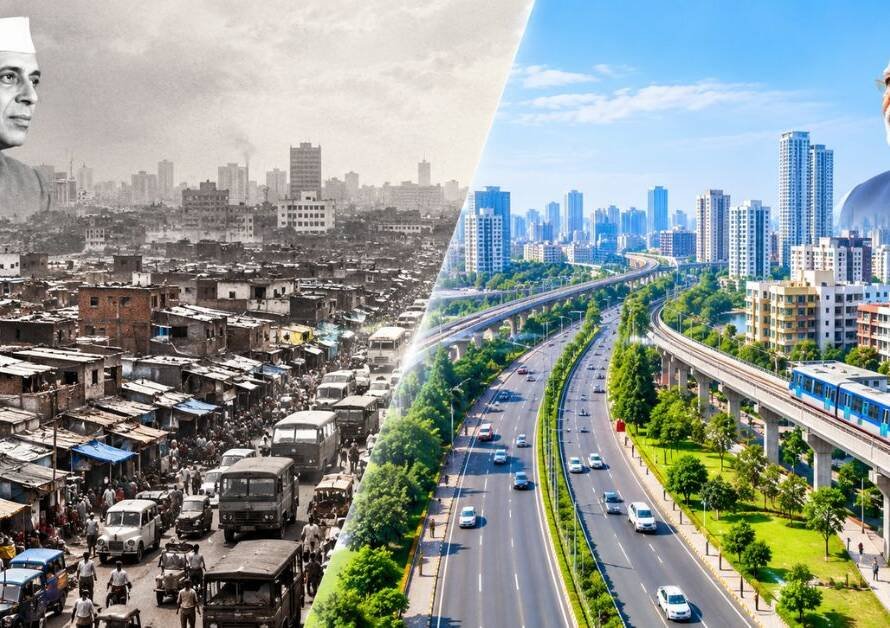
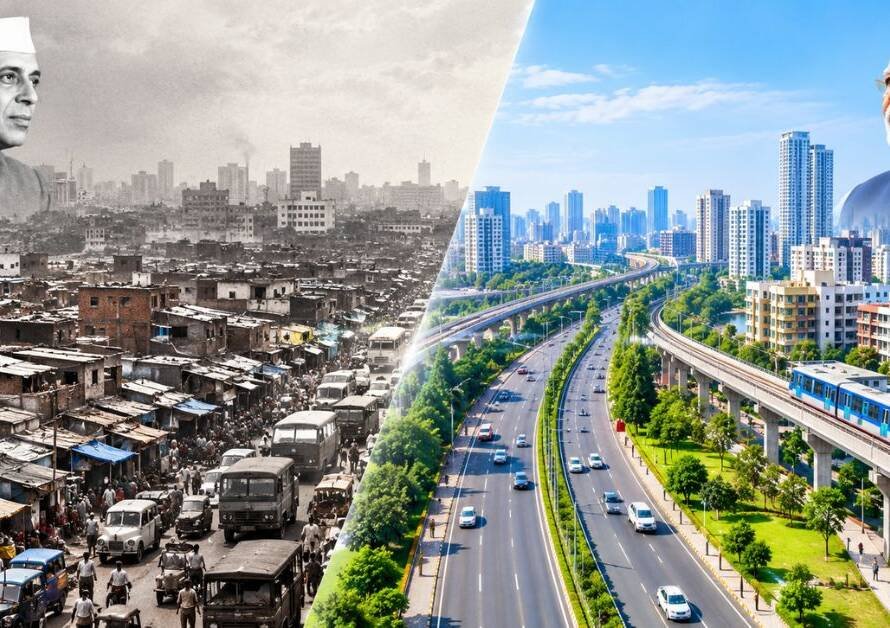
History is witness to how the previous regimes, during their six decades in power, reduced India’s glorious railway network to a victim of political inertia. While technically the world’s fourth-largest railway network, it was fundamentally crumbling under the burden of mixed traffic, where passenger and goods trains ran on the exact same tracks.
- An Economy Stranded on Loop Lines: Freight trains were routinely stranded on loop lines for hours to clear the path for passenger trains, dropping the average speed of cargo trains to a dismal 20 to 30 km/h.
- The Crippling Cost of Logistics: This sluggish pace pushed India’s logistics costs to a dangerous 14% of GDP, rendering Indian goods expensive and uncompetitive in the global market. While cargo would quickly unload from foreign ships at ports, moving it to the country’s hinterland took weeks. Power plants starved for coal and factories waiting for raw materials remained perpetually stuck on the tracks.
- Hollow Paper Dreams: In 2005, the then-UPA government drew up a beautiful paper blueprint for the ‘Dedicated Freight Corridor’. However, they lacked the political will and clear policy framework to execute it on the ground. DFCCIL was set up as a mere formality in 2006, and the project received paperwork approval in 2008 with big promises of completion by 2013. The actual output was zero. Delayed by flawed land acquisition policies and administrative lethargy, the vital Eastern and Western corridors languished in files for 15 years.
3. The Post-2014 Vision: Uncompromising Will and Mission Mode
The political leadership of the country shifted in 2014, and with it changed the entire culture of governance. Development projects were rescued from the trap of election manifestos and placed into an aggressive ‘Mission Mode’.
- A 10-Fold Jump in Capital Expenditure: The capital expenditure for railways witnessed a historic 10-fold increase. Land acquisition processes were digitized and made transparent, funding bottlenecks were permanently cleared, and strict digital monitoring was instituted via the PM Gati Shakti National Master Plan.
- The Phenomenal Success of EDFC & WDFC: The 1,337-km EDFC route from Ludhiana to Sonnagar, once trapped in bureaucratic limbo, is today fully functional, seeing hundreds of heavy freight trains pass seamlessly every day.
- The Era of Double-Stack Container Trains: The 1,506-km WDFC route connecting Dadri to JNPT Port, which crawled during the previous era, was fast-tracked. With the successful completion of the highly challenging Vaitarna-JNPT link in March 2026, the entire corridor is active. Today, world-class double-stack container trains travel at speeds exceeding 100 km/h along this corridor. India now boasts a 2,843-kilometer exclusive freight matrix operating 300 to 400 trains daily, more than doubling previous freight speeds.
4. Dismantling the Toolkit Ecosystem with Youth Awareness
During previous administrations, when national resources were swallowed by mega-scams like the 2G spectrum, coal block allocations, and the Commonwealth Games (CWG) scandal instead of being invested in infrastructure, an ordinary citizen could not even imagine double-stack trains running non-stop in India. The current governance model has permanently sealed those avenues of corruption.
- The Blueprint of the Anti-National Ecosystem: Because the anti-national toolkit ecosystem has failed to find a single stain of corruption to exploit over the last 12 years, it has shifted to a dangerous strategy of manufacturing internal instability.
- Using Students as a ‘Human Shield’: Whenever administrative or structural challenges arise regarding competitive exams—be it issues with the UGC or NEET—this ecosystem immediately jumps in to exploit the situation rather than seeking constructive solutions. They try to turn the genuine anxieties of youth into a human shield to incite chaos and violent protests, aiming to trigger an artificial breakdown of order and usurp power to resume their exploitation of national resources.
- A Tech-Savvy and Vigilant Generation: However, this desperate ecosystem underestimates the modern Indian youth. Today’s youth are highly educated, tech-savvy, and deeply aware. While they demand accountability and administrative reforms with full vigor, they refuse to become pawns for political parties looking to damage national property or tarnish India’s global standing. The youth recognize the reality of this narrative war and cannot be misled by toolkit propaganda.
The Politics of Development vs. Disruption
- The real, uncompromising face of anti-development politics stands fully exposed before the nation. In their obsession with opposing a single leader, these political factions have inadvertently positioned themselves against India’s progress and economic security.
- While a constructive opposition is vital for a healthy democracy, the electorate never forgives an agenda focused solely on protecting dynastic privileges, inviting foreign interference, and stalling national infrastructure.
- The youth and ordinary citizens of India stand firmly with progress, good governance, and national sovereignty.
🇮🇳Jai Bharat, Vandematram 🇮🇳
Read our previous blogs 👉 Click here
Join us on Arattai 👉 Click here
👉Join Our Channels👈