Summary
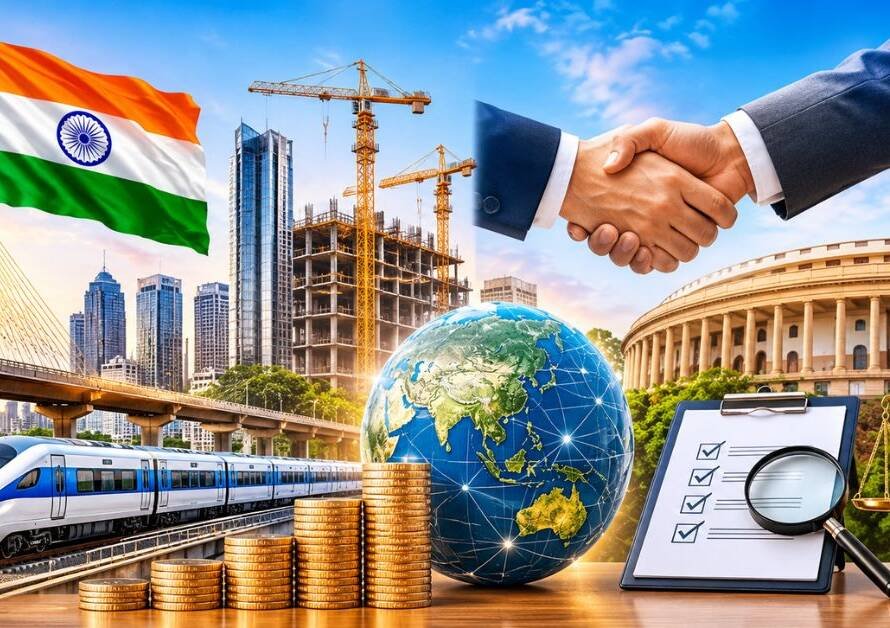
- In the 21st century, India is taking decisive strides toward establishing itself on the global stage as a self-reliant, prosperous, and empowered nation.
- To realize the vision of ‘Viksit Bharat’ (Developed India), the construction of national highways, strategic tunnels, hydroelectric and irrigation projects, modern ports, dedicated freight corridors, and administrative complexes represents far more than physical civil works; these projects form the core pillars of India’s economic sovereignty and strategic security.
- However, an objective review of India’s modern history reveals that for several decades following independence, numerous vital mega-projects remained stalled due to administrative apathy, narrow political priorities, ideological impasses, and the systematic intervention of foreign-funded non-governmental organizations (NGOs).
- Since 2014, a new era has begun, accelerating these long-pending national projects to completion. Concurrently, the issue of foreign and domestic attempts to derail or slow the pace of development under the guise of environmental and social activism has emerged at the center of national discourse.
- This detailed analysis provides a comprehensive, fact-based examination of India’s major development projects, the strict enforcement of the Foreign Contribution Regulation Act (FCRA), and the balance between national interests and external pressures.
India’s Infrastructure Growth and Financial Transparency
1. Post-Independence Historical Context: Delayed Projects and Political Impasses
In the decades immediately following independence, the pace of infrastructure creation failed to align with the country’s actual strategic requirements and developmental potential. Several far-reaching projects that could have transformed India’s economic and social trajectory remained stalled for decades due to various institutional factors:
- Conflict of Political and Economic Priorities:
- For many decades after independence, short-term political considerations were often prioritized over long-term strategic infrastructure. As a consequence, key connectivity networks, the energy sector, industrial corridors, and critical border-region infrastructure lagged significantly behind global standards.
- Decades-Long Delays in Major Mega-Projects:
- Sardar Sarovar (Narmada) Dam: Designed to supply irrigation and drinking water to drought-prone regions across Gujarat, Madhya Pradesh, and Rajasthan, this lifeline project was delayed for decades through legal petitions, social protests, and administrative inertia. These delays resulted in unprecedented cost overruns and deprived millions of citizens of water security for generations.
- Atal Tunnel (Rohtang) and Chenab Railway Bridge: Despite their paramount strategic importance, progress on these projects remained exceptionally slow and was shelved for extended periods, impacting all-weather military logistics and border-region connectivity.
- Sutlej-Yamuna Link (SYL) Canal and Indus River Water Projects: Owing to inter-state disputes, political calculations, and protracted litigation, these critical water-resource projects could not be fully operationalized for years.
2. Infrastructure Expansion Post-2014 and Major National Achievements
After 2014, a major shift occurred in administrative and legislative governance. Clear policy decision-making, strict timelines, and a modernized governance model injected new momentum into long-pending national projects:
- Successful Completion of Strategic and National Mega-Projects:
- Atal Tunnel and Chenab Bridge: By providing all-weather and secure connectivity to Ladakh and the Kashmir Valley, national security and border logistics were substantially reinforced.
- Atal Setu (MTHL) and Central Vista Redevelopment: Milestone engineering achievements that modernized Mumbai’s economic grid and provided the country’s administrative center with an integrated, secure, and modern infrastructure tailored to 21st-century requirements.
- Purvanchal, Bundelkhand, and Samruddhi Expressways: Connecting vast rural and semi-urban hinterlands directly to national economic corridors, creating new opportunities for trade and regional employment.
- PM GatiShakti National Master Plan:
- A multimodal infrastructure platform launched to eliminate the lack of coordination among different ministries and departments. This platform streamlined land acquisition, environmental clearances, and forestry approvals, significantly reducing administrative delays.
3. Environmental and Social Activism: FCRA Regulations and Foreign Funding
While government-led project execution accelerated significantly after 2014, new ideological and legal avenues were simultaneously utilized to stall or challenge these infrastructure developments:
- Financial Inflows and the Role of Foreign NGOs:
- Intelligence assessments and security analyses highlighted that significant funds were funneled to certain local NGOs by foreign entities seeking to impede India’s infrastructure self-reliance and temper its economic growth rate.
- Strategic Deployment of Environmental and Social Movements:
- In several instances, public interest litigation (PIL) and localized protests framed around environmental conservation or tribal rights were leveraged to entangle major industrial, energy, and infrastructure projects—such as the Kudankulam Nuclear Power Plant, mining operations, highways, and coastal road projects—in prolonged judicial reviews.
- Tightened FCRA Regulations and Administrative Actions:
- To check unregulated and suspicious foreign financial flows, the Government of India enacted comprehensive amendments to the Foreign Contribution Regulation Act (FCRA).
- Key measures included centralizing bank accounts (SBI Main Branch, New Delhi), prohibiting the re-granting of foreign funds between entities, and capping administrative expenses at 20%. Following audits that revealed financial irregularities or activities inimical to national interests, the FCRA licenses of thousands of non-compliant NGOs were suspended or canceled.
4. Balancing Environmental Protection and Rapid Infrastructure Growth
In a democratic and law-governed society, maintaining a balance between the speed of development and environmental conservation remains essential:
- Judicial Processes and Project Overruns:
- While sustainable development and environmental stewardship are vital, unverified or motivated public interest litigations significantly escalate project costs and delay public utility delivery.
- Balanced Approach by the Judiciary:
- The Supreme Court of India and the National Green Tribunal (NGT) increasingly weigh national security imperatives and essential infrastructure needs alongside environmental standards, ensuring that national progress is not indefinitely stalled by unsubstantiated petitions.
5. Conclusion: Institutional Strength and National Interests for ‘Viksit Bharat’
India’s path toward development relies on the alignment of economic self-reliance, regulatory transparency, and national sovereignty:
- Complete Financial Transparency: Entities operating within the country must provide transparent accounting regarding the end-use of foreign funds to ensure such contributions serve legitimate welfare objectives rather than obstructing national progress.
- Primacy of National Priorities: The growth of national infrastructure cannot be contingent upon external agendas or political impasses. Completing infrastructure projects within defined timelines remains a core national interest.
- Fact-Based Public Discourse: A balanced, fact-based understanding among citizens is vital to distinguishing genuine developmental efforts from actions that generate unnecessary impediments to national progress.
🇮🇳Jai Bharat, Vandematram 🇮🇳
Read our previous blogs 👉 Click here
Join us on Arattai 👉 Click here
👉Join Our Channels👈