Summary
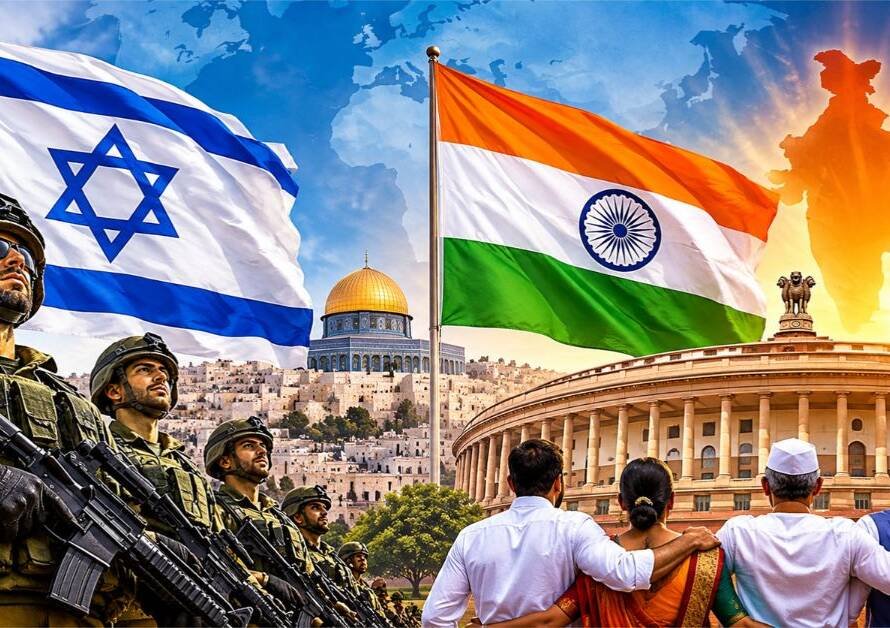
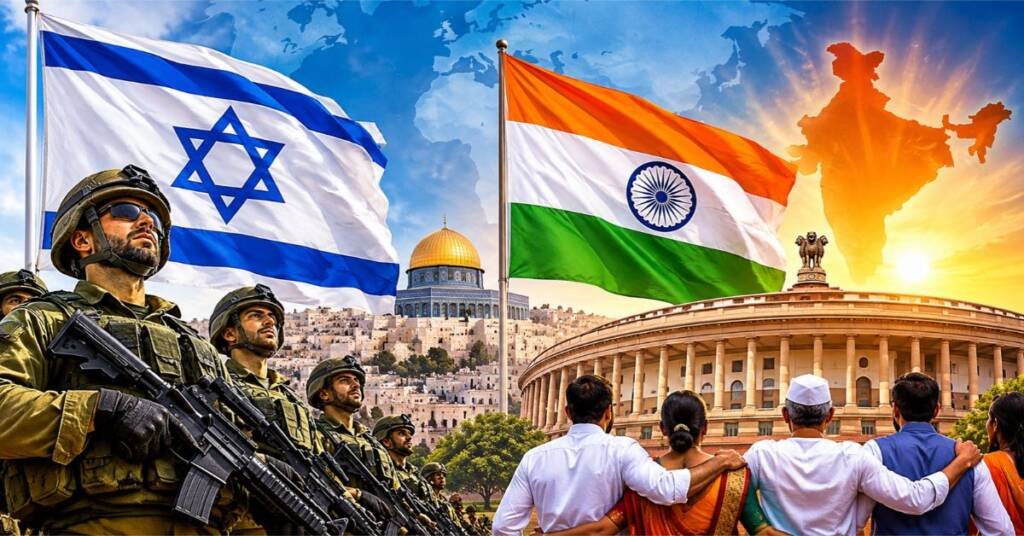
- This article presents an in-depth analysis of Indian politics in the context of contemporary international developments, particularly Israel’s political scenario—where Prime Minister Benjamin Netanyahu and the Israeli opposition firmly refused to take support from Arab parties, prioritizing ideological purity and national sovereignty over the equations of power.
- It illustrates how, a decade ago in India during the era of the ‘Thugbandhan’ (alliance of thugs/opportunists), ideological compromises were made for the sake of power, whereas today in the Modi era, national interest, internal security, and ideological commitment have taken center stage in the political discourse.
Israel’s Message: Nation and Ideology Above Power
Israel’s Ideological Model: National Interest Above Power
- Priority of Ideological Purity: Despite sharp differences between the ruling party and the opposition in Israeli politics, when it comes to the nation’s core ideology and security, both stand on the exact same platform.
- Rejection of Opportunistic Alliances: In recent political developments, Benjamin Netanyahu and the Israeli opposition made it clear that they would not take support from Arab parties to form or save a government.
- Selection of Principles over Power: This decision is proof that for their political leadership, the country’s identity and ideological integrity are far more important than a chair.
- An Example of Democratic Maturity: In a strong and sensitive democracy, the role of the opposition is not merely to oppose the government, but to stand rock-solid with the nation during crises or ideological questions, which the Israeli opposition has successfully demonstrated.
- A Message for the World: Israel’s stance serves as a mirror to democratic nations across the globe where long-term national security and core principles are sacrificed for short-term electoral gains.
Past of Indian Politics: The Era of ‘Thugbandhan’ and Ideological Compromises
- Dominance of Power-Centric Politics: Until about twelve years ago, Indian politics witnessed an era that political analysts and conscious citizens characterize as the epoch of the ‘Thugbandhan’.
- A Multitude of Opportunistic Equations: During that period, parties with conflicting ideologies forged mismatched coalitions solely with the objective of tasting power and keeping a specific ideology at bay.
- Flawed Approach Toward National Security: Under the tenure of previous governments, a soft and compromising approach was adopted toward internal security, cross-border terrorism, and separatist elements, which adversely impacted the nation’s morale.
- Allegations of Patronizing Anti-National Elements: Critics firmly believe that during that era, several ideological and political groups whose allegiance lay with narrow agendas rather than national sovereignty were promoted under the patronage of the establishment.
- Remembrance of the Opposition’s Role: During those challenging times, the then-opposition played a vigilant watchdog role on issues of national interest and cultural self-respect, vehemently opposing the government’s appeasement policies.
Ideological Renaissance and Policy Shifts in the Modi Era
- Reinstatement of National Interests: Over the past decade, under the leadership of Prime Minister Narendra Modi, the axis of Indian politics has completely shifted, where the principle of ‘Nation First’ now supersedes appeasement.
- Zero Tolerance on Terrorism and Separatism: In the current era, any scope for political compromise on questions related to external and internal security has been completely eliminated.
- Emergence of Ideological Clarity: Today, governance clearly reflects that policies are not framed under vote-bank pressure, but by keeping the country’s long-term strength and cultural renaissance in focus.
- Imprint of Decisive Leadership: Whether it is the historic decision to abrogate Article 370 or India’s independent foreign policy on global platforms, current leadership has proven that bold and tough decisions can be taken with ideological commitment.
- Polarization of Political Discourse: This shift has drawn a clear line in Indian politics, making it easier for the public to recognize which forces are engaged in nation-building and which are spreading instability merely to grab power.
Ideological Crisis and Directionlessness of the Current Opposition
- Restlessness of Being Out of Power: Having remained out of power for the past decade, a distinct sense of ideological restlessness and frustration is visible among current opposition parties.
- Politics of Opposition for the Sake of Opposing: Today’s opposition often hesitates not even to question national interests and achievements while opposing government policies—which is in sharp contrast to the patriotic behavior of Israel’s opposition.
- Return to Old Patterns of Appeasement: The tendency to divide society along caste and communal lines for electoral gain and to share platforms with questionable ideologies remains dominant in the opposition camp.
- Expectations of 100 Crore Citizens: A strong sentiment is growing in social media and public discourse that if leaders of a small country like Israel can reject power for their religion and nation, why do parties politics in the name of India’s majority community compromise principles for power?
- Deepening Credibility Crisis: Due to ideological instability and opportunistic alliances, today’s opposition is steadily losing credibility among the ordinary voter.
Public Consciousness and the Decisive Role of Social Media
- Transformed Discourse via Information Revolution: The monopoly of mainstream media has ended in today’s digital age, with ordinary citizens and independent thinkers directly shaping political discourse via social media.
- Comparative Study of International Events: The Indian voter is no longer restricted to local issues alone; rather, they perform a microscopic analysis of politics in Israel and other nations to set the benchmarks for their own country’s leaders.
- Enhanced Accountability of Leaders: No political party can now pull the wool over the public’s eyes through backroom ideological compromises, because every move undergoes immediate and sharp public analysis.
- Spirit of Cultural and National Pride: Debates running on digital platforms have awakened a consciousness in society that while power comes and goes, the nation’s ideology and cultural identity must remain unblemished.
Conclusion: Mandatory Criteria for Future Politics
- Victory of Principles, Not Power: The maturity of Indian democracy lies in all political parties drawing inspiration from Israel’s example and remaining united on questions of national security and core ideology.
- Complete End of Appeasement: Going forward, only those political forces will remain relevant that discard opportunistic alliances and appeasement politics to pursue transparent and nationalist policies.
- An Aware Citizenry is the Strength of Democracy: Only when the nation’s voters begin questioning power-hungry leaders does the establishment of ideological purity and national interest in politics get ensured.
🇮🇳Jai Bharat, Vandematram 🇮🇳
Read our previous blogs 👉 Click here
Join us on Arattai 👉 Click here
👉Join Our Channels👈
Reads & Views: 44