Summary
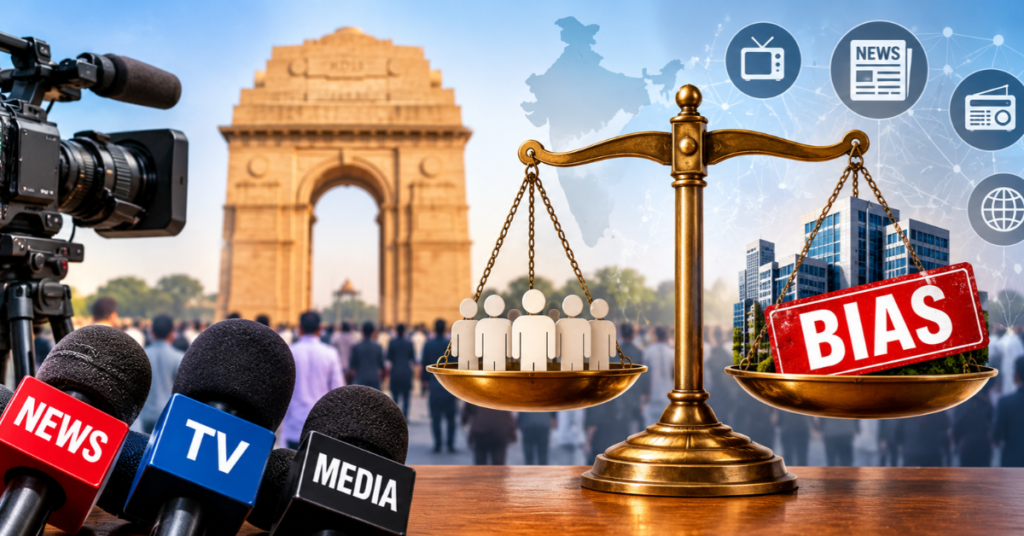
- In contemporary Indian political discourse, intense debates surround narrative control, press neutrality, and national security.
- Beyond traditional discussions on newsroom bias, modern analysis examines how established elite media networks—historically designated as “Lutyens media”—intersect with political dynasties, corporate structures, and foreign funding channels.
- This article presents an analysis of evidence linking journalist-politician family networks, systemic mechanisms of institutional bias, national security implications involving foreign financial flows, and the ongoing broader debate between “Godi media” and foreign-supported ecosystem outlets.
National Sovereignty in India: Untold Story Behind the Scenes
1. Analysis of the Media-Political Family Ecosystem
The narrative surrounding “Lutyens media” argues that post-independence Indian journalism has been heavily influenced by direct familial, marital, and career connections between media executives and political establishments.
- Direct Marital and Familial Alliances: Critics highlight high-profile connections where prominent anchors and editors married key political figures from opposition parties (such as alliances involving Congress, National Conference, and Left leadership). It is argued that these personal relationships blurred the line between news reporting and political partisanship.
- Political Appointments and Parliamentary Seats: Several senior editors, columnists, and media house proprietors subsequently accepted political nominations, parliamentary seats, or advisory roles within specific political regimes, reinforcing perceptions of partisan loyalty.
- Institutional Gatekeeping: Proponents of this critique believe that this integrated network historically controlled entry into major national newsrooms, prioritizing ideological conformity over regional, cultural, or pluralistic representation.
2. Institutional Bias, Narrative Construction, and Cultural Alienation
Beyond direct political connections, this critique extends to how legacy media outlets portray national policy, civilizational identity, and state institutions.
- Resistance to Decolonization and Cultural Shifts: The established media ecosystem is often accused of systematically opposing indigenous cultural revivals, major legislative reforms, and civilizational identity policies, typically framing them through hyper-critical lenses.
- Selective Promotion of External Reports: Analysts point to a pattern where legacy media highlights and amplifies negative indices, foreign think-tank reports, and external criticisms concerning India’s internal affairs while downplaying positive macroeconomic or developmental achievements.
- Institutional Skepticism: This discourse highlights instances where media campaigns actively foster distrust toward key sovereign institutions—including the judiciary, the Election Commission, and security agencies—portraying constitutional processes as compromised.
3. Foreign Funding, Security Threats, and Legal Scrutiny: The NewsClick Benchmark
Following law enforcement actions against digital news outlets, the discussion surrounding media bias expanded from ideological criticism to national security scrutiny.
- Foreign Financial Flows: Law enforcement investigations revealed cases where digital portals received substantial foreign funding—allegedly routed through foreign state-affiliated entities or international donors—to influence domestic political discourse.
- Strategic Narrative Coordination: Legal documents and investigative reports alleged that financial grants were tied to specific editorial objectives, such as promoting foreign policy lines favorable to external actors during border standoffs or fueling domestic protests to create instability.
- Application of Anti-Terrorism Laws: The use of stringent laws like the Unlawful Activities (Prevention) Act (UAPA) in media funding investigations marked a decisive turning point, treating foreign-backed media operations not merely as biased journalism, but as subversion targeting territorial integrity and national sovereignty.
4. The Polarization Counter-Debate: “Lutyens Media” vs. “Godi Media”
Debates surrounding the Indian media are symmetrically polarized, with opposing camps leveling systematic accusations against one another.
- The “Godi Media” Accusation: Critics of the current ruling establishment argue that major corporate-owned news networks (“Godi media”) act as unconditional amplifiers of state policy, engage in hyper-nationalist rhetoric, marginalize opposition voices, and deflect attention from economic and social challenges.
- Corporate Ownership Dynamics: Opponents of the current media landscape emphasize that acquisitions of legacy channels by large industrial groups have led to newsroom restructuring, the departure of critical journalists, and alignment with government priorities due to regulatory and corporate interests.
- Counter-Argument on National Interest: Conversely, supporters of alternative or nationalist media argue that traditional media outlets compromised national interests by aligning with foreign narratives, thereby creating the need for a robust, sovereign-first digital media ecosystem.
5. Structural Realignment: The Rise of Sovereign Digital Ecosystems
The fallout from political network exposures and foreign funding investigations has fundamentally transformed media consumption habits in India.
- Growth of Independent Digital Platforms: Audiences are increasingly turning to direct-to-consumer digital outlets, YouTube commentators, and subscriber-funded portals to bypass traditional broadcast gatekeepers.
- Demand for Financial Transparency: Recent controversies have heightened public demands for strict audit standards regarding newsroom funding, donor transparency, and cross-border financial transactions for digital media companies.
- Ideological Pluralism: The ongoing restructuring of the Indian press reflects a broader democratic transition away from a single centralized elite consensus toward a competitive, multi-polar news environment.
🇮🇳Jai Bharat, Vandematram 🇮🇳
Read our previous blogs 👉 Click here
Join us on Arattai 👉 Click here
👉Join Our Channels👈