Summary
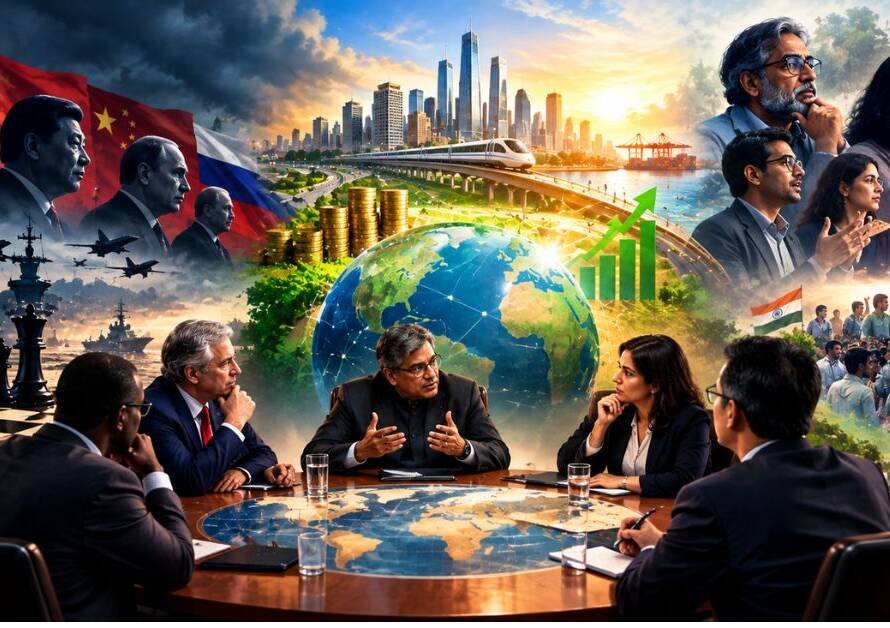
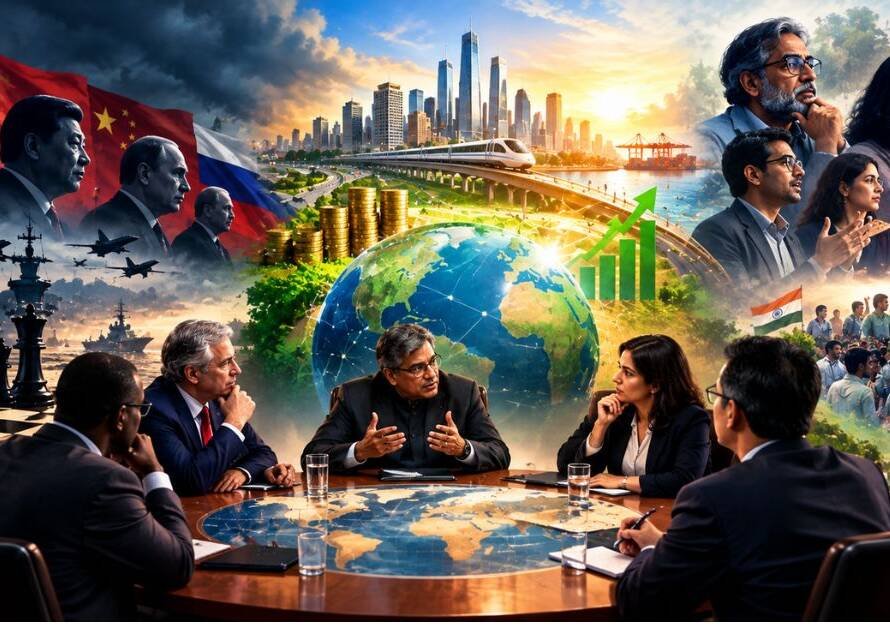
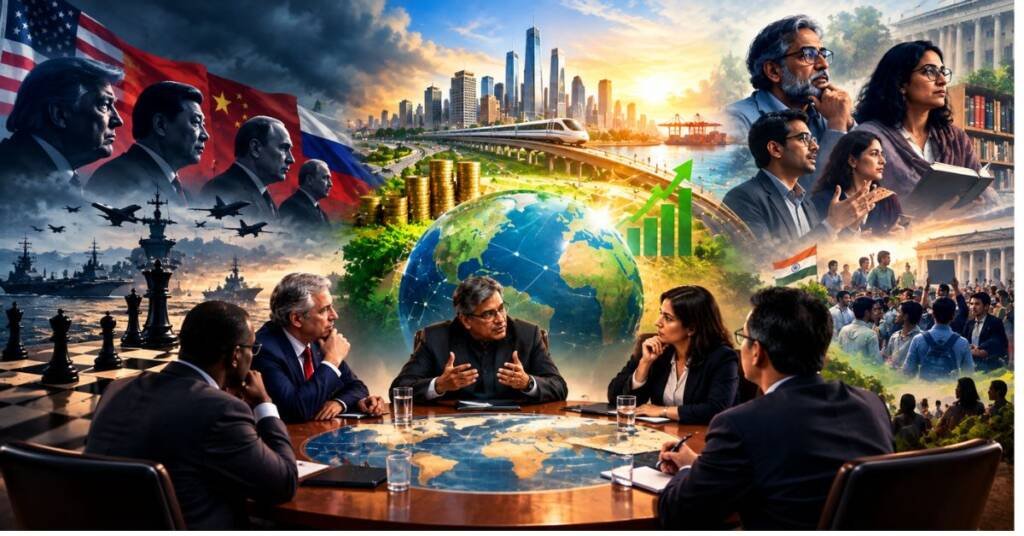
- This comprehensive narrative examines the intense debate surrounding former Reserve Bank of India (RBI) Governor Raghuram Rajan’s public commentary on India’s superpower ambitions.
- By questioning whether the ultimate objective of becoming a superpower is to “dominate or insult other countries,” Rajan triggered widespread debate among political analysts, economic strategists, and the broader public.
- While Rajan and his co-author Rohit Lamba argue in Breaking the Mould that national focus must prioritize human capital, individual capability, and per-capita wealth over global power projection, critics view this framework as a flawed dichotomy that misinterprets statecraft.
- Real-world geopolitical survival dictates that hard economic capacity, industrial scale, and global leverage are not vanity metrics, but essential prerequisites for domestic poverty alleviation and sovereignty protection.
- Furthermore, this analysis highlights the civilizational imperative: reclaiming India’s historical legacy as a Vishwaguru—an economic and cultural powerhouse over 2,000 years ago—is not an aggressive pursuit, but the natural restoration of global balance.
- Ultimately, public figures across the political spectrum carry an absolute responsibility to transcend personal egos, partisan agendas, and elite academic detachment when national interests, economic sovereignty, and civilizational identity are on the line.
The “Superpower” Debate: Power, Prosperity, and the Duty of Public Intellectuals
1. The Genesis of the “Superpower” Controversy
The controversy erupted following a viral interview and subsequent commentary where former RBI Governor Raghuram Rajan questioned the core rationale behind India’s pursuit of superpower status.
- The Core Question: Rajan explicitly asked what India ultimately aims to achieve by becoming a superpower, raising concerns about whether the underlying ambition is to project power, coerce neighbors, or insult other nations on the global stage.
- The Clarification: In response to immediate pushback, Rajan clarified that his statements were not an argument against economic growth, but rather a plea to redefine national goals around individual development, education, health, and per-capita prosperity rather than raw state power.
- The “Wolf Warrior” Comparison: In his book Breaking the Mould (co-authored with Rohit Lamba), Rajan expanded on this thesis by warning India against adopting China’s aggressive “Wolf Warrior” style of diplomacy, claiming that confrontation and coercion could alienate global partners and damage economic prospects.
- Public and Professional Backlash: Critics, economic analysts, and policy experts noted that drawing an equivalence between India’s legitimate rise and aggressive foreign diplomacy creates a false narrative that delegitimizes India’s strategic autonomy.
2. Analyzing the Conceptual Flaws in Elite Economic Commentary
The controversy surrounding Rajan’s remarks exposes fundamental flaws in how certain technocratic economists view national strength, strategic capability, and global trade dynamics.
- Misinterpreting the Nature of Economic Power: Equating economic power with a desire to “dominate or insult” misunderstands modern international relations. In a multipolar world, economic scale is the primary shield against trade coercion, supply chain disruption, and foreign interference.
- The False Choice Between Power and Prosperity: Rajan’s framework presents a artificial trade-off: internal human development versus global power projection. Historically, no major nation has sustained high per-capita prosperity without building hard industrial, technological, and military capabilities to back it up.
- Dismantling the “Wolf Warrior” Fallacy: Comparing India’s foreign policy to Chinese assertiveness ignores India’s long record of peaceful global engagement, democratic values, and rules-based international conduct. India’s strategic rise has consistently focused on mutual partnership, global stability, and South-South cooperation.
- Detachment from Ground Realities: For a developing country navigating a dangerous neighborhood, economic strength is not an academic exercise. Securing energy lines, defense readiness, and manufacturing self-reliance requires comprehensive state power.
3. Strategic Realism vs. Individual-Centric Growth
The debate highlights two opposing philosophies regarding national development and economic strategy:
- The Strategic Realism Model:
- Prerequisite for Sovereignty: High-growth economic power and global influence are not optional luxuries; they are foundational prerequisites for national survival and domestic welfare.
- Comprehensive State Capacity: Building heavy manufacturing, defense industrial bases, advanced technology infrastructure, and global supply chain dominance secures the nation against external shocks.
- Leverage in Global Trade: Strong international positioning gives a nation the bargaining power required to protect its domestic markets, secure favorable trade terms, and lift millions out of poverty.
- The Individual-Centric Model (Rajan-Lamba Thesis):
- Focus on Per-Capita Income: Argues that national policy should focus almost exclusively on direct human capital indicators—such as primary education, healthcare, and service-sector jobs—rather than industrial scale.
- Avoidance of Foreign Friction: Asserts that active power projection risks overextension, inviting foreign backlash, and diverting resources away from social development.
- Critique of Industrial Policy: Skeptical of state-backed manufacturing initiatives (such as Make in India or Production Linked Incentives), advocating instead for service-led, decentralized growth.
4. The Civilizational Context: Reclaiming the Vishwaguru Legacy
A major gap in technocratic commentary is the failure to evaluate India’s economic rise through the lens of its deep civilizational history and cultural heritage.
- Historical Reality of Ancient Wealth: Over 2,000 years ago, ancient India generated over a quarter of global GDP. It operated as a true Vishwaguru—a global center of knowledge, university systems (such as Nalanda and Takshashila), advanced metallurgy, trade networks, and spiritual philosophy.
- Non-Imperialist Global Stature: India’s historic role as a superpower was built without colonial conquest, forced conversion, or economic plunder. Its global influence spread through trade, culture, science, and philosophy.
- Restoration, Not Aggression: Modern India’s pursuit of global leadership is not an attempt to subjugate other nations, but the natural restoration of a civilizational trajectory that was disrupted by centuries of foreign invasion and colonial exploitation.
- Global Welfare (Vasudhaiva Kutumbakam): Reclaiming superpower status allows India to contribute meaningfully to global problem-solving—from vaccine diplomacy and digital public infrastructure to climate action and international disaster relief.
5. The Responsibility of Current and Past Public Figures
Public figures who have held constitutional posts, led central banks, or shaped national policy carry a permanent ethical obligation to align their public commentary with the broader national interest.
- Transcending Personal Ego and Ideology: Responsible leaders—whether in active governance or academic retirement—must set aside personal grievances, political ideologies, and partisan biases when discussing the nation’s core security and economic ambitions.
- The Impact of Words on Global Perception: Statements made by former central bankers and international economists carry weight in foreign capitals, rating agencies, and financial markets. Nuanced academic critiques, when framed carelessly, can be weaponized by global adversaries to undermine national confidence and deter investment.
- National Interest Above Partisan Debates: Domestic political disagreements are natural in a vibrant democracy, but on the global stage, national sovereignty, economic self-reliance, and strategic autonomy must remain paramount and non-negotiable.
- Constructive vs. Destructive Criticism: Public intellectuals owe the country constructive, grounded policy advice that builds capacity, rather than rhetoric that demoralizes national ambition or questions the fundamental legitimacy of India’s growth.
- Economic strength is neither a vanity metric nor an instrument for global domination; it is the essential engine of state capacity, national self-reliance, and human dignity.
- As India navigates a volatile international landscape, the nation’s rise to superpower status represents both an economic necessity and a civilizational duty.
- Achieving this vision requires a clear national consensus where past and present leaders unite behind India’s sovereign rise, ensuring that internal prosperity and global strength advance hand in hand.