Executive Summary
- This strategic commentary serves as a socio-political critique and mobilization framework focusing on demographic shifts, national security, and civilizational preservation.
- Drawing vital historical parallels from the Partition of 1947, the displacement of minorities across Afghanistan and Pakistan, and the 1990 exodus from Kashmir, the text argues that infrastructural development, spiritual institutions, and private wealth are entirely secondary to national security and demographic stability.
- It critiques contemporary political leadership for engaging in transient partisan debates while consistently overlooking long-term strategic vulnerabilities. The narrative advocates for immediate, institutional legal reforms—including a nationwide Uniform Civil Code (UCC), equal standardized education, and stringent population regulations—as the primary mechanisms to ensure long-term stability.
- The ultimate thesis is that civic survival requires active, organized engagement with lawmakers to build a robust legal and policy framework capable of protecting the nation’s sovereign integrity.
Demographic Change: An Emerging Challenge
1. The Hierarchy of National Priorities: Security Before Expansion
A nation’s primary, non-negotiable duty is the absolute preservation of its sovereign territory and the physical security of its citizens. While economic growth, infrastructure development, and industrial expansion are vital for a nation’s global standing, these achievements become entirely redundant if the internal social fabric degrades.
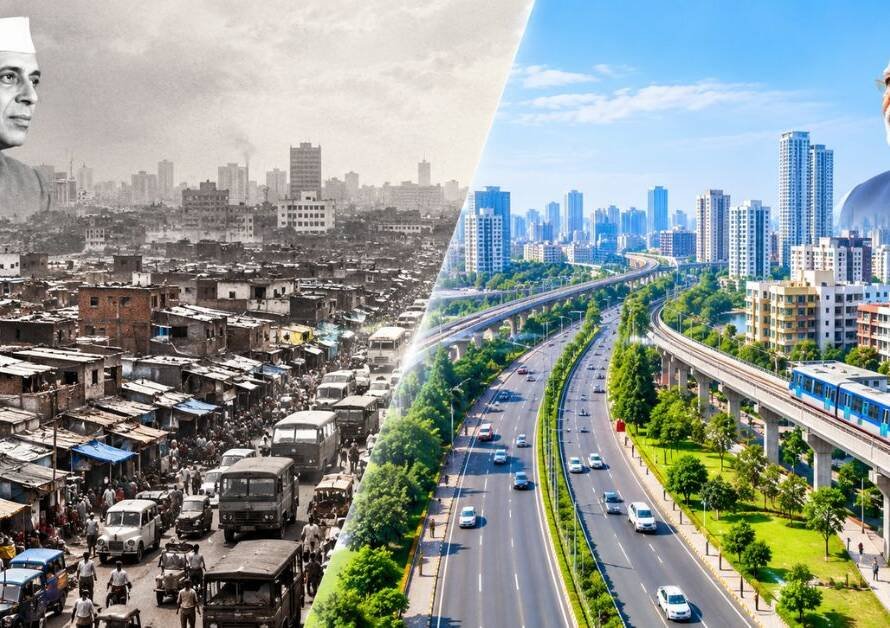
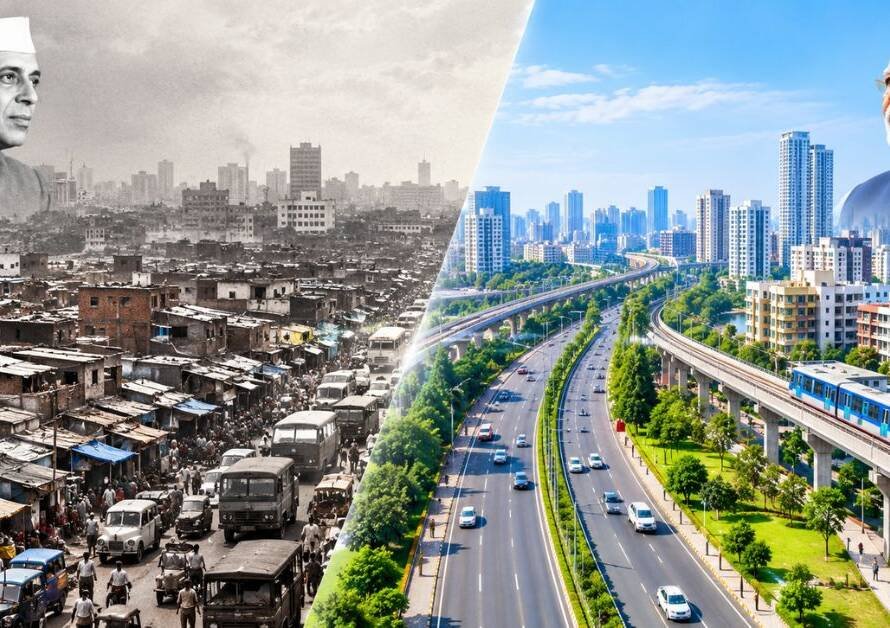
- The Illusion of Pure Development: High-growth economies, sleek smart cities, and advanced infrastructure corridors do not guarantee long-term immunity from internal strife or civilizational displacement. History demonstrates that highly developed societies can undergo rapid demographic collapse and social fragmentation if internal security measures and structural baseline protections are neglected.
- The Vulnerability of Wealth: Real estate holdings, commercial empires, and agricultural assets hold tangible value only as long as the state maintains absolute administrative, legal, and law enforcement control over that geography. When the rule of law collapses under asymmetric demographic pressure, private assets and personal wealth are invariably the first to be compromised and confiscated.
2. Historical Precedents of Civilizational Displacement
The trajectory of borders, demographics, and populations over the last two centuries provides a stark, empirical reminder of how quickly geographical and cultural landscapes shift when long-term trends are ignored by the majority.
- The Lessons of Partition (1947): The catastrophic events of 1947 forced some of the country’s most prominent cultural, intellectual, and business leaders to abandon established properties, sprawling industries, and ancestral homes overnight. This historical rupture demonstrates that personal success and elite social status cannot withstand systemic political and territorial fragmentation.
- The Erasure of Regional Heritage: Across the wider subcontinent, ancient centers of learning, historic temples, and grand monuments have been systematically altered, repurposed, or entirely erased over the past century. The near-total loss of historic cultural sites in ancient regions like Gandhara or Multan highlights how physical architectural heritage vanishes when the native population dynamics decline.
- The Tragedy of Kashmir (1990): The sudden, targeted displacement of the minority community from the Kashmir Valley in 1990 remains a modern testament to internal vulnerability. Despite holding land, prominent businesses, deep academic roots, and cultural heritage for generations, thousands were forced into exile within days, and their properties remain largely unrecovered to this day.
3. The Limits of Institutional Sentimentality
Building vast social, religious, and charitable infrastructure is an admirable expression of community strength and philanthropic dedication. However, these physical institutions cannot defend themselves in the absence of an overarching, robust legal framework backed by state power.
- The Fragility of Physical Structures: Historically, geographies that once housed thousands of traditional schools, vibrant community centers, and spiritual sanctuaries saw these spaces completely repurposed, renamed, or dismantled once the demographic equilibrium shifted permanently. Cultural structures do not preserve populations; populations preserve structures.
- The Limits of Ritualism: Cultural practices, massive spiritual gatherings, and private philanthropy provide ethical grounding and community cohesion, but they do not replace the necessity of institutional state power, hard law enforcement, and strict constitutional safeguards.
4. Political Complacency vs. Legislative Necessity
Modern political discourses frequently devolve into short-term partisan debates, tactical media posturing, and immediate electoral calculations. In the process, leadership often ignores the fundamental structural and demographic challenges that will manifest decades later.
- The Policy Deficit: While mainstream political platforms focus heavily on populist rhetoric, freebie politics, and daily 24-hour media cycles, critical discussions on long-term demographic balance, border control, and uniform legal standards are frequently sidelined or delayed in legislative bodies.
- The Citizen’s Responsibility: Relying solely on political figures or temporary electoral cycles for long-term cultural and civilizational survival is a strategic error. Citizens must transition from passive spectators into proactive stakeholders who demand structural institutional accountability and a long-term policy vision from their elected representatives.
5. The Structural Solution: Institutional and Legislative Reform
The only sustainable defense for a diverse, democratic nation against internal fragmentation is the implementation of uniform, non-negotiable legal frameworks that treat every single citizen equally under a singular, uncompromising constitutional standard.
- Uniform Civil Code (UCC): Implementing a comprehensive, nationwide Uniform Civil Code is essential to ensure identical rights, responsibilities, and legal obligations for all citizens, irrespective of community or religious affiliation, thereby ending legal fragmentation and separate communal personal laws.
- Standardized National Education: Establishing a uniform educational curriculum across all primary and secondary institutions ensures that every child receives an education rooted in scientific temperament, civic duty, and constitutional patriotism, effectively minimizing localized radicalization and insular parallel schooling systems.
- Strict Population and Immigration Controls: Enacting stringent, modern laws to curb illegal immigration, completely secure national borders through technological and military means, and encourage balanced demographic growth is vital to maintaining long-term social stability, political representation, and resource equity for future generations.
Securing the Future Through Law
- The stability and security enjoyed by future generations depend entirely on the structural and legislative decisions made by lawmakers today.
- Temporary political slogans, electoral victories, and personal wealth will offer zero protection against deep-seated demographic and social transformations.
- The path forward demands an organized, lawful, and relentless effort by citizens to engage directly with their representatives to enact robust, preventative legislation.
- A nation is preserved not by historical complacency, but by the unyielding strength of its laws and the collective discipline of its people.
🇮🇳Jai Bharat, Vandematram 🇮🇳
Read our previous blogs 👉 Click here
Join us on Arattai 👉 Click here
👉Join Our Channels👈