Executive Summary
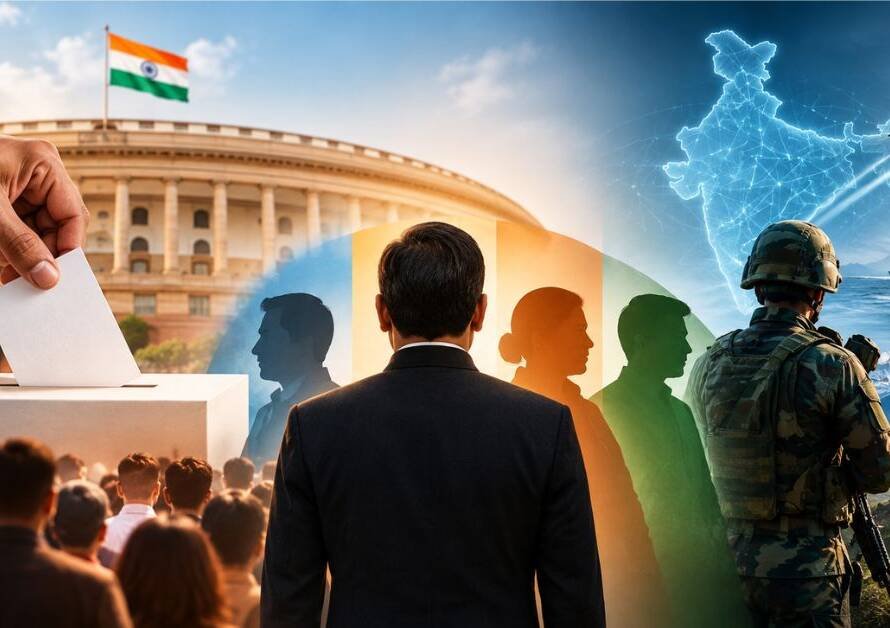
- This diplomatic analysis evaluates the shifting dynamics of US-India relations and India’s growing strategic autonomy on the global stage.
- Utilizing pivotal moments from US Secretary of State Antony Blinken’s recent visit to India—such as the joint press briefing and airport protocol execution—this piece illustrates how New Delhi has discarded its historically defensive foreign policy. Instead, India now engages global superpowers on equal footing, utilizing a highly realistic, transactional model.
- The visible discomfort of the US Secretary of State when directly questioned by an Indian journalist regarding rising racial discrimination in America, followed by his abrupt termination of the press conference under the pretext of ‘heat’ inside a state-of-the-art air-conditioned hall, highlights a profound geopolitical reality: ‘New India’ possesses the confidence and leverage to challenge Western double standards live on camera.
The Superpower’s Hesitation:
1. The Evolving Pitch of Global Diplomacy and New India’s Assertive Stance
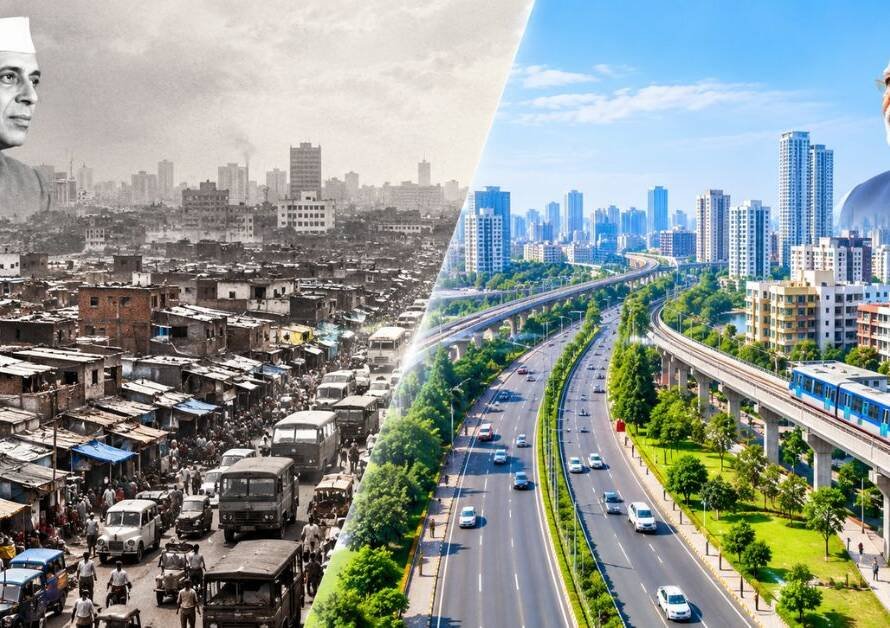
For decades, international relations dictated that New Delhi adopt a defensive posture whenever a high-level delegation from Washington arrived. Indian diplomacy quietly tolerated patronizing lectures from Western leaders on human rights, press freedom, and internal policies. Today, that geopolitical landscape has transformed completely.
- A New Era of Equality: The recent visit of the US delegation led by the Secretary of State proves that India no longer operates as a junior partner to any superpower. It stands tall as a peer and an equally sovereign nation.
- From Defensive to Assertive Diplomacy: This paradigm shift is not confined to classified diplomatic files. It is vividly on display in front of live broadcast cameras, during international press briefings, and in the precise execution of state protocols.
2. A Sharp Question Exposes the Double Standards of Western Narrative
The United States and its Western allies have frequently weaponized global rankings—such as the Press Freedom Index or Human Rights Index—as strategic tools to exert geopolitical pressure on developing nations. However, when the mirror is turned back on them, their defensive framework struggles to hold.
- The Boldness of Indian Media: During the joint press briefing, an Indian journalist confidently took the floor to ask a direct, pointed question regarding the continuous rise of racial discrimination, hate crimes, and xenophobic rhetoric against Indian immigrants and citizens on American soil. The unyielding nature of the question immediately silenced the hall.
- The Diplomatic Discomfort: The top diplomat of the world’s foremost superpower was visibly caught off guard by this direct counter-offensive. His body language and facial expressions made it clear that Washington’s team was not mentally prepared for such a sharp, reciprocating interrogation.
- A Deflective Alibi: After a noticeable moment of hesitation, the Secretary offered a brief, surface-level response, stating: “Every country has some stupid people, and those stupid people do not define the direction of a nation.”
- The Paradox of Western Discourse: This response perfectly exposes a long-standing double standard. When an isolated incident occurs in India, it is systematically aggregated to question the entire nation’s secular fabric and democratic character. Yet, when systemic racial violence occurs within the US, it is conveniently dismissed as the isolated actions of “a few stupid individuals.”
3. Demanding ‘Heat’ in a State-of-the-Art AC Hall: A Strategic Retreat
In diplomacy and high-stakes politics, when words fall short and logical ground slips away, leaders frequently seek physical or environmental pretexts to exit an uncomfortable situation with their diplomatic decorum intact.
- The Warmth of Questions, Not the Weather: The venue hosting this joint press conference alongside Indian External Affairs Minister S. Jaishankar was equipped with advanced climate-control and centralized air-conditioning (AC) systems. The indoor temperature was strictly regulated, cool, and comfortable. Yet, the diplomatic intensity of the journalist’s question was so profound that it made the American Secretary of State feel an abrupt wave of ‘heat.’
- Exiting the Live Stage: To evade further cross-examination and avoid potential follow-up questions, the US Secretary suddenly took the microphone and stated: “I am feeling very warm in here. I am going to end this press conference right now because I come from Miami, and the weather there is much nicer.”
- The Strategic Meaning: In diplomatic lexicon, this maneuver is recognized as a ‘strategic retreat.’ When a global leader finds their own arguments coming under intense scrutiny on live television, they utilize an environmental pretext to gracefully withdraw. It was a psychological victory for India’s sovereign rhetoric that the top US diplomat was left breaking a sweat inside a perfectly cooled room.
4. The Subtle Message of Protocol: The Era of Deference is History
In international diplomacy, welcoming protocols and airport receptions carry immense symbolic weight. The rank of the official dispatched to receive a foreign dignitary at the tarmac serves as an accurate barometer for the existing power dynamics between the two nations.
- A Measured Diplomatic Welcome (The Cold Shoulder): Upon the arrival of the US Secretary of State and his entourage in India, New Delhi did not dispatch a senior cabinet minister or a top-tier cabinet secretary to the airport. Adhering strictly to the baseline requirements of established protocol, a Deputy Secretary-rank official was sent to manage the reception.
- A Message of Absolute Parity: This served as the initial diplomatic signal to the visiting delegation. Washington received a clear message: India is no longer a nation that will engage in unnecessary sycophancy. This is not the India of the past that rolls out the red carpet unconditionally for Western officials while viewing itself as a subordinate ally. This is ‘New India’—standing firmly on its own feet with thorough preparation, self-reliance, and national self-respect.
5. The ‘Transactional Relationship’ Mode: Pure Pragmatism Beyond Sentiment
The relationship between India and the United States has never mirrored a formal military alliance like NATO. In the current global arena, this partnership has fully transitioned into a highly realistic, practical, and transactional model.
- The Pragmatic Architecture (Give and Take): Transactional diplomacy operates on a transparent principle: “You prioritize your national interests, and we will place our national interests above all else. Where our strategic goals align, we will cooperate extensively in trade and security. Where our paths diverge, we will independently pursue our own course without hesitation.” This model leaves no room for emotional manipulation or historical obligations.
- The Litmus Test of Russian Crude Oil: Following the outbreak of the Ukraine crisis, the United States and the European Union exerted massive global pressure on India to halt its purchase of Russian crude oil and comply with unilateral Western sanctions. India comprehensively rejected this pressure. Indian foreign policy boldly clarified that India’s energy security and the welfare of its citizens would not be dictated by a third country or the dictates of the Washington administration.
- Visa and Immigration Equilibrium: India no longer approaches the United States as a solicitor regarding visa regulations for its IT professionals and technical experts. New Delhi views this migration as a ‘two-way street.’ When Indian talent moves to the US, they actively power the American GDP, fortify its tech economy, and sustain Silicon Valley. This is mutually beneficial commerce, not a charitable concession granted to India.
6. American ‘Pampering’ and India’s Uncompromising Sovereignty
对抗 (Confrontation) and divergent policies notwithstanding, a fascinating trend has emerged: the US administration and top leaders continuously praise and ‘pamper’ India. This behavior is driven by a deep geopolitical necessity.
- The Imperative of Containing China: To balance and contain China’s aggressive expansionism across the Indo-Pacific region, Washington desperately requires a strong, independent, and reliable military and economic anchor in Asia. The US leadership understands perfectly that alienating or marginalizing India would effectively neutralize American relevance in the Asia-Pacific theater.
- The Failure of Coercive Tactics: Washington has come to realize that the old playbook of issuing sanction threats, economic penalties, or interfering in domestic affairs cannot intimidate or bend New Delhi. India remains unyielding regarding its national sovereignty and strategic autonomy. Consequently, when coercive diplomacy failed entirely, the US pivoted to a strategy of validation and public praise to ensure India remains closely aligned with its broader strategic calculations.
7. India’s Transition from ‘Rule Taker’ to ‘Rule Maker’
The unfolding sequence of events during the press conference, the calculated execution of airport protocols, and the recalibrated tone from Washington yield profound and far-reaching signals for India’s future. India is no longer playing on a ‘line and length’ dictated by the West; it is actively preparing the pitch of international politics on its own terms.
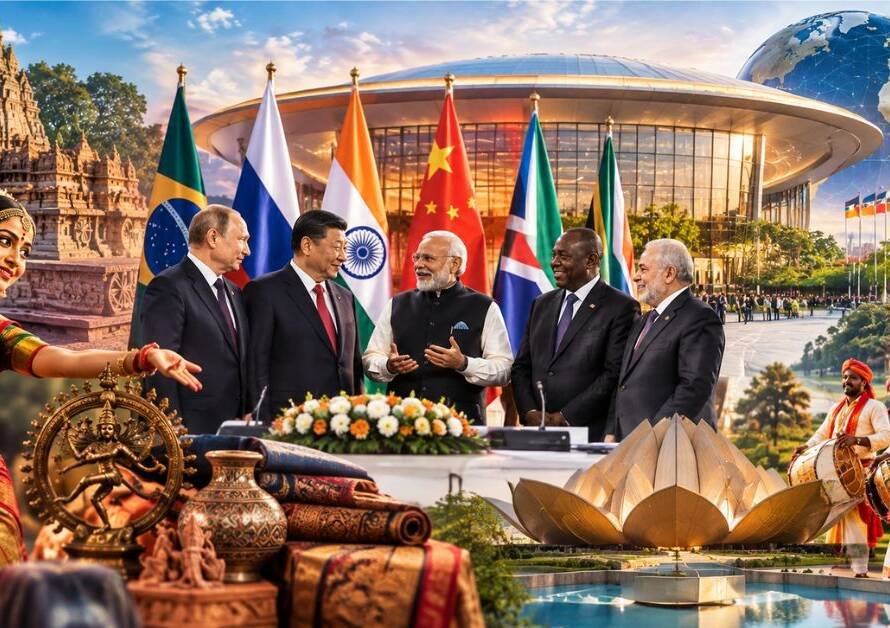
- A New Position in the Global Order: We are witnessing a historic transformation where India is no longer a passive ‘rule taker’ that quietly absorbs the dictates of global governance. Instead, it has taken decisive strides toward becoming a ‘rule maker’ that actively shapes the global architecture.
- The End of Compliance: Whether it is Washington or any other global superpower, the world must respect New India’s terms, its sovereignty, and its strategic autonomy. The era of unilateral compliance is permanently over, and the era of absolute parity has begun.
🇮🇳 Jai Bharat, Vandematram 🇮🇳
Read our previous blogs 👉 Click here
Join us on Arattai 👉 Click here
👉Join Our Channels👈