Summary
- Since independence, the political landscape of India has witnessed intense debates regarding governance systems, ideological perspectives, and national security.
- On one hand, the current nationalist governance system and its supporters strongly believe that since 2014, the country has prioritized the “Nation First” policy, zero tolerance, and transparent development.
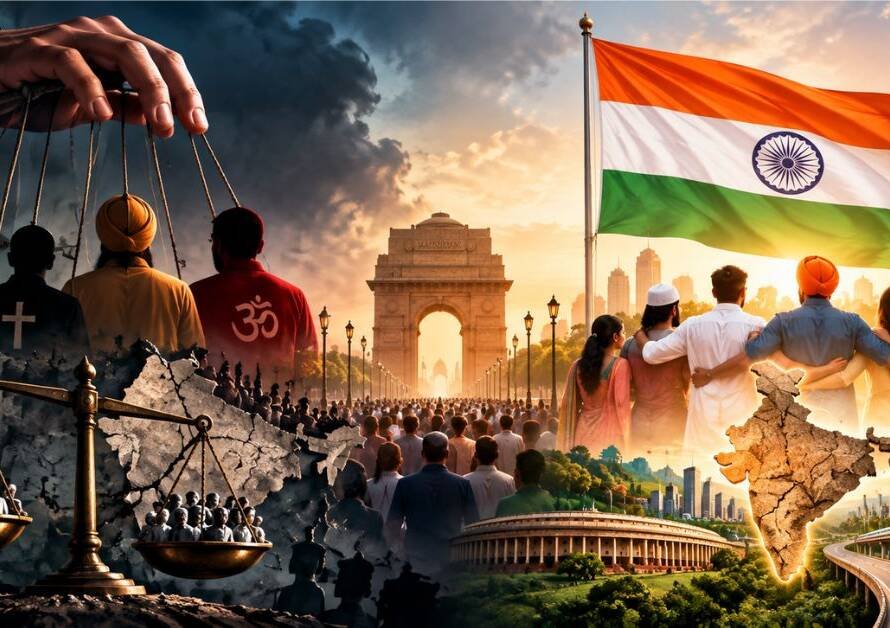
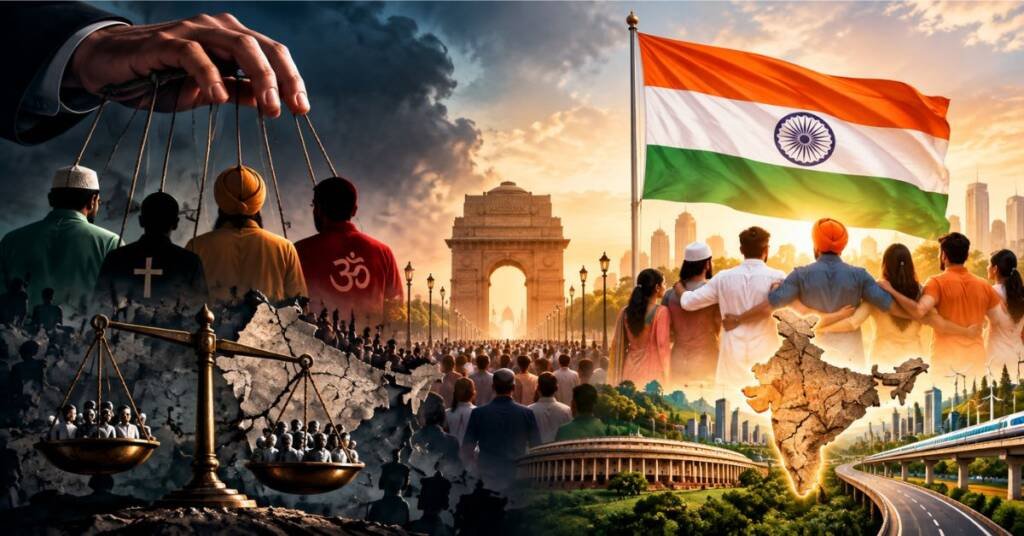
- On the other hand, critics and political analysts also argue that the appeasement politics and vote-bank-based decisions of the early decades caused deep damage to the country’s internal stability, cultural identity, and economic progress.
- This article presents a comprehensive overview of India’s political trends, the opposition’s working style, historical decisions, and national security issues.
Appeasement Politics vs. Nation First: A Political Analysis
1. Historical Perspective and Controversies of Appeasement Politics
Decisions made by various governments in the decades following independence have faced serious allegations of prioritizing the appeasement of specific communities over broader national interests:
- Legal Imbalance and Administrative Policies: Laws such as the Waqf Act of 1995, the Places of Worship Act of 1991, and overturning the Supreme Court’s verdict in the Shah Bano case promoted a one-sided legal system in society.
- Double Standards on Religious Institutions: In many parts of the country, the direct control and financial management of major Hindu temples remained in the hands of governments, while places of worship belonging to other religious communities were granted complete autonomy and freedom.
- Political Softness in Security Matters: Incidents of yielding to terrorists during kidnapping cases between 1989 and 1991 (such as the release of terrorists in the cases of Rubaiya Sayeed, Nahida Soz, and Tasadduq) sent a message that political compromises could override national security.
2. Transformation in Governance Post-2014: ‘Nation First’ and Security
Since 2014, a fundamental and welcome shift has occurred in India’s political and administrative direction:
- Zero Tolerance Against Terrorism: Decisive military actions, such as surgical strikes and air strikes, were executed against cross-border terrorism and forces challenging internal national security.
- Cultural Self-Esteem and National Pride: The revival of India’s ancient cultural heritage, historical monuments, and spiritual symbols has been promoted, strengthening the country’s ideological identity.
- Transparent Governance and Economic Reforms: Contrary to the massive financial scams of earlier eras, the current system focuses on Digital India, Direct Benefit Transfer (DBT), and rapid infrastructure development.
3. Role of the Opposition, International Platforms, and Public Concerns
While the presence of an opposition is essential in a democracy, deep concerns arise among the public when the working style of opposition parties appears contrary to national interests:
- Tarnishing the Country’s Image on International Platforms: Questioning Indian democracy, institutions, or electoral processes during foreign visits by opposition leaders is considered anti-national and irresponsible by citizens.
- Apprehension of Anarchy and Instability: Critics argue that if the opposition continues to make appeasement and protest politics its primary weapons, it could adversely affect the pace of internal security and economic progress.
- Imperative of Nation First: On issues related to the country’s sovereignty and integrity, both the ruling side and the opposition must rise above ideological differences and stand united with the nation.
4. Inclusive Growth vs. Vote-Bank Politics
To maintain the country’s development and social fabric, it is essential that policies are based on inclusive growth (Sabka Saath, Sabka Vikas) rather than appeasement:
- Equal Access to Welfare Schemes: Empowering the underprivileged standing at the last rung of society by providing housing, electricity, water, healthcare, and rations to every citizen without discrimination.
- Guarantee of Security and Stability: Strengthening internal security has boosted investor confidence and accelerated economic activities.
- Long-Term National Vision: Moving away from past tendencies of compromising national security and integrity for short-term electoral gains, long-term national interests are now being prioritized.
Conclusion
In a vast and diverse democracy like India, it is imperative that the reins of governance remain in hands that move forward with the sole resolve of “Nation First” free from any appeasement or external pressure. Citizen awareness and strong political will alone can establish the country as a safe, prosperous, and powerful nation.
🇮🇳Jai Bharat, Vandematram 🇮🇳
Read our previous blogs 👉 Click here
Join us on Arattai 👉 Click here
👉Join Our Channels👈