Summary
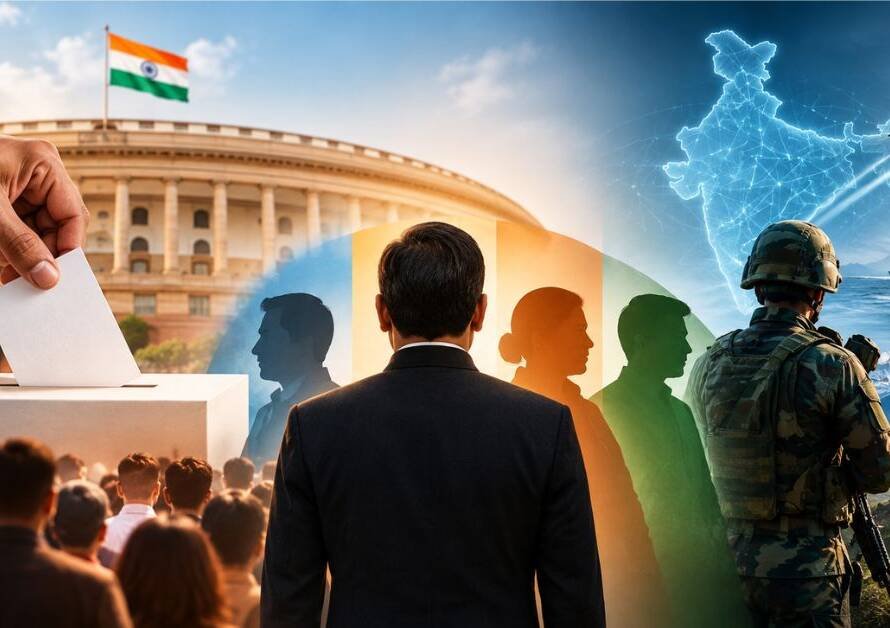
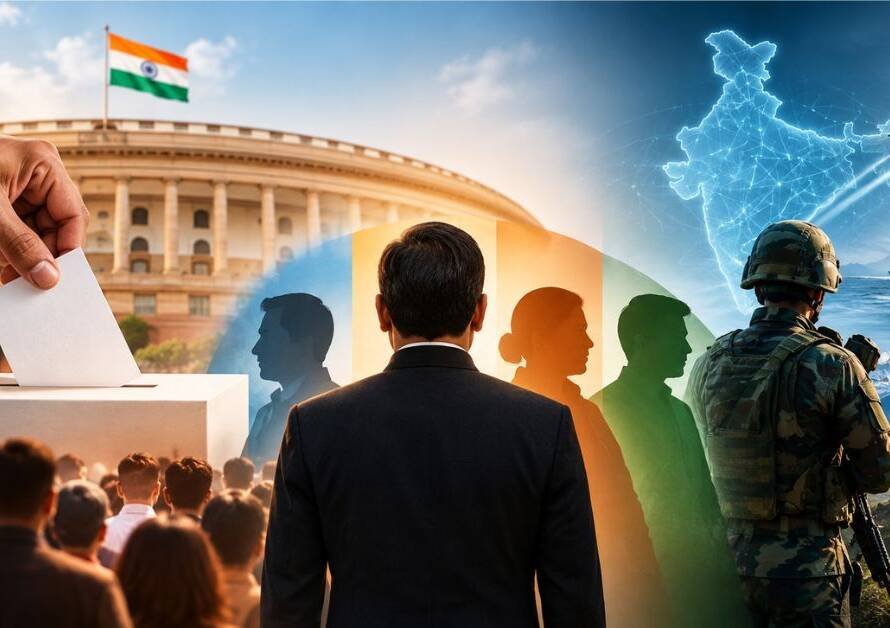
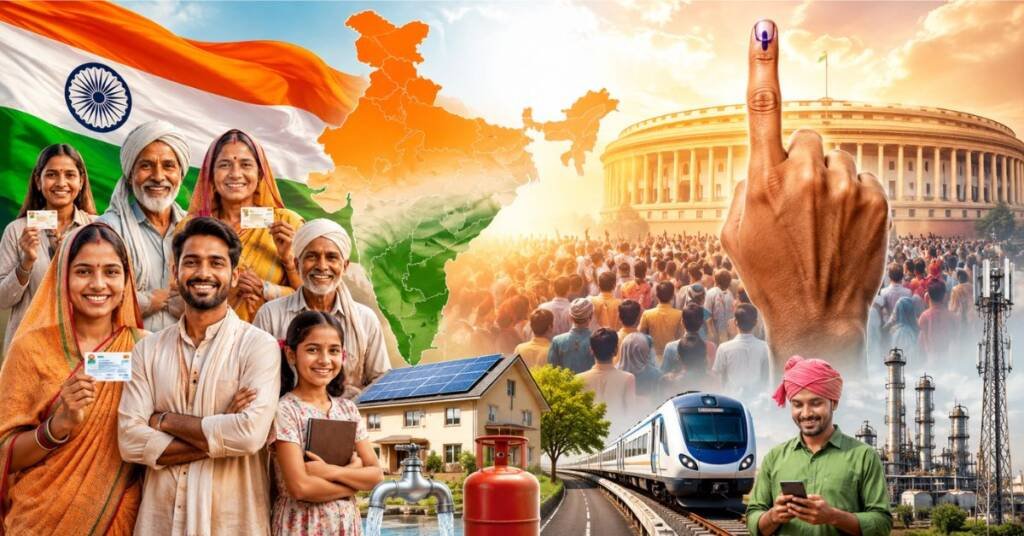
- This analysis looks closely at the rise of the “Beneficiary Class” (Labharthi Varg) in modern Indian politics.
- It explains how public welfare has shifted from an old “rights-based” system to a highly efficient “digital delivery mechanism.” By completely cutting out middlemen, this new setup has built a direct and strong bond of trust between the public and the central leadership.
- Driven by data, the widespread delivery of permanent assets like concrete houses and cooking gas has created a solid voter base that moves past traditional politics based on caste and region.
The Transformation of Indian Electoral Governance
1. The Big Shift: From Legal Rights to Total Delivery
Over the past decade, the basic way public welfare works in India has changed. In the past, government welfare focused on legal rights (like MGNREGA or the Right to Education). While this model looked good on paper, it often suffered from slow implementation and local corruption. The modern governance model has replaced this old way by focusing entirely on absolute delivery to every eligible person (the saturation model).
- Focusing on Results, Not Just Processes: The old model spent too much time dealing with paperwork, rules, and administrative steps. In contrast, the modern delivery model focuses on getting the benefits directly and clearly into the hands of the people. Welfare is no longer measured by how much money is allocated in a budget, but by the actual infrastructure built on the ground.
- Lifting Millions Out of Poverty: Data from NITI Aayog shows that 24.8 crore people have moved out of multidimensional poverty, proving the success of this shift. By improving health, education, and basic living standards all at once, the government has permanently lifted people’s quality of life instead of just offering temporary cash relief.
- Building Permanent Assets Instead of Giving Handouts: Government policy has moved away from just distributing short-term financial aid. Instead, the focus is on creating permanent assets for households. Giving concrete homes through PM Awas Yojana, clean cooking fuel through Ujjwala, and toilets through Swachh Bharat turns public spending into long-term wealth for poor families.
- Breaking Traditional Caste Equations: When every eligible citizen receives a scheme’s benefits without any discrimination, local brokers and caste-based political fixers lose their power. This builds a direct link between the ordinary citizen and the central leadership, weakening old caste alliances and regional voting blocs.
2. The Saturation Doctrine: ‘Modi’s Guarantee’ as a Safety Shield
In today’s political landscape, where different regions have their own complex dynamics, running massive welfare programs serves as a powerful shield. The clearest example is the PM Garib Kalyan Anna Yojana, which provides continuous food security to over 80 crore citizens.
- Protecting People from Economic Shocks: Even during global supply chain disruptions and rising inflation, the government’s guarantee of free food grains has given the poorest economic groups a reliable safety net. By securing a family’s basic nutritional needs, the state protects voters from negative political narratives driven by economic distress.
- Turning Trust into a Permanent System: Linking the total delivery of welfare schemes directly to centralized accountability has built unique trust among the public. People no longer view these benefits as a temporary political favor from a party, but as a certain right guaranteed by the leader of the nation.
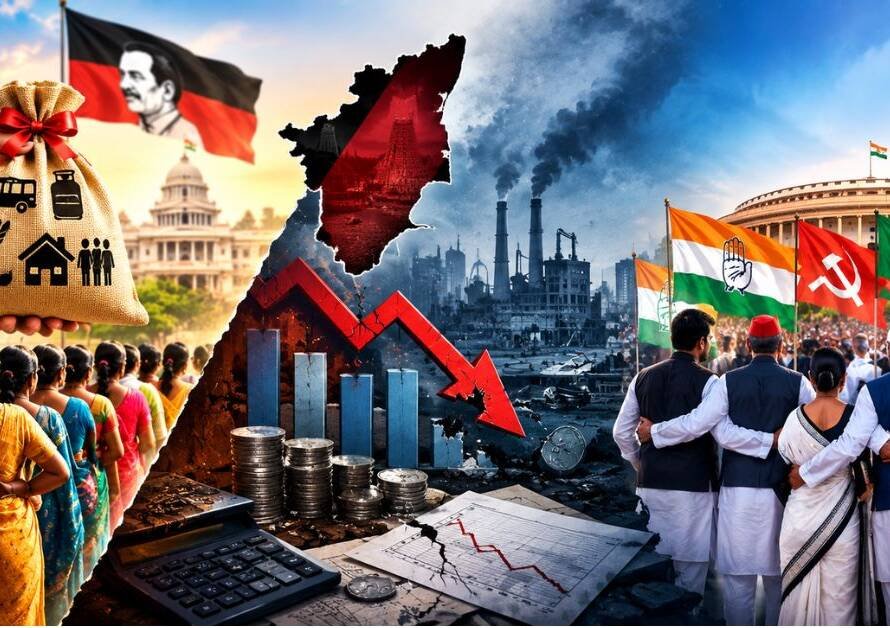
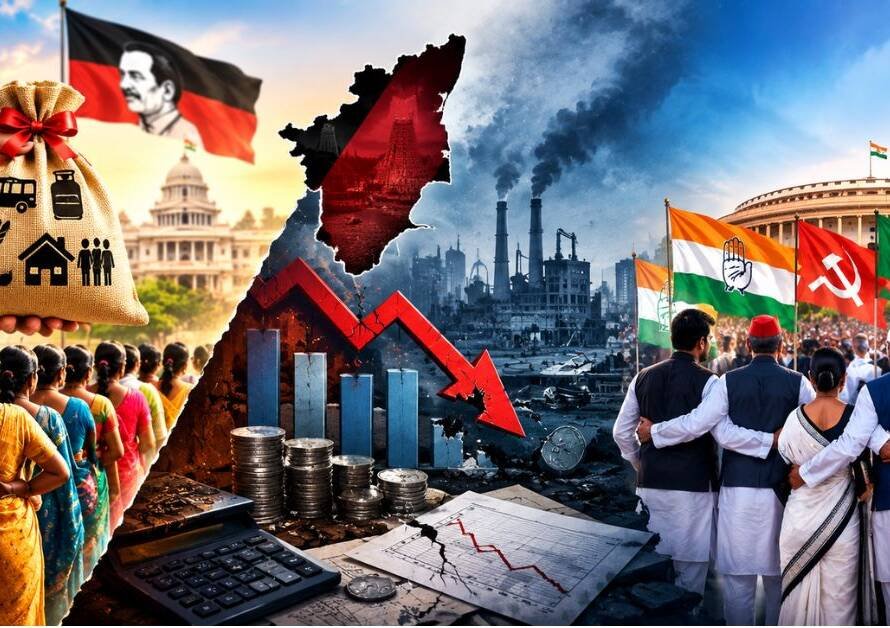
- Creating a Shared Policy Goal: The scale of this welfare system is so massive that opposition parties cannot afford to criticize these programs or promise to end them. Instead, all parties are forced to compete on the same ground by offering similar models of cash transfers and subsidies. This has made the centralized delivery system the permanent blueprint for Indian governance.
- Focusing on Women’s Welfare: The deliberate policy of registering houses and bank accounts directly in the names of women has created a highly supportive and aware group of voters. Feeling a sense of personal dignity and physical security, this segment often votes based on national progress rather than local anti-incumbency factors.
3. Digital Governance: Direct Benefit Transfer (DBT) and the Trust Surplus
Eliminating systemic leakages and corruption from the welfare delivery chain is the biggest technical success of modern Indian administration. Combining digital systems into the JAM (Jan Dhan-Aadhaar-Mobile) Trinity has completely transformed how public money reaches citizens.
- Ending the Control of Middlemen: For generations, the biggest weakness of the Indian state was the network of corrupt middlemen who took a cut of the money meant for the public. The modern digital setup completely bypasses these layers, sending electronic payments directly from the central treasury to individual bank accounts without any deductions.
- Direct Financial Aid for Farmers: The smooth, quarterly transfer of the PM-Kisan Samman Nidhi to over 12 crore small and marginal farmers is a prime example of this efficiency. By putting cash directly into the agricultural economy right when farmers need it for the sowing season, the state has freed smallholders from relying on predatory local moneylenders.
- Building Deep Trust in the State: When a citizen receives an immediate, text message alert showing the exact financial credit on their mobile phone, it proves the integrity of the system. This transparency builds immense trust. Voters can distinguish between local administrative failures and the true intent of the central leadership, realizing that local glitches are not reflections of central policy.
- Using Data to Improve Policy: Digitizing the entire beneficiary list gives the central government excellent tracking tools. The state can monitor progress in real-time, find local bottlenecks, and move funds where needed, ensuring that public money spent on social welfare yields a very high return.
4. The Credibility Matrix: Personal Narrative and the Politics of Dignity
In a large and complex democracy, successful welfare policies must be backed by a credible communicator. The personal background of the leadership acts as the vital bridge that changes material benefits into long-term political loyalty.
- Connecting Through a Shared Background: The leader’s personal story—coming from a background of economic hardship and everyday struggles—stands in sharp contrast to the elite, dynastic political families of the past. For the lower economic classes, this shared life experience makes the leader an authentic representative of their own struggles, rather than an elite figure handing down favors.
- A New Kind of Social Identity: Traditional politics relied heavily on dividing society along caste lines. The modern beneficiary framework replaces these divisions with a new economic identity: a conscious group of individuals whose standard of living has been elevated by state action. This new grouping helps limit the impact of old caste-based political engineering.
- Restoring Self-Respect and Dignity (Pratishtha): Welfare schemes are designed to maximize the psychological dignity of the person receiving them. Moving away from the safety risks of open defecation to having a private toilet, or avoiding financial ruin during a medical emergency thanks to free treatment under Ayushman Bharat, is presented as a restoration of individual respect. This combination of material upliftment and social honor builds a deep emotional bond that traditional political deals cannot easily break.
- A Connected Message: Linking welfare infrastructure with larger themes of national pride and strategic security creates a complete political message. The person receiving state welfare feels connected to a historic journey of national transformation, viewing their own economic growth as a vital part of a rising, self-reliant global power.
5. Geopolitical and Long-Term Institutional Value
Beyond immediate domestic political benefits, strengthening the beneficiary class is crucial for India’s long-term internal stability, security, and strategic resilience.
- A Shield Against Internal Disturbances: Massive, well-targeted social safety nets serve as an effective defense against attempts to create civil unrest. When the most vulnerable sections of society feel economically secure through state action, it becomes very difficult for hostile groups to exploit financial anxieties to cause large-scale domestic trouble.
- Financial Discipline and Transparency: Despite the massive scale of these programs, digital tracking keeps the fiscal deficit under control. By removing fake names and duplicate accounts, the state saves billions of dollars every year, proving that large social security networks can coexist with disciplined economic management.
- Raising the Standard of the Democratic Mandate: Indian voters have permanently raised their expectations from democracy. Now, any political party seeking power cannot win just on abstract promises. They must demonstrate the administrative capability to manage large-scale infrastructure and digital delivery networks. This political maturity ensures that the path of India’s development remains secure against short-term political shifts.
🇮🇳 Jai Bharat, Vandematram 🇮🇳
Read our previous blogs 👉 Click here
Join us on Arattai 👉 Click here
👉Join Our Channels👈