SUMMARY:
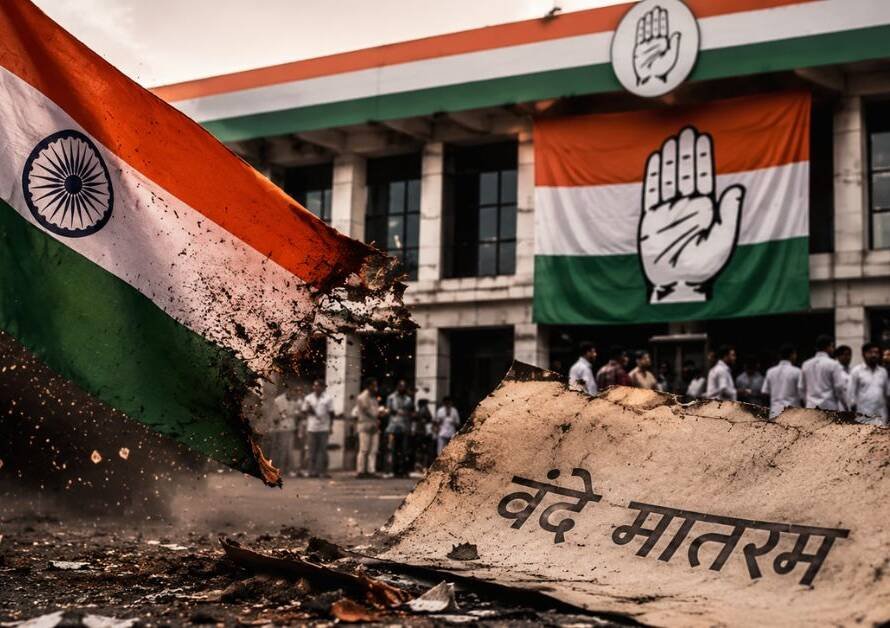
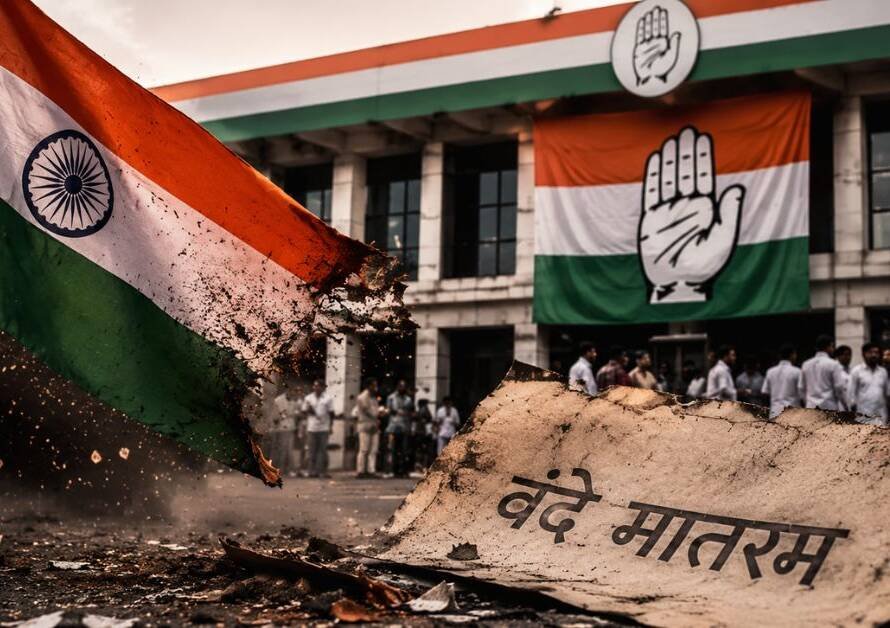
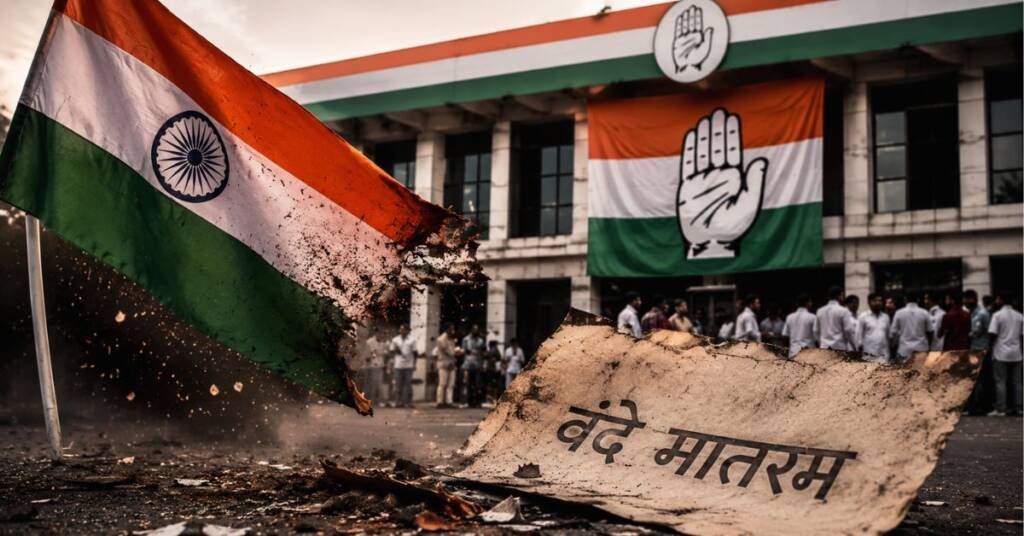
- This document details a critical breach of statutory decorum that occurred at the All India Congress Committee (AICC) headquarters on August 15, 2026, during the 80th Independence Day flag-hoisting ceremony.
- During the official rendition of the National Song, Vande Mataram, senior leadership—including Mallikarjun Kharge, Sonia Gandhi, and Rahul Gandhi—were recorded making visible non-verbal gestures attempting to interrupt and prematurely stop the performance.
- This action directly violates Section 3 of the Prevention of Insults to National Honour (Amendment) Act, 2026, which explicitly criminalizes obstructing or disturbing assemblies engaged in rendering the National Song or National Anthem.
- This petition respectfully appeals to the Supreme Court of India to take suo motu cognizance of this grave insult to national identity.
- It links this symbolic disrespect to a broader political strategy by the opposition coalition and associated political networks aimed at institutional subversion, outlining the statutory framework, evidentiary grounds, and constitutional imperatives required to enforce equal accountability under the law.
Why Did the Controversy Erupt Over the Respect for ‘Vande Mataram’?
SECTION 1: THE AUGUST 15, 2026 AICC HQ INCIDENT
1.1 Factual Matrix of the Breach
- Event and Context: On August 15, 2026, during the official 80th Independence Day proceedings at the AICC headquarters in New Delhi, an official chorus commenced the full rendition of Bankim Chandra Chatterjee’s Vande Mataram.
- On-Stage Disruptions: Broadcast media captured Congress Parliamentary Party Chairperson Sonia Gandhi and Party President Mallikarjun Kharge expressing visible irritation and executing explicit hand gestures directed at the choir to halt the singing.
- Chain-of-Command Gestures: Following Sonia Gandhi’s hand signals, Lok Sabha Leader of Opposition Rahul Gandhi repeated similar stopping motions toward the organizers and choir.
- Choir Persistence: Despite repeated hand signals from the high command, the performers completed the rendition, creating an uncoordinated public spectacle on stage.
1.2 Contradictory Official Defenses
- The Logistics Explanation: Party spokespersons initially claimed the leadership was merely signaling aides to arrange a chair for Mallikarjun Kharge mid-ceremony.
- The Historical Stanza Plea: Secondary defenses cited a 1937 Congress Working Committee resolution that sought to restrict public recitations of Vande Mataram strictly to its first two stanzas.
- Internal Event Confirmations: Organizers privately conceded that leadership felt uncomfortable with the continuation into later stanzas, leading to the deliberate attempt to cut the song short.
SECTION 2: STATUTORY FRAMEWORK & LEGAL VIOLATIONS
2.1 The Prevention of Insults to National Honour (Amendment) Act, 2026
- Legislative Expansion: Passed during Parliament, the 2026 Amendment Act amended Section 3 of the parent 1971 Act.
- Parity of Protection: Section 3 legally equates the National Song (Vande Mataram) with the National Anthem (Jana Gana Mana), making it a cognizable offense to intentionally disrupt or stop its singing.
- Prohibited Acts:
- Intentionally preventing the full or partial authorized singing of the National Anthem or National Song.
- Causing disturbance or distraction to any assembly engaged in such singing.
- Displaying public gestures of disrespect or non-cooperation during solemn national proceedings.
2.2 Penal Provisions & Judicial Precedents
- Section 3 Penalties: Any person who intentionally prevents or disturbs the rendition faces up to 3 years imprisonment, a fine, or both.
- Section 3A (Repeat Offenders): Mandates a strict minimum term of 1 year imprisonment for subsequent convictions.
- Constitutional Mandate: Article 51A(a) imposes a fundamental duty on every Indian citizen to abide by the Constitution and respect its ideals, institutions, the National Flag, and the National Anthem.
- Relevant Jurisprudence:
- Shyam Narayan Chouksey v. Union of India (2018): Established that national symbols require solemnity and decorum during formal public proceedings.
- Bijoe Emmanuel v. State of Kerala (1986): Distinguished respectful silence from active obstruction, affirming that active interference with a performing assembly constitutes an offense.
SECTION 3: THE NARRATIVE ARC—PATTERN OF INSTITUTIONAL SUBVERSION AND ABUSE
3.1 Systematic Abuse of Constitutional Positions, Sanatana Dharma, and Institutions
- Targeting Constitutional Office Holders: A persistent pattern of public rhetoric routinely denigrates high constitutional authorities—including the Presidency, the Judiciary, and Parliament—eroding public trust in democratic governance.
- Vilification of Sanatana Dharma and Cultural Heritage: Under the pretext of political commentary and secular discourse, ancient cultural values, sacred symbols, and Sanatana Dharma are systematically vilified, alienating the civilizational consensus of the nation.
- Denigrating the Armed Forces and Freedom Fighters: Sacrifices made by military personnel and historical revolutionaries are frequently subjected to political skepticism, questioning surgical strikes, operational protocols, and historical legacies for political gain.
- Subverting State Institutions: Investigative agencies, administrative apparatuses, and electoral bodies are regularly branded as compromised whenever their independent functioning challenges entrenched political interests.
3.2 The Abuse of “Freedom of Expression” as a Shield
- Exploiting Constitutional Protections: While freedom of speech under Article 19 is a constitutional right, it was never designed as an unrestricted license to subvert national dignity or compromise state security.
- Limits of Freedom: When public actions cross the line from political critique into deliberate insults to national symbols, cultural heritage, and sovereign institutions, they violate basic constitutional boundaries.
- Escalation in Recent Years: The systematic targeting of national honour under the guise of free expression has escalated significantly in recent years, requiring immediate legal and constitutional restraint.
SECTION 4: DEMANDS FOR EXECUTIVE, LEGAL, AND JUDICIAL PROCEEDINGS
4.1 Appeal for Suo Motu Cognizance by the Supreme Court
- Judicial Intervention Required: Given the involvement of high-ranking political figures, this petition respectfully prays that the Honorable Supreme Court of India exercise its extraordinary powers to take suo motu cognizance of this grave violation.
- Directing Investigation: Order an independent, court-monitored investigation by central agencies to examine the unedited audio-visual feeds using AI-assisted lip-reading, gesture mapping, and audio-isolation analysis to establish clear intent.
- Severely Punishing Offenders: Ensure that those found guilty of insulting the National Song or obstructing its performance are severely punished under Section 3 of the Prevention of Insults to National Honour Act, 1971 (as amended in 2026), demonstrating that no individual or position is above the law.
4.2 Safeguarding National Sovereignty
- Equal Accountability Under Article 14: High political stature or public position must not grant immunity or shielding from statutory penalties when national honour is intentionally desecrated.
- Non-Negotiable Core: The honour, safety, security, integrity, and sovereignty of India must remain paramount and uncompromised under any political circumstance.
🇮🇳 Jai Bharat, Vandematram 🇮🇳
Read our previous blogs 👉 Click here
Join us on Arattai 👉 Click here
👉Join Our Channels👈
Reads & Views: 52