Summary
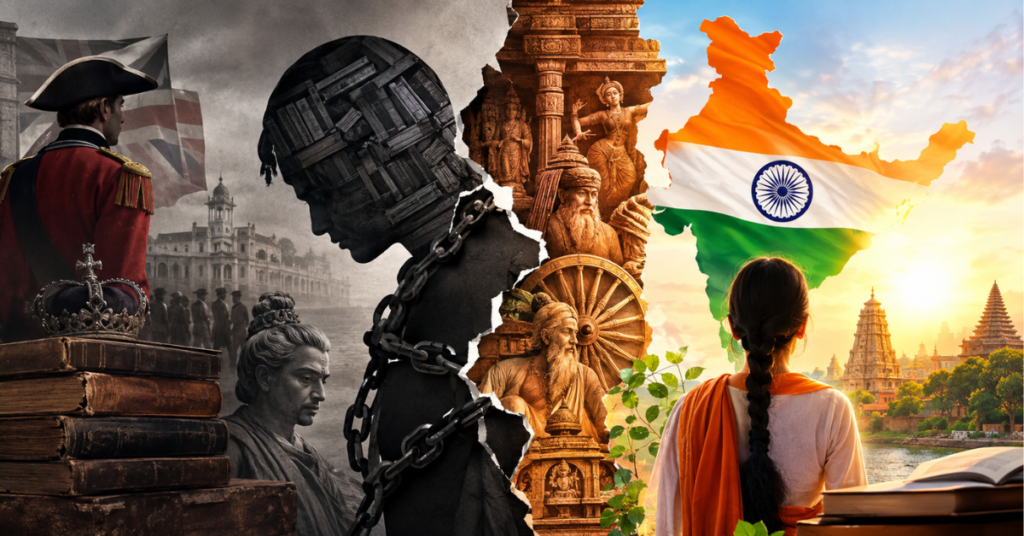
- This comprehensive analysis examines the calculated, multi-generational disruption of India’s traditional education system and cultural identity.
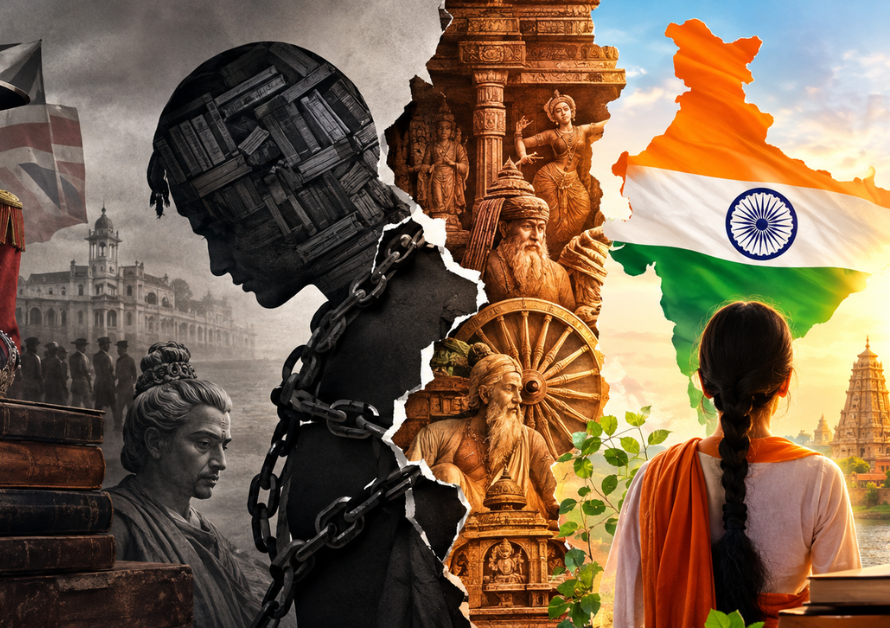
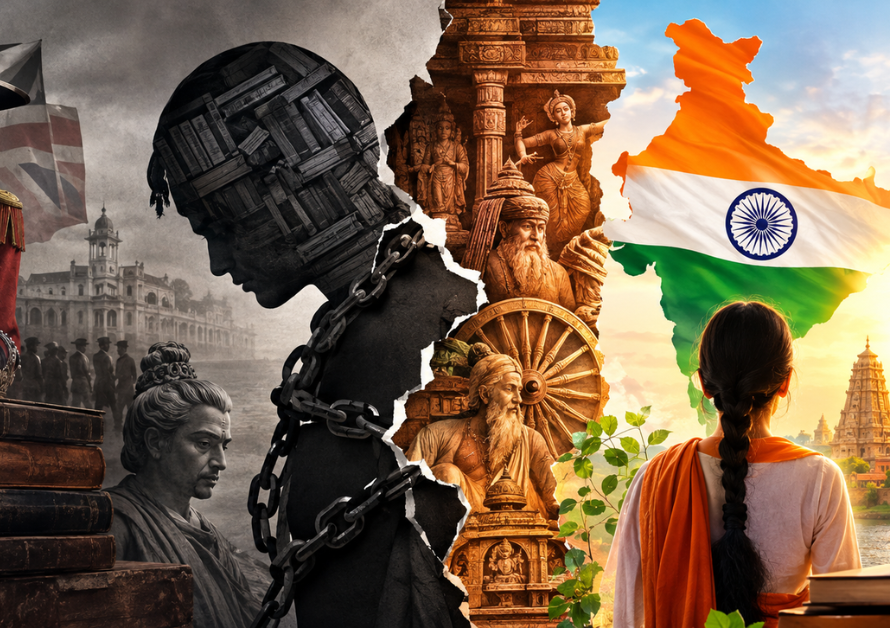
- Beginning with Lord Macaulay’s 1835 address to the British Parliament, colonial rulers sought to dismantle India’s spiritual, moral, and educational backbone to establish control.
- This systematic distortion deepened in the post-independence era through targeted curriculum frameworks that marginalized indigenous heritage and civilizational narratives.
- This document details the history of colonial and post-colonial educational policies, the marginalization of Sanatana Dharma, the social impact on Hindu society, and the ongoing efforts to restore authentic history and values through modern curriculum reforms.
Colonial Influence On India’s Cultural And Intellectual Identity
1. Historical Context: The Macaulayan Blueprint
To consolidate its grip on India, the British East India Company and the British Crown required an administrative and social framework that could completely neutralize India’s traditional, self-reliant systems.
- The Statement of February 2, 1835: Macaulay’s 1835 document exposes the fundamental character of British colonial strategy, explicitly noting India’s prosperous economic condition, high moral character, and crime-free society.
- Breaking the Cultural Backbone: The colonial administration recognized that India’s true strength lay in its ancient civilizational roots, Vedantic thought, the Gurukul tradition, and spiritual values.
- Instilling Inferiority: Instead of relying solely on military force, the primary objective became altering the nation’s ideological framework and instilling an inferiority complex among Indians regarding their own native culture.
- The Illusion of Western Superiority: Colonial policy aimed to establish that the English language, Western values, and the British administrative setup were inherently superior to Indian knowledge traditions.
2. Post-Independence Aggravation And Historical Distortion
The systemic erosion of India’s civilizational identity did not end in 1947; rather, the ideological direction of post-independence education further worsened the crisis.
- Ideological Control of Early Ministry Portfolios: In the crucial decades following independence, the leadership of the Education Ministry—held successively by figures such as Maulana Abul Kalam Azad—established an ideological direction that shaped national curricula, textbooks, and academic institutions.
- Glorification of Foreign Invaders: School curricula and historical narratives heavily focused on and glorified medieval Islamic dynasties and Mughal rulers, framing expansionist invasions as periods of nation-building.
- Marginalization of Hindu Warriors and Culture: The contributions, empires, and resistance of legendary Hindu rulers—such as the Cholas, the Vijayanagara Empire, Chhatrapati Shivaji Maharaj, Maharana Pratap, Lachit Borphukan, and the Ahoms—were relegated to brief footnotes or systematically ignored.
- Erasure of Civilizational Achievements: Decades of standardized textbooks minimized India’s ancient contributions to mathematics, astronomy, medicine, architecture, and philosophy, projecting a narrative of perpetual backwardness prior to foreign rule.
3. The Institutional Blocking Of Sanatana Dharma
Post-independence policy frameworks implemented a rigid interpretation of secularism that selectively disassociated native cultural traditions from public education.
- Prohibition of Core Ethos: Under the guise of state neutrality, the teaching of Sanatana principles, Vedic literature, classical philosophy, and ethical texts was barred from state-funded school curricula.
- Disconnection from Roots: Generations of students grew up without formal exposure to their native scriptures, Sanskrit heritage, or the philosophical foundations of Sanatana Dharma.
- Brainwashing and Cultural Self-Hate: By teaching young Indians that their ancestors possessed a flawed, regressive, and poverty-stricken past, the educational framework systematically manufactured self-doubt and cultural alienation.
- Existential Risk to Hindu Society: This continuous erasure weakened social cohesion, eroded civilizational pride, and left Hindu society vulnerable to ideological subversion, demoralization, and conversion activities.
4. The Distorted Impact Of The Inherited Model
The combined legacy of Macaulayan policies and post-independence historical distortion created deep-seated structural issues within Indian society.
- Erosion of Self-Respect: Remaining ignorant of indigenous scientific, literary, and philosophical achievements severely weakened the national consciousness and sense of pride.
- Creation of a Subordinate Mindset: Traditional education empowered individuals toward self-reliance and entrepreneurship, whereas the inherited system conditioned generations to view employment within state or external bureaucracies as the sole goal.
- Blind Imitation of Western Norms: Disconnection from cultural roots led society to view foreign lifestyles, consumerism, and Western political theories as the only valid benchmarks of progress.
5. Course Correction: Curriculum Reform And The Revival Of Sanatana Principles
To correct historical imbalances and eliminate remnants of mental slavery, comprehensive educational reforms are currently underway.
- National Education Policy (NEP) Framework: The implementation of the NEP marks a structural departure from colonial and post-colonial frameworks by prioritizing mother-tongue instruction and integrating Indian Knowledge Systems (IKS).
- Restoration of Authentic History: Textbooks and academic programs are being revised to accurately reflect the valor of native warriors, regional resistance movements, and the true extent of civilizational achievements.
- Integration of Sanatana Values: Core ethical, philosophical, and humanistic principles derived from Sanatana Dharma—such as Vasudhaiva Kutumbakam (the world is one family), environmental stewardship, and value-based living—are being reintroduced into school curricula.
- Building a Self-Reliant Nation: The revised educational paradigm aims to produce confident, culturally rooted citizens capable of driving India’s economic, scientific, and civilizational resurgence as a Vishwaguru.
Conclusion
- Education is not merely a mechanism for granting degrees; it is the vital foundation of a nation’s sovereignty, identity, and civilizational survival.
- The dual challenges of Macaulayan colonial engineering and post-independence historical distortion severely damaged India’s collective consciousness.
- By actively correcting past biases, restoring authentic historical truth, and embedding the timeless values of Sanatana Dharma into the educational framework, India is reclaiming its heritage and securing its path toward civilizational resurgence.
🇮🇳 Jai Bharat, Vandematram 🇮🇳
Read our previous blogs 👉 Click here
Join us on Arattai 👉 Click here
👉Join Our Channels👈